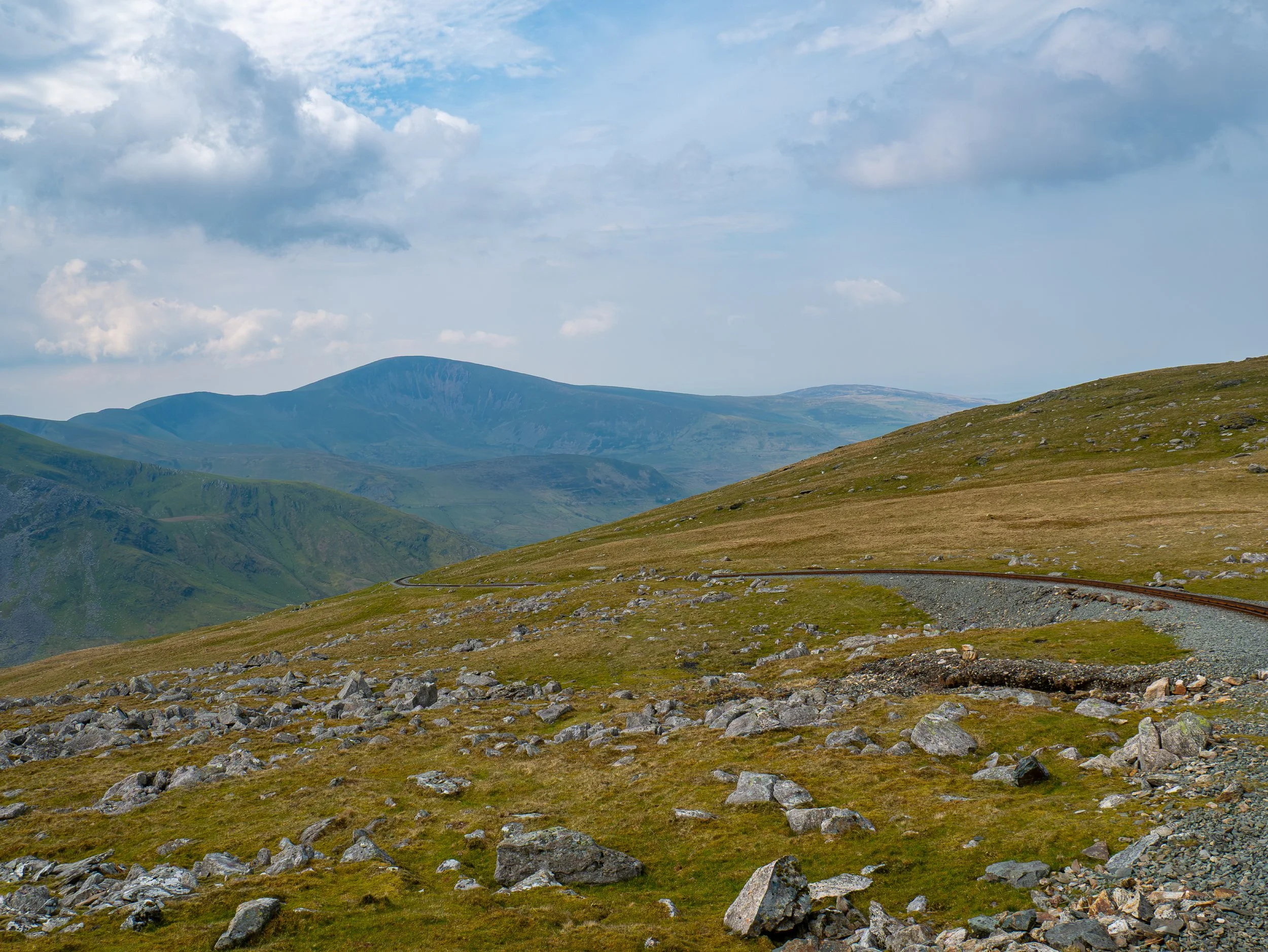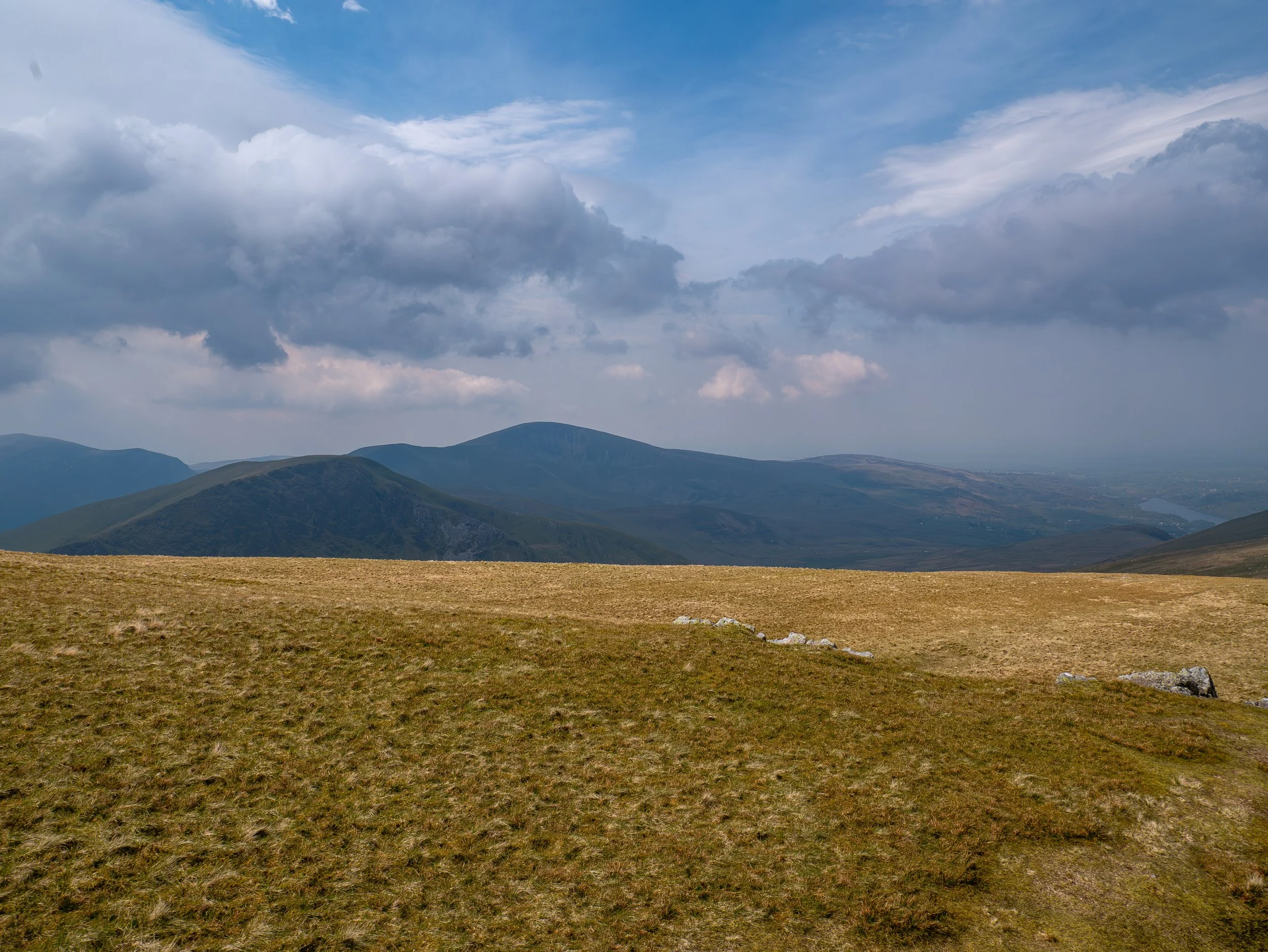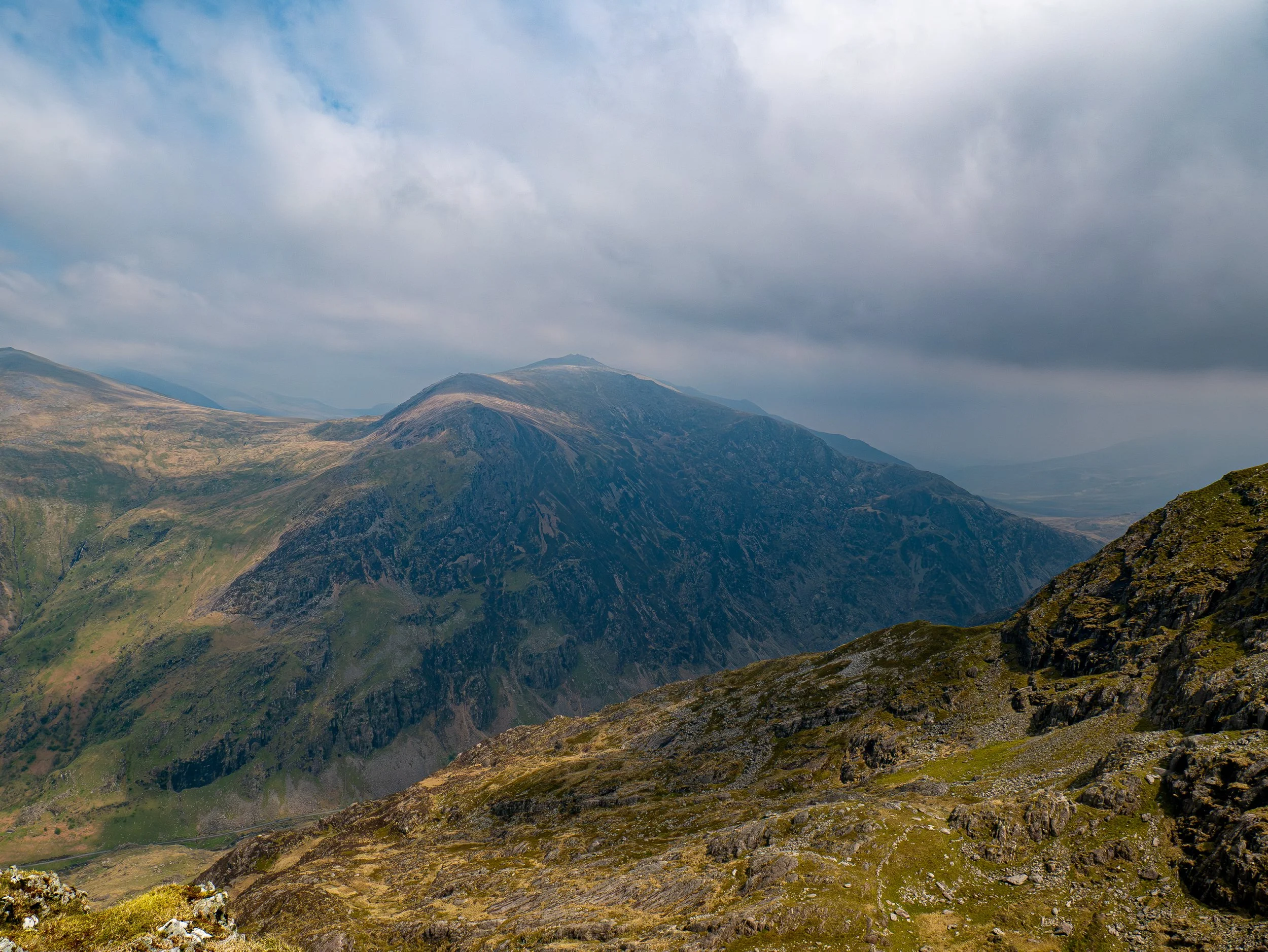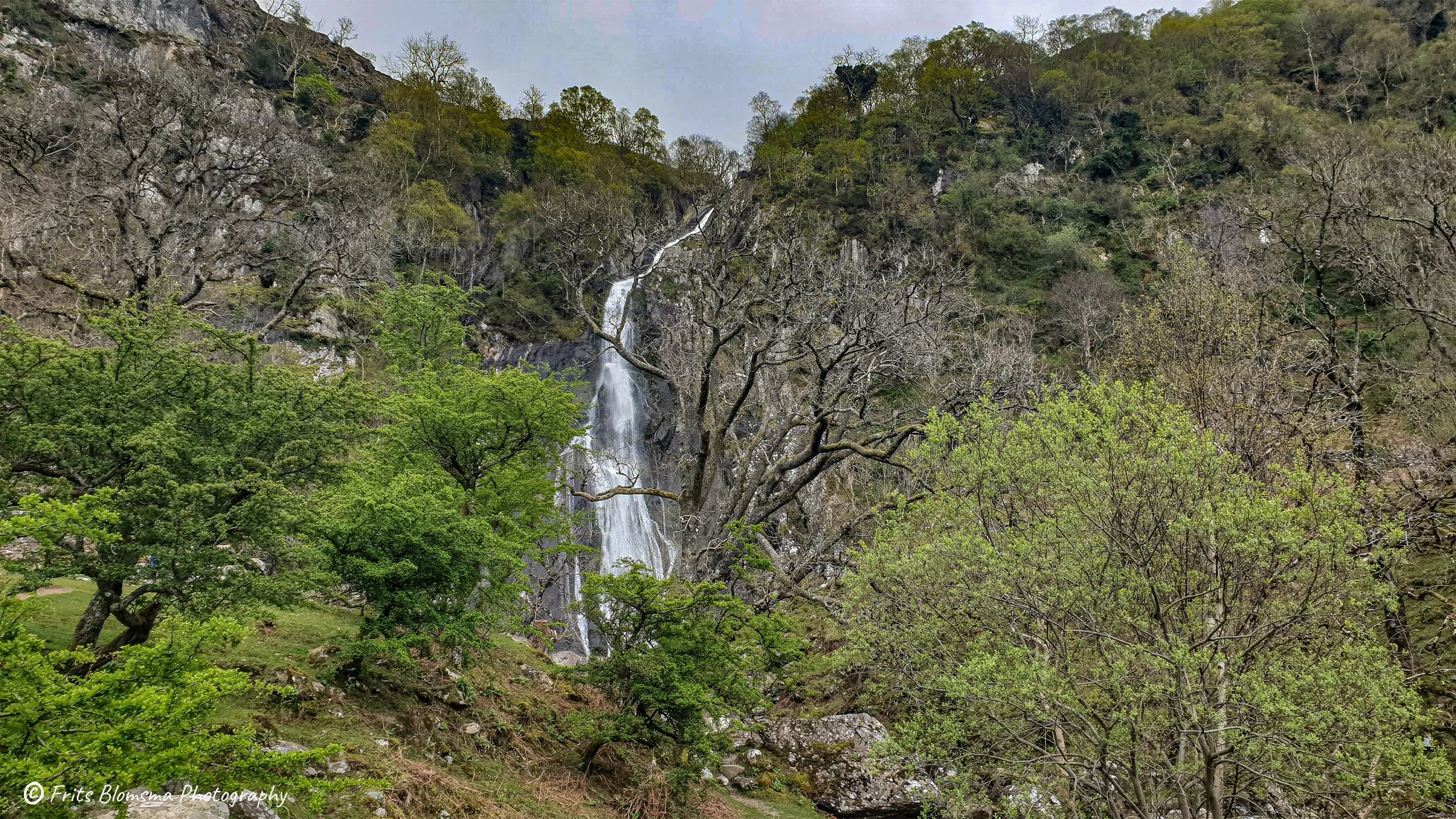
This photograph captures the raw, serene beauty of Aber Falls (Rhaeadr Fawr) in Gwynedd, Wales. It’s a classic example of the dramatic landscape found within the foothills of the Carneddau mountains.
The waterfall itself serves as a striking vertical element against the rugged rock face. In this shot, the water appears as a powerful, white plume, suggesting a healthy flow—likely fueled by the Welsh rain. The way it weaves through the dark, jagged geology creates a beautiful sense of movement.
The image perfectly captures the "awkward but beautiful" transition of mid-spring:
Vibrant New Growth: The bright, lime-green foliage on the foreground trees indicates fresh budding.
Dormant Skeletal Limbs: Contrasting with the new leaves are the stark, grey branches of trees that haven't quite woken up for the season yet, giving the scene a layered, textured feel.
The Terrain: The steep, rocky slopes are peppered with scrub and moss, typical of the high-moisture environment found near the Snowdonia (Eryri) coast.
The photographer, Frits Blomsma, has used the surrounding trees to "frame" the falls, drawing the eye directly to the center. The overcast sky provides a soft, diffused light that prevents harsh shadows, allowing the subtle greys of the stone and the vivid greens of the moss to really pop.
There’s a palpable sense of quiet power here. You can almost hear the roar of the water echoing off the rock walls and feel the cool, damp mist in the air. It’s the kind of place that feels ancient and untouched, reminding us why this specific spot has been a draw for hikers and nature lovers for centuries.
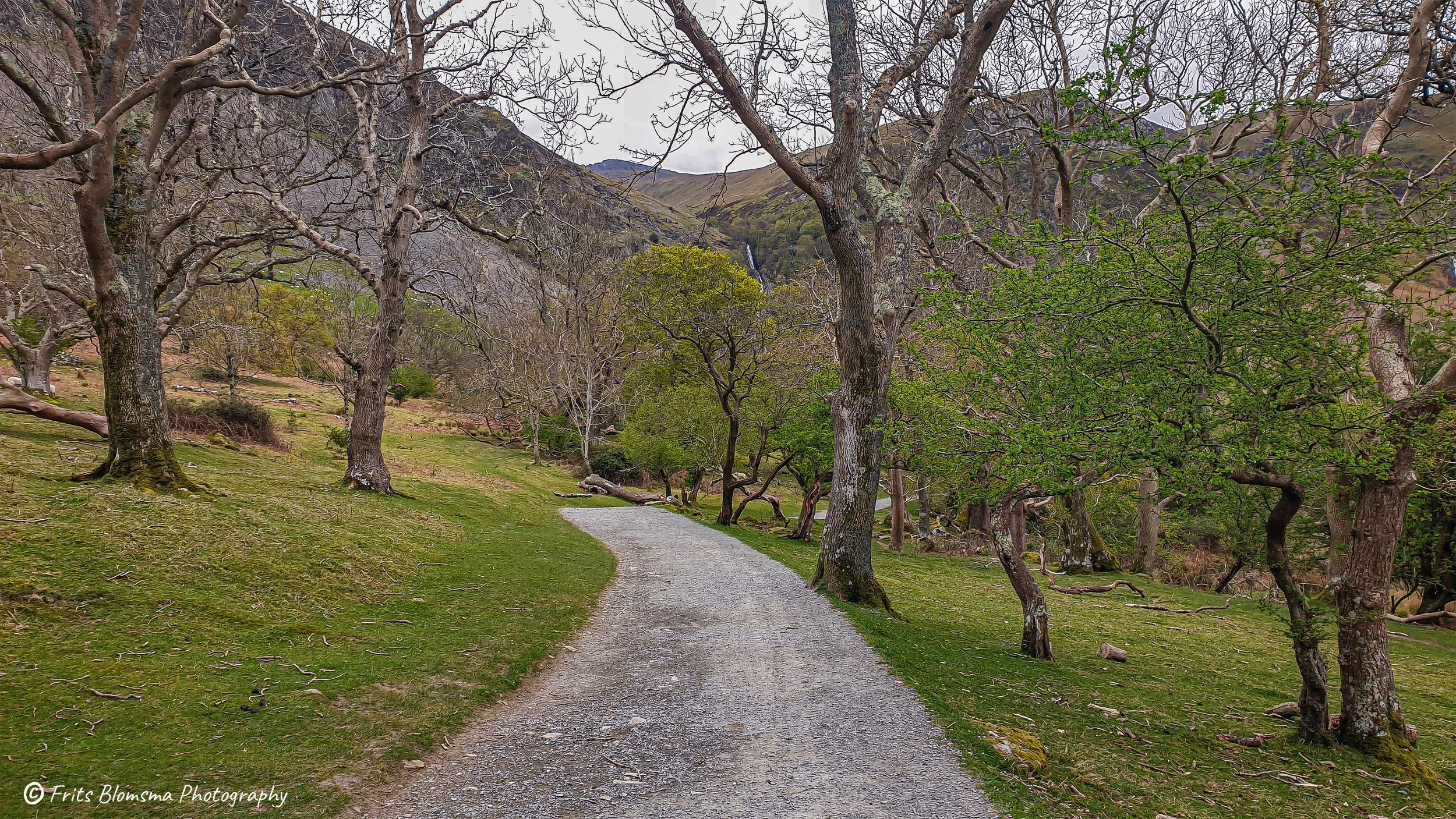
This image captures the quiet, rugged beauty of Snowdonia (Eryri) during that delicate transition between late winter and early spring. The scene likely sits within one of the region’s ancient glacial valleys, where the landscape feels both timeless and raw.
The Path Forward: A winding gravel track serves as the central anchor of the photo, drawing the eye toward the shadowed valley and the distant mountain slopes. It suggests a journey into the heart of the Welsh wilderness.
The Ancient Canopy: The trees here—likely sessile oaks or birch common to the area—exhibit the dramatic, twisted forms typical of high-exposure environments. Some remain skeletal and bare, while others are just beginning to "leaf out" with that brilliant, neon-green foliage unique to springtime.
The Backdrop: In the distance, the rugged, scree-covered mountainside rises against a moody, overcast sky. You can even spot a slender silver thread of a waterfall cascading down the rocks in the center-right background, a testament to the region's high rainfall and dramatic geology.
The photography by Frits Blomsma emphasizes the natural textures of the park: the mossy bark, the sparse grass nibbled short (likely by local sheep), and the cool, diffused light that makes the colors pop without harsh shadows.
Fun Fact: Snowdonia is home to some of the rarest temperate rainforests in the UK. The presence of moss and lichen on these trunks indicates high air quality and a very damp, oceanic climate.
This looks like the perfect day for a low-level valley walk, perhaps near Llanberis or the Ogwen Valley, where the scale of the mountains makes everything else feel small and quiet.
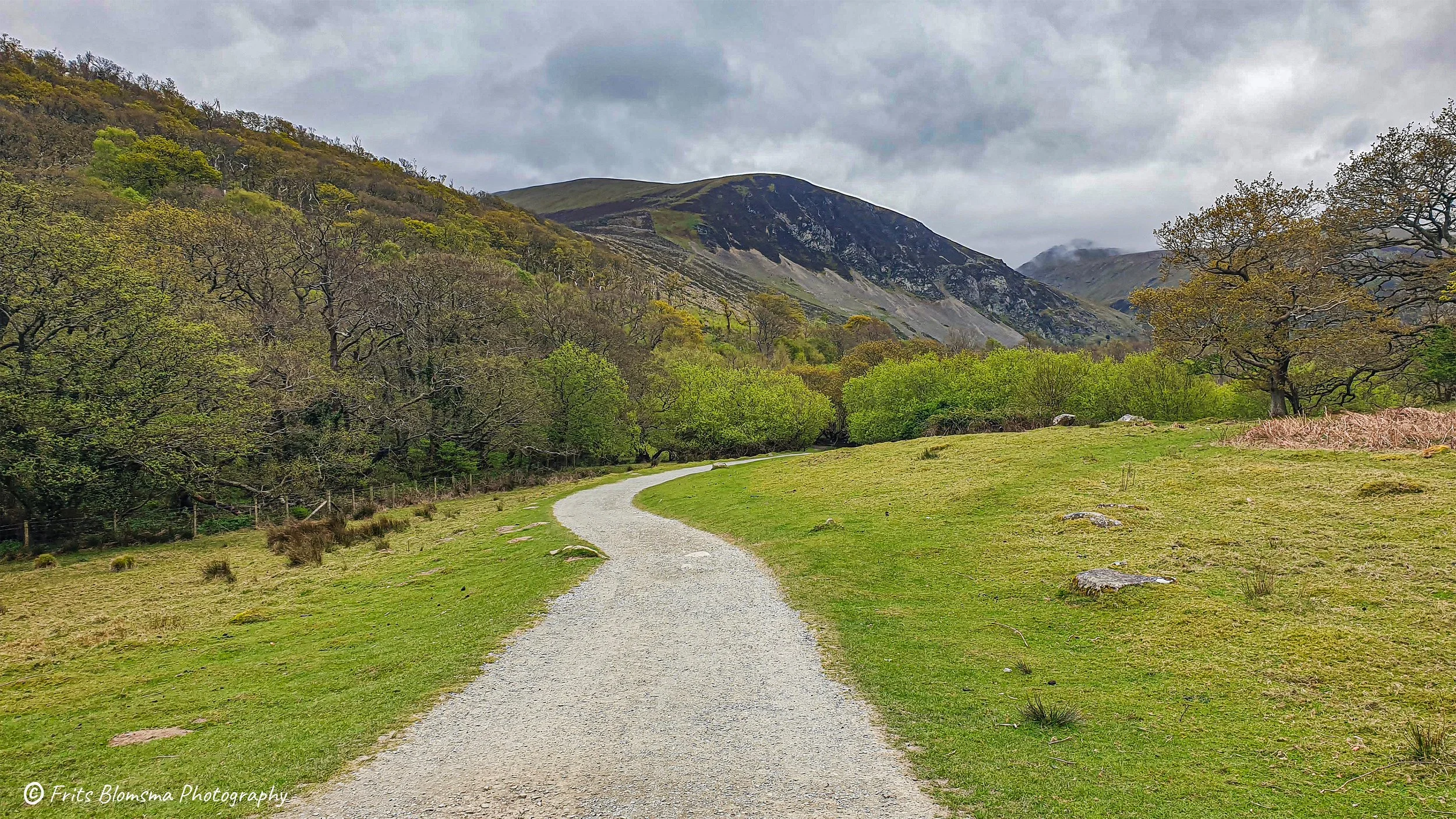
That looks like a classic, moody day in Snowdonia (Eryri) National Park. The photo captures that specific "shoulder season" vibe—likely mid-to-late spring—where the valley floor is starting to pop with neon greens while the higher peaks still hold onto their rugged, wintry browns.
Here is a breakdown of what makes this scene so quintessential to the Welsh landscape:
The gravel path creates a perfect S-curve, drawing the eye from the foreground deep into the heart of the valley. It gives the viewer a sense of journey—inviting you to follow the bend and see what’s hiding behind that next cluster of trees.
The Flora: The trees on the left show the skeletal remains of winter transitioning into spring. The bright, almost lime-green shrubs in the middle ground are a sharp contrast against the darker, weathered slopes of the mountain behind them.
The Terrain: You can see the characteristic scree slopes (loose rock fragments) on the mountainside in the background. This is a hallmark of Snowdonia’s glacial history, where the elements have slowly carved away at the volcanic rock.
The Atmosphere: The heavy, low-hanging clouds are very typical for North Wales. They provide a soft, diffused light that makes the greens look more saturated and gives the mountains a sense of brooding scale.
Unlike the high-traffic summit of Snowdon (Yr Wyddfa) itself, this image captures the tranquility of the lower trails. It’s the kind of place where the only sounds are the crunch of the gravel underfoot and the distant bleating of sheep on the hillsides.
Fun Fact: The name "Snowdonia" comes from the Old English word for "Snow Hill," but the Welsh name Eryri is thought to derive from Eryr (Eagle), suggesting these were once the "Highlands of the Eagles."
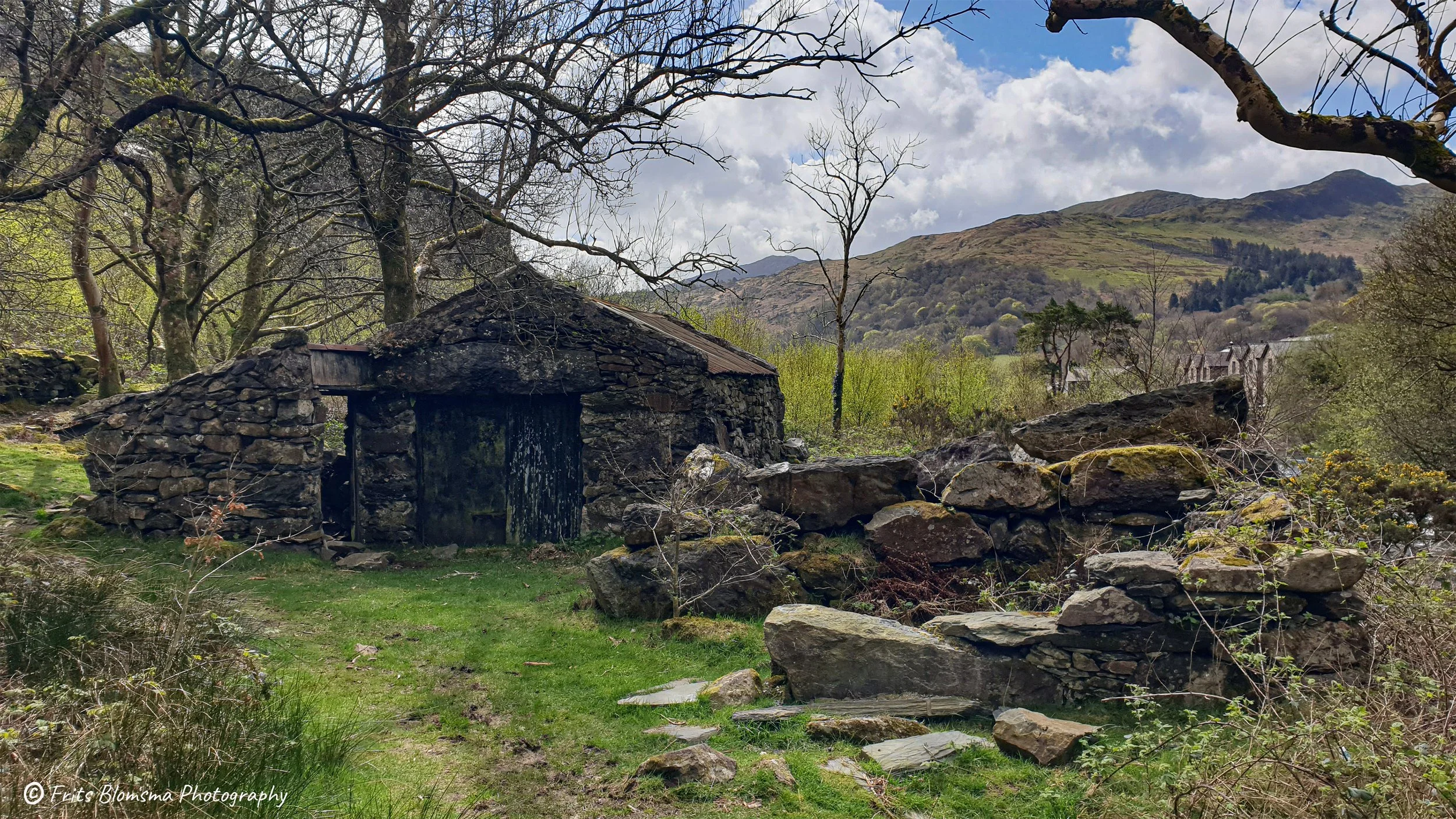
This image captures the rugged, enduring spirit of Snowdonia (Eryri), where the hand of man and the raw power of nature have spent centuries in a slow dance.
The focal point is a traditional dry-stone outbuilding, likely an old shepherd's hut or a store for mining tools, nestled into the valley. These structures are iconic to the Welsh landscape, built from the very mountains they sit upon without a drop of mortar to hold them together.
The Architecture of Resilience: The building’s low profile and thick stone walls are designed to withstand the fierce Atlantic weather systems that frequently roll through the Gwynedd peaks. The corrugated roof and weathered wooden door suggest it may still see occasional use, even if its primary era has passed.
The Seasonal Transition: You’ve caught the park in that beautiful "in-between" stage of mid-April. The trees are still skeletal, showing off their twisted, moss-covered limbs, but the vibrant green of the grass and the budding gorse in the background signal that spring is finally taking hold.
The Backdrop: In the distance, the undulating ridges of the Snowdonia range rise under a classic "fair-weather" sky—dramatic white cumulus clouds with patches of deep blue. The soft lighting brings out the texture of the scree slopes and the distant valley settlements.
There is a profound sense of "Hiraeth" here—a Welsh word that describes a deep longing for a home or a time that may no longer exist. The ruins in the foreground, merging back into the earth, remind us of the region's industrious past, from sheep farming to slate quarrying.
It’s a quiet, grounding scene that makes you want to lace up your boots and see what lies over that next ridge.
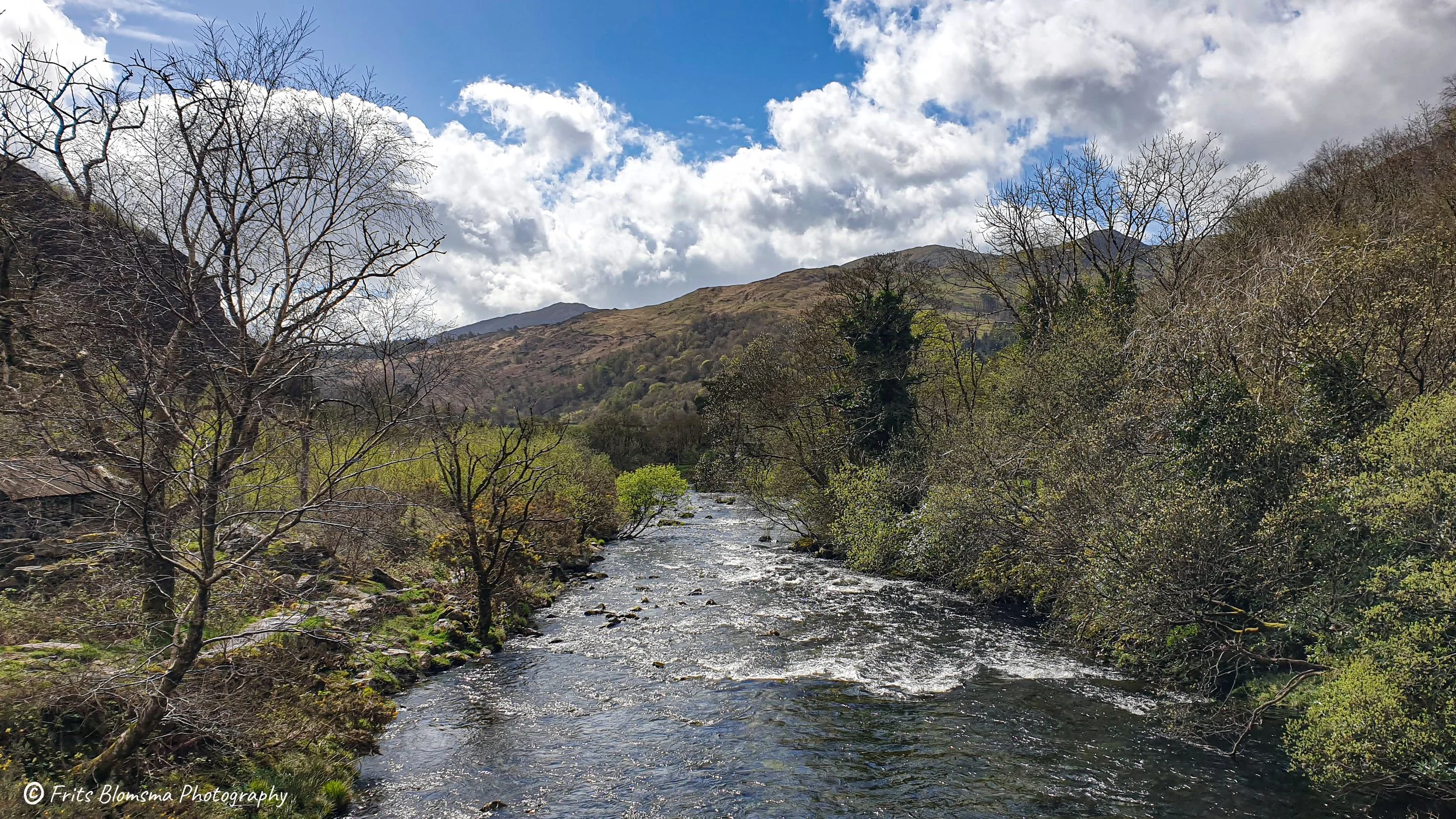
This photograph captures the raw, storied beauty of Snowdonia (Eryri), specifically highlighting the transition between the rugged mountain landscape and the lush river valleys. The image feels like a classic Welsh spring day—dramatic, bright, and full of movement.
The Waterway: The river dominates the center, its surface broken by white water and ripples that suggest a brisk current. The clarity of the light hitting the water creates a sparkling "silver" effect, contrasting with the deep shadows of the riverbanks.
The Flora: We see a mix of skeletal, bare-branched trees in the foreground and the soft, lime-green budding of spring on others. The presence of gorse and the dense, dark ivy climbing the more mature trees are quintessential sights in the North Wales countryside.
The Backdrop: In the distance, the rolling, sun-drenched foothills of the Snowdon range rise against a dynamic sky. The lighting here is particularly effective, showcasing the golden-brown hues of the dormant winter grasses as they wait to turn green.
The sky plays a major role in the mood of this shot. Those cumulus clouds are heavy and white, typical of the maritime climate in the region where weather shifts by the minute. The way the sunlight breaks through to illuminate the valley floor while leaving parts of the mountain in shadow creates a sense of immense scale and depth.
On the far left, you can just make out the dark, weathered stone of what appears to be an old slate structure or dry-stone wall. This is a subtle nod to the industrial heritage of the area, where man-made structures are often slowly being reclaimed by the wild Welsh landscape.
Photography Note: The composition uses the river as a powerful "leading line," drawing the viewer's eye from the bottom of the frame all the way back toward the mountain peaks, creating a perfect sense of immersion in the wilderness.
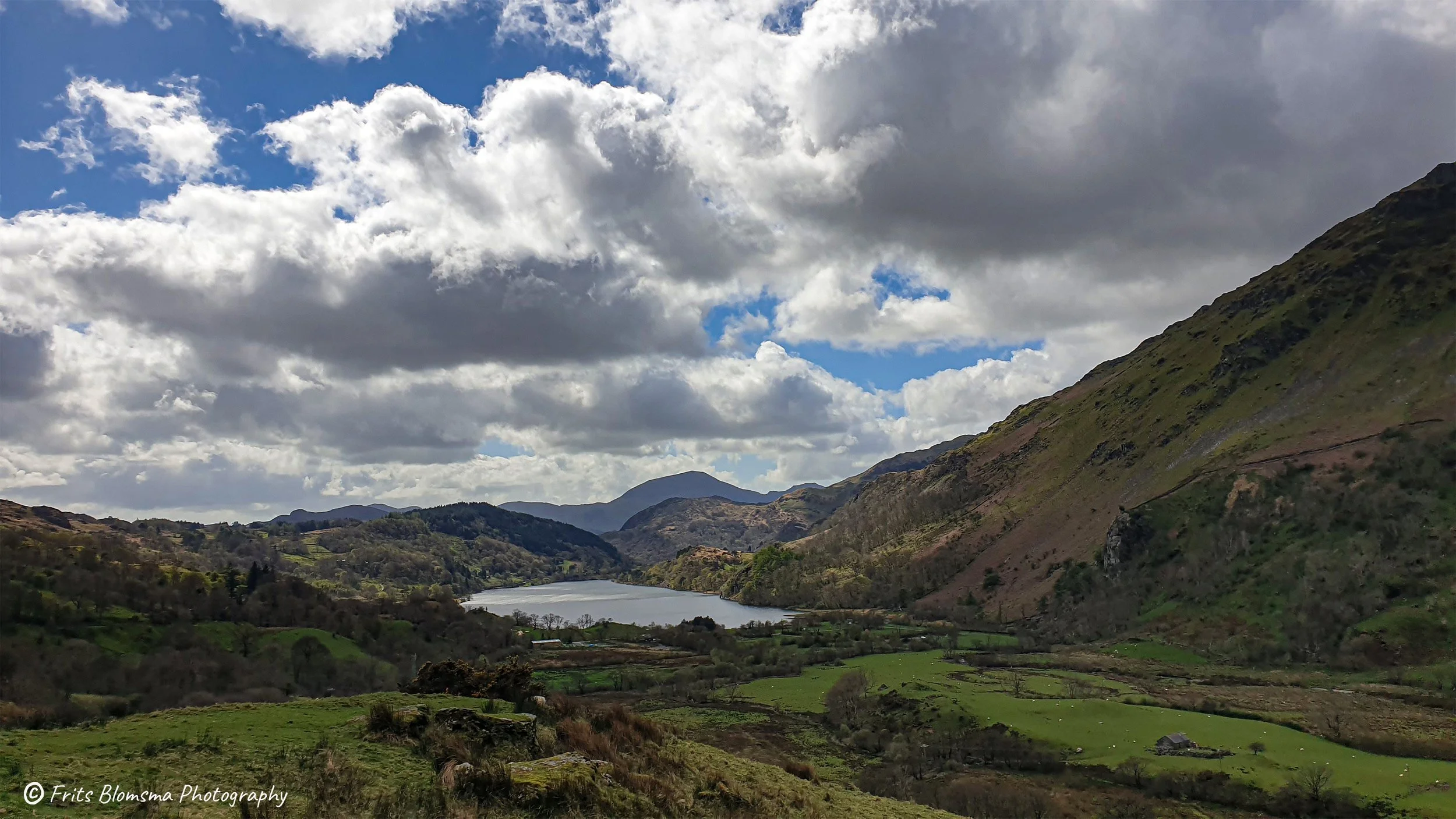
Snowdon Moutains, Wales.
This photograph captures the quiet, atmospheric beauty of Snowdonia (Eryri), likely taken during the transitional dampness of early spring or late autumn. It perfectly illustrates why the Welsh landscape is often described as "mythic."
The defining feature of this shot is the temperature inversion or "valley mist." The way the clouds cling to the valley floor while the hillsides remain clear creates a sense of depth and mystery. It gives the impression that the landscape is breathing.
The Natural Arch: The gnarled, moss-covered branch in the upper right acts as a fantastic "frame within a frame." It guides the viewer’s eye toward the center of the valley.
Layering: The photo excels at showing the different planes of the Welsh countryside:
Foreground: Sharp, dark evergreens and the reaching branch.
Midground: The rolling, forested slopes showing a mix of deciduous trees (still bare) and darker conifers.
Background: The soft, hazy blue sky and rolling peaks disappearing into the clouds.
The image leans into a cool, earthy palette. You have the deep mossy greens and slate browns of the hills contrasted against the vibrant, crisp blue of the sky. This high-contrast sky suggests a break in the typical Welsh rain—that fleeting moment of "fine weather" photographers chase.
There is a specific stillness in this photo. Unlike the jagged, dramatic peaks of Tryfan or Snowdon itself, this view highlights the softer, wooded valleys of the national park (perhaps near Betws-y-Coed or the Conwy Valley).
It feels less like a tourist postcard and more like a quiet, local secret—a view from a high window or a hiking trail just as the morning sun starts to burn off the dew.
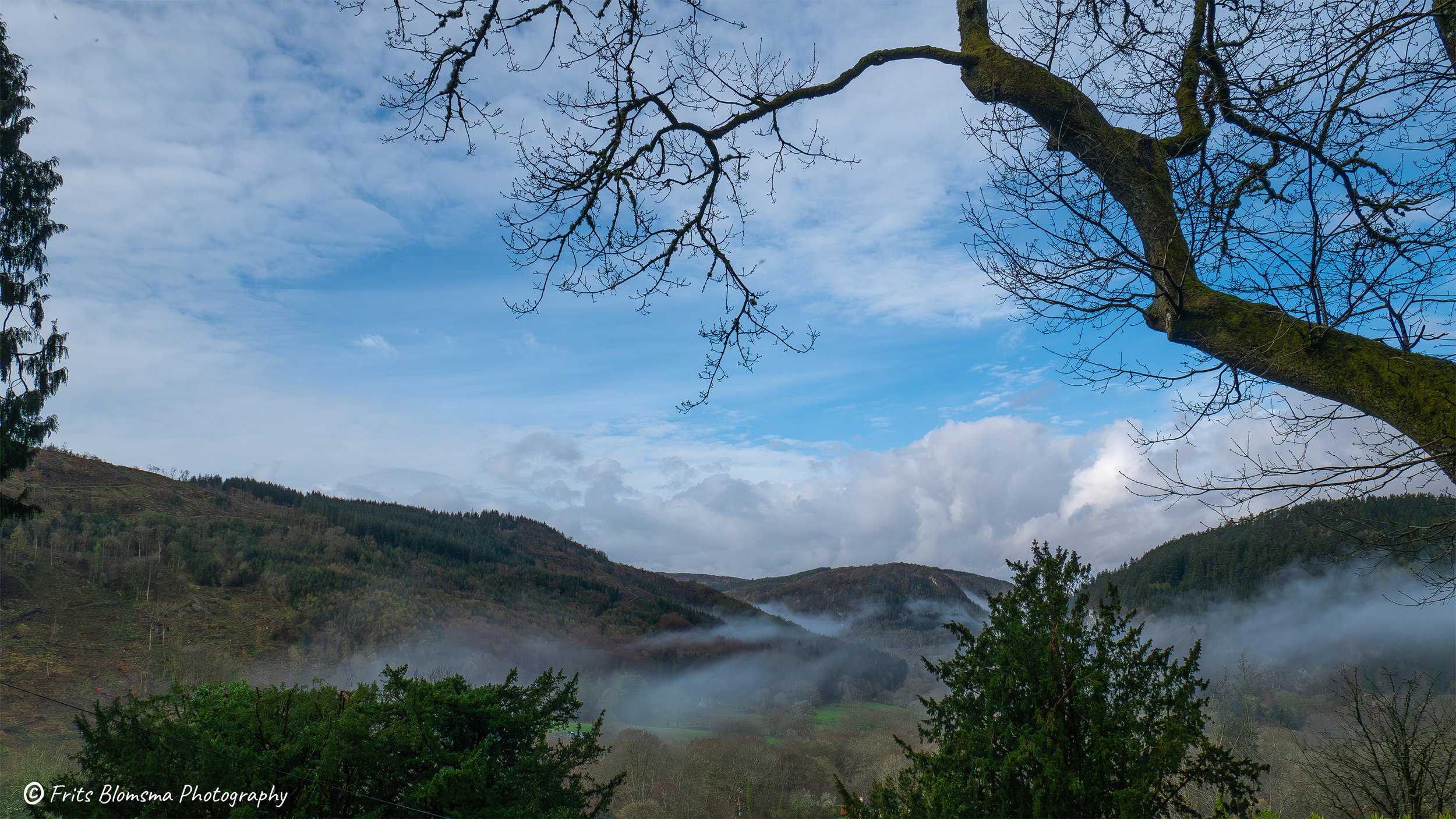
Snowdon Moutains, Wales.
This photograph captures the quiet, atmospheric beauty of Snowdonia (Eryri), likely taken during the transitional dampness of early spring or late autumn. It perfectly illustrates why the Welsh landscape is often described as "mythic."
The defining feature of this shot is the temperature inversion or "valley mist." The way the clouds cling to the valley floor while the hillsides remain clear creates a sense of depth and mystery. It gives the impression that the landscape is breathing.
The Natural Arch: The gnarled, moss-covered branch in the upper right acts as a fantastic "frame within a frame." It guides the viewer’s eye toward the center of the valley.
Layering: The photo excels at showing the different planes of the Welsh countryside:
Foreground: Sharp, dark evergreens and the reaching branch.
Midground: The rolling, forested slopes showing a mix of deciduous trees (still bare) and darker conifers.
Background: The soft, hazy blue sky and rolling peaks disappearing into the clouds.
The image leans into a cool, earthy palette. You have the deep mossy greens and slate browns of the hills contrasted against the vibrant, crisp blue of the sky. This high-contrast sky suggests a break in the typical Welsh rain—that fleeting moment of "fine weather" photographers chase.
There is a specific stillness in this photo. Unlike the jagged, dramatic peaks of Tryfan or Snowdon itself, this view highlights the softer, wooded valleys of the national park (perhaps near Betws-y-Coed or the Conwy Valley).
It feels less like a tourist postcard and more like a quiet, local secret—a view from a high window or a hiking trail just as the morning sun starts to burn off the dew.
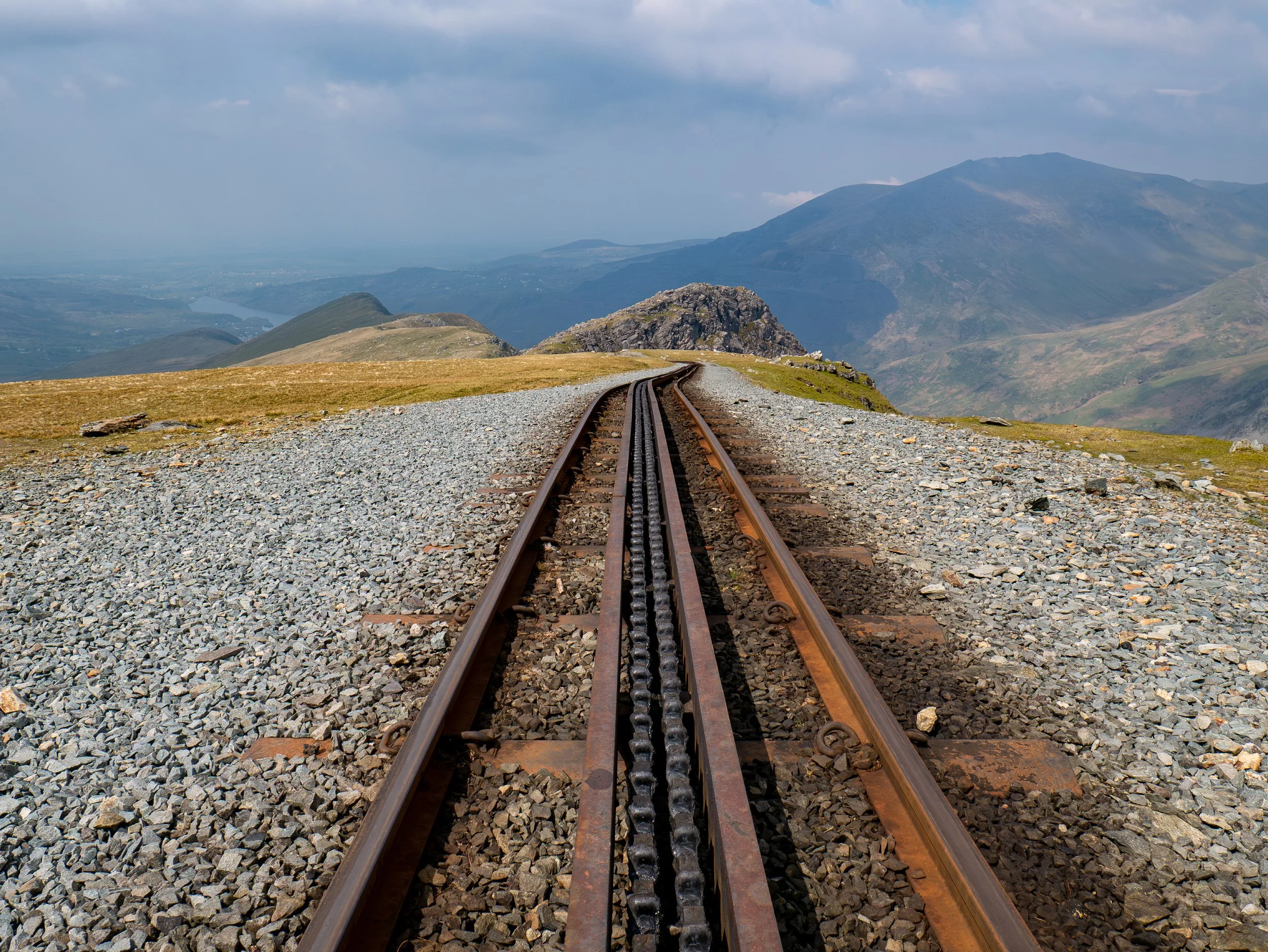
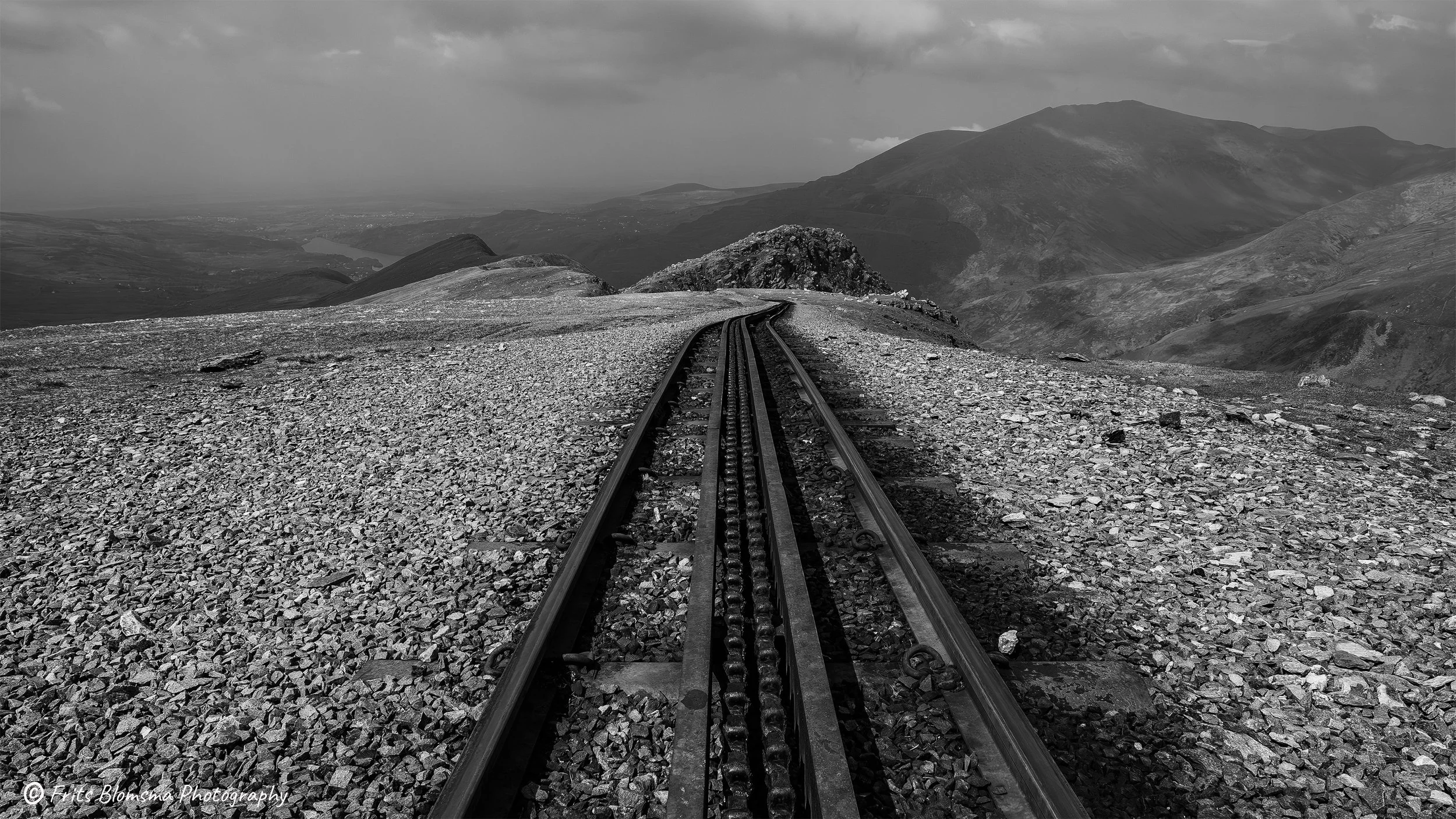
Snowdon Moutains, Wales.
This striking black-and-white photograph by Frits Blomsma captures the rugged, industrial beauty of the Snowdon Mountain Railway (Rheilffordd yr Wyddfa) in North Wales.
The image focuses on the unique track engineering required to scale the highest peak in Wales and England. Here is a breakdown of what makes this scene and its history so compelling:
The most prominent feature in the foreground is the rack-and-pinion system. Because the mountain’s gradients are too steep for standard "adhesion" (friction between smooth wheels and rails), the railway uses the Abt system, designed by Swiss engineer Roman Abt.
The "Ladder" in the Middle: Those two offset toothed bars in the center of the track allow a cogwheel (pinion) on the locomotive to "climb" the mountain.
The Gripper Rails: If you look closely at the sides of the central rack, you can see the safety grippers. Following a derailment on the railway’s opening day in 1896, these "L" shaped rails were added so that the train remains literally hooked to the track, preventing it from lifting off even in high winds.
The tracks lead the eye toward the dramatic silhouettes of the Snowdonia (Eryri) range.
Perspective: The photo appears to be taken looking down from a high point—likely near the Clogwyn station or approaching the Summit.
The Terrain: The ground is covered in treacherous, jagged slate and scree, typical of the volcanic geology of the region. The monochromatic edit emphasizes the harsh, wind-swept textures of the mountain, stripping away the greenery to highlight the raw "bones" of the land.
Blomsma’s choice of black and white creates a timeless, almost archival feel. It strips the "tourist" element away, leaving only the contrast between the rigid, man-made geometry of the iron rails and the chaotic, organic shapes of the mountainside. The leading lines of the track create a powerful sense of journey, disappearing into the mist and peaks in the distance.
Fun Fact: This is the only public rack-and-pinion railway in the United Kingdom. The locomotives (both vintage steam and modern diesel) don’t actually pull the carriages; for safety reasons, they push them up the mountain and lead them back down to ensure they never "run away" down the slope.
No results match your search. Try removing a few filters.