
 Image 1 of 1
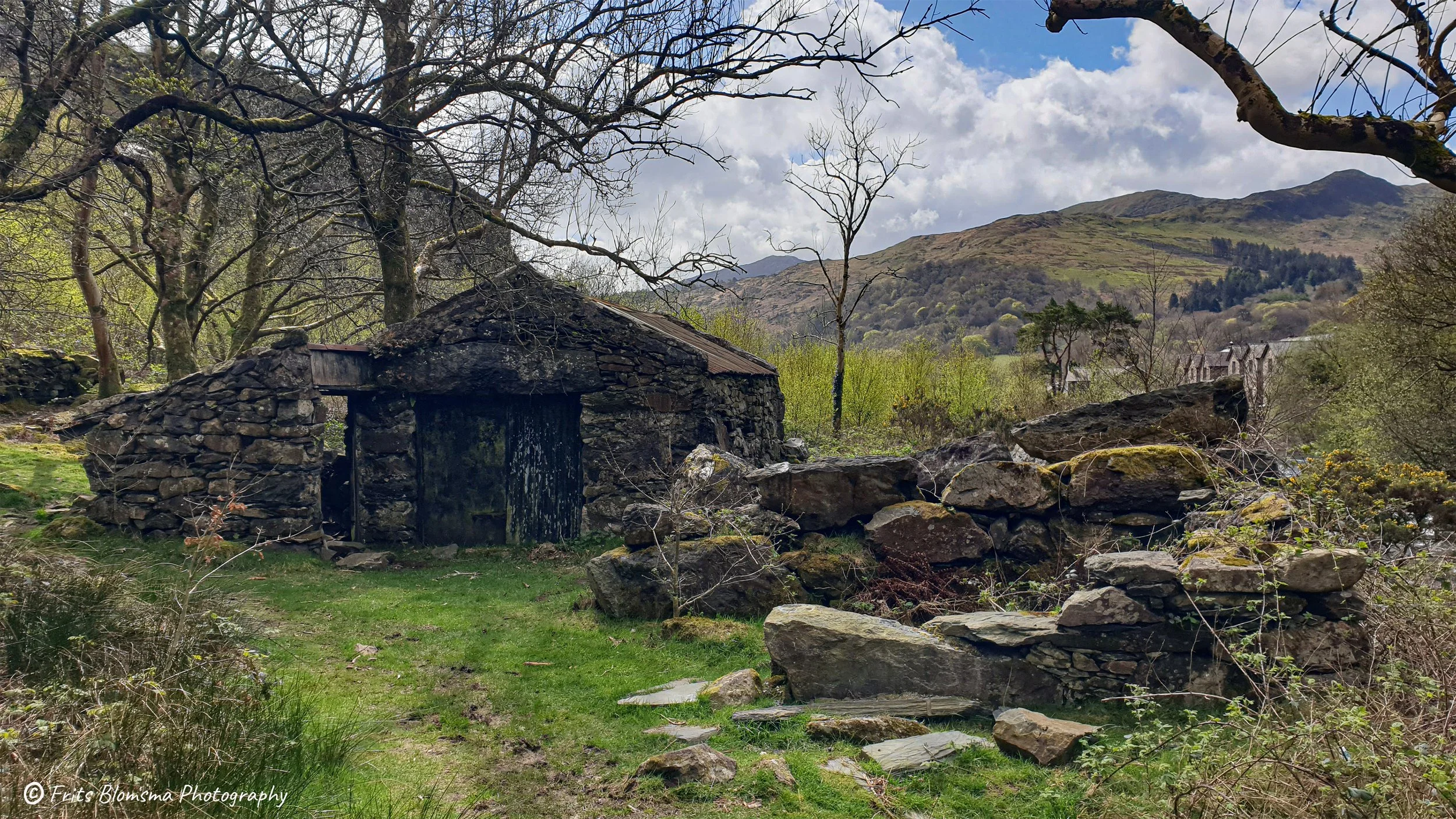
This image captures the rugged, enduring spirit of Snowdonia (Eryri), where the hand of man and the raw power of nature have spent centuries in a slow dance.
The focal point is a traditional dry-stone outbuilding, likely an old shepherd's hut or a store for mining tools, nestled into the valley. These structures are iconic to the Welsh landscape, built from the very mountains they sit upon without a drop of mortar to hold them together.
The Architecture of Resilience: The building’s low profile and thick stone walls are designed to withstand the fierce Atlantic weather systems that frequently roll through the Gwynedd peaks. The corrugated roof and weathered wooden door suggest it may still see occasional use, even if its primary era has passed.
The Seasonal Transition: You’ve caught the park in that beautiful "in-between" stage of mid-April. The trees are still skeletal, showing off their twisted, moss-covered limbs, but the vibrant green of the grass and the budding gorse in the background signal that spring is finally taking hold.
The Backdrop: In the distance, the undulating ridges of the Snowdonia range rise under a classic "fair-weather" sky—dramatic white cumulus clouds with patches of deep blue. The soft lighting brings out the texture of the scree slopes and the distant valley settlements.
There is a profound sense of "Hiraeth" here—a Welsh word that describes a deep longing for a home or a time that may no longer exist. The ruins in the foreground, merging back into the earth, remind us of the region's industrious past, from sheep farming to slate quarrying.
It’s a quiet, grounding scene that makes you want to lace up your boots and see what lies over that next ridge.
This image captures the rugged, enduring spirit of Snowdonia (Eryri), where the hand of man and the raw power of nature have spent centuries in a slow dance.
The focal point is a traditional dry-stone outbuilding, likely an old shepherd's hut or a store for mining tools, nestled into the valley. These structures are iconic to the Welsh landscape, built from the very mountains they sit upon without a drop of mortar to hold them together.
The Architecture of Resilience: The building’s low profile and thick stone walls are designed to withstand the fierce Atlantic weather systems that frequently roll through the Gwynedd peaks. The corrugated roof and weathered wooden door suggest it may still see occasional use, even if its primary era has passed.
The Seasonal Transition: You’ve caught the park in that beautiful "in-between" stage of mid-April. The trees are still skeletal, showing off their twisted, moss-covered limbs, but the vibrant green of the grass and the budding gorse in the background signal that spring is finally taking hold.
The Backdrop: In the distance, the undulating ridges of the Snowdonia range rise under a classic "fair-weather" sky—dramatic white cumulus clouds with patches of deep blue. The soft lighting brings out the texture of the scree slopes and the distant valley settlements.
There is a profound sense of "Hiraeth" here—a Welsh word that describes a deep longing for a home or a time that may no longer exist. The ruins in the foreground, merging back into the earth, remind us of the region's industrious past, from sheep farming to slate quarrying.
It’s a quiet, grounding scene that makes you want to lace up your boots and see what lies over that next ridge.