
 Image 1 of 1
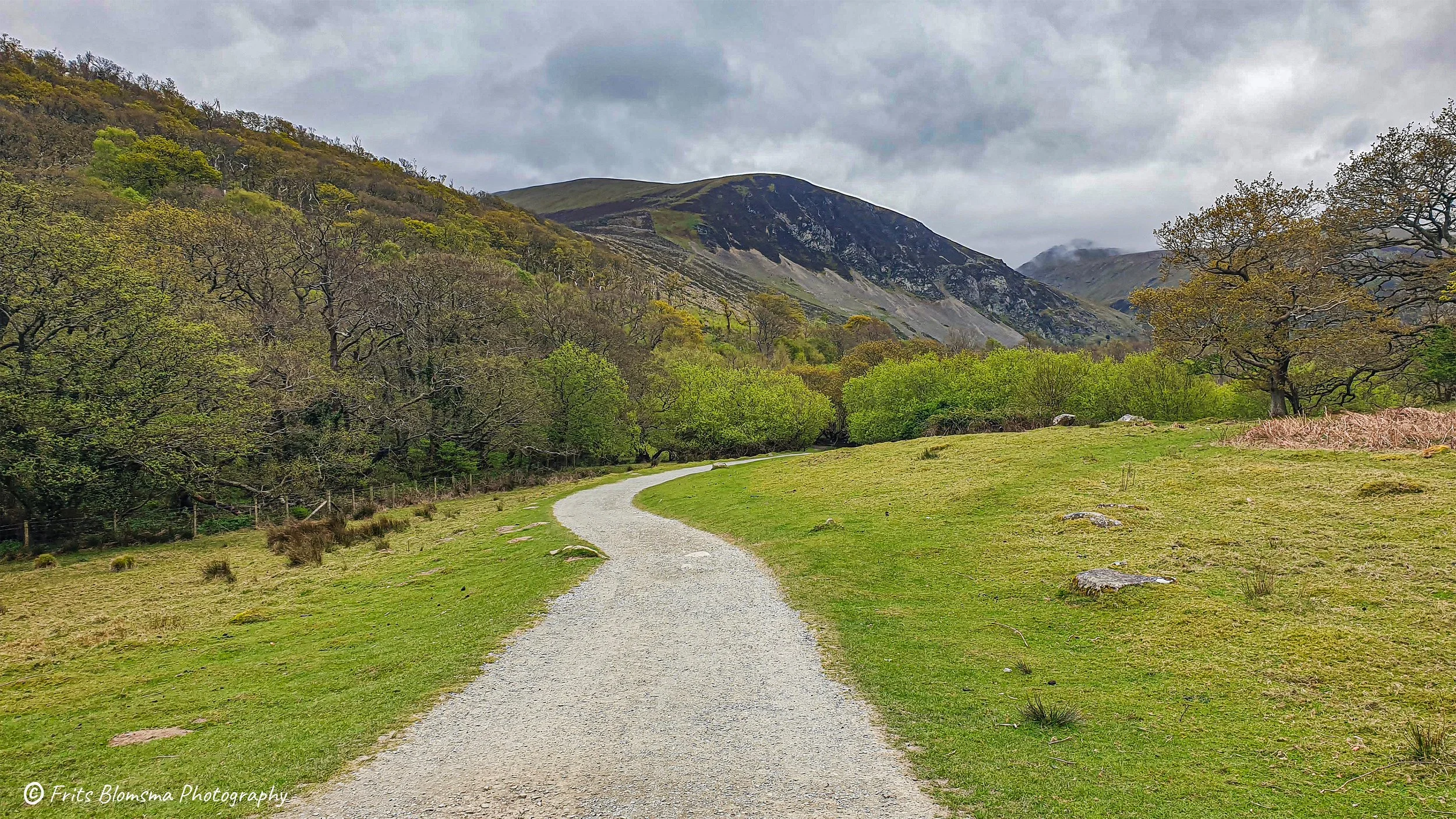
That looks like a classic, moody day in Snowdonia (Eryri) National Park. The photo captures that specific "shoulder season" vibe—likely mid-to-late spring—where the valley floor is starting to pop with neon greens while the higher peaks still hold onto their rugged, wintry browns.
Here is a breakdown of what makes this scene so quintessential to the Welsh landscape:
The gravel path creates a perfect S-curve, drawing the eye from the foreground deep into the heart of the valley. It gives the viewer a sense of journey—inviting you to follow the bend and see what’s hiding behind that next cluster of trees.
The Flora: The trees on the left show the skeletal remains of winter transitioning into spring. The bright, almost lime-green shrubs in the middle ground are a sharp contrast against the darker, weathered slopes of the mountain behind them.
The Terrain: You can see the characteristic scree slopes (loose rock fragments) on the mountainside in the background. This is a hallmark of Snowdonia’s glacial history, where the elements have slowly carved away at the volcanic rock.
The Atmosphere: The heavy, low-hanging clouds are very typical for North Wales. They provide a soft, diffused light that makes the greens look more saturated and gives the mountains a sense of brooding scale.
Unlike the high-traffic summit of Snowdon (Yr Wyddfa) itself, this image captures the tranquility of the lower trails. It’s the kind of place where the only sounds are the crunch of the gravel underfoot and the distant bleating of sheep on the hillsides.
Fun Fact: The name "Snowdonia" comes from the Old English word for "Snow Hill," but the Welsh name Eryri is thought to derive from Eryr (Eagle), suggesting these were once the "Highlands of the Eagles."
That looks like a classic, moody day in Snowdonia (Eryri) National Park. The photo captures that specific "shoulder season" vibe—likely mid-to-late spring—where the valley floor is starting to pop with neon greens while the higher peaks still hold onto their rugged, wintry browns.
Here is a breakdown of what makes this scene so quintessential to the Welsh landscape:
The gravel path creates a perfect S-curve, drawing the eye from the foreground deep into the heart of the valley. It gives the viewer a sense of journey—inviting you to follow the bend and see what’s hiding behind that next cluster of trees.
The Flora: The trees on the left show the skeletal remains of winter transitioning into spring. The bright, almost lime-green shrubs in the middle ground are a sharp contrast against the darker, weathered slopes of the mountain behind them.
The Terrain: You can see the characteristic scree slopes (loose rock fragments) on the mountainside in the background. This is a hallmark of Snowdonia’s glacial history, where the elements have slowly carved away at the volcanic rock.
The Atmosphere: The heavy, low-hanging clouds are very typical for North Wales. They provide a soft, diffused light that makes the greens look more saturated and gives the mountains a sense of brooding scale.
Unlike the high-traffic summit of Snowdon (Yr Wyddfa) itself, this image captures the tranquility of the lower trails. It’s the kind of place where the only sounds are the crunch of the gravel underfoot and the distant bleating of sheep on the hillsides.
Fun Fact: The name "Snowdonia" comes from the Old English word for "Snow Hill," but the Welsh name Eryri is thought to derive from Eryr (Eagle), suggesting these were once the "Highlands of the Eagles."