
 Image 1 of 1
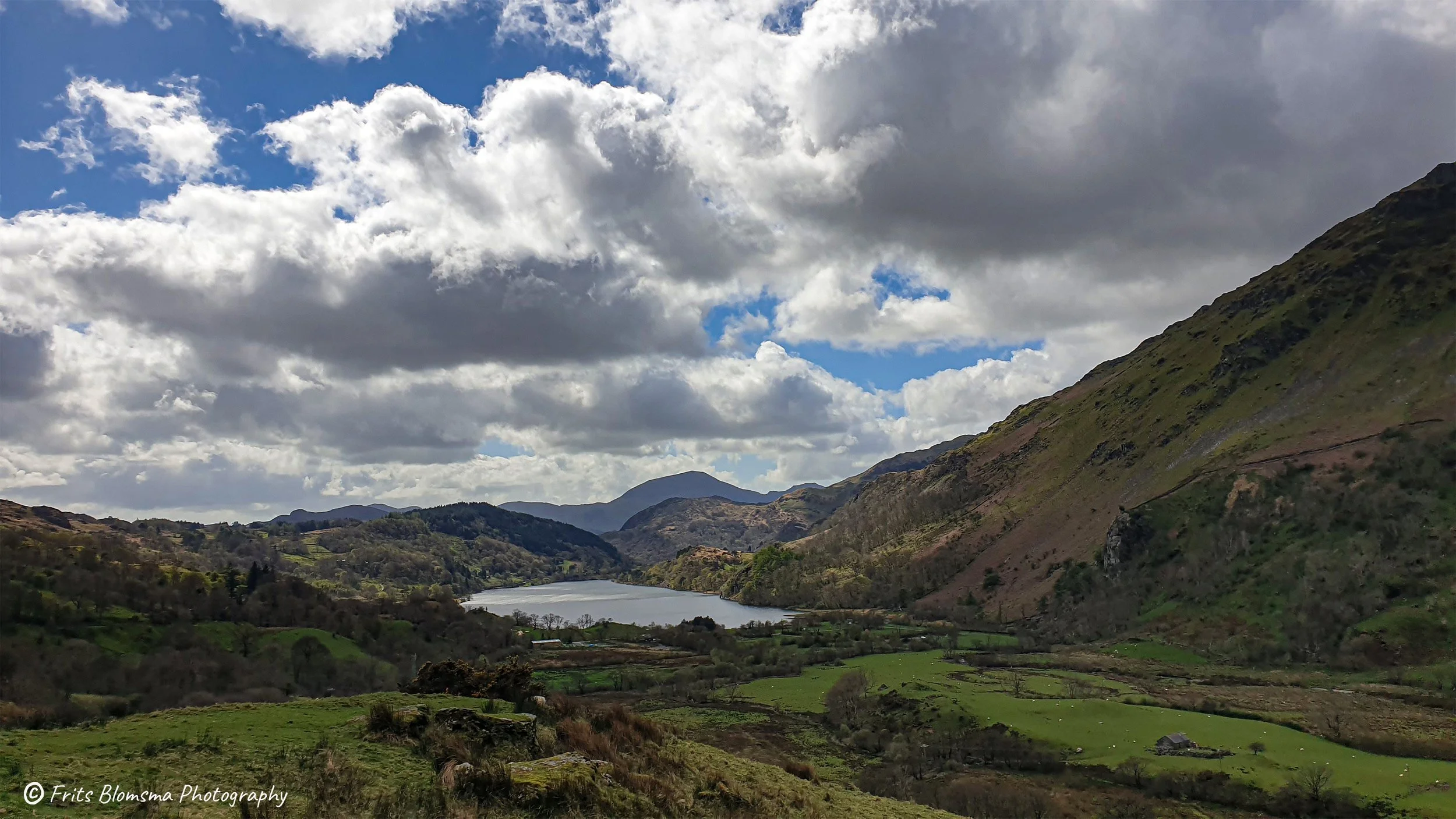
Snowdon Moutains, Wales.
This photograph captures the quiet, atmospheric beauty of Snowdonia (Eryri), likely taken during the transitional dampness of early spring or late autumn. It perfectly illustrates why the Welsh landscape is often described as "mythic."
The defining feature of this shot is the temperature inversion or "valley mist." The way the clouds cling to the valley floor while the hillsides remain clear creates a sense of depth and mystery. It gives the impression that the landscape is breathing.
The Natural Arch: The gnarled, moss-covered branch in the upper right acts as a fantastic "frame within a frame." It guides the viewer’s eye toward the center of the valley.
Layering: The photo excels at showing the different planes of the Welsh countryside:
Foreground: Sharp, dark evergreens and the reaching branch.
Midground: The rolling, forested slopes showing a mix of deciduous trees (still bare) and darker conifers.
Background: The soft, hazy blue sky and rolling peaks disappearing into the clouds.
The image leans into a cool, earthy palette. You have the deep mossy greens and slate browns of the hills contrasted against the vibrant, crisp blue of the sky. This high-contrast sky suggests a break in the typical Welsh rain—that fleeting moment of "fine weather" photographers chase.
There is a specific stillness in this photo. Unlike the jagged, dramatic peaks of Tryfan or Snowdon itself, this view highlights the softer, wooded valleys of the national park (perhaps near Betws-y-Coed or the Conwy Valley).
It feels less like a tourist postcard and more like a quiet, local secret—a view from a high window or a hiking trail just as the morning sun starts to burn off the dew.
Snowdon Moutains, Wales.
This photograph captures the quiet, atmospheric beauty of Snowdonia (Eryri), likely taken during the transitional dampness of early spring or late autumn. It perfectly illustrates why the Welsh landscape is often described as "mythic."
The defining feature of this shot is the temperature inversion or "valley mist." The way the clouds cling to the valley floor while the hillsides remain clear creates a sense of depth and mystery. It gives the impression that the landscape is breathing.
The Natural Arch: The gnarled, moss-covered branch in the upper right acts as a fantastic "frame within a frame." It guides the viewer’s eye toward the center of the valley.
Layering: The photo excels at showing the different planes of the Welsh countryside:
Foreground: Sharp, dark evergreens and the reaching branch.
Midground: The rolling, forested slopes showing a mix of deciduous trees (still bare) and darker conifers.
Background: The soft, hazy blue sky and rolling peaks disappearing into the clouds.
The image leans into a cool, earthy palette. You have the deep mossy greens and slate browns of the hills contrasted against the vibrant, crisp blue of the sky. This high-contrast sky suggests a break in the typical Welsh rain—that fleeting moment of "fine weather" photographers chase.
There is a specific stillness in this photo. Unlike the jagged, dramatic peaks of Tryfan or Snowdon itself, this view highlights the softer, wooded valleys of the national park (perhaps near Betws-y-Coed or the Conwy Valley).
It feels less like a tourist postcard and more like a quiet, local secret—a view from a high window or a hiking trail just as the morning sun starts to burn off the dew.