
 Image 1 of 2
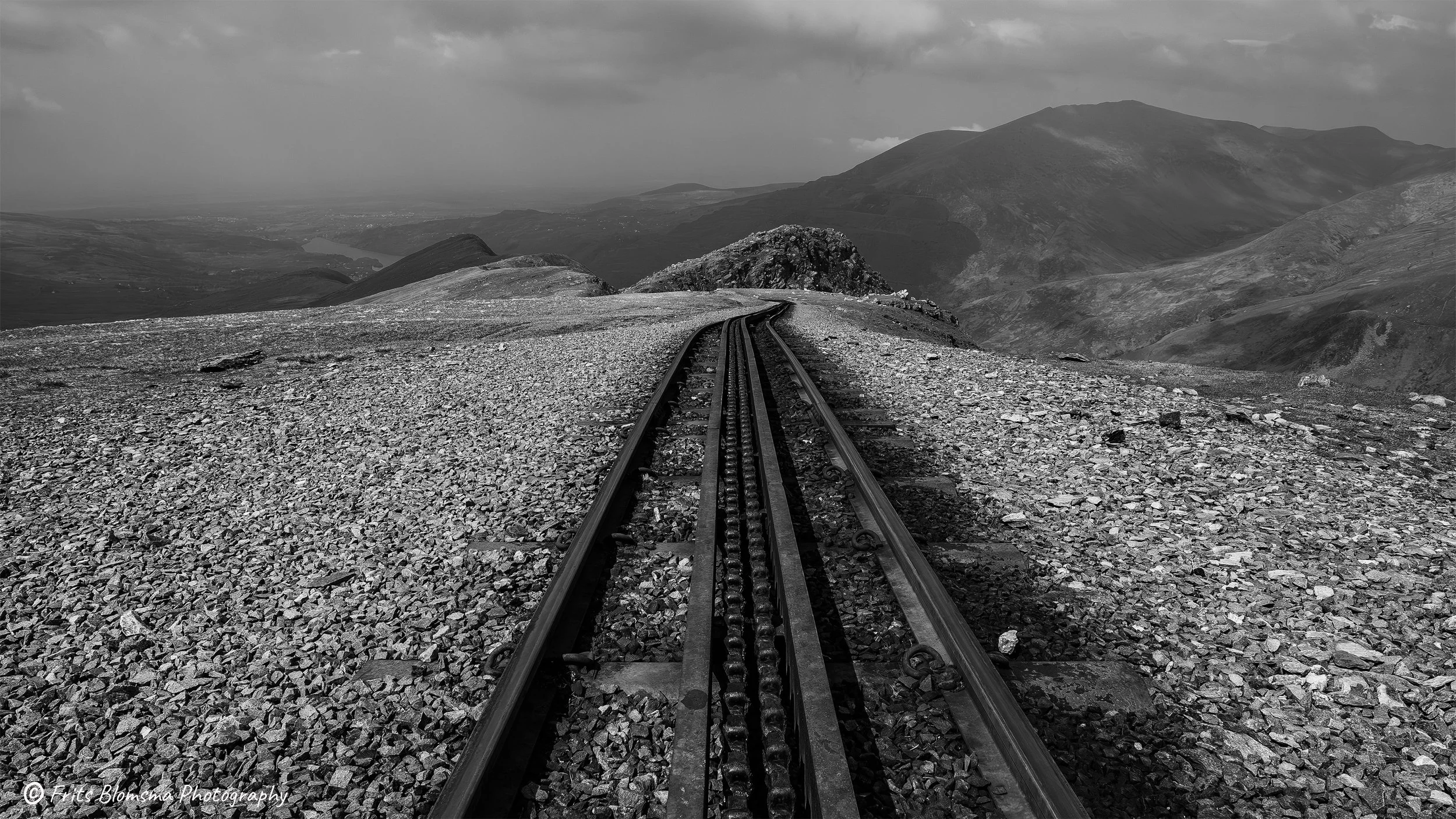 Image 2 of 2
Snowdon Moutains, Wales.
This striking black-and-white photograph by Frits Blomsma captures the rugged, industrial beauty of the Snowdon Mountain Railway (Rheilffordd yr Wyddfa) in North Wales.
The image focuses on the unique track engineering required to scale the highest peak in Wales and England. Here is a breakdown of what makes this scene and its history so compelling:
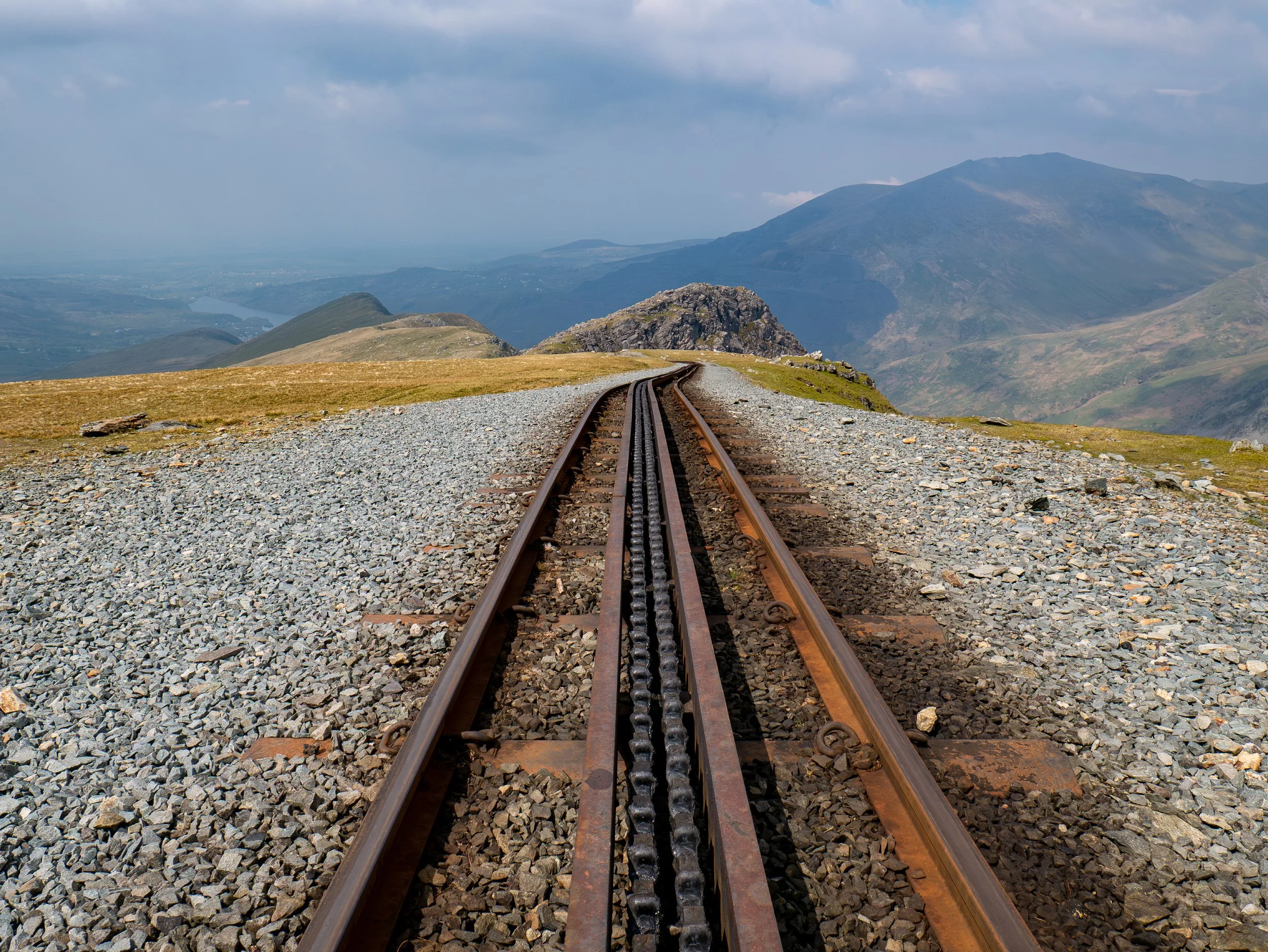
The most prominent feature in the foreground is the rack-and-pinion system. Because the mountain’s gradients are too steep for standard "adhesion" (friction between smooth wheels and rails), the railway uses the Abt system, designed by Swiss engineer Roman Abt.
The "Ladder" in the Middle: Those two offset toothed bars in the center of the track allow a cogwheel (pinion) on the locomotive to "climb" the mountain.
The Gripper Rails: If you look closely at the sides of the central rack, you can see the safety grippers. Following a derailment on the railway’s opening day in 1896, these "L" shaped rails were added so that the train remains literally hooked to the track, preventing it from lifting off even in high winds.
The tracks lead the eye toward the dramatic silhouettes of the Snowdonia (Eryri) range.
Perspective: The photo appears to be taken looking down from a high point—likely near the Clogwyn station or approaching the Summit.
The Terrain: The ground is covered in treacherous, jagged slate and scree, typical of the volcanic geology of the region. The monochromatic edit emphasizes the harsh, wind-swept textures of the mountain, stripping away the greenery to highlight the raw "bones" of the land.
Blomsma’s choice of black and white creates a timeless, almost archival feel. It strips the "tourist" element away, leaving only the contrast between the rigid, man-made geometry of the iron rails and the chaotic, organic shapes of the mountainside. The leading lines of the track create a powerful sense of journey, disappearing into the mist and peaks in the distance.
Fun Fact: This is the only public rack-and-pinion railway in the United Kingdom. The locomotives (both vintage steam and modern diesel) don’t actually pull the carriages; for safety reasons, they push them up the mountain and lead them back down to ensure they never "run away" down the slope.
Snowdon Moutains, Wales.
This striking black-and-white photograph by Frits Blomsma captures the rugged, industrial beauty of the Snowdon Mountain Railway (Rheilffordd yr Wyddfa) in North Wales.
The image focuses on the unique track engineering required to scale the highest peak in Wales and England. Here is a breakdown of what makes this scene and its history so compelling:
The most prominent feature in the foreground is the rack-and-pinion system. Because the mountain’s gradients are too steep for standard "adhesion" (friction between smooth wheels and rails), the railway uses the Abt system, designed by Swiss engineer Roman Abt.
The "Ladder" in the Middle: Those two offset toothed bars in the center of the track allow a cogwheel (pinion) on the locomotive to "climb" the mountain.
The Gripper Rails: If you look closely at the sides of the central rack, you can see the safety grippers. Following a derailment on the railway’s opening day in 1896, these "L" shaped rails were added so that the train remains literally hooked to the track, preventing it from lifting off even in high winds.
The tracks lead the eye toward the dramatic silhouettes of the Snowdonia (Eryri) range.
Perspective: The photo appears to be taken looking down from a high point—likely near the Clogwyn station or approaching the Summit.
The Terrain: The ground is covered in treacherous, jagged slate and scree, typical of the volcanic geology of the region. The monochromatic edit emphasizes the harsh, wind-swept textures of the mountain, stripping away the greenery to highlight the raw "bones" of the land.
Blomsma’s choice of black and white creates a timeless, almost archival feel. It strips the "tourist" element away, leaving only the contrast between the rigid, man-made geometry of the iron rails and the chaotic, organic shapes of the mountainside. The leading lines of the track create a powerful sense of journey, disappearing into the mist and peaks in the distance.
Fun Fact: This is the only public rack-and-pinion railway in the United Kingdom. The locomotives (both vintage steam and modern diesel) don’t actually pull the carriages; for safety reasons, they push them up the mountain and lead them back down to ensure they never "run away" down the slope.