
Wales, Brecon Beacons
Wales, Brecon Beacons
Filters
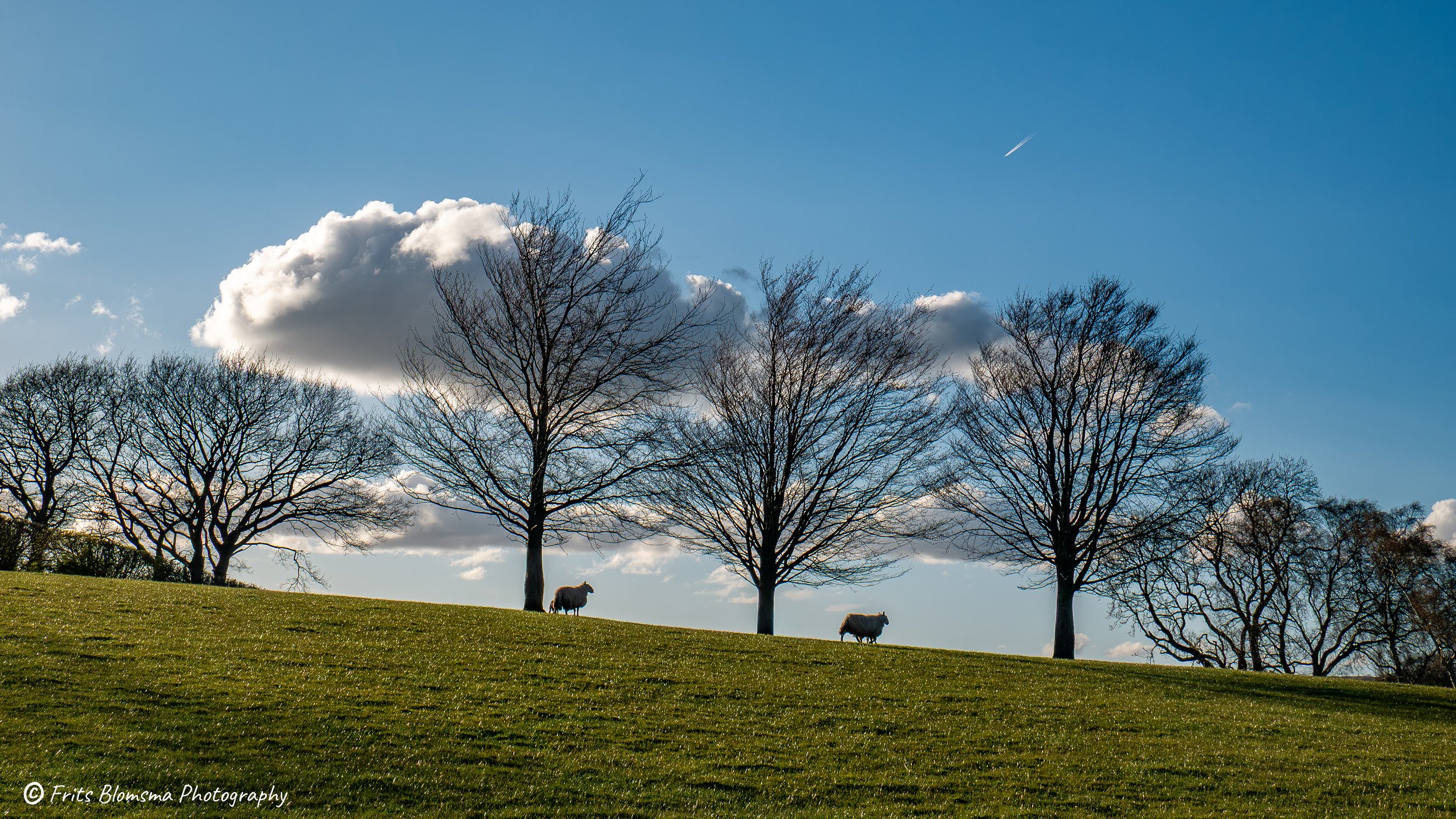
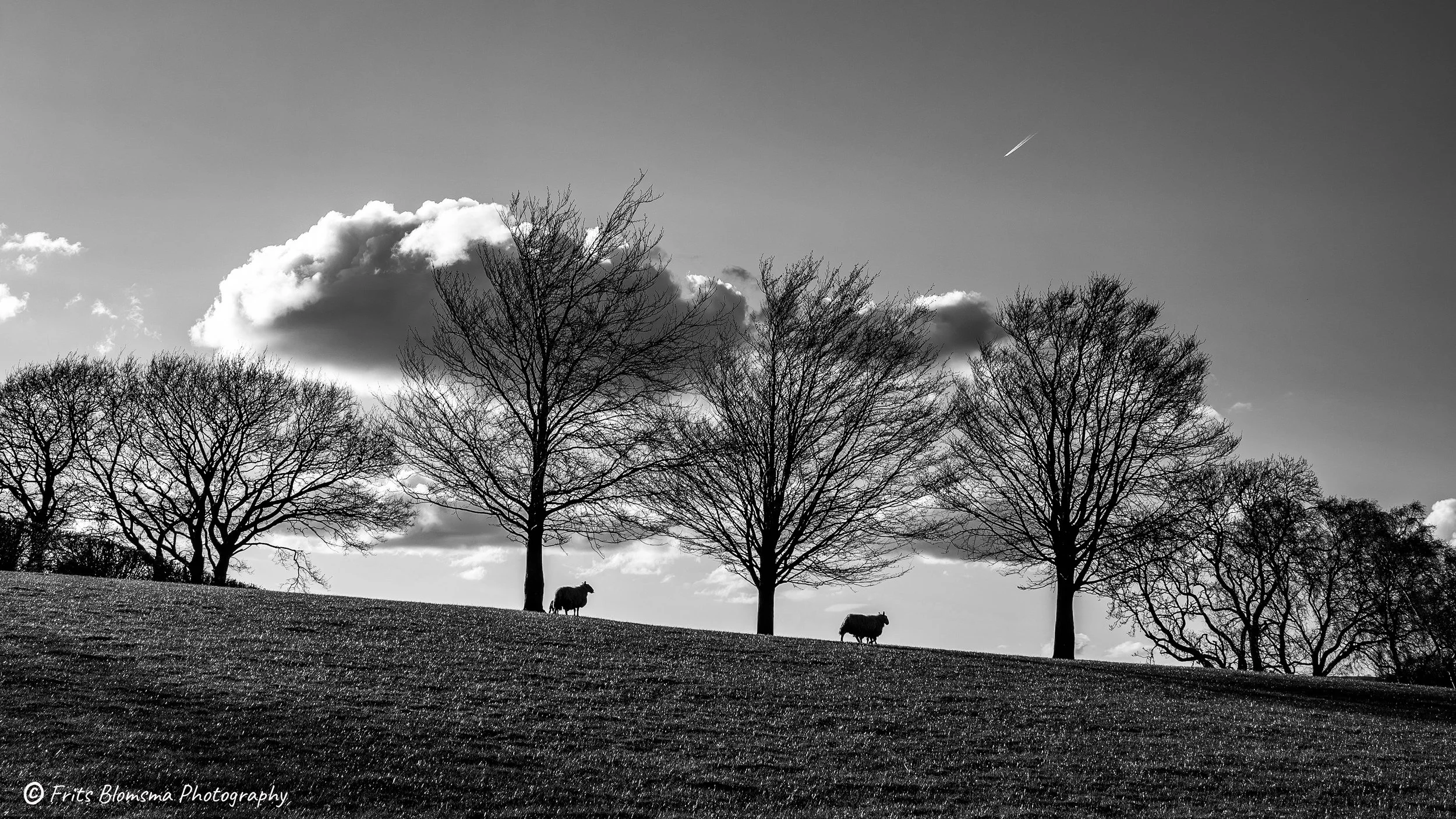
That is a beautifully composed landscape that captures a quiet, pastoral moment. Based on the file name and the general aesthetic, this appears to be the Brecon Beacons (now known as Bannau Brycheiniog) in Wales—a region famous for exactly this kind of rolling, sheep-dotted scenery.
Here is a breakdown of why this shot works so well:
1. Composition and Rhythm
The photo uses the natural slope of the hill to create a strong diagonal foundation. The rhythm of the trees acts as a visual anchor; the way they are spaced out across the ridge gives the image a sense of balance and pace. By silhouetting the trees against the bright sky, the photographer has emphasized their intricate, winter-bare branch structures.
2. The Play of Light
The lighting is the real star here. It looks like "golden hour" or mid-afternoon sun, which provides:
Backlighting: Notice the "rim lighting" on the sheep and the edges of the clouds, giving them a soft, glowing halo.
Texture: The low angle of the sun rakes across the grass, highlighting the uneven texture of the hillside rather than making it look like a flat green sheet.
3. The "Living" Elements
While the landscape is static, the inclusion of the sheep provides scale and a sense of life. They are positioned perfectly in the gaps between the trees, preventing the mid-ground from feeling empty.
Additionally, the contrail (the vapor trail from a plane) in the upper right adds a touch of modern reality to an otherwise timeless scene. It leads the eye upward and breaks up the vastness of the blue sky.
Technical Highlights
Depth of Field: Everything from the grass in the foreground to the clouds in the distance is sharp, suggesting a narrow aperture (likely around $f/8$ or $f/11$).
Color Palette: The high contrast between the deep "British Racing Green" of the grass and the vibrant cerulean sky creates a classic, high-energy color profile.
It’s a very peaceful image—the kind that makes you want to take a long walk, provided you've got a sturdy pair of boots!
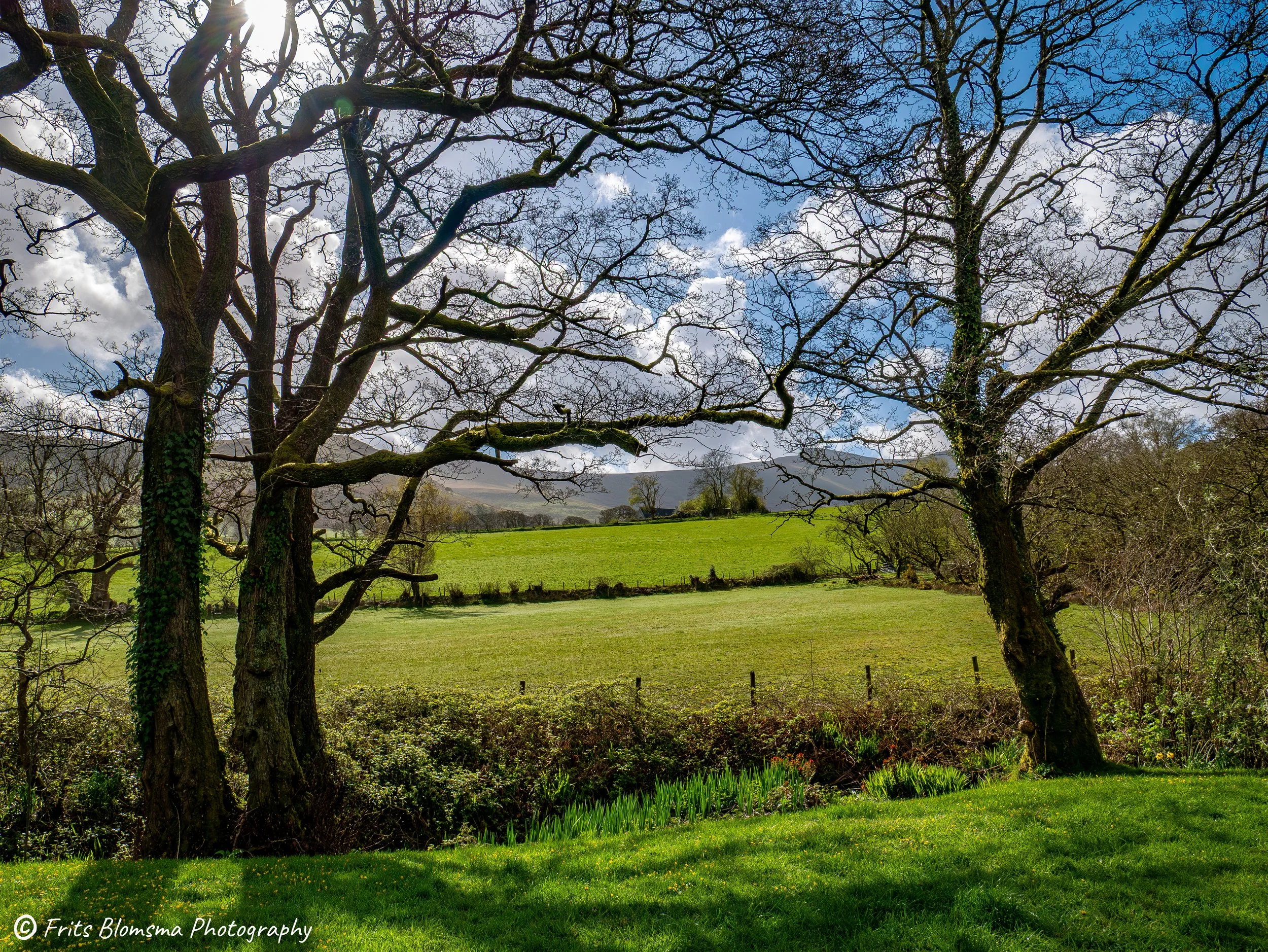
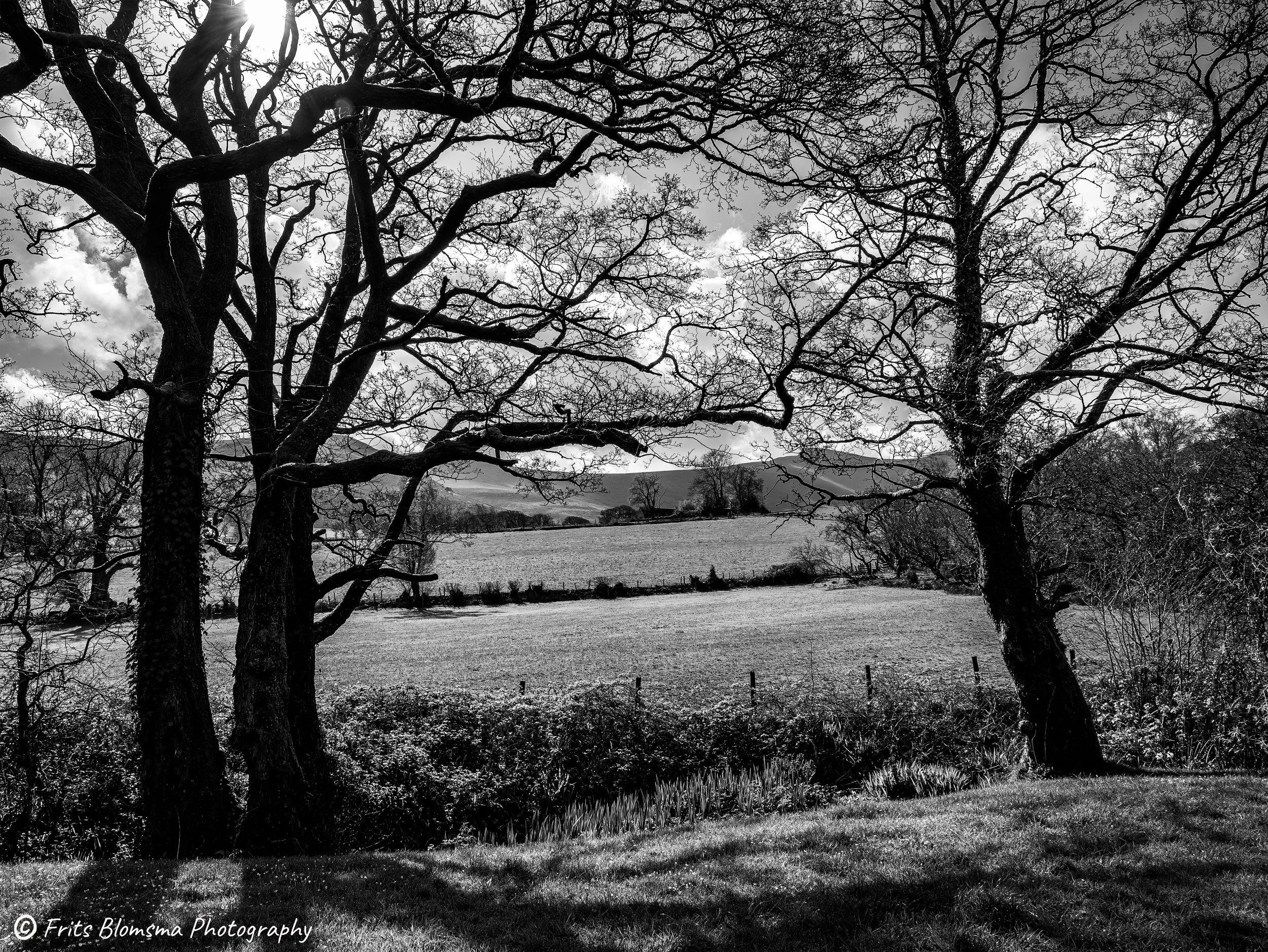
This photograph captures a quintessential scene of the British countryside, likely in the Brecon Beacons (indicated by the filename and the characteristic rolling topography). It is a composition of layers from the intricate, dark silhouettes of the foreground trees to the soft, sun-drenched hills in the distance.
## Visual Composition
The Framing: Two large, gnarled trees act as a natural "curtain," framing the view of the open pasture beyond. Their tangled branches create a complex lattice against the bright sky, adding a sense of texture and age.
The Lighting: The sun appears to be high and slightly behind the trees, creating a backlit effect. This highlights the vibrant green of the grass and casts long, soft shadows across the foreground, giving the image a sense of depth and three-dimensionality.
Color Palette: The image is dominated by various shades of green—from the deep, mossy tones on the tree trunks to the brilliant, almost glowing emerald of the spring grass. This is balanced by the crisp blues and whites of the sky.
## Atmosphere and Mood
The photo evokes a feeling of tranquility and timelessness. There is a specific "freshness" to the scene that suggests early spring; the trees are still mostly bare, allowing the light to pour through, yet the grass is lush and vibrant.
The Stone Wall: A traditional stone boundary or hedgerow runs across the middle ground, a classic marker of the Welsh rural landscape.
The Hills: In the far background, the muted, hazy silhouette of the mountains provides a sense of scale, reminding the viewer of the rugged wilderness that often lies just beyond these managed pastures.
## Technical Details
The photographer, Frits Blomsma, has used a wide-angle perspective to pull the viewer into the scene. By keeping the foreground in sharp focus along with the distant hills, the image achieves a high level of clarity, making the viewer feel as though they are standing right there on the mossy verge, looking out over the valley.
It’s a beautiful tribute to the quiet, enduring beauty of the Welsh landscape a moment where the light hits the field just right, turning a simple pasture into something cinematic.
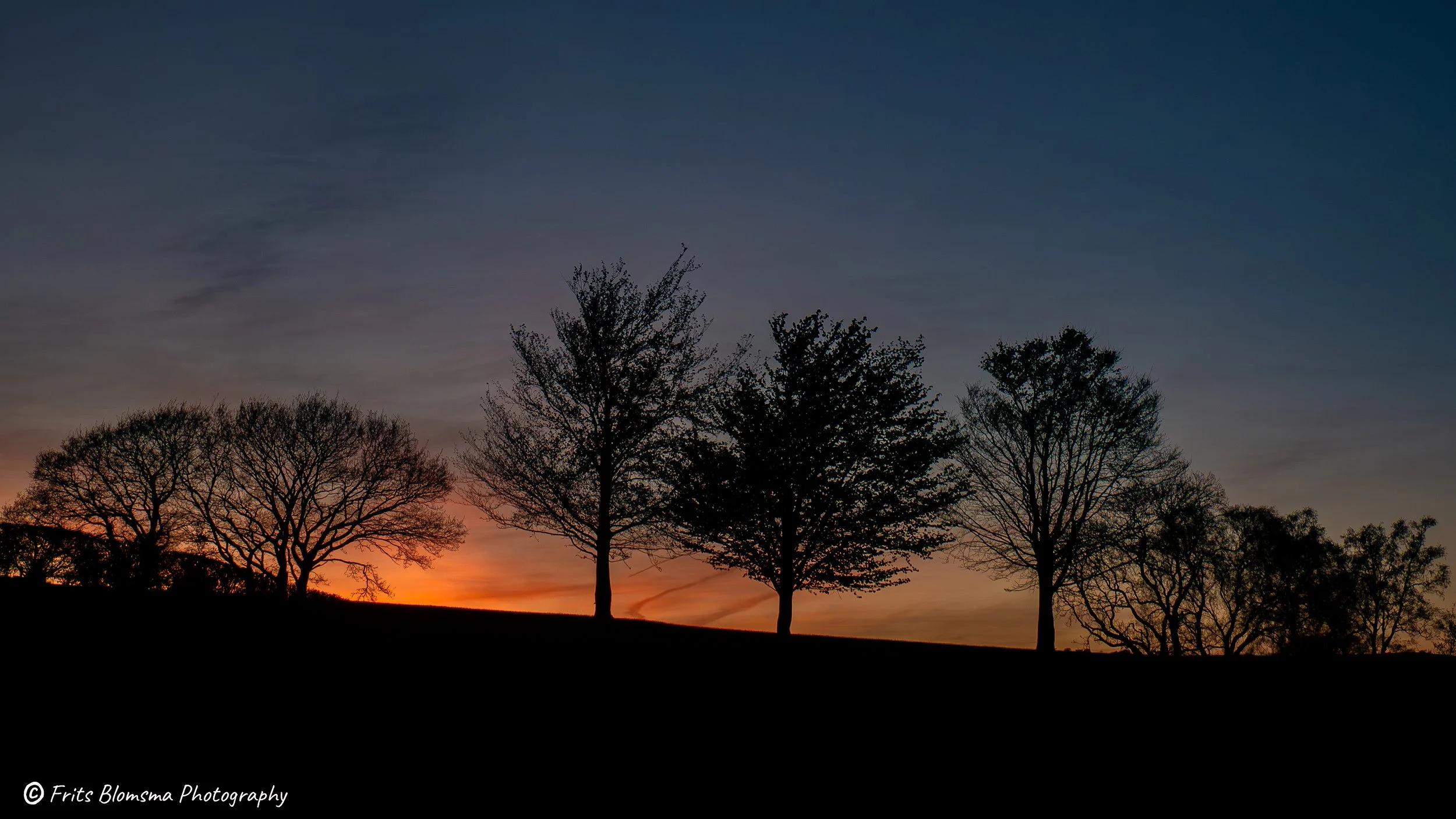
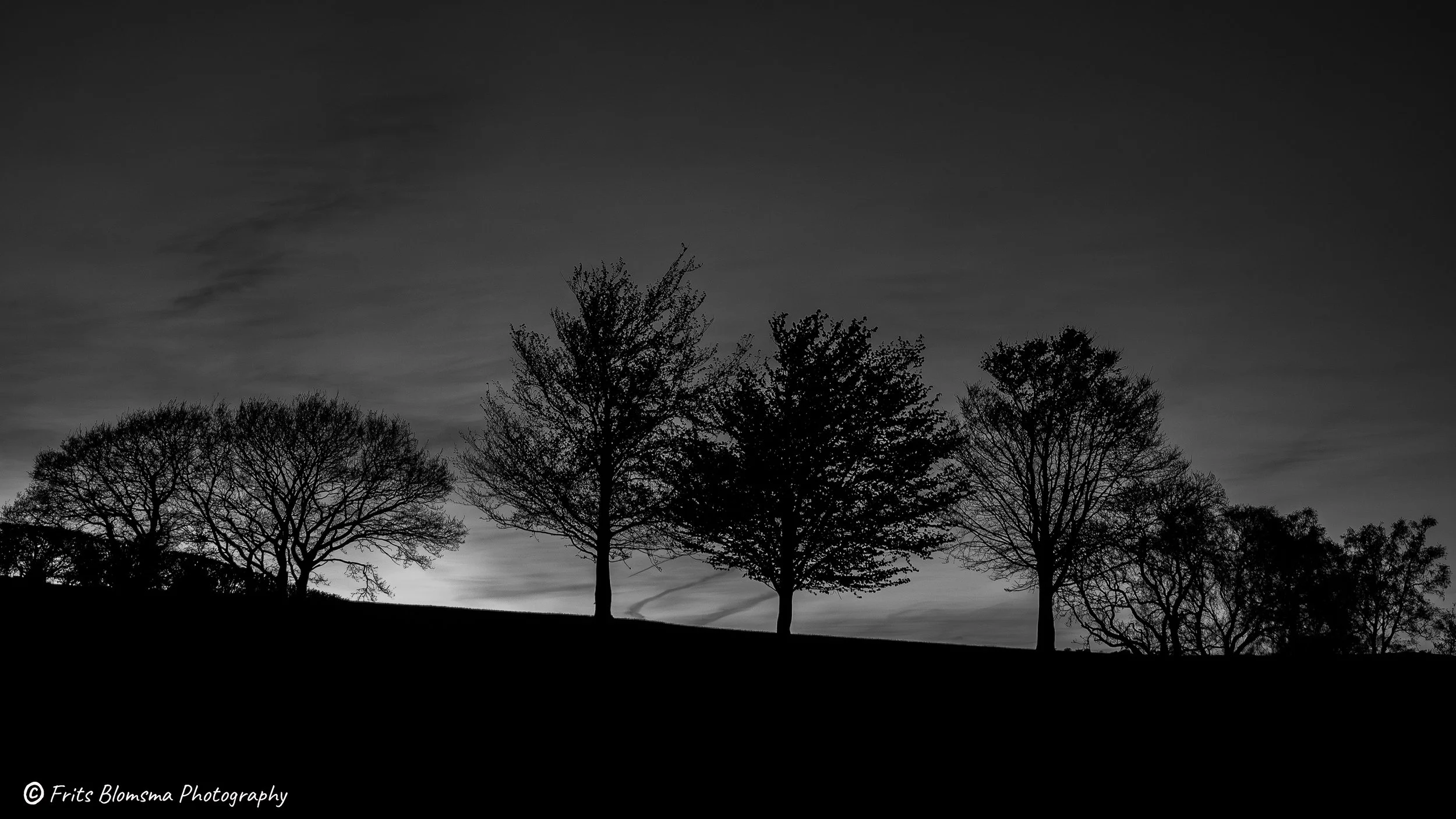
That’s a stunning shot. There’s something deeply peaceful about the transition between day and night, especially when it’s captured with this kind of stark, minimalist beauty.
Here is a breakdown of what makes this photograph so compelling:
1. The Play of Light and Silhouette
The core of this image is the high contrast. By exposing for the sky, the photographer has turned the landscape into a pure black silhouette. This strips away the "noise" of texture and color on the ground, forcing the viewer to focus entirely on the graphic shapes of the trees. Each branch and twig becomes part of an intricate, lace-like pattern against the glowing horizon.
2. The Color Gradient
The sky acts as a natural canvas, transitioning through a classic twilight palette:
The Horizon: A fiery, concentrated orange that suggests the sun has just dipped below the ridge.
The Mid-tones: A soft transition into muted purples and deep indigo.
The Zenith: A heavy, midnight blue that gives the image a sense of scale and coolness.
3. Composition and Rhythm
The placement of the trees creates a natural visual rhythm.
The "Main Characters": The four central trees are spaced almost like musical notes on a staff. They vary in height and fullness, which keeps the eye moving across the frame.
The Horizon Line: The slight diagonal slope of the hill adds a sense of "place"—it feels like a real, rolling landscape (consistent with the "Brecon" in the filename, likely referring to the Brecon Beacons) rather than a flat, artificial stage.
4. Emotional Impact
There is a profound sense of stillness here. It captures that specific moment in the evening when the wind usually dies down and the world goes quiet. The image feels lonely, but in a meditative, "breath of fresh air" kind of way.
Technical Observation: The photographer, Frits Blomsma, chose a wide aspect ratio that emphasizes the vastness of the sky. The slight "vignetting" (the darkening of the corners) naturally draws the eye back toward the center where the orange glow is strongest, ensuring the viewer doesn't get lost in the dark edges of the frame.
It’s a masterclass in using simple elements—trees, a hill, and a sunset—to create a very sophisticated mood. Does this style of photography usually resonate with you, or do you prefer more detailed, brightly lit landscapes?
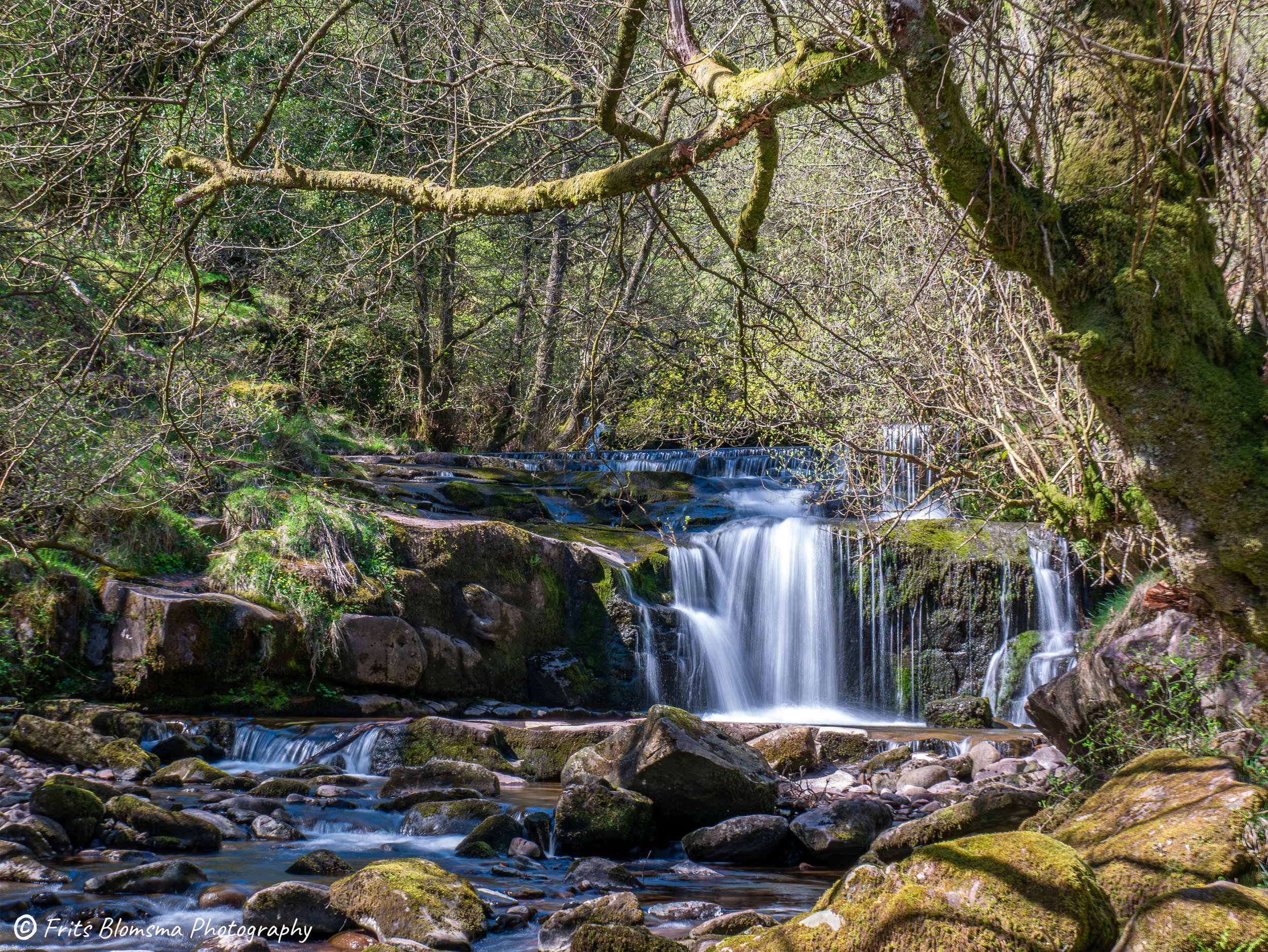
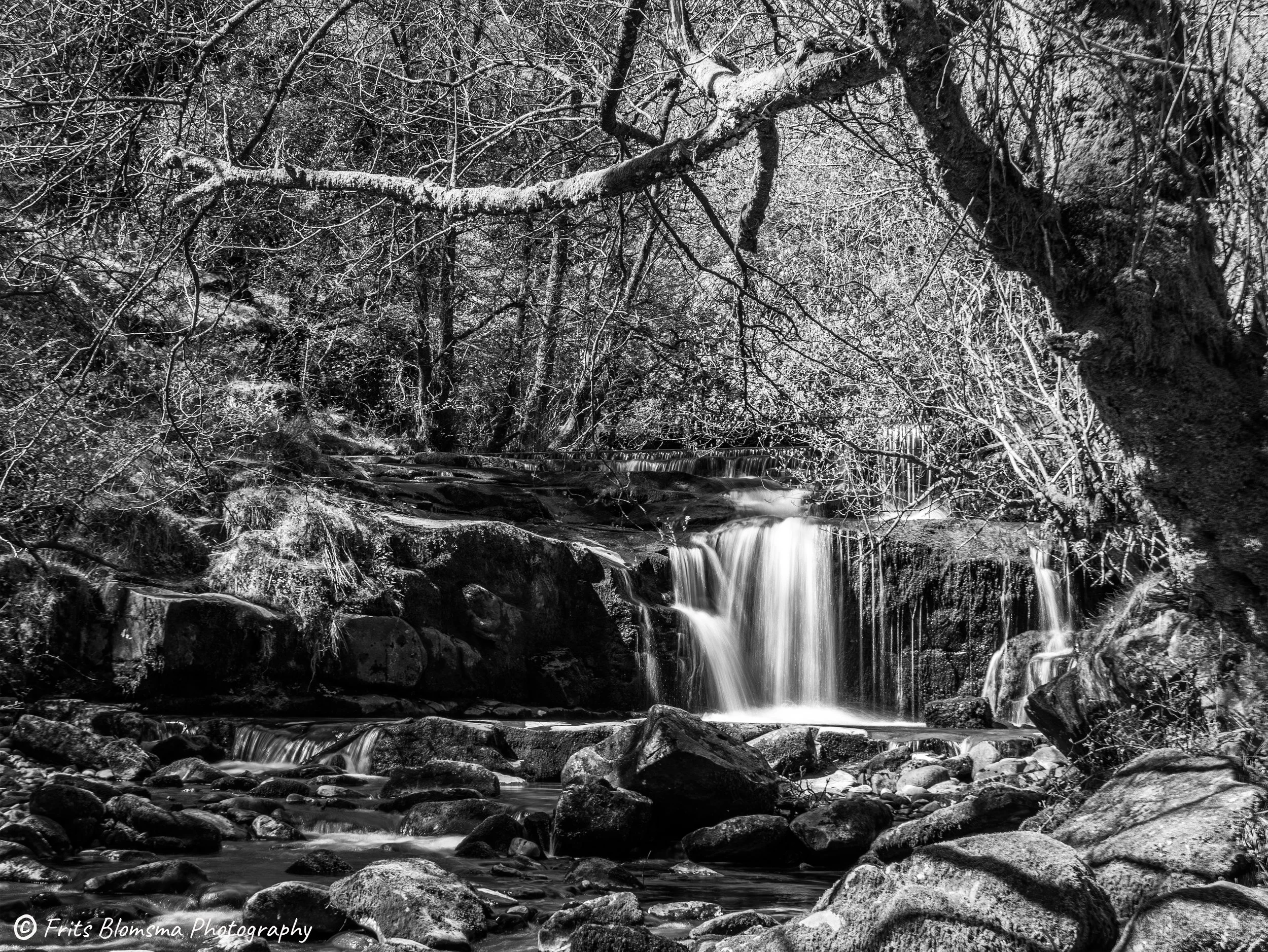
This image captures a serene, long-exposure shot of a waterfall nestled in a lush, wooded area—likely within the Brecon Beacons (Bannau Brycheiniog) in Wales, given the filename. The photographer, Frits Blomsma, has beautifully balanced the rugged textures of the landscape with the ethereal movement of the water.
Visual Highlights
The Waterfall: The central focus is a multi-tiered cascade. The long exposure creates a "silky" effect, turning the rushing water into soft, white ribbons that contrast sharply against the dark, wet rocks.
Moss and Texture: Almost every rock and tree trunk is blanketed in a rich, vibrant green moss. This suggests a damp, pristine environment typical of Welsh temperate rainforests.
Natural Framing: An old, moss-covered tree limb reaches across the top of the frame. This "leading line" draws the eye downward toward the falls and adds a sense of depth and enclosure to the scene.
Lighting: Sunlight filters through the canopy, creating a dappled effect. This highlights the fresh spring greens of the budding leaves and creates a bright, airy atmosphere despite the dense forest setting.
Atmosphere and Composition
The composition follows a natural flow, leading the viewer's eye from the scattered boulders in the foreground, up through the main falls, and into the soft-focus woodland in the background. It evokes a feeling of tranquility and timelessness.
Fun Fact: The Brecon Beacons is famous for its "Four Waterfalls Walk," where the geology of the limestone and Old Red Sandstone creates dozens of these picturesque cascades hidden in deep, wooded gorges.
This photo is a classic example of landscape photography that celebrates the quiet, persistent beauty of the natural world.
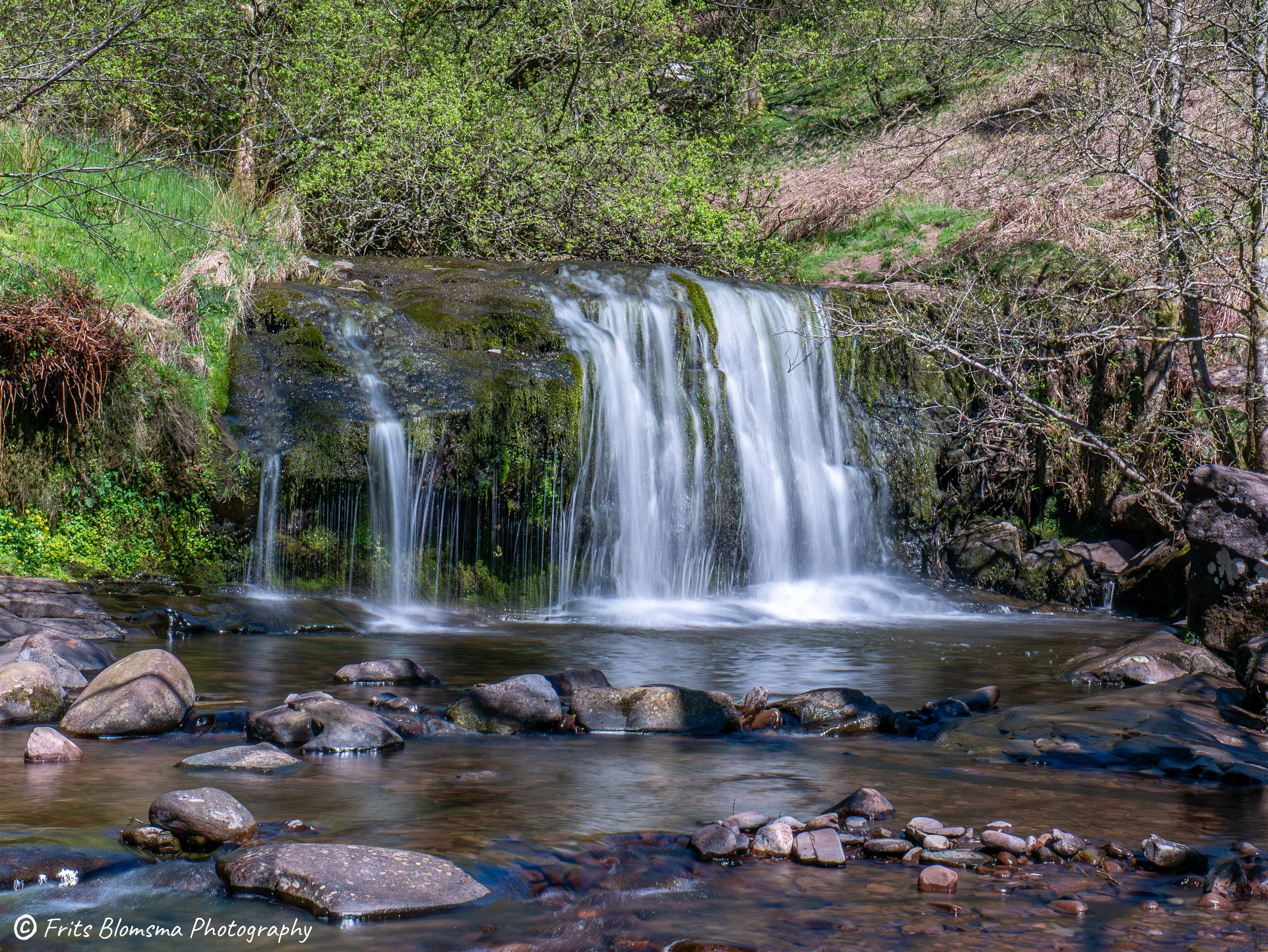
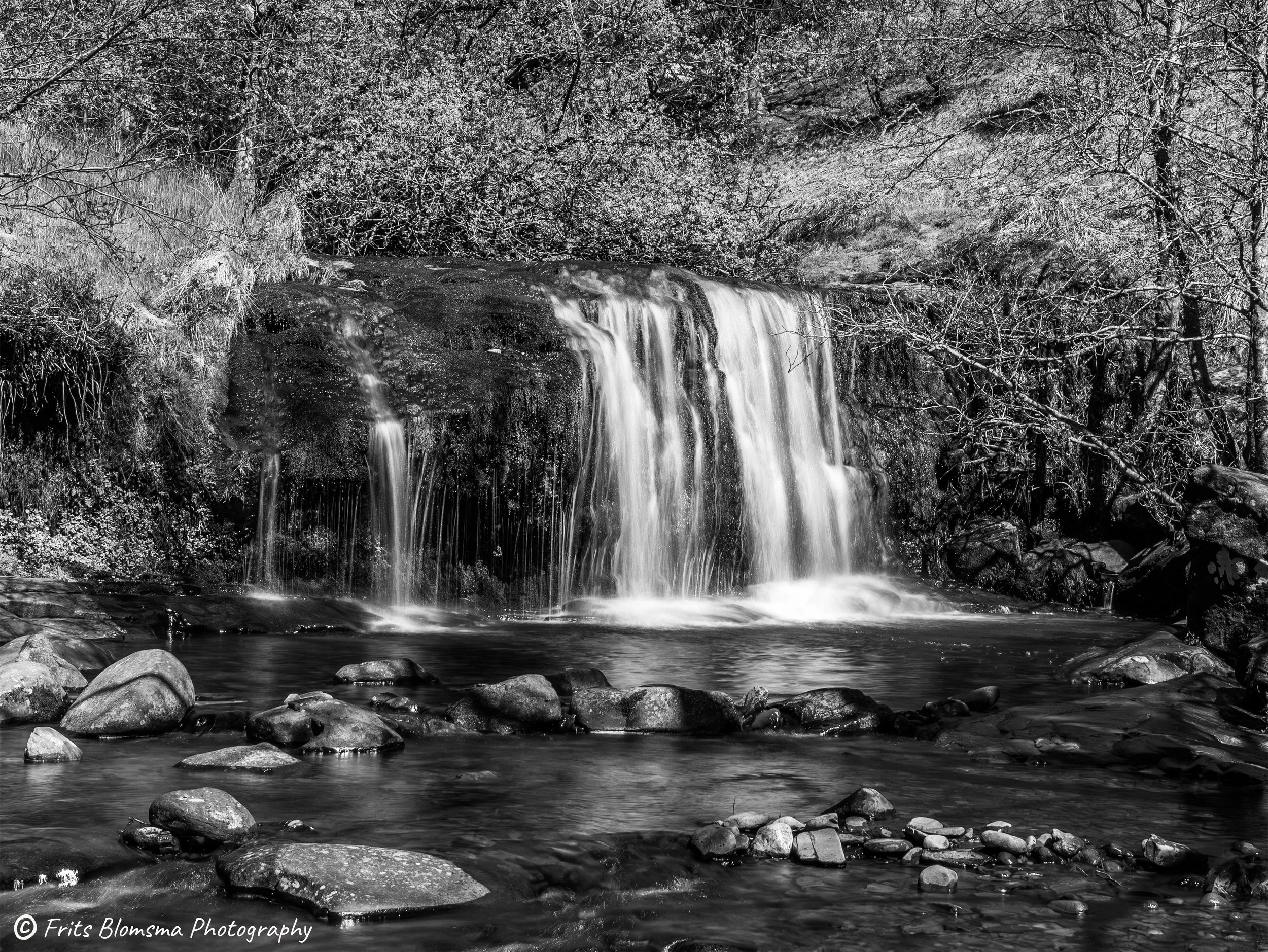
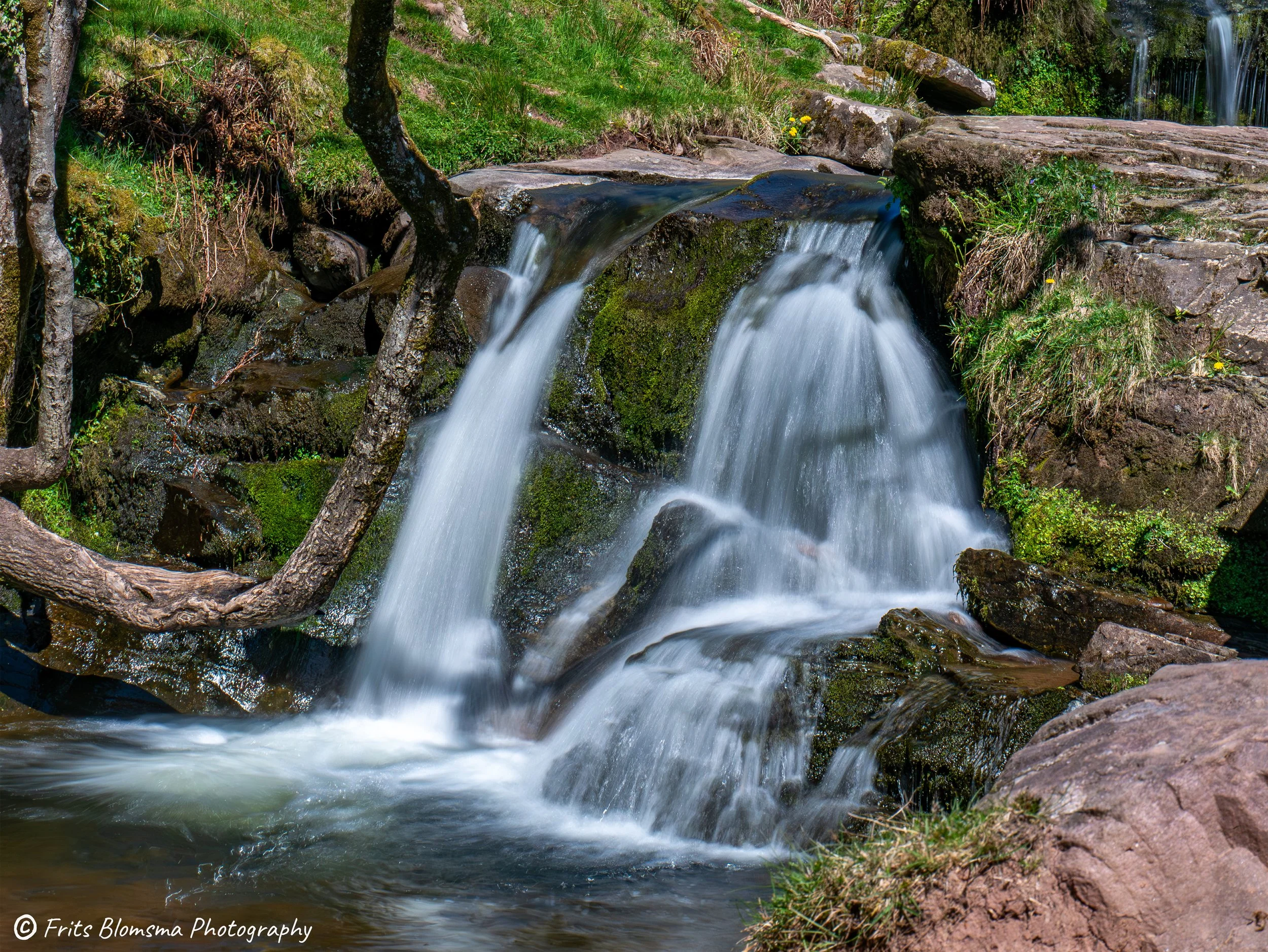
That is a beautiful long-exposure shot of a waterfall, likely captured in the Brecon Beacons (Bannau Brycheiniog) in Wales, given the filename and the characteristic Old Red Sandstone geology of the region.
Here is a breakdown of what makes this image so compelling from both a natural and photographic perspective:
The Scene: Nature’s Curtain
The waterfall acts as a central "curtain" of water, spilling over a moss-covered rock ledge into a shallow, stony pool.
Geology: The flat, stepped nature of the rocks is typical of the Welsh landscape, where layers of hard rock resist erosion better than the softer layers beneath, creating these picturesque drops.
Flora: The vibrant green moss and the budding trees in the background suggest this was taken in mid-to-late spring. The soft, feathery textures of the new leaves contrast beautifully with the ruggedness of the wet stones.
Photographic Technique
The photographer, Frits Blomsma, used a long exposure technique to achieve this specific look.
Motion Blur: By keeping the shutter open for a second or longer, the individual splashes of water are blurred into a silk-like texture. This creates a sense of serenity and "flow" that a high-speed freeze-frame shot lacks.
Dynamic Range: The lighting is well-balanced. Even with the bright white of the falling water, there is still deep detail in the shadows of the mossy grotto and the submerged rocks in the foreground.
Composition: The use of the foreground rocks provides a "lead-in" line, drawing the viewer's eye from the bottom of the frame up toward the main event—the falls.
Atmosphere and Mood
There is a profound sense of tranquility here. The cool tones of the water and the deep shadows under the ledge suggest a hidden, quiet spot away from the hustle of modern life. It’s the kind of place where the only sound is the consistent, rhythmic "white noise" of the water hitting the pool below.
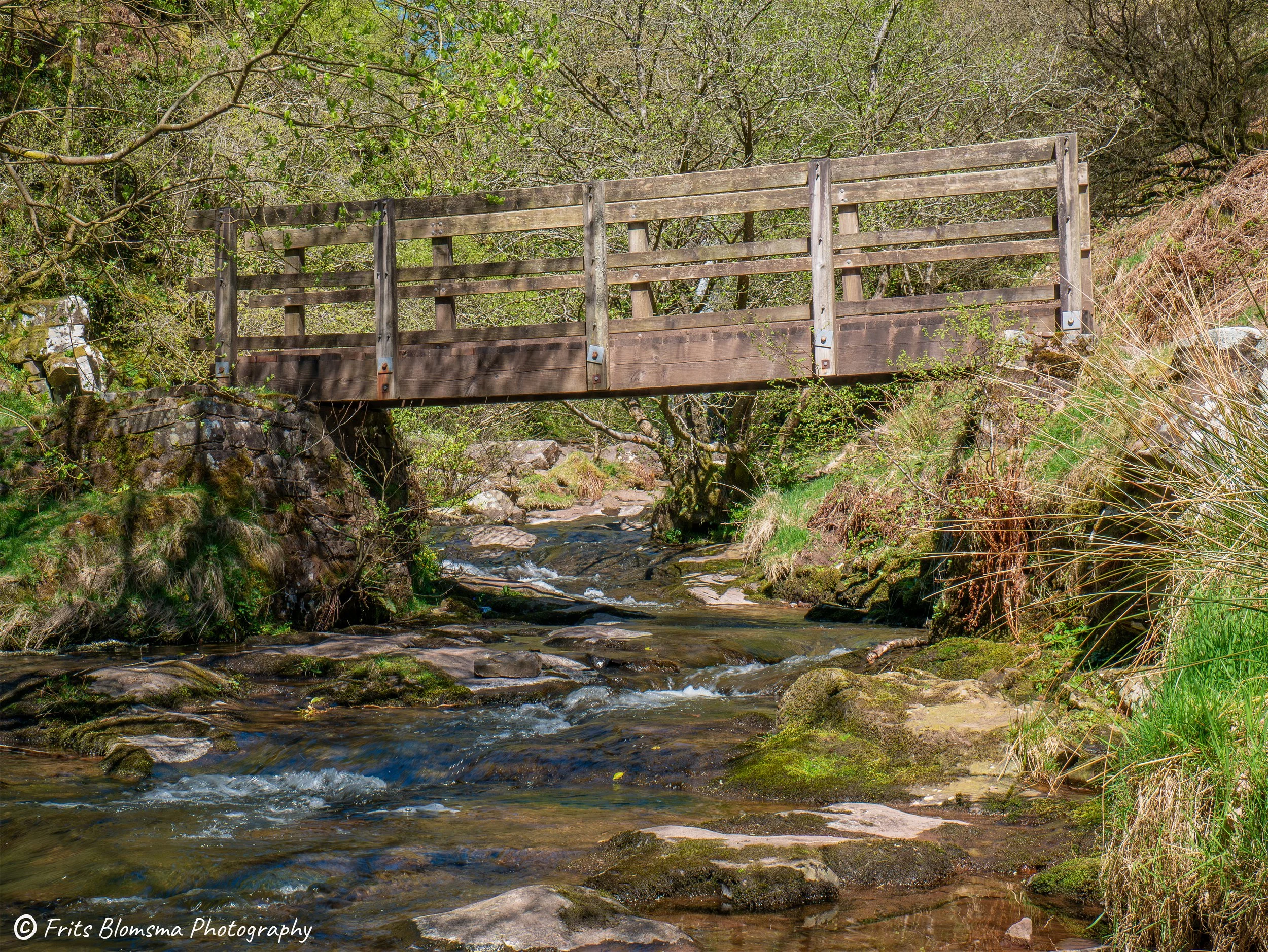
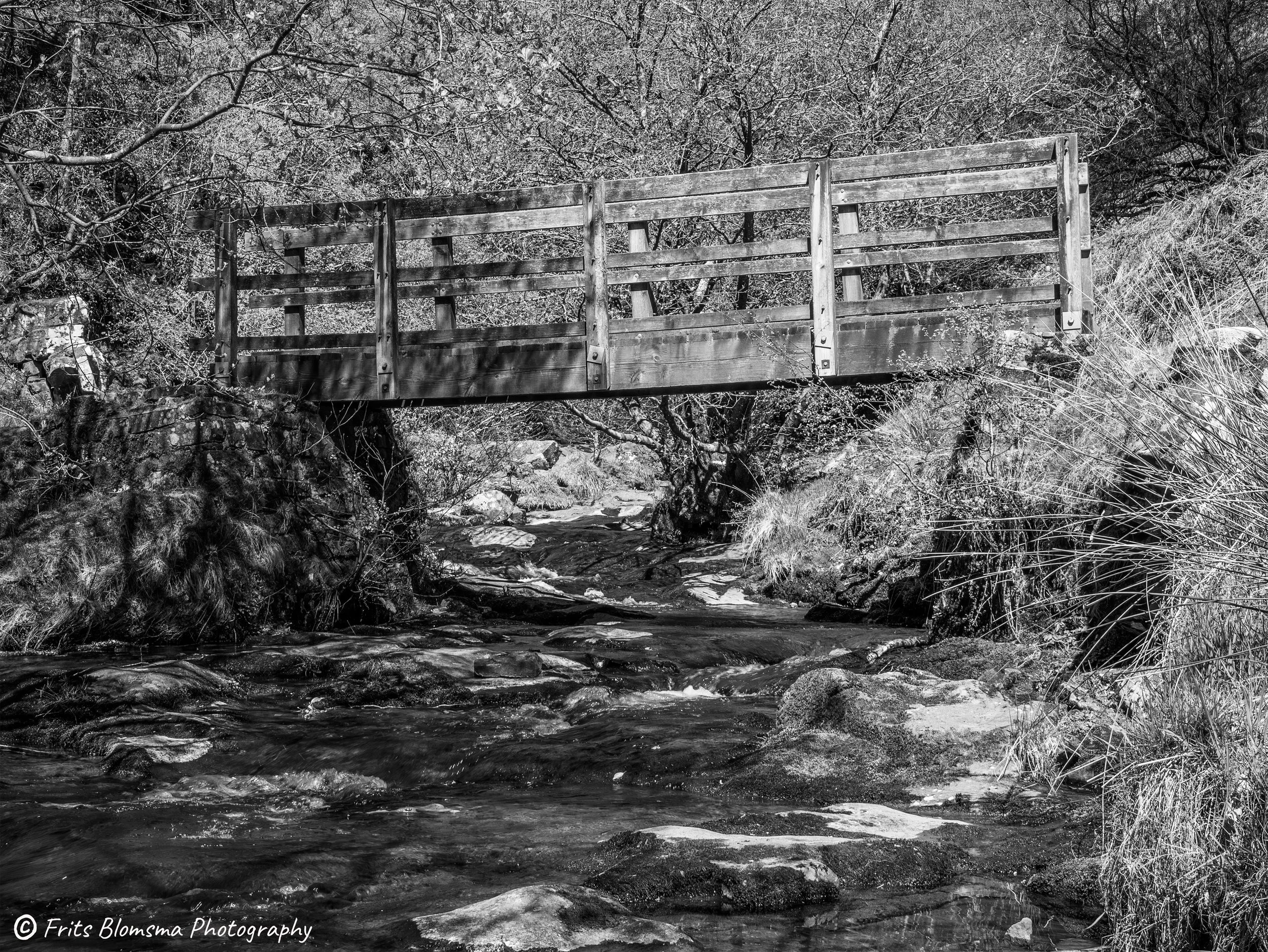
That is a lovely, serene shot. It captures a rustic wooden footbridge spanning a rocky stream, likely tucked away in the Brecon Beacons (Bannau Brycheiniog) in Wales, given the file name and the characteristic mossy, gritstone landscape.
Here is a breakdown of what makes this scene so inviting:
The Composition
The photo uses the bridge as a strong horizontal element that anchors the frame, creating a clear division between the lush, leafy canopy above and the dynamic movement of the water below. The perspective from the stream bed gives the viewer a "boots-on-the-ground" feeling, as if you’ve just paused mid-hike to take in the sound of the water.
Key Features
The Stream: The water is clear and shallow, rippling over dark, moss-covered stones. The longish exposure (or just the natural flow) creates those soft white textures in the rapids, contrasting with the stiller, tea-colored pools.
The Bridge: It’s a sturdy, utilitarian timber design. The weathered wood and heavy metal bolts suggest it’s built to withstand the damp Welsh climate and the occasional heavy surge of the stream.
Nature’s Palette: The scene is dominated by vibrant spring greens. The sunlight filtering through the budding trees suggests a bright, crisp day—the kind where the air feels fresh and everything is just starting to wake up.
The Vibe
There is a profound sense of tranquility and solitude here. It’s the kind of place where the only sounds are the bubbling of the brook and the occasional birdcall. It perfectly encapsulates the charm of the British countryside—rugged, green, and timeless.
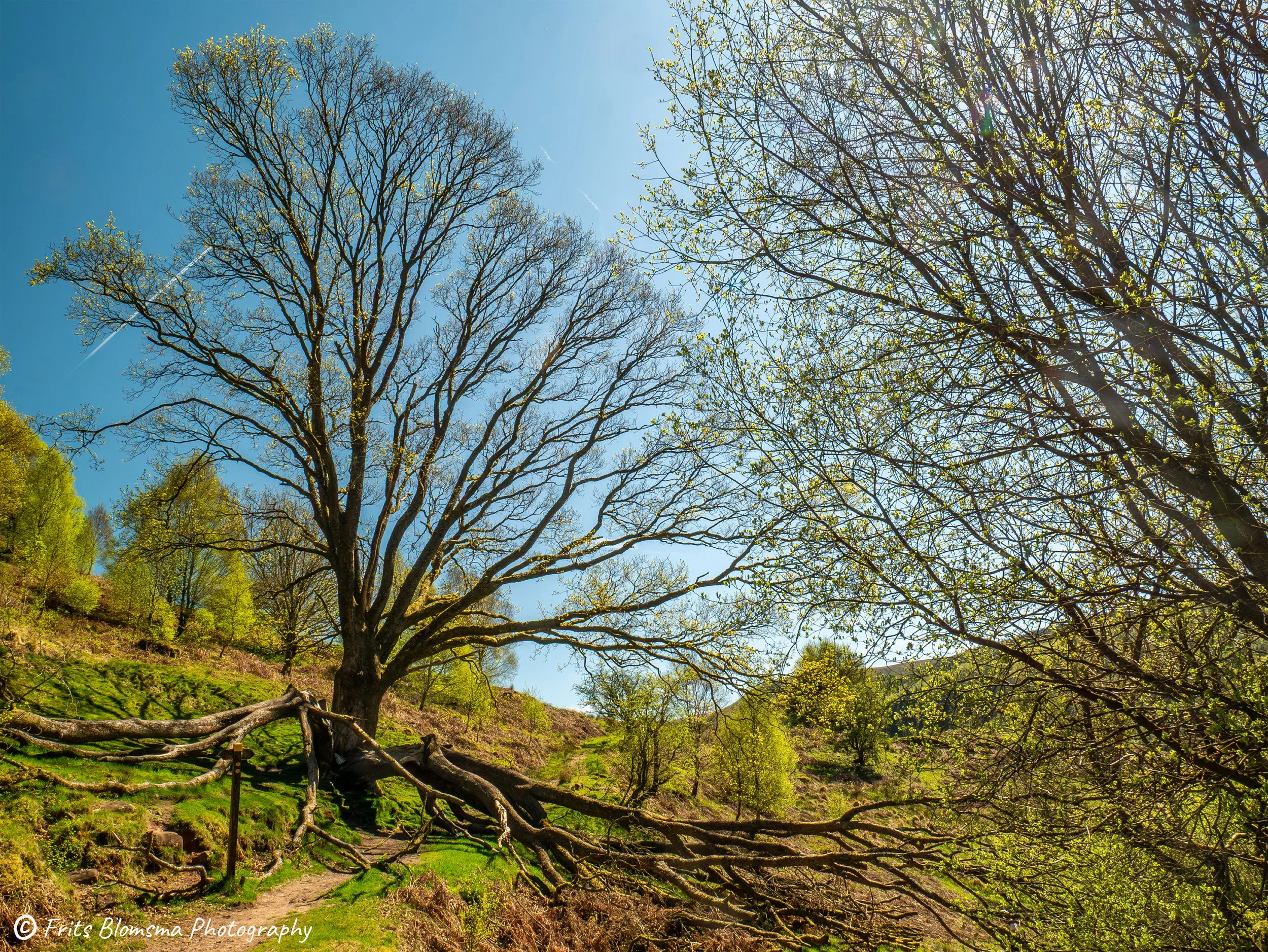
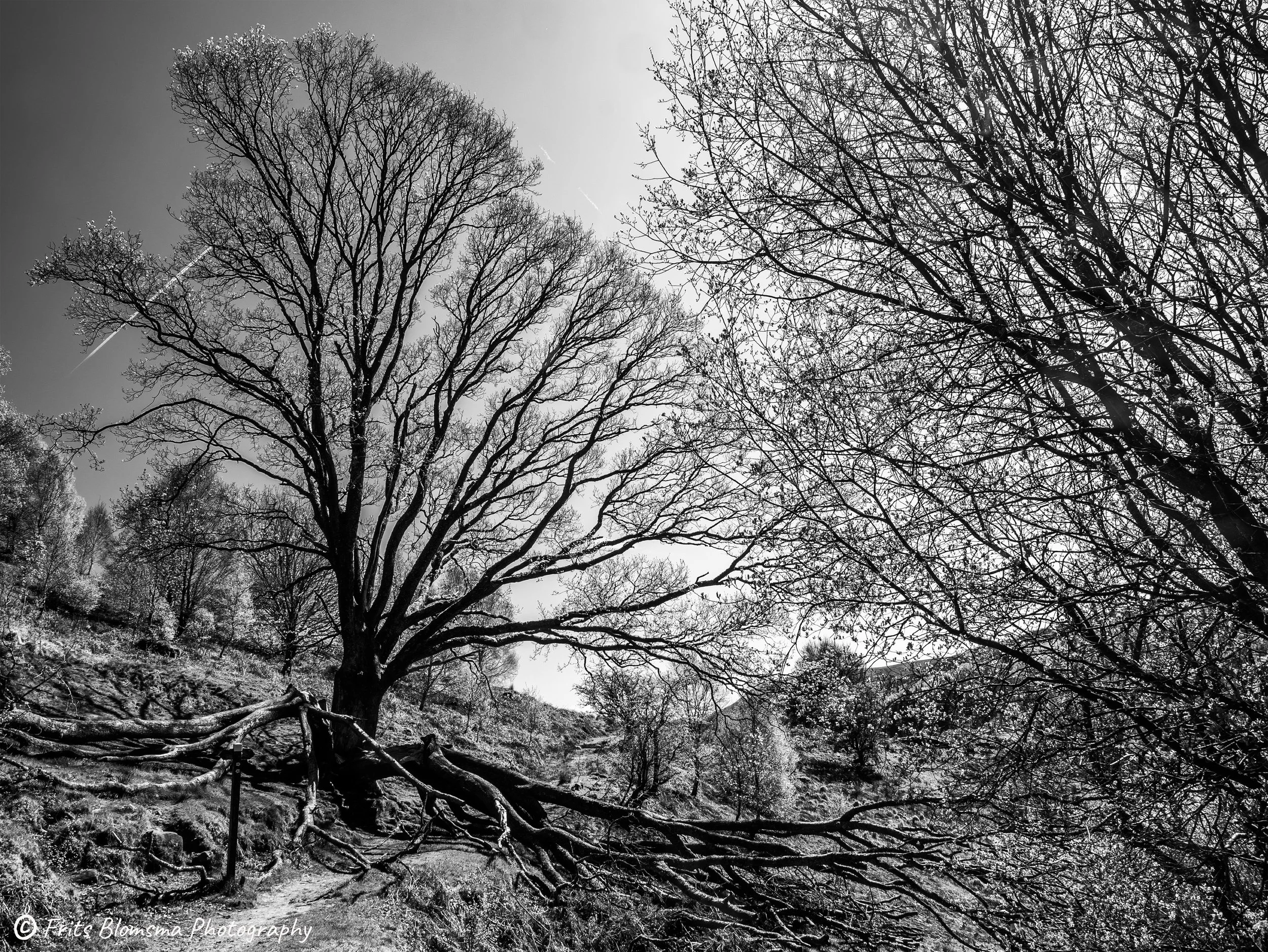
This photograph captures a poignant moment of natural transition in the Brecon Beacons (Bannau Brycheiniog), Wales. It’s a striking study of resilience, showcasing the "life after death" cycle within a forest ecosystem.
The Focal Point: A Fallen Giant
The heart of the image is a massive, ancient tree that has suffered a significant limb failure or partial collapse. Despite the heavy branches resting on the grassy slope, the remaining upright structure continues to reach toward the sky.
Spring Awakening: The delicate, lime-green buds emerging on the tips of the branches suggest this photo was taken in early spring. It creates a beautiful contrast between the heavy, dark weight of the fallen wood and the airy, light life beginning anew.
The Path Forward: A narrow hiking trail winds directly under the arch of the fallen limb, marked by a small wooden signpost. This gives the viewer a sense of scale and invites them into the frame, turning a natural "disaster" into a scenic archway for walkers.
Composition and Light
The photographer, Frits Blomsma, has used a wide-angle perspective to emphasize the sprawling reach of the tree's canopy.
ElementDescriptionLightingBacklit by a bright sun, creating a "glow" effect around the new leaves and a slight lens flare in the upper right.TextureHigh contrast between the rough, deeply furrowed bark of the old tree and the soft, velvet-like grass of the hillside.AtmosphereCrisp and clear. A faint vapor trail (contrail) cuts across the deep blue sky, adding a subtle touch of human presence to the wild landscape.
Ecological Significance
In woodland management, trees like this are often left in place. Known as "deadwood habitat," the fallen sections will eventually provide a home for beetles, fungi, and birds. The way the tree continues to grow despite its injury is a testament to the hardiness of old-growth specimens in the Welsh uplands.
The image perfectly balances the rugged, sometimes harsh reality of nature with the quiet, persistent beauty of a new season.
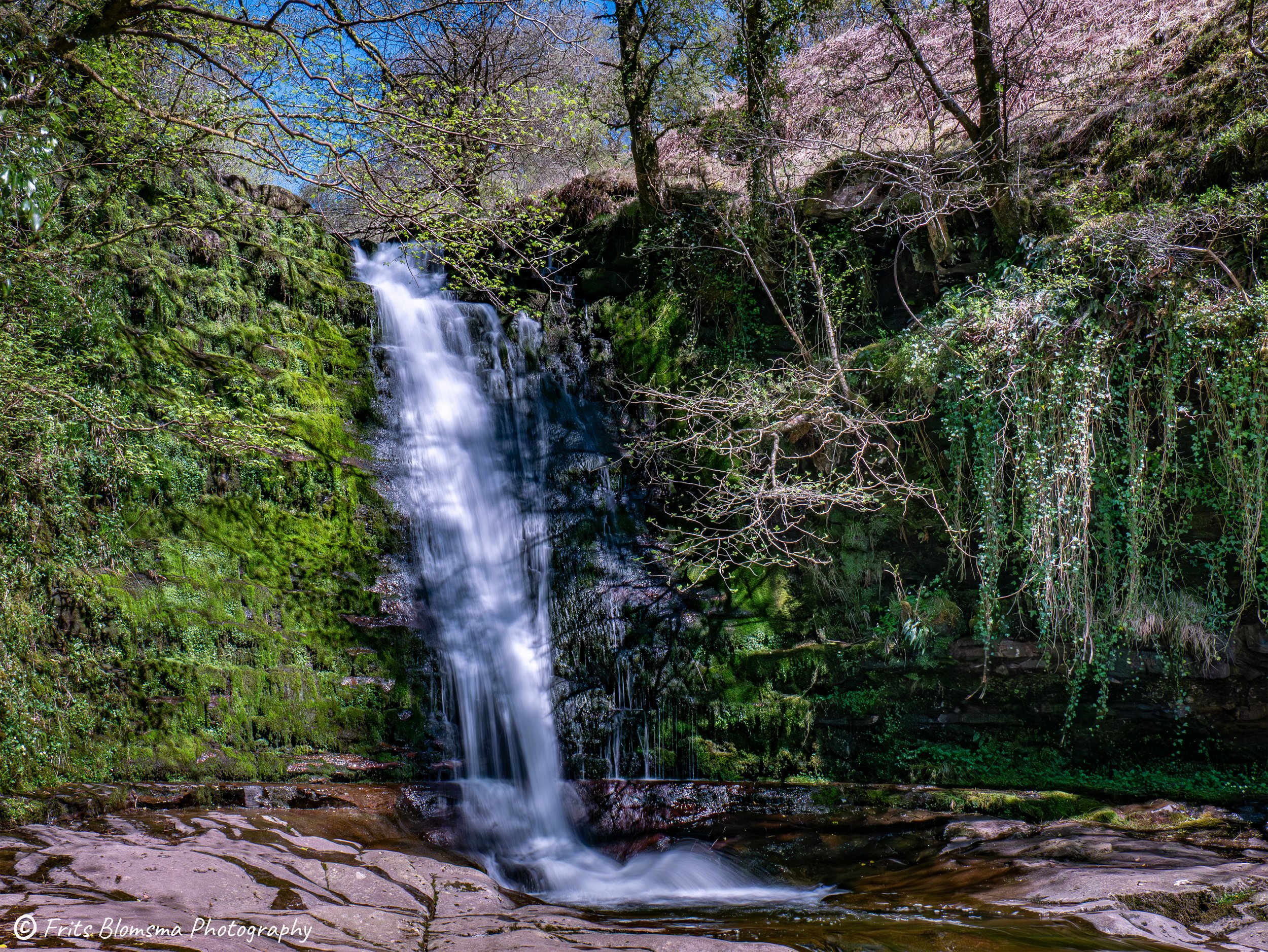
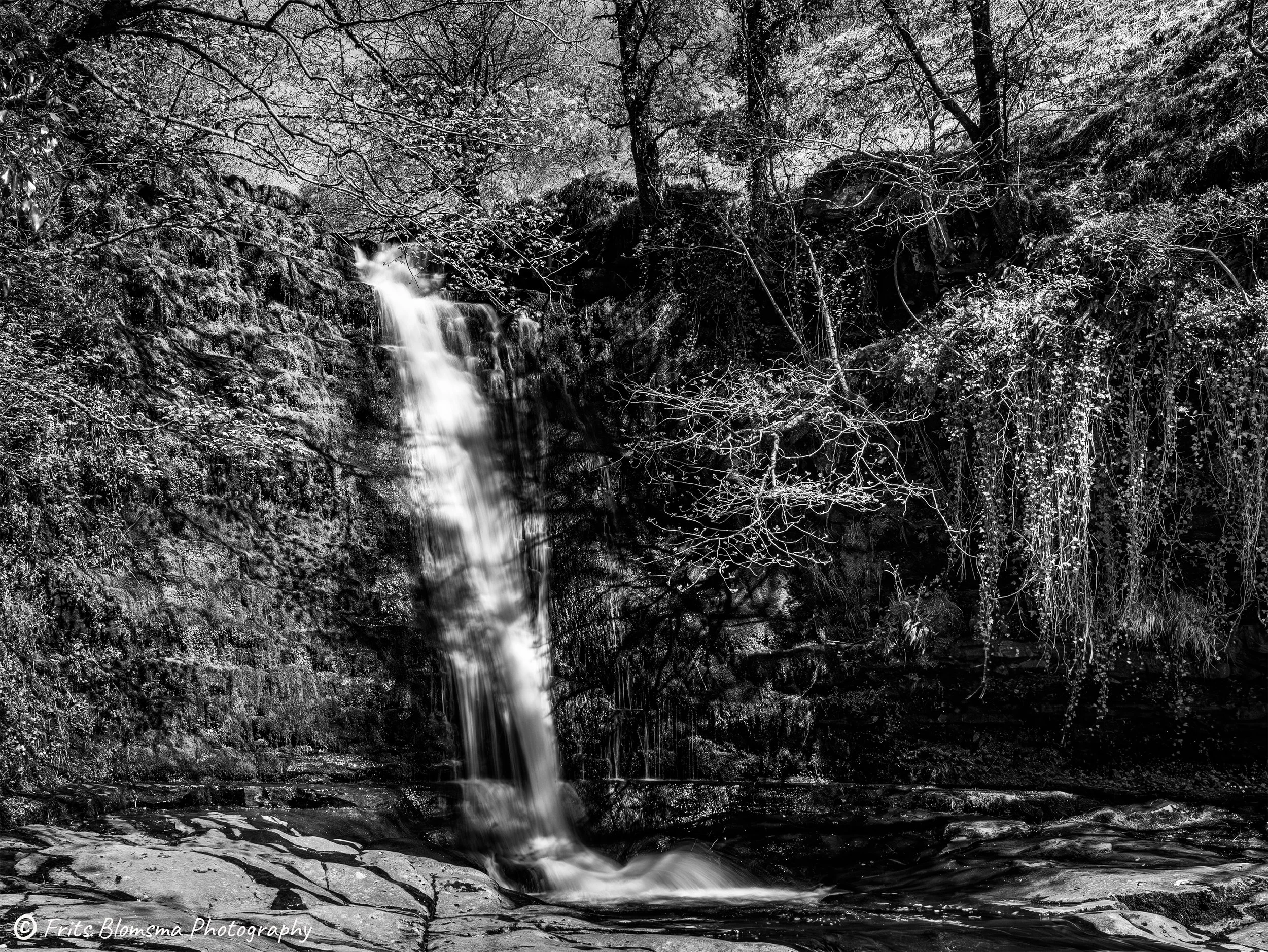
This photograph captures a serene, long-exposure shot of a waterfall nestled in a lush, mossy ravine. Based on the filename and the distinctive red sandstone geology, this is likely a scene from the Brecon Beacons (Bannau Brycheiniog) in Wales—an area world-renowned for its "Waterfall Country."
Here is a breakdown of what makes this image stand out:
1. The Photographic Technique
The photographer, Frits Blomsma, utilized a long exposure to capture the water.
The Silk Effect: Instead of seeing individual droplets or splashes, the water appears as a soft, ethereal veil. This creates a beautiful contrast between the dynamic motion of the stream and the static, rugged texture of the rocks.
Composition: The waterfall is positioned slightly off-center, allowing the eye to wander from the bright white water to the rich textures of the surrounding flora.
2. The Environment & Texture
The image is a masterclass in various shades of green and organic textures:
Moss-Covered Rock: The vertical rock face to the left is almost entirely carpeted in deep green moss, indicating a very humid, clean environment.
The Red Sandstone: At the base of the falls, the characteristic "Old Red Sandstone" of the region is visible. The wet rock reflects the sky and the trees, giving the foreground a metallic, bronzed sheen.
Hanging Vines: To the right, delicate creepers and vines drape down like natural curtains, adding a sense of depth and "secret garden" mystery to the scene.
3. Lighting and Atmosphere
The lighting suggests a bright, clear day, with sunlight filtering through the canopy above.
Highlights: The top of the falls and the bare branches are caught in sharp light, creating a high-contrast look against the shaded depths of the pool.
Seasonality: The sparse leaves on the upper trees suggest this was taken in early spring or late autumn, allowing more light to reach the canyon floor than would be possible in the height of summer.
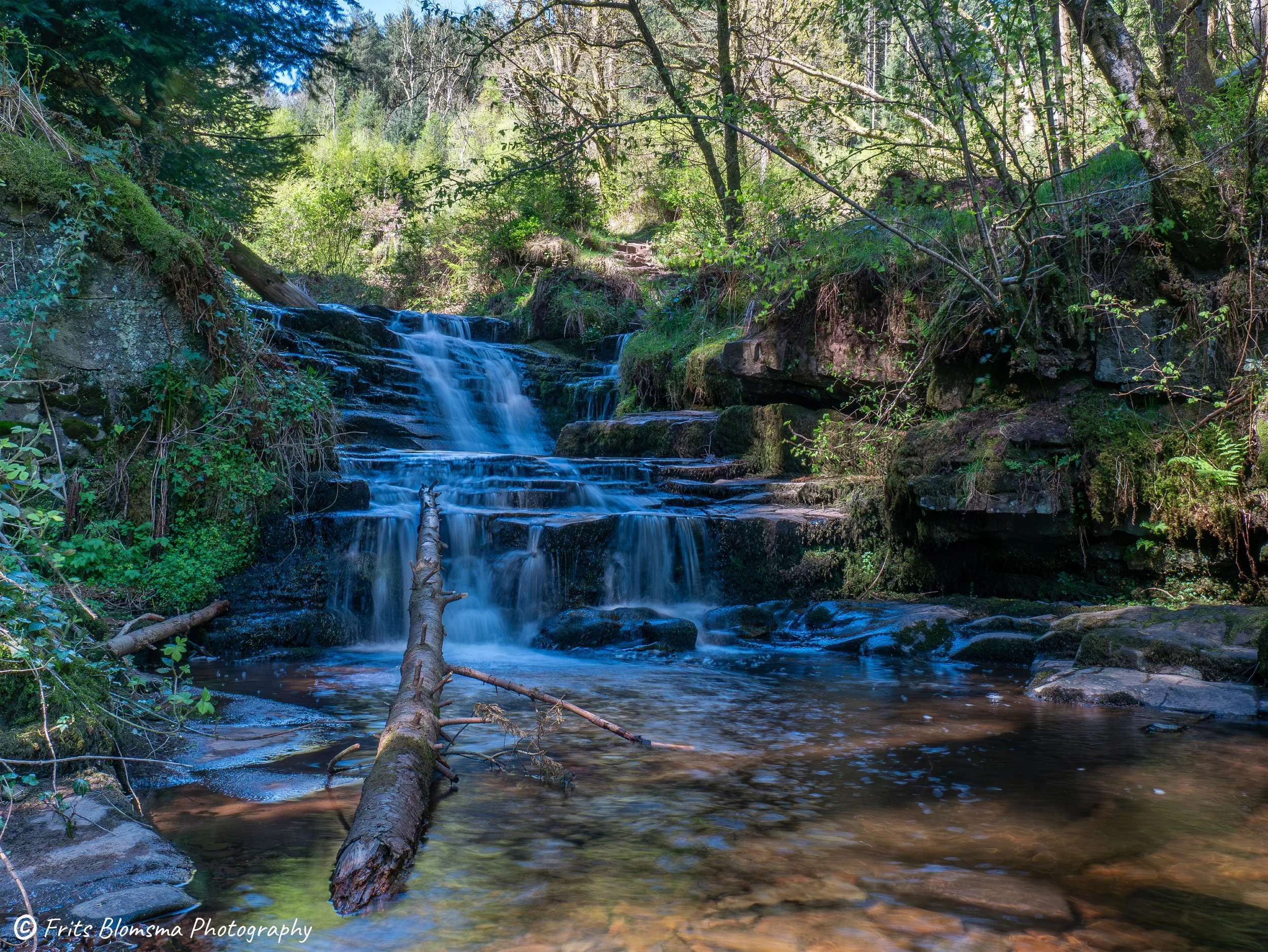
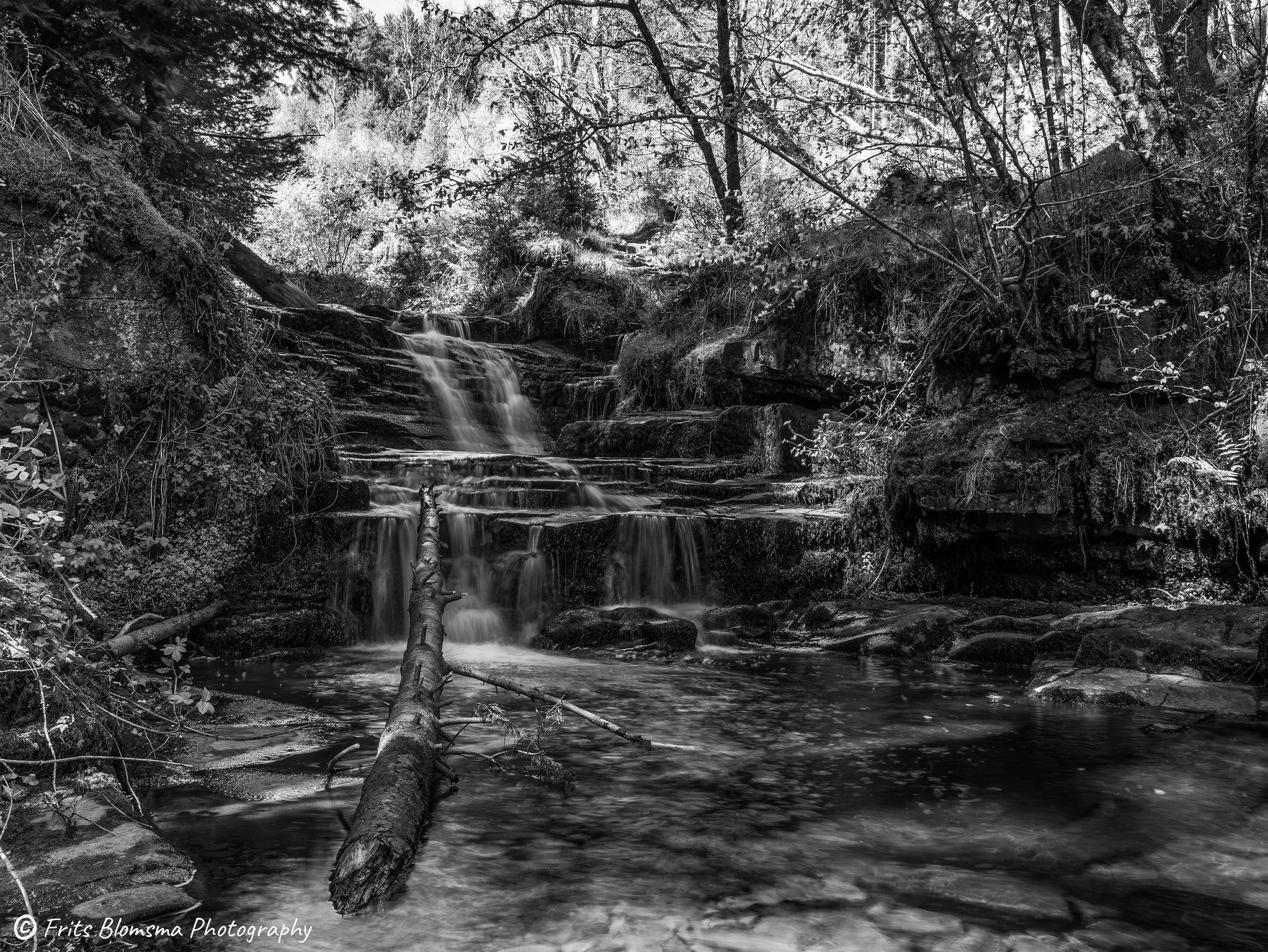
This photograph captures a serene, tiered waterfall nestled within a lush, temperate woodland. The scene is a masterclass in long-exposure photography, which gives the cascading water a silky, ethereal texture as it flows over the dark, stratified rock steps.
Visual Composition
The image is anchored by a fallen coniferous log in the foreground, pointing like a natural compass toward the heart of the falls. This adds a sense of depth and tells a story of the forest's ongoing cycle of growth and decay.
Key Elements:
The Waterfall: A series of gentle cascades over rectangular stone ledges, characteristic of sedimentary rock formations.
The Pool: The water settles into a clear, shallow pool at the bottom, reflecting the surrounding greenery and the blue hues of the sky filtered through the canopy.
The Flora: Vibrant mosses and ferns cling to the damp rock faces, while the background is filled with a dense mix of deciduous and evergreen trees, suggesting a healthy, thriving ecosystem.
Technical Observations
The photographer, Frits Blomsma, likely used a neutral density (ND) filter and a tripod to achieve this shot. By slowing down the shutter speed, the chaotic movement of splashing water is transformed into smooth white ribbons, contrasting beautifully against the sharp, rugged edges of the wet stones.
The lighting appears to be soft daylight, likely filtered through the overhead leaves, which prevents harsh shadows and keeps the colors—from the deep browns of the log to the bright spring greens—rich and saturated.
Mood and Atmosphere
There is a profound sense of tranquility and timelessness in this image. It evokes the cool, damp scent of a forest floor and the rhythmic, white-noise sound of rushing water. It’s the kind of hidden gem one might stumble upon while hiking through the Brecon Beacons or a similar mountainous woodland region.
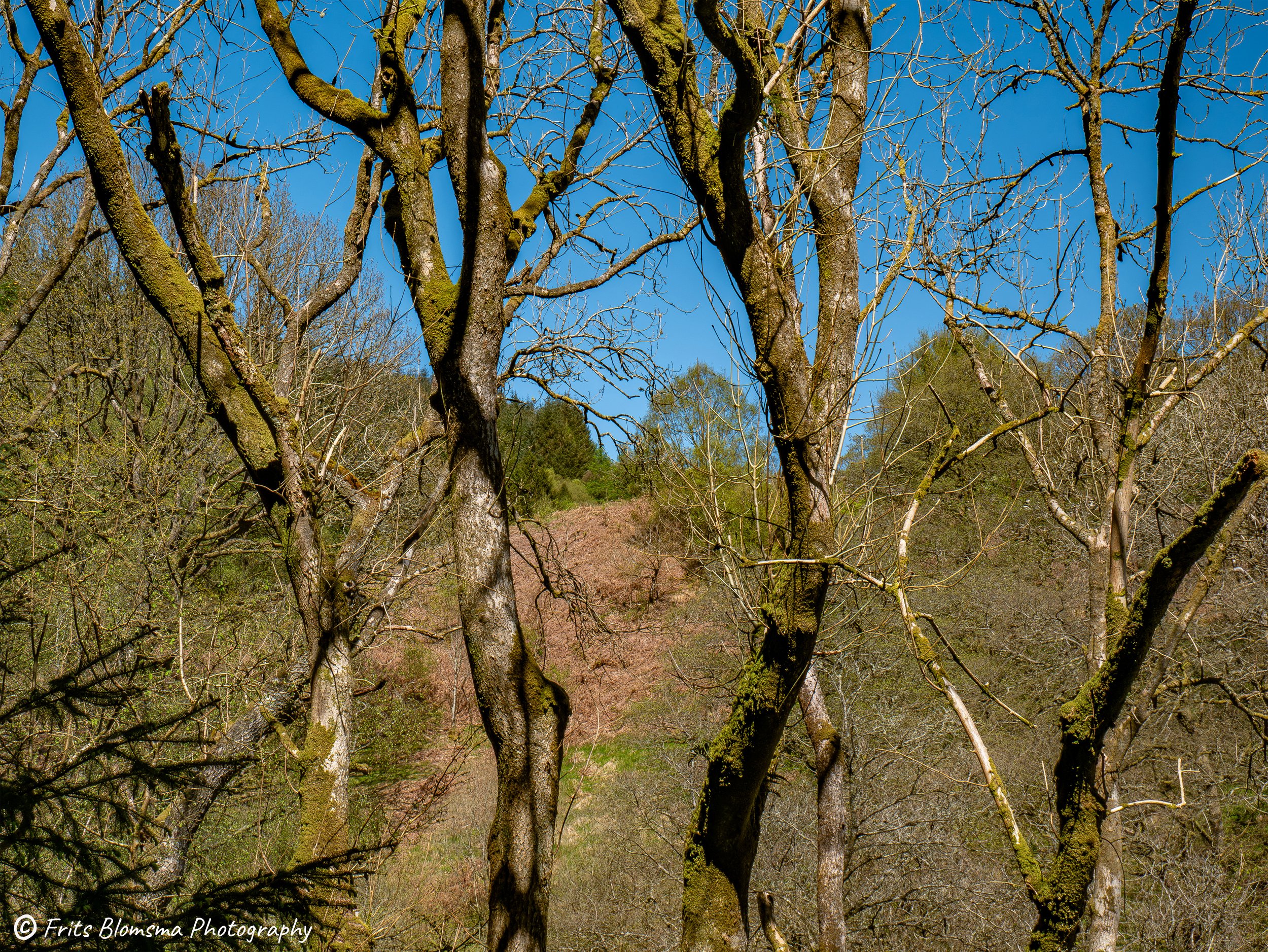
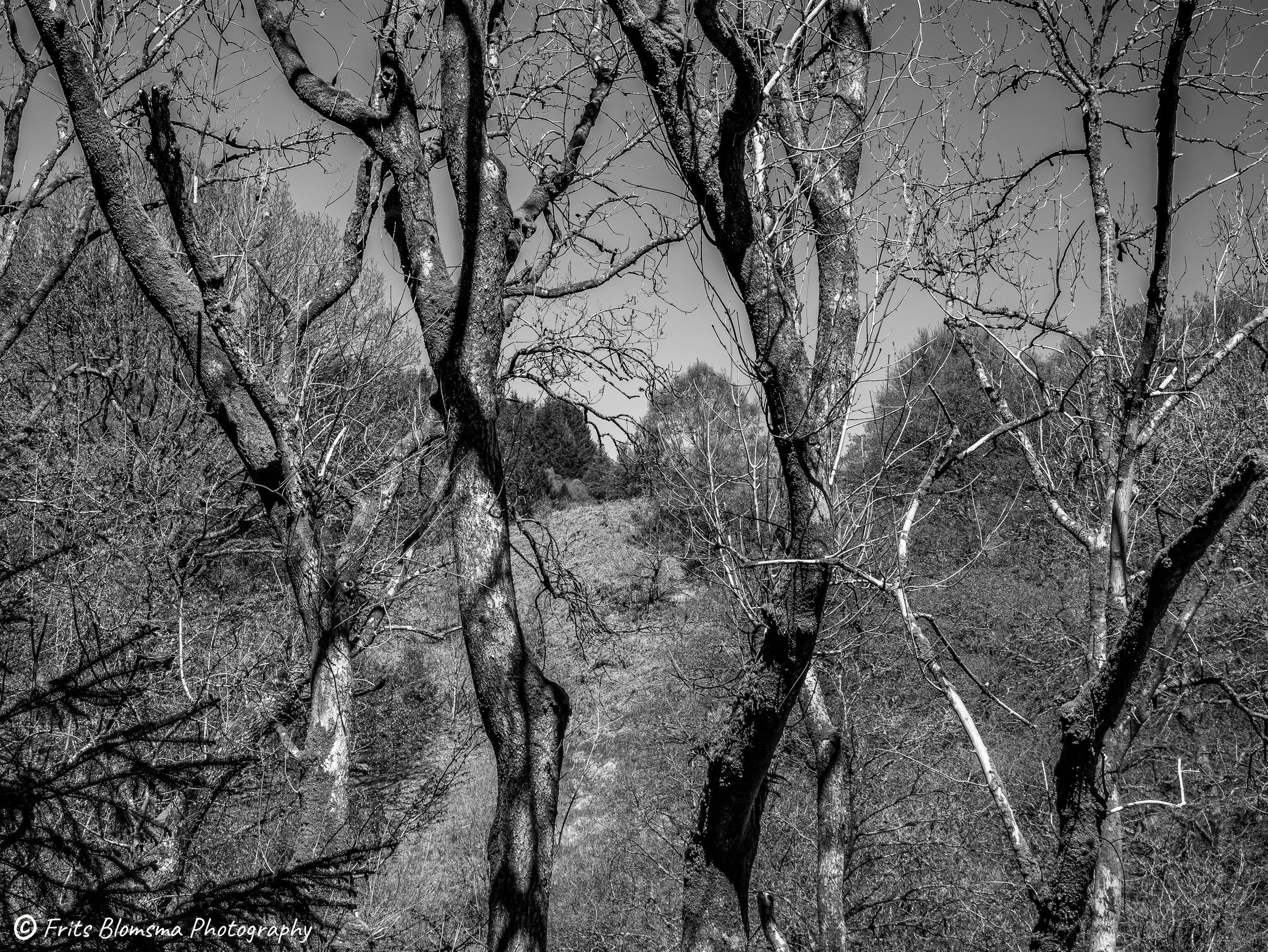
This photograph captures a quiet, sun-drenched moment in a woodland, likely during the transitional period of early spring. The interplay between the rugged texture of the trees and the brilliant clarity of the sky creates a scene that feels both ancient and fresh.
The Composition
The image is anchored by several prominent, moss-covered deciduous trees in the foreground. Their dark, gnarled trunks provide a strong vertical rhythm, framing a glimpse of a hillside in the distance.
Color Palette: The striking contrast between the deep cerulean blue of the sky and the warm, earthy tones of the bark and dried ferns creates a vibrant visual pop.
Textural Detail: The thick, velvet-like green moss clinging to the branches suggests a damp, temperate climate—characteristic of places like the Brecon Beacons (as hinted by the filename).
Seasonal Indicators
There is a distinct "waking up" energy to the photo:
The Canopy: The trees are largely skeletal, yet a fine mist of new green buds is beginning to emerge on the distant treeline.
The Undergrowth: The hillside in the center-frame is covered in the copper-colored remains of last year’s bracken, which has yet to be overtaken by the bright green growth of summer.
Lighting: The harsh, high-angle sunlight creates sharp shadows on the trunks, indicating a clear, crisp day where the sun provides light but perhaps not much heat yet.
Atmosphere and Mood
The photograph evokes a sense of seclusion and stillness. By shooting from within the thicket looking upward and outward, the photographer places us right on the forest floor. It feels like a moment of pause during a hike—the kind of view that makes you stop to appreciate the complexity of a single branch against an endless sky.
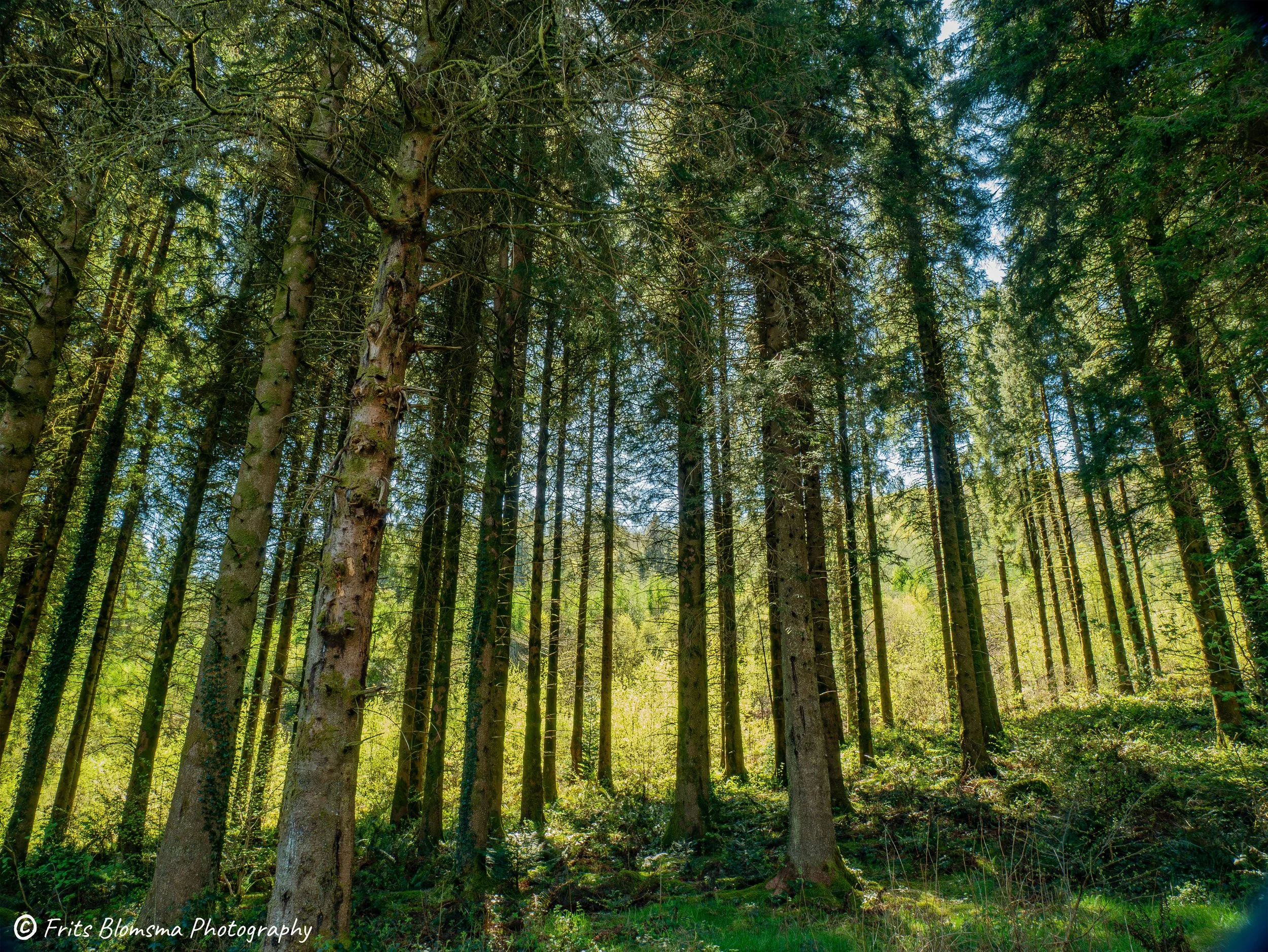
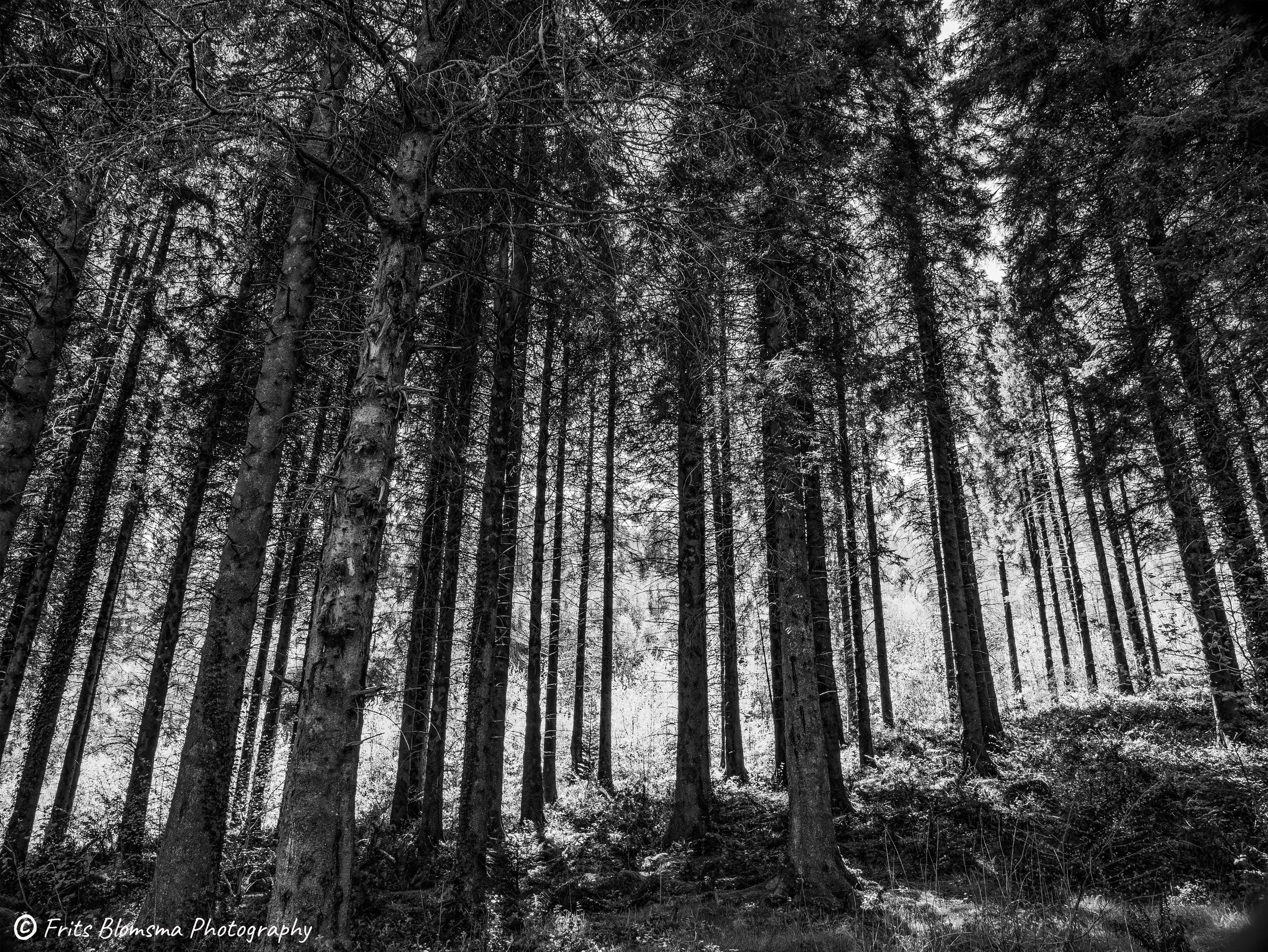
This image captures a classic, sun-drenched woodland scene that feels both expansive and intimate. Based on the photographer's credit and the file name, this is likely a glimpse into the lush forests of the Brecon Beacons (Bannau Brycheiniog) in Wales.
Here is a breakdown of what makes this shot so compelling:
1. Composition and Perspective
The photographer uses a low-angle, wide-lens perspective, which makes the coniferous trees appear to tower into the sky. This "worm's-eye view" emphasizes the verticality of the forest, drawing the viewer's gaze upward toward the canopy. The way the trunks converge slightly toward the top creates a sense of being completely enclosed by nature.
2. Lighting and Color
The lighting is the "secret sauce" of this photo. It appears to be captured during the "Golden Hour" or in the bright light of a clear morning.
Backlighting: The sun is positioned behind the trees, creating a beautiful rim-lighting effect on the trunks and making the fresh spring leaves in the background glow with a vibrant, translucent lime green.
Contrast: There is a lovely play between the deep, cool shadows of the foreground moss and the warm, golden bursts of light filtering through the "windows" between the trunks.
3. Texture and Detail
The photo is rich in organic textures:
The Bark: You can see the rough, scaly texture of the evergreens (likely spruce or fir), some of which are draped in delicate climbing ivy.
The Forest Floor: The ground is a tapestry of ferns, mosses, and brambles, suggesting a healthy, damp ecosystem typical of the Welsh landscape.
4. Atmosphere
There is a profound sense of tranquility and "Shinrin-yoku" (forest bathing) here. The image evokes the smell of pine needles and damp earth, and the stillness of a place where the only sound might be the rustle of wind through the high needles or a distant birdcall.
Technical Note: The watermark attributes the work to Frits Blomsma Photography, whose style often focuses on capturing the natural light and rugged beauty of European landscapes. The high dynamic range in the photo suggests a careful edit to balance the bright sky with the darker details of the forest floor.
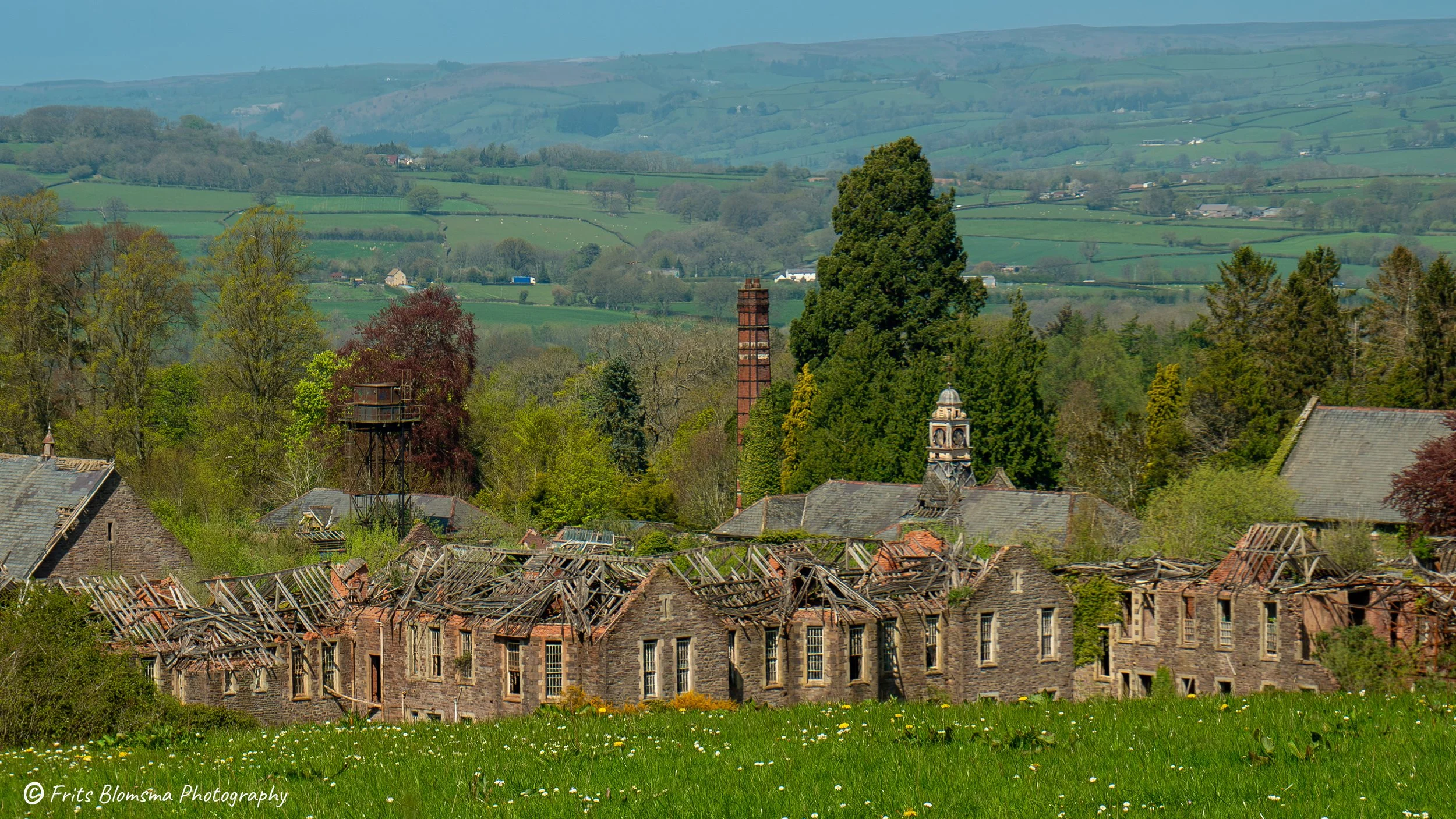
This image captures the haunting contrast between the decay of human architecture and the enduring vitality of the Welsh landscape. The subject is the derelict Mid Wales Hospital (formerly the Brecon and Radnor Joint Counties Lunatic Asylum) located in Talgarth.
Here is a breakdown of the elements that make this photograph so compelling:
1. The Architecture of Abandonment
In the foreground, the skeletal remains of the hospital wards dominate the view. The collapsed roofs reveal a jagged line of rafters that look like ribs against the sky. Built in the late 19th century using local stone, the structures were designed in a "compact arrow" layout. The sight of the rows of empty windows and the crumbling masonry evokes a strong sense of "urban exploration" (urbex) melancholy.
2. Victorian Industrial Silhouettes
Rising from the center of the complex are two iconic landmarks of Victorian institutional design:
The Water Tower: A rusted, skeletal metal structure to the left.
The Clock Tower and Chimney: To the right, the tall, slender brick chimney and the decorative clock tower suggest the self-sufficiency of the asylum in its heyday, when it functioned almost as its own independent village.
3. A Study in Contrast
The photograph is a masterclass in visual juxtaposition:
Structure vs. Nature: While the buildings rot, the surrounding greenery is vibrant and thriving. The foreground is dotted with wildflowers (dandelions and daisies), symbolizing life reclaiming the site.
Gloom vs. Light: Despite the "spooky" nature of the ruins, the lighting is bright and pastoral. The rolling hills of the Brecon Beacons in the background are bathed in a soft, hazy blue-green, grounding the decay in a peaceful, rural context.
4. Historical Weight
The Mid Wales Hospital was closed in 1999 and has since become a magnet for photographers and historians. Looking at this photo, one can’t help but think about the thousands of lives patients and staff that once occupied these halls. What was once a place of "asylum" and order has been surrendered to the elements, making it a powerful memento mori.
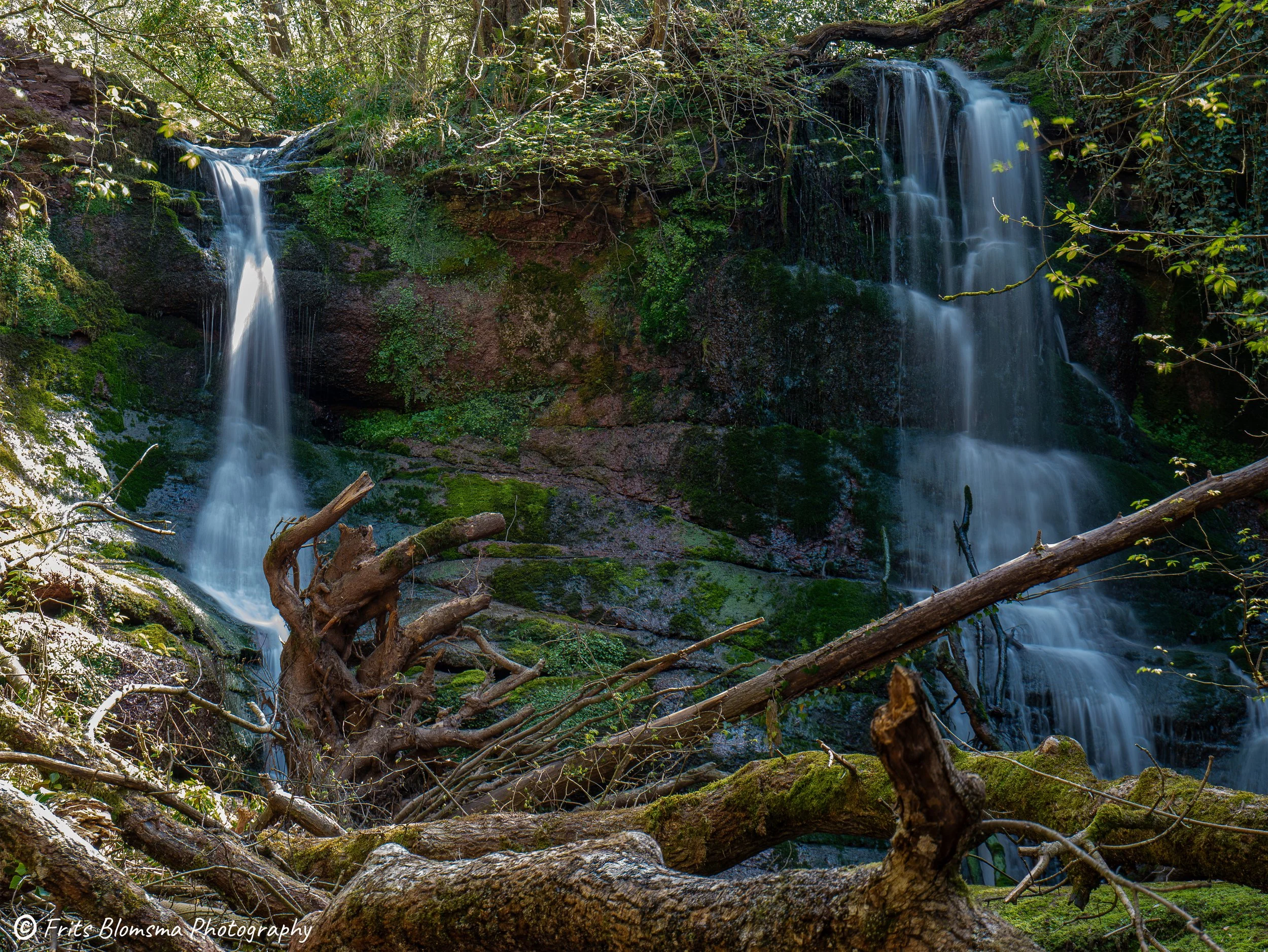
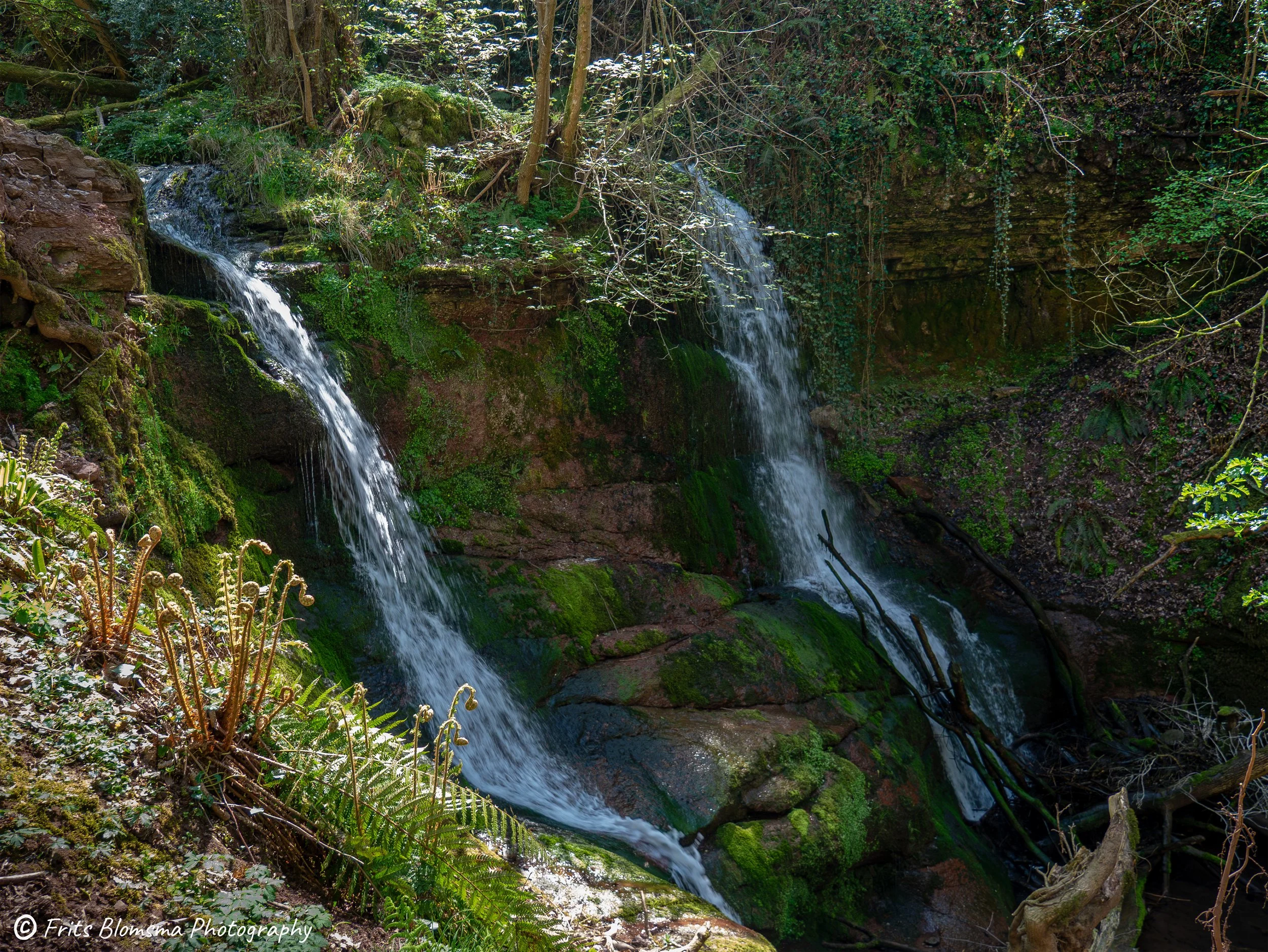
This photograph captures a serene, dual-tiered waterfall tucked within a lush, ancient-feeling woodland. The composition balances the ethereal movement of the water with the rugged, grounded textures of the forest floor.
Visual Highlights
The Twin Falls: Two distinct streams of water cascade down a dark, moss-covered rock face. The photographer likely used a long exposure technique, which transforms the falling water into silky, white ribbons, creating a sense of calm and continuous motion.
The Foreground: A dramatic tangle of fallen trees and mossy branches dominates the lower half of the frame. These logs provide a sense of scale and raw, natural history, suggesting a forest that is left to its own organic cycles of growth and decay.
Texture and Color: The palette is dominated by deep forest greens and earthy browns, contrasted sharply by the bright white of the falls. The vibrant green moss clinging to the rocks and logs indicates a damp, thriving ecosystem.
Mood and Atmosphere
The image evokes a feeling of secluded tranquility. The way the light filters through the canopy above highlights certain patches of moss while leaving others in deep shadow, adding depth and a touch of mystery to the scene. It feels like a "hidden gem" location, far removed from the noise of modern life.
Photographer Note: The watermark attributes the work to Frits Blomsma Photography, whose style here emphasizes the fluid beauty of nature through sharp focus on static elements and a soft blur on the moving water.
This is a classic example of landscape photography that celebrates the "wilder" side of nature—where the chaos of fallen timber and the grace of falling water coexist perfectly.
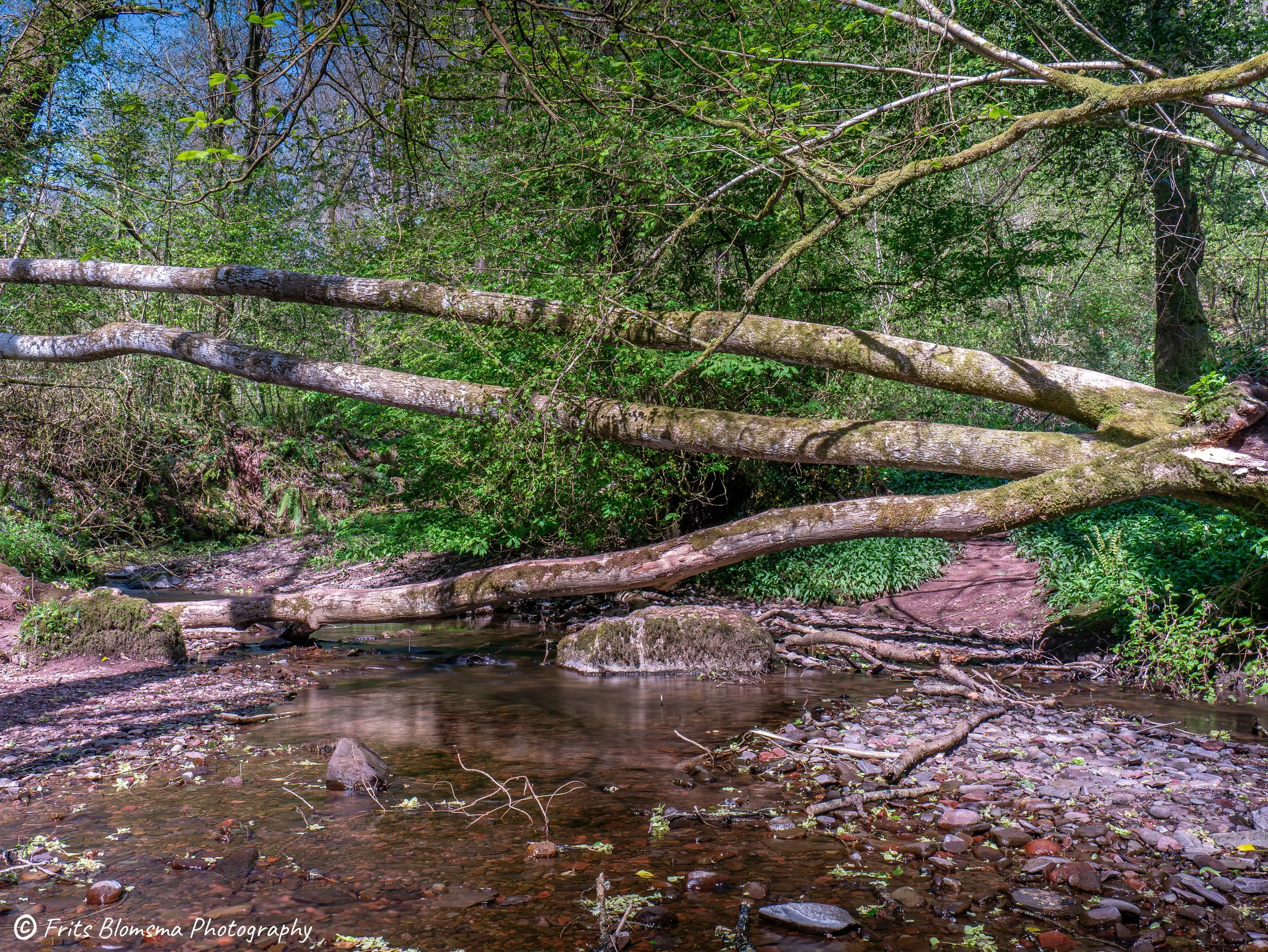
This image captures a serene, moss-drenched scene in what appears to be a lush woodland—likely within the Brecon Beacons (Bannau Brycheiniog) in Wales, given the filename.
The composition is dominated by a fallen tree that has split into several long, horizontal limbs, creating a natural bridge or "rib" structure over a shallow, rocky stream.
Visual Highlights
The Natural Architecture
The way the tree spans the water creates a striking sense of depth. Its bark is textured with moss and lichen, suggesting it has been in this state for some time, slowly becoming a permanent fixture of the landscape. It acts as a focal point that draws the eye from the right bank toward the dense green background.
The Stream Bed
The water is clear and tranquil, reflecting the dappled sunlight filtering through the canopy. The stream bed is a mosaic of:
Reddish-brown stones and pebbles, typical of the Old Red Sandstone found in the Brecon region.
Moss-covered boulders that break the surface.
Submerged twigs and leaf litter, adding to the untamed, organic feel of the forest floor.
Flora and Lighting
Wild Garlic: The bright green, broad-leafed plants clustered on the banks appear to be wild garlic (ramsons), common in British ancient woodlands during spring.
Dappled Light: The lighting is soft yet vibrant, with "hot spots" of sun hitting the leaves and the water, creating a high-contrast, atmospheric "fairytale" aesthetic.
Technical Impression
The photographer, Frits Blomsma, has used a slightly longer exposure (indicated by the smooth, glass-like texture of the moving water) to emphasize the stillness of the woods. The vibrant saturation of the greens and purples in the shadows suggests a post-processing style that leans into the mystical, lush character of the Welsh wilderness.
It’s a perfect snapshot of natural resilience—even in collapse, the fallen tree provides a new structure for the ecosystem and a beautiful subject for the lens.
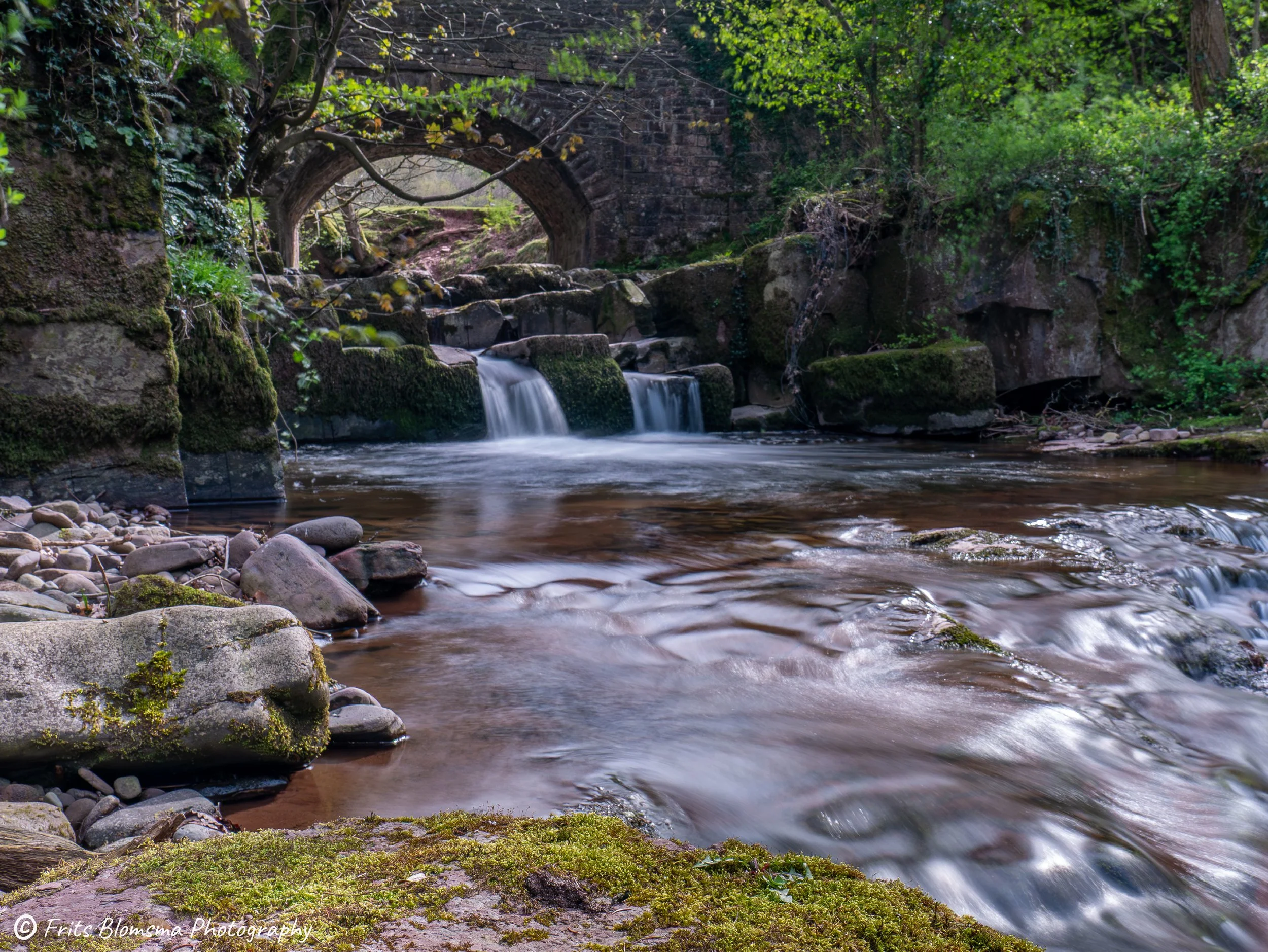
This photograph captures a serene, long-exposure scene of a woodland stream, likely located within the Brecon Beacons (Bannau Brycheiniog) in Wales, as suggested by the filename. The image expertly balances the rugged textures of the Welsh landscape with the soft, ethereal movement of water.
Composition and Visual Elements
The Stone Bridge: The focal point in the background is a rustic, arched stone bridge. It acts as a frame within a frame, drawing the eye toward the distant, sun-dappled foliage and creating a sense of history and permanence.
Cascading Water: The use of a slow shutter speed (long exposure) transforms the small waterfalls and the rushing foreground stream into a silky, white veil. This technique provides a beautiful contrast against the sharp, moss-covered rocks.
Natural Palette: The colors are quintessentially British countryside—deep mossy greens, cool river blues, and the earthy, reddish-brown tones of the riverbed and stones, which are characteristic of the Old Red Sandstone found in the Brecon region.
Atmosphere and Mood
The photo evokes a feeling of tranquility and timelessness. There is a deliberate stillness to the surrounding forest that contrasts with the constant, fluid motion of the river.
"The image captures that specific 'forest bathing' quality where the sound of the water is almost audible through the lens."
Technical Observations
FeatureDescriptionLightingSoft, diffused natural light, likely from an overcast sky or filtered through a heavy canopy, which prevents harsh shadows.TextureHigh detail in the moss and the lichen on the foreground rocks, providing a tactile quality to the image.PerspectiveA low-angle shot that immerses the viewer in the stream, making the small falls feel more significant and grand.
This is a classic piece of landscape photography by Frits Blomsma, showcasing the hidden, fairytale-like corners of the United Kingdom’s national parks. It’s the kind of place where you’d half-expect to find a local legend lingering under the bridge.
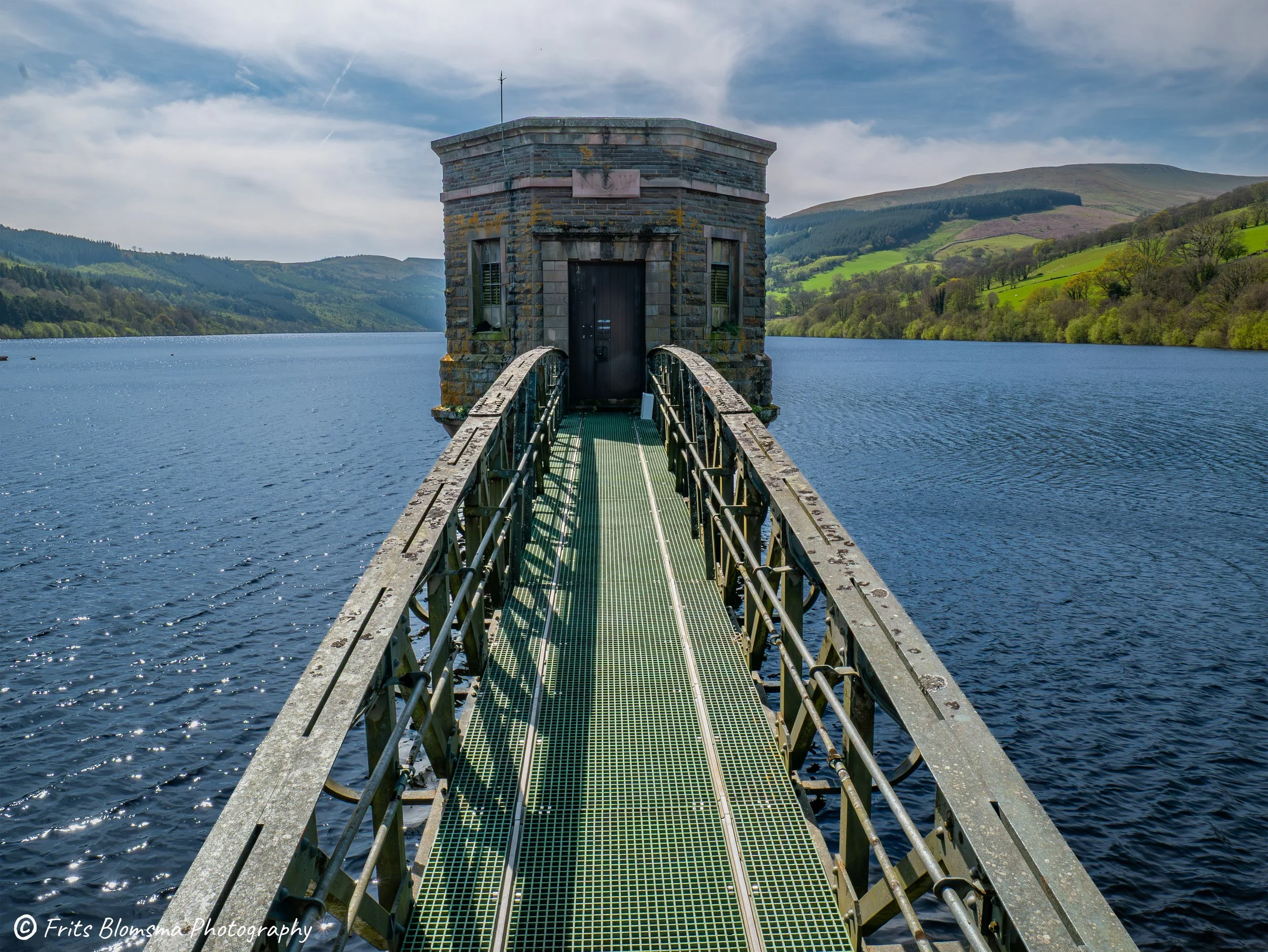
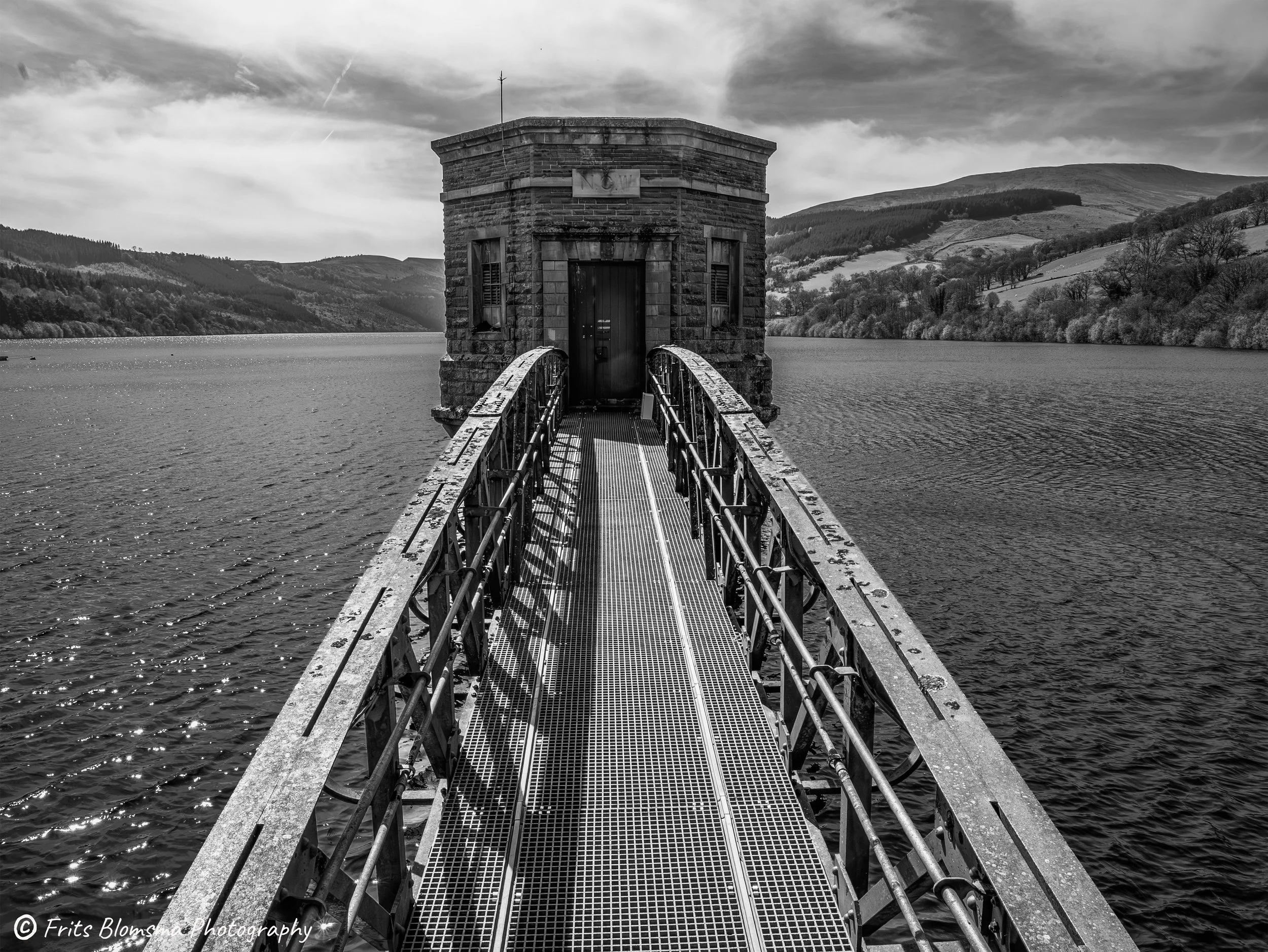
This striking photograph captures the Pontsticill Reservoir valve tower, nestled within the scenic Brecon Beacons (Bannau Brycheiniog) in South Wales. The image expertly balances industrial heritage with the soft, rolling beauty of the Welsh countryside.
Visual Composition
The photographer uses a powerful leading line technique. The metal walkway, with its green grated floor and weathered grey railings, draws the eye directly from the bottom of the frame toward the central subject: the stone valve tower.
The Tower: A hexagonal, neo-Gothic structure built from local stone. It feels both sturdy and mystical, standing as a lonely sentinel in the middle of the water.
The Water: The deep blue of the reservoir is textured by gentle ripples, reflecting a bright, hazy sky.
The Landscape: In the background, the vibrant green hillsides and patches of evergreen forestry showcase the classic topography of the Taf Fechan valley.
Historical Context
Completed around 1927, this reservoir serves as a vital water source for the South Wales Valleys. The tower itself isn't just for show; it houses the valves used to regulate the flow of water from the reservoir into the pipes that supply the surrounding towns.
Interesting Fact: When water levels are exceptionally low, the remains of the old village and the "Big House" (Dol-y-gaer) that were submerged during the reservoir's construction sometimes reappear, like a Welsh Atlantis.
Mood and Atmosphere
There is a profound sense of tranquility and solitude in this shot. The weathered textures of the metal and stone suggest the passage of time, while the bright lighting gives the scene a crisp, modern feel. It’s a testament to how functional infrastructure can, over time, become a seamless and beautiful part of the natural landscape.
The watermark indicates this was captured by Frits Blomsma Photography, who has a clear eye for the rugged, atmospheric charm of the United Kingdom's national parks.
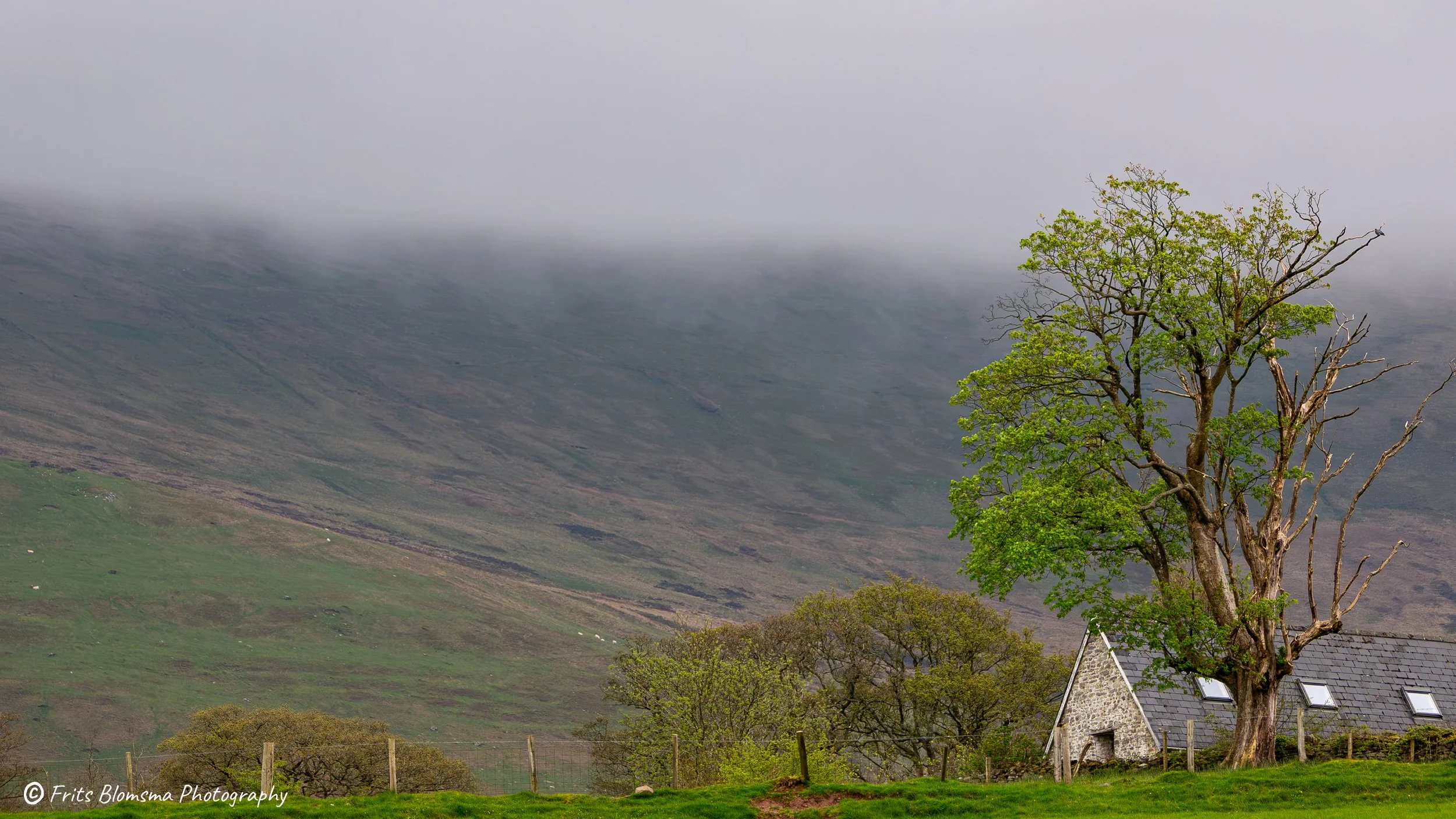
This photograph captures a moody, atmospheric slice of the Brecon Beacons (Bannau Brycheiniog) in Wales. It’s a study in textures—the soft, weightless mist juxtaposed against the rugged, unyielding stone of the hillside and cottage.
Visual Breakdown
1. The Looming Backdrop
The dominant feature is the massive, sloping flank of a mountain, likely part of the Black Mountains range. The low-hanging cloud base creates a "ceiling," slicing off the summit and burying it in a dense, grey fog. This creates a sense of isolation and vastness, making the human elements in the foreground feel small and tucked away.
2. The Lone Sentinel
A striking, asymmetrical tree stands as the focal point on the right.
Vitality vs. Decay: One side of the tree is flush with the vibrant, neon-green leaves of spring, while the other consists of bare, skeletal branches reaching into the mist.
Resilience: Its weathered trunk suggests a long history of enduring the harsh Welsh winds that whip through these valleys.
3. The Vernacular Architecture
Tucked beneath the tree is a traditional stone building, likely a converted barn or a cottage.
Materials: It features classic grey stone masonry and a slate roof, designed to blend into the natural environment.
Modern Touches: The inclusion of several skylights suggests that this historic shell has been modernized into a bright living or studio space, contrasting the ancient exterior with a contemporary interior.
Mood and Atmosphere
The image evokes a feeling of "Hiraeth"—a Welsh word describing a deep longing or nostalgia for a home that may no longer exist, or a yearning for the wild, ancient spirit of the land.
The color palette is restricted to earthy tones:
Muted Olives and Tans on the hillside.
Slate Greys in the sky and stone.
Vivid Lime Green in the new spring growth, providing the only "pop" of saturated color in an otherwise somber scene.
Photographic Note: Frits Blomsma’s composition uses a wide-angle perspective that emphasizes the height of the mountain while keeping the foreground sharp. The lighting is diffused and soft, typical of an overcast day in the UK, which prevents harsh shadows and allows the subtle textures of the grass and stone to shine.
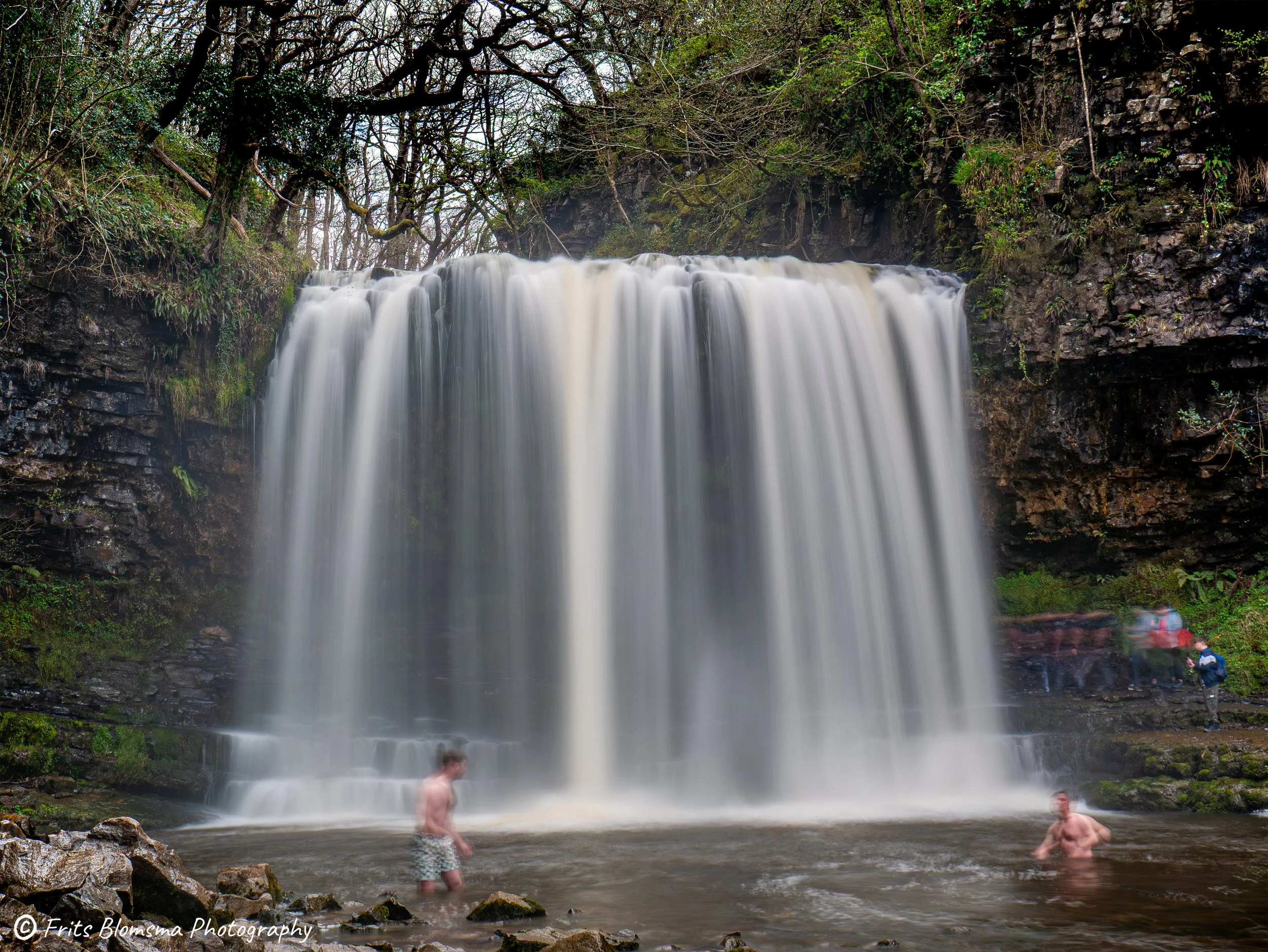
This photo captures a beautifully moody and dynamic scene at a waterfall, likely within the lush landscapes of the Brecon Beacons in Wales (hinted at by the filename). It is a classic long-exposure shot, which transforms the rushing water into a silky, ethereal veil.
Here is a breakdown of what makes this image so compelling:
1. The Power of Long Exposure
The photographer, Frits Blomsma, clearly used a slow shutter speed to achieve this effect.
The Waterfall: Instead of frozen droplets, the water appears as a continuous, soft curtain. The slight "tea" color in the center suggests recent rainfall, washing peat and sediment down from the hills.
The Figures: Because the shutter was open for a few seconds, the people in the water and on the bank are slightly blurred. This "ghosting" effect adds a sense of passing time and movement to the frame.
2. The Composition
The image utilizes a strong natural frame. The dark, jagged rock faces on either side and the overhanging branches at the top draw the viewer’s eye directly toward the center of the falls.
Contrast: There is a wonderful contrast between the dark, textured mossy rocks and the bright, smooth white of the falling water.
Scale: The two swimmers in the foreground provide a perfect sense of scale, showing just how massive and powerful this waterfall truly is.
3. The Atmosphere
The photo feels "alive." You can almost hear the roar of the water and feel the damp, cool mist on your skin.
Cold Water Swimmers: The inclusion of the swimmers adds a touch of human grit. It captures a moment of "wild swimming," a popular activity in this region, emphasizing a raw connection with nature.
The Setting: The dense ferns and bare branches suggest a scene in early spring or late autumn, where the greenery is just beginning to wake up or starting to fade into the earth.
Technical Note: To get a shot like this in broad daylight, a photographer usually needs a Neutral Density (ND) filter, which acts like sunglasses for the lens, allowing for longer shutter speeds without overexposing the image.
It’s a fantastic shot that balances the stillness of the ancient rocks with the relentless, kinetic energy of the water.
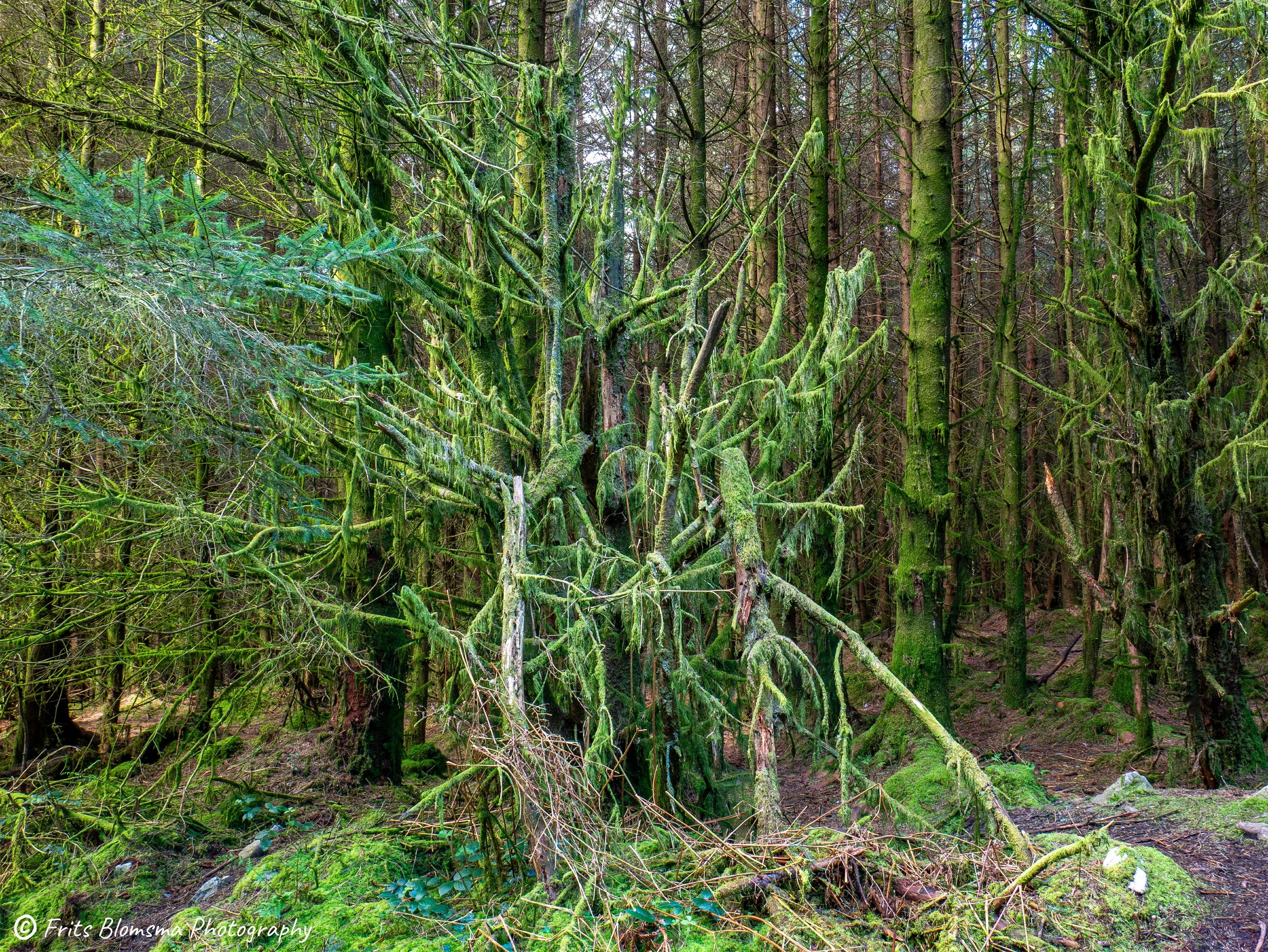
This image captures a strikingly ethereal, almost "haunted" corner of a coniferous forest, likely within the Brecon Beacons (as hinted by the filename). The scene is dominated by a dense, tangled web of branches draped in heavy, vibrant green moss and lichen, creating a texture that feels more underwater than terrestrial.
Here is a breakdown of what makes this shot so compelling:
1. The "Old Growth" Aesthetic
While many commercial forests feel uniform and orderly, this particular pocket feels wild and ancient. The centerpiece is a skeletal, broken tree that has become a host for life. This process—where dead wood provides a foundation for mosses and fungi—is a hallmark of a healthy, damp ecosystem, often referred to as a temperate rainforest.
2. Texture and Color Palette
The photo is a masterclass in the color green. You can see a range of hues:
Electric Lime: Where the light hits the fresh moss.
Deep Forest Green: In the shadows of the needles.
Silvery-Grey: From the stringy lichen (likely Usnea, or "Old Man's Beard") hanging from the branches, which acts as a bio-indicator of extremely clean air.
3. Compositional Chaos
The photographer, Frits Blomsma, has captured the beautiful "mess" of nature. There is no clear single focal point; instead, the eye wanders through the intersecting lines of the vertical trunks and the chaotic, drooping diagonals of the mossy branches. This creates a sense of being "lost" in the woods, evoking a mood that is both peaceful and slightly mysterious.
4. Lighting
The lighting is soft and diffused, typical of an overcast day or a deep forest canopy. This lack of harsh shadows allows the intricate details of the moss and the rough bark of the trees to pop, giving the image a high-definition, tactile quality. You can almost smell the damp earth and pine needles just by looking at it.
Nature's Architecture: In environments like this, the forest floor and the canopy merge. The fallen branches don't just decay; they become "nurse logs," supporting the next generation of the forest's micro-flora.
This image is a beautiful reminder of the quiet, complex life that thrives in the damp corners of the world, away from the groomed trails.
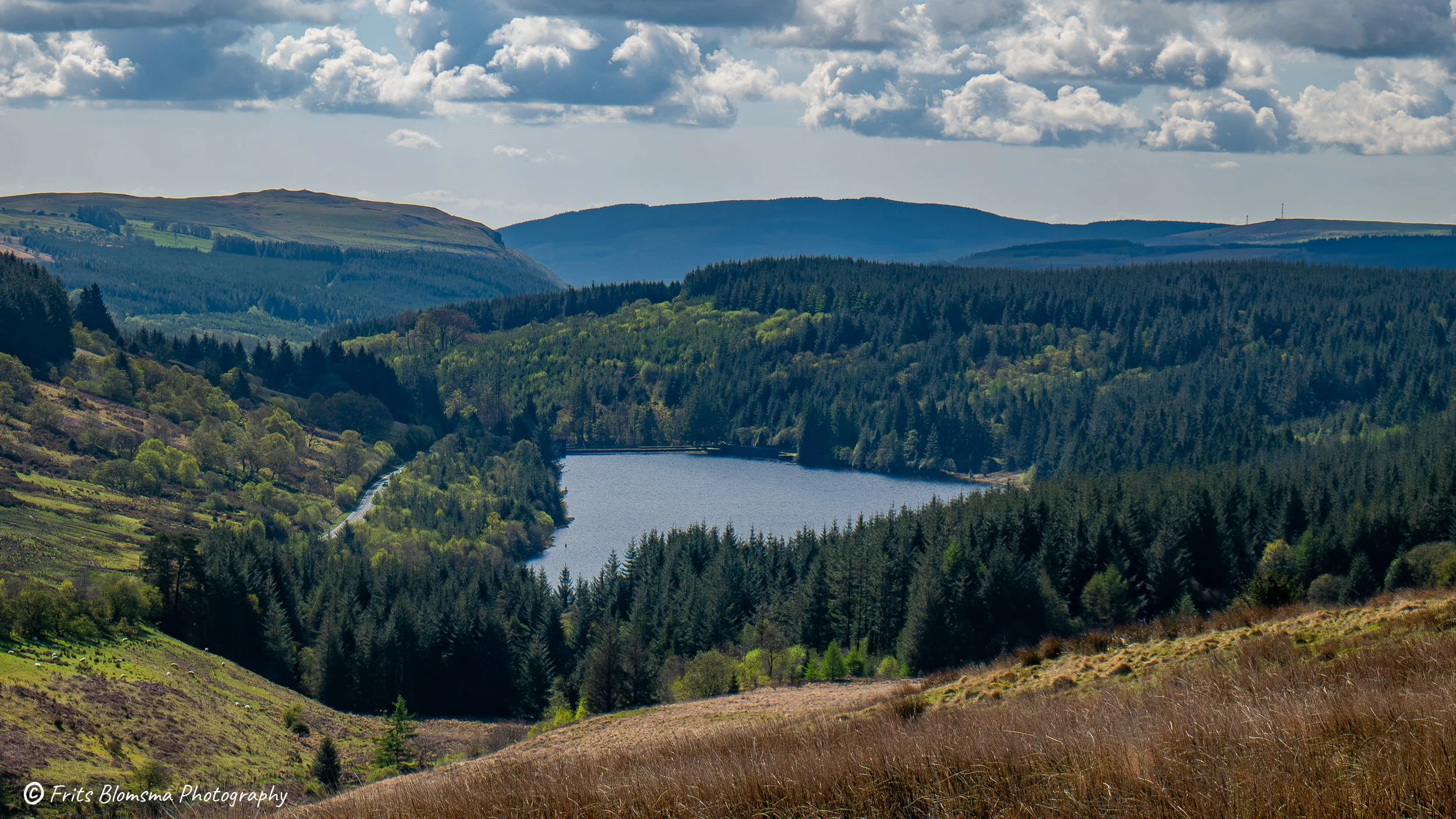
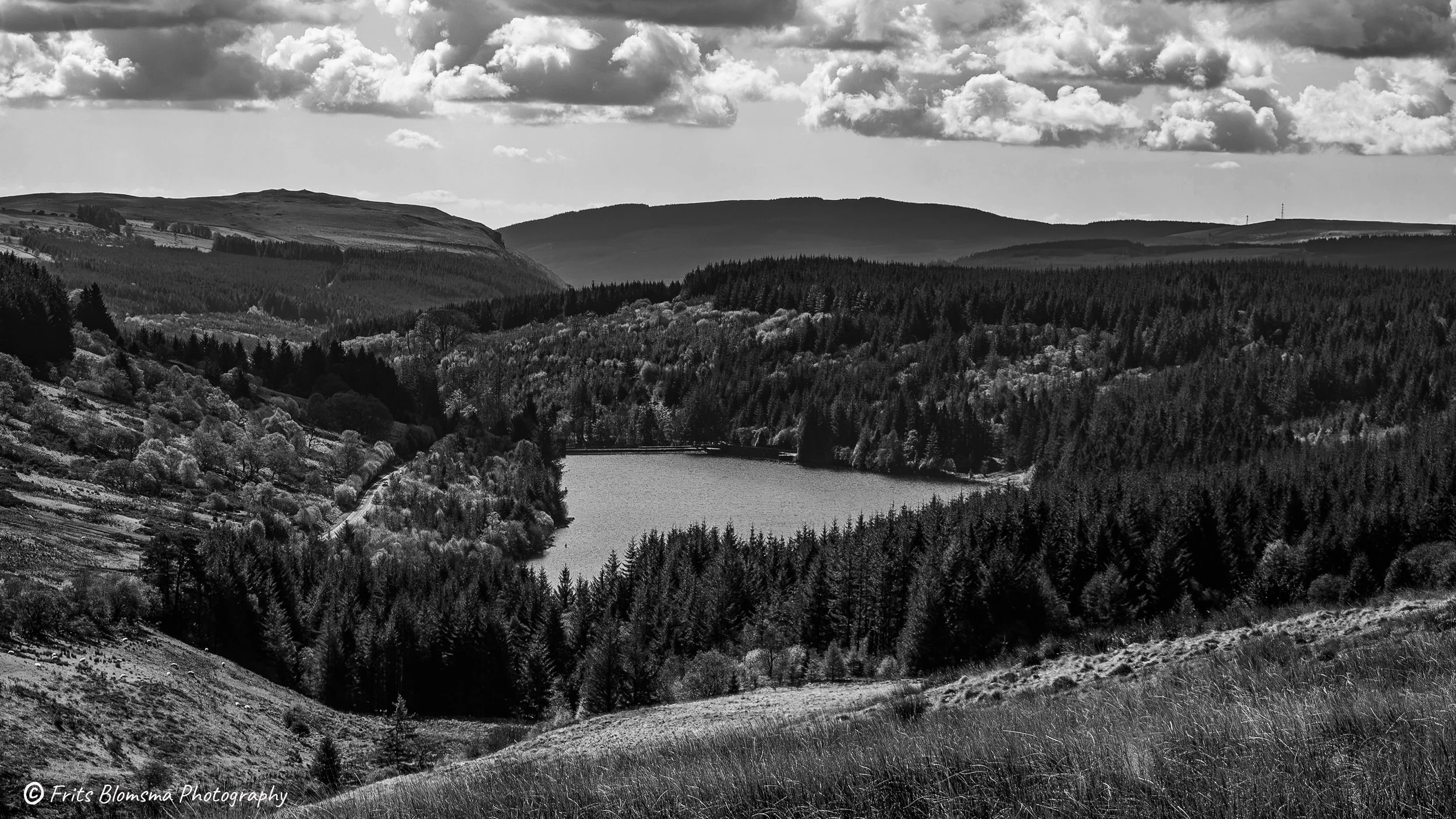
That is a stunning capture of the Brecon Beacons (Bannau Brycheiniog) in Wales. The photographer, Frits Blomsma, has framed a classic Welsh landscape that perfectly captures the transition between managed forestry and the wild, rolling uplands.
Landscape Overview
The image showcases a deep valley anchored by a serene reservoir, likely part of the Taff Fawr or similar catchment area. The scene is a masterclass in layers and textures:
The Foreground: Golden-brown moorland grasses suggest it might be early spring or late autumn. The rough texture of the hillside leads the eye downward into the lush valley.
The Midground: A dense, dark evergreen forest (likely Sitka spruce) hugs the water's edge, contrasting sharply with the brighter, lime-green deciduous trees beginning to bud or leaf out along the road on the left.
The Background: The "flat-topped" silhouettes of the Old Red Sandstone peaks define the horizon. These are the iconic silhouettes that make the Brecon Beacons recognizable to hikers and nature lovers worldwide.
Atmosphere and Light
The lighting is what truly elevates this photo. You can see:
Dappled Sunlight: The cloud cover is creating "islands of light" across the hillsides, a phenomenon common in the UK's mountainous regions that gives the landscape a dynamic, shifting feel.
The Water: The reservoir acts as a mirror for the sky, providing a cool, blue focal point amidst the warm earth tones and deep greens of the forest.
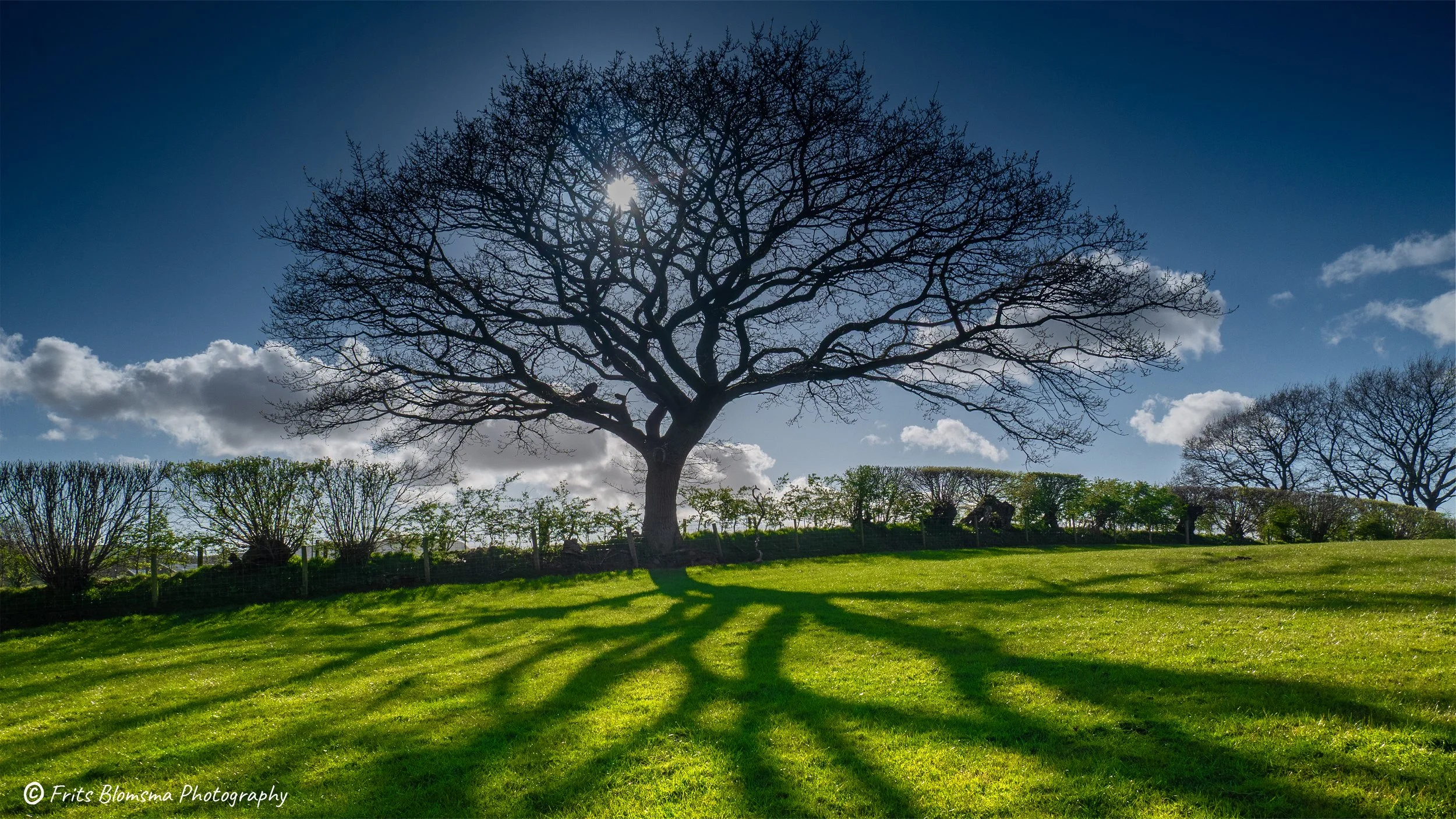
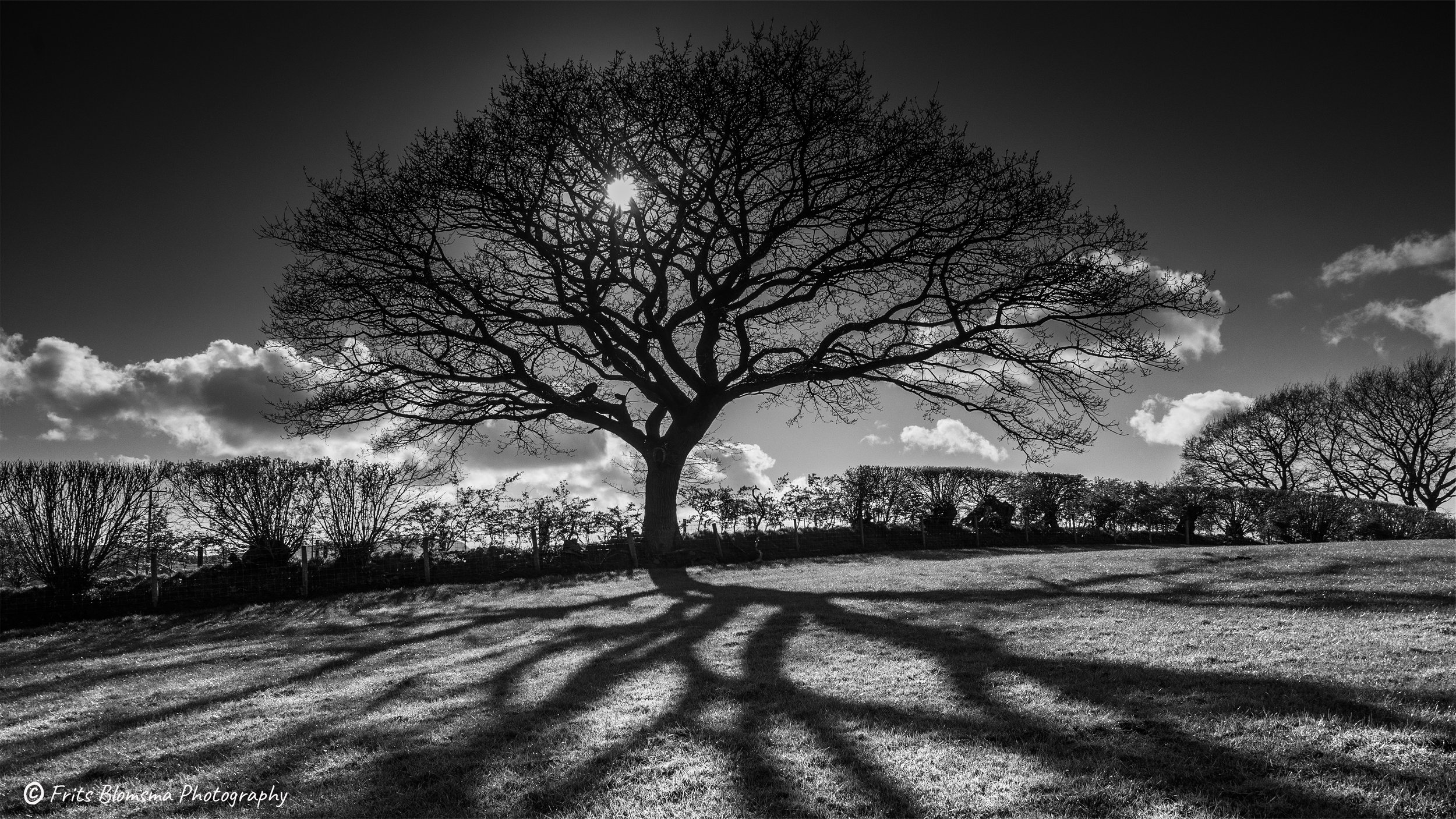
This is a striking example of silhouette and shadow play, capturing a moment where nature’s geometry takes center stage. The photographer, Frits Blomsma, has used a low sun angle to transform a standard pastoral scene into a dramatic study of light and form.
Visual Breakdown
1. The Focal Point: The Lone Tree
The tree stands as a dark, intricate silhouette against a bright, clear sky. Because the sun is positioned directly behind the upper canopy, it creates a "rim lighting" effect, emphasizing the fractal-like complexity of the bare branches. It suggests a late autumn or early winter setting, where the absence of leaves allows the "skeleton" of the tree to be the star.
2. The Mirror Image: The Shadow
The most compelling part of the composition is the elongated shadow stretching toward the viewer.
Perspective: The shadow acts as a leading line, pulling the eye from the bottom of the frame up toward the base of the tree.
Contrast: The dark, cool tones of the shadow provide a sharp counterpoint to the vibrant, sun-drenched green of the grass.
3. Composition and Color
Rule of Thirds: The horizon line sits roughly in the lower third of the image, giving the sky and the sprawling canopy plenty of room to "breathe."
The Sky: The deep gradient of blue at the top fades into a brighter, hazy glow near the horizon, punctuated by soft, white cumulus clouds that add texture without distracting from the main subject.
The Hedgerow: A manicured line of shrubs and a stone wall/fence run horizontally, grounding the tree and suggesting a managed agricultural landscape, likely in a place like the UK (hinted at by the filename "Brecon").
Mood and Atmosphere
The image evokes a sense of serenity and solitude. There is a rhythmic balance between the stillness of the tree and the implied movement of the sun. It captures that "golden hour" feeling where the world feels quiet, and the light makes even a simple field look monumental.
Technical Note: To capture a shot like this without blowing out the highlights or losing all detail in the grass, the photographer likely used a high dynamic range (HDR) technique or careful exposure compensation to balance the intense backlight of the sun with the rich greens of the foreground.
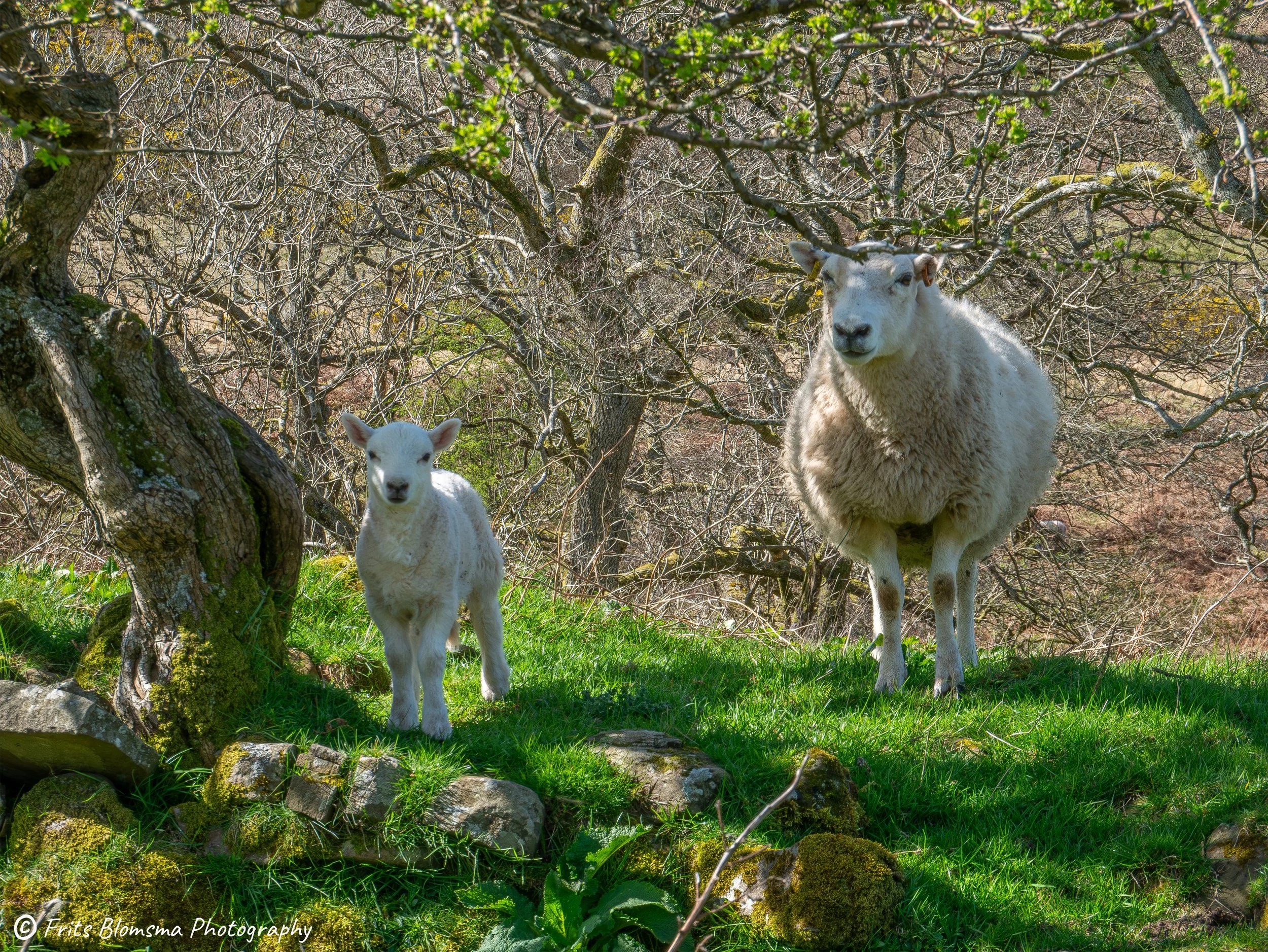
A quiet moment unfolds in a sunlit woodland clearing. Beneath a tangle of twisting, leaf-dappled branches, The adult sheep’s thick, slightly weathered wool contrasts with the lamb’s soft, bright coat, emphasizing the tenderness of early life against the resilience of maturity.
They stand on a small rise of vivid green grass, edged with moss-covered stones that hint at an old boundary or forgotten path. The lamb faces forward with a tentative curiosity, as if just beginning to understand the world, while the ewe’s steady gaze suggests watchfulness and quiet protection.
The surrounding trees, still sparse with early-season leaves, create a textured backdrop of grays and browns, making the fresh greens and the sheep’s pale coats stand out. Sunlight filters through the branches, scattering patches of light across the ground and adding a gentle warmth to the scene.
Overall, the image captures a sense of calm, renewal, and the simple bond between parent and offspring nature in one of its most peaceful and enduring rhythms.
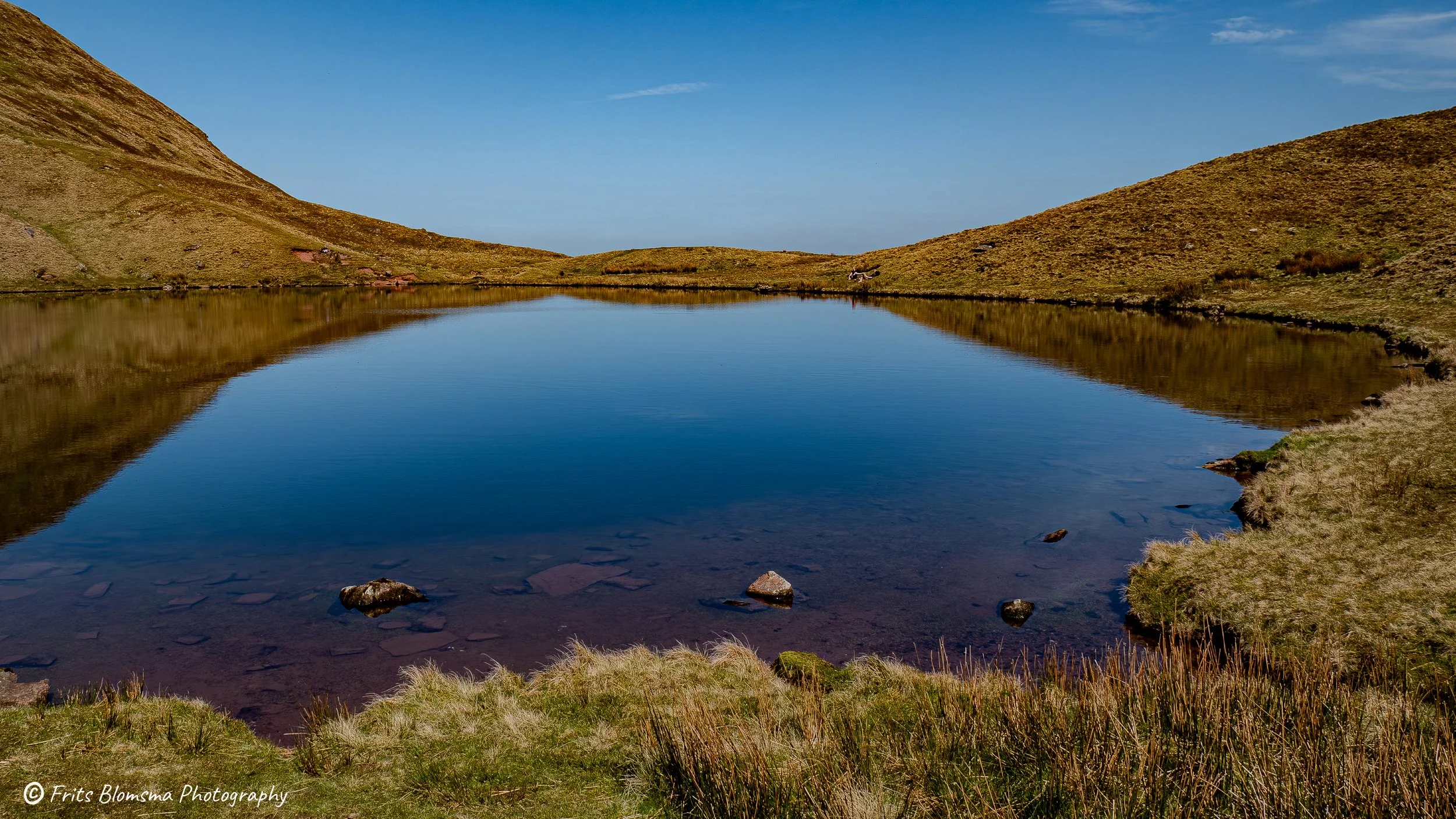
A quiet stillness settles over this small mountain lake in Brecon Beacons National Park. The water lies almost perfectly calm, turning the sky into a mirror and blurring the line between land and air. Gentle slopes rise on either side, their muted browns and golds suggesting a landscape shaped by wind, weather, and time rather than human touch.
In the foreground, tufts of grass lean slightly, as if caught mid-whisper by a passing breeze. Beneath the clear surface, stones rest undisturbed, visible through the shallow edge of the lake small details that give the scene a sense of clarity and honesty. There’s no rush here, no movement demanding attention—just a quiet balance between earth, water, and sky.
The hills cradle the lake like a natural basin, creating a sense of shelter and solitude. It feels like a place where time slows down, where the only sounds might be distant wind or the occasional ripple across the water. The simplicity of the composition soft hills, still water, open sky—makes the moment feel both expansive and intimate at once.
It’s the kind of landscape that doesn’t try to impress, but lingers in your mind anyway.
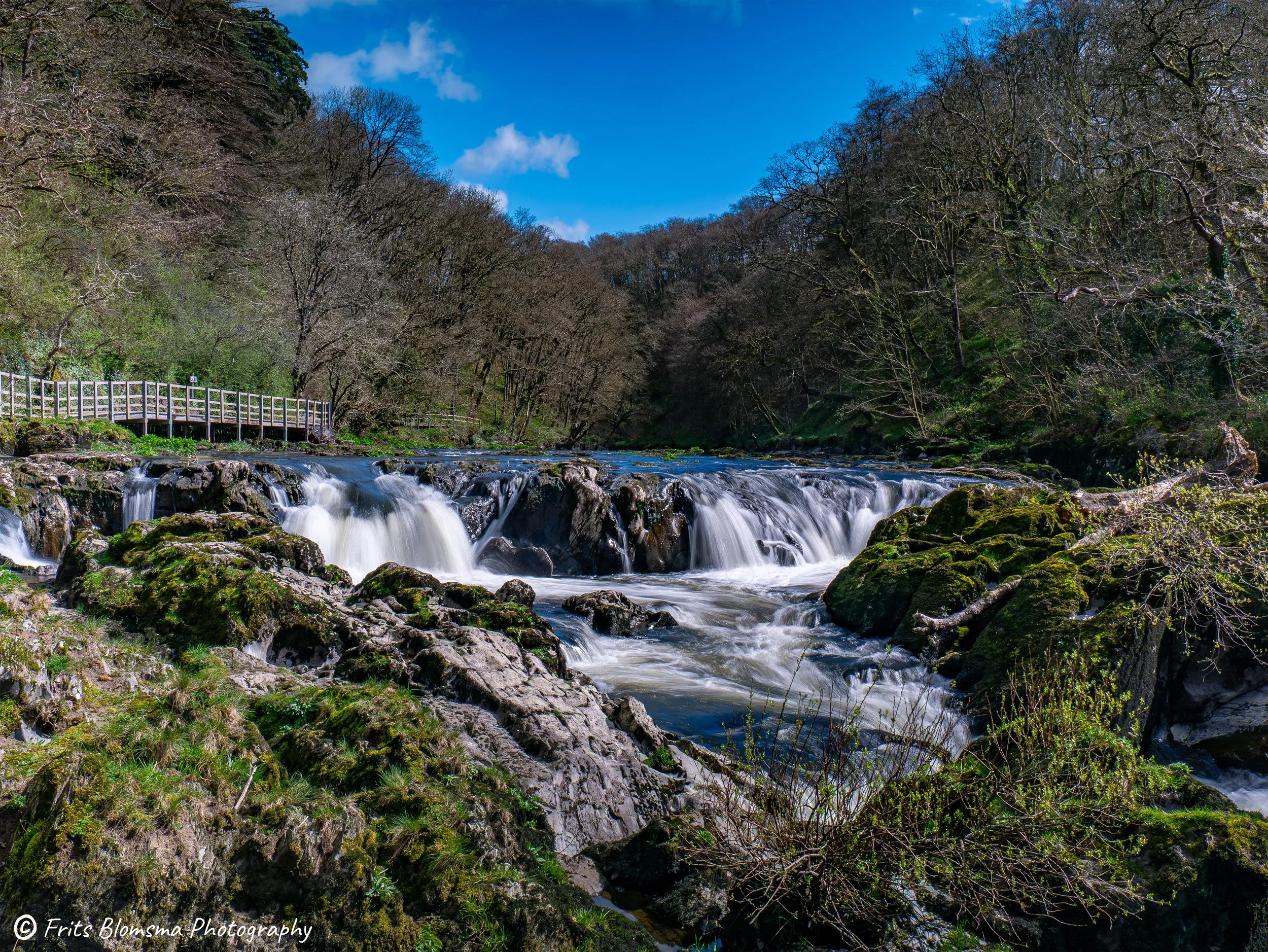
The scene feels like a quiet pause in the middle of motion. A low waterfall stretches across the frame, its water spilling in soft white ribbons over dark, weathered rock. The flow isn’t dramatic or towering, but steady—confident—spreading out in a way that makes the whole river seem alive rather than rushed.
On either side, the banks rise into dense woodland. The trees are still bare or just beginning to wake, their branches forming a delicate lattice against a bright, open sky. Patches of green moss cling to the rocks in the foreground, adding texture and softness to the otherwise rugged terrain. You can almost feel the dampness in the air, the coolness rising from the water.
To the left, a wooden walkway edges along the river, gently curving into the distance. It hints at human presence without interrupting the natural rhythm of the place an invitation to wander, to pause, to listen.
The light is crisp and clean, casting a clarity over everything. The blue sky reflects in the calmer stretches of water, while sunlight picks out highlights in the falling stream. It’s the kind of place where sound matters as much as sight the constant hush of water, the rustle of branches, the quiet hum of a landscape in balance.
Overall, the photo captures a moment that feels both grounded and fleeting: a peaceful stretch of river that keeps moving, even as everything around it seems still.
No results found
No results match your search. Try removing a few filters.