
 Image 1 of 1
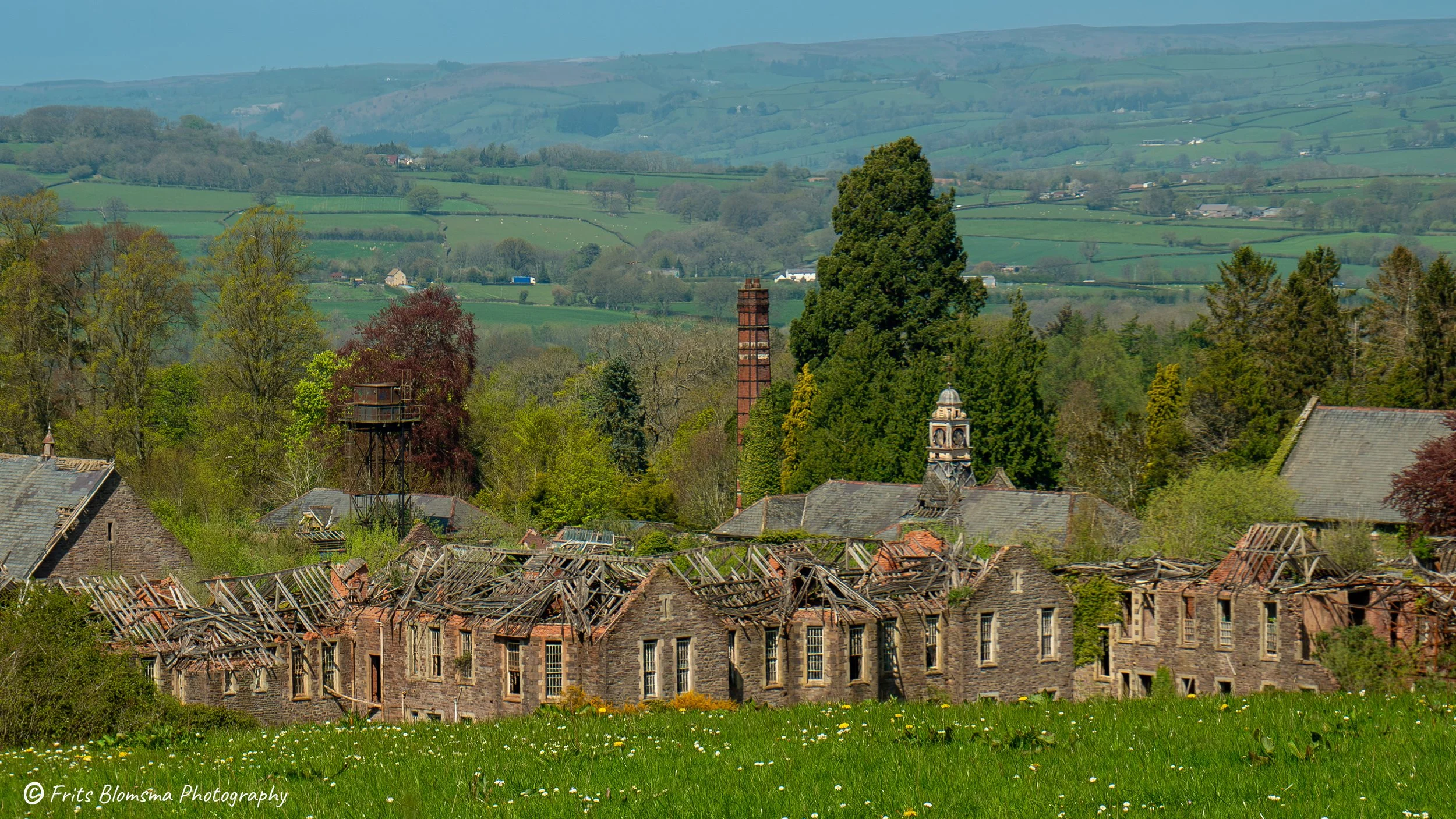
This image captures the haunting contrast between the decay of human architecture and the enduring vitality of the Welsh landscape. The subject is the derelict Mid Wales Hospital (formerly the Brecon and Radnor Joint Counties Lunatic Asylum) located in Talgarth.
Here is a breakdown of the elements that make this photograph so compelling:
In the foreground, the skeletal remains of the hospital wards dominate the view. The collapsed roofs reveal a jagged line of rafters that look like ribs against the sky. Built in the late 19th century using local stone, the structures were designed in a "compact arrow" layout. The sight of the rows of empty windows and the crumbling masonry evokes a strong sense of "urban exploration" (urbex) melancholy.
Rising from the center of the complex are two iconic landmarks of Victorian institutional design:
The Water Tower: A rusted, skeletal metal structure to the left.
The Clock Tower and Chimney: To the right, the tall, slender brick chimney and the decorative clock tower suggest the self-sufficiency of the asylum in its heyday, when it functioned almost as its own independent village.
The photograph is a masterclass in visual juxtaposition:
Structure vs. Nature: While the buildings rot, the surrounding greenery is vibrant and thriving. The foreground is dotted with wildflowers (dandelions and daisies), symbolizing life reclaiming the site.
Gloom vs. Light: Despite the "spooky" nature of the ruins, the lighting is bright and pastoral. The rolling hills of the Brecon Beacons in the background are bathed in a soft, hazy blue-green, grounding the decay in a peaceful, rural context.
The Mid Wales Hospital was closed in 1999 and has since become a magnet for photographers and historians. Looking at this photo, one can’t help but think about the thousands of lives patients and staff that once occupied these halls. What was once a place of "asylum" and order has been surrendered to the elements, making it a powerful memento mori.
This image captures the haunting contrast between the decay of human architecture and the enduring vitality of the Welsh landscape. The subject is the derelict Mid Wales Hospital (formerly the Brecon and Radnor Joint Counties Lunatic Asylum) located in Talgarth.
Here is a breakdown of the elements that make this photograph so compelling:
In the foreground, the skeletal remains of the hospital wards dominate the view. The collapsed roofs reveal a jagged line of rafters that look like ribs against the sky. Built in the late 19th century using local stone, the structures were designed in a "compact arrow" layout. The sight of the rows of empty windows and the crumbling masonry evokes a strong sense of "urban exploration" (urbex) melancholy.
Rising from the center of the complex are two iconic landmarks of Victorian institutional design:
The Water Tower: A rusted, skeletal metal structure to the left.
The Clock Tower and Chimney: To the right, the tall, slender brick chimney and the decorative clock tower suggest the self-sufficiency of the asylum in its heyday, when it functioned almost as its own independent village.
The photograph is a masterclass in visual juxtaposition:
Structure vs. Nature: While the buildings rot, the surrounding greenery is vibrant and thriving. The foreground is dotted with wildflowers (dandelions and daisies), symbolizing life reclaiming the site.
Gloom vs. Light: Despite the "spooky" nature of the ruins, the lighting is bright and pastoral. The rolling hills of the Brecon Beacons in the background are bathed in a soft, hazy blue-green, grounding the decay in a peaceful, rural context.
The Mid Wales Hospital was closed in 1999 and has since become a magnet for photographers and historians. Looking at this photo, one can’t help but think about the thousands of lives patients and staff that once occupied these halls. What was once a place of "asylum" and order has been surrendered to the elements, making it a powerful memento mori.