
 Image 1 of 2
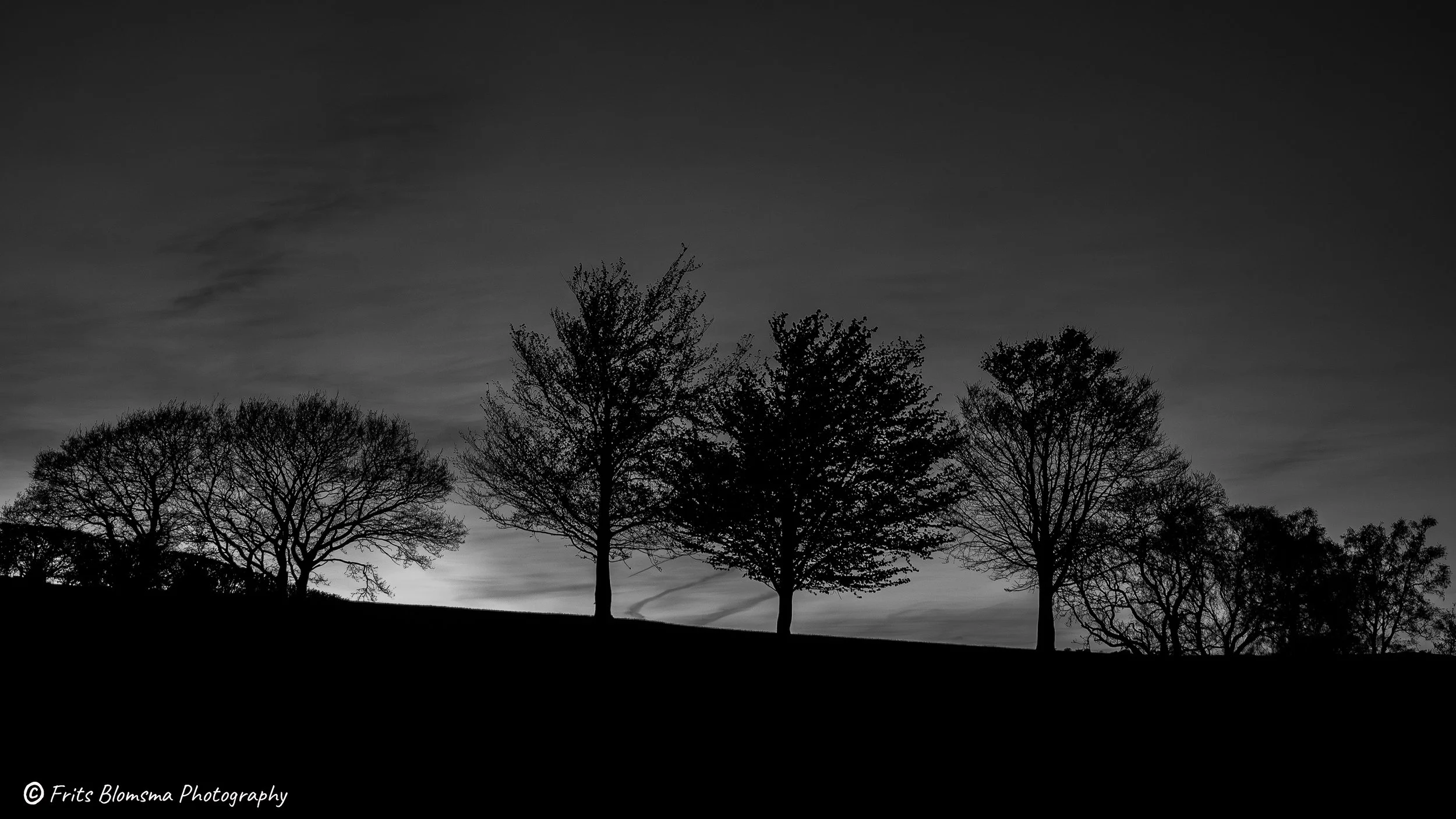 Image 2 of 2
That’s a stunning shot. There’s something deeply peaceful about the transition between day and night, especially when it’s captured with this kind of stark, minimalist beauty.
Here is a breakdown of what makes this photograph so compelling:
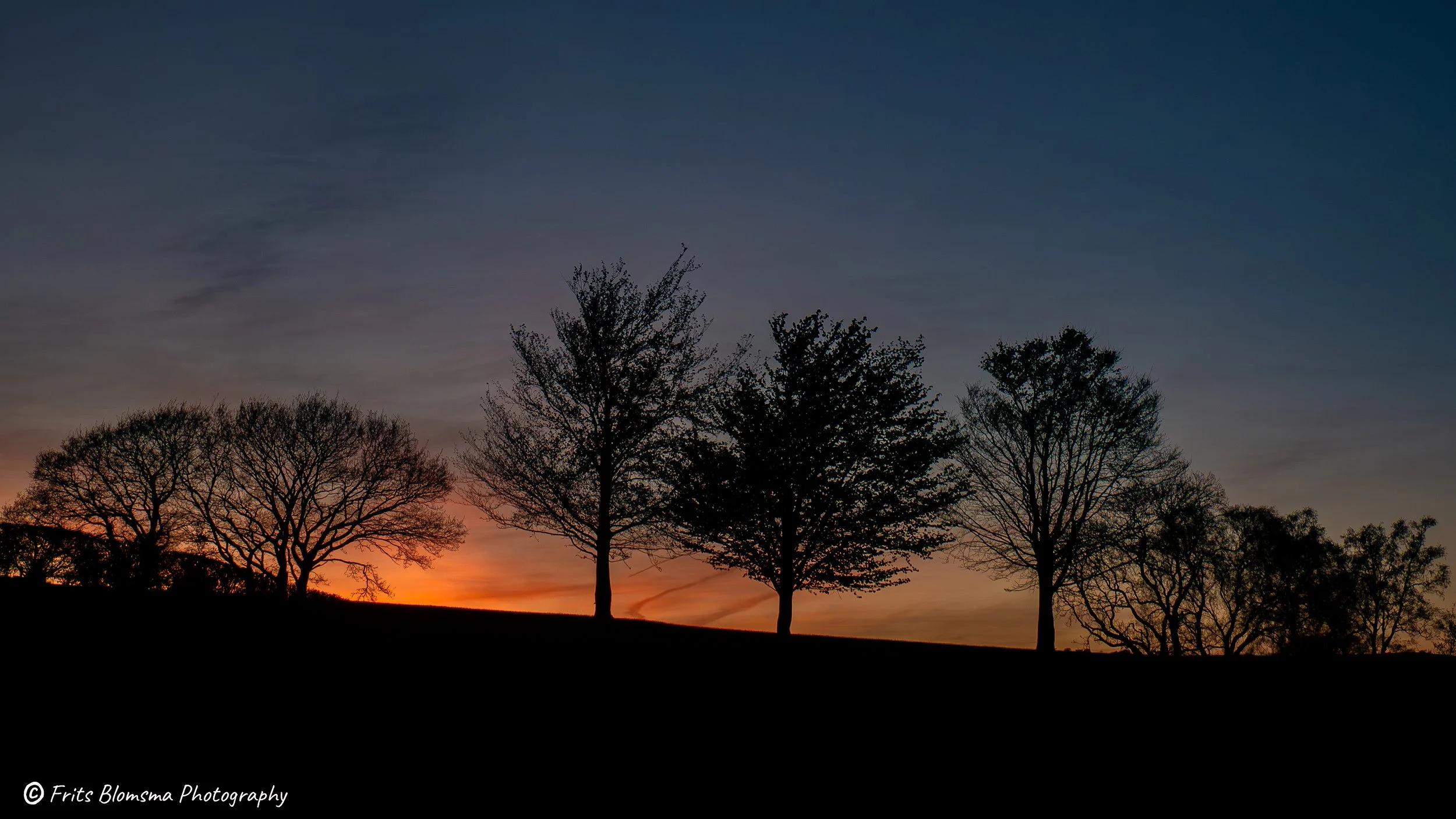
The core of this image is the high contrast. By exposing for the sky, the photographer has turned the landscape into a pure black silhouette. This strips away the "noise" of texture and color on the ground, forcing the viewer to focus entirely on the graphic shapes of the trees. Each branch and twig becomes part of an intricate, lace-like pattern against the glowing horizon.
The sky acts as a natural canvas, transitioning through a classic twilight palette:
The Horizon: A fiery, concentrated orange that suggests the sun has just dipped below the ridge.
The Mid-tones: A soft transition into muted purples and deep indigo.
The Zenith: A heavy, midnight blue that gives the image a sense of scale and coolness.
The placement of the trees creates a natural visual rhythm.
The "Main Characters": The four central trees are spaced almost like musical notes on a staff. They vary in height and fullness, which keeps the eye moving across the frame.
The Horizon Line: The slight diagonal slope of the hill adds a sense of "place"—it feels like a real, rolling landscape (consistent with the "Brecon" in the filename, likely referring to the Brecon Beacons) rather than a flat, artificial stage.
There is a profound sense of stillness here. It captures that specific moment in the evening when the wind usually dies down and the world goes quiet. The image feels lonely, but in a meditative, "breath of fresh air" kind of way.
Technical Observation: The photographer, Frits Blomsma, chose a wide aspect ratio that emphasizes the vastness of the sky. The slight "vignetting" (the darkening of the corners) naturally draws the eye back toward the center where the orange glow is strongest, ensuring the viewer doesn't get lost in the dark edges of the frame.
It’s a masterclass in using simple elements—trees, a hill, and a sunset—to create a very sophisticated mood. Does this style of photography usually resonate with you, or do you prefer more detailed, brightly lit landscapes?
That’s a stunning shot. There’s something deeply peaceful about the transition between day and night, especially when it’s captured with this kind of stark, minimalist beauty.
Here is a breakdown of what makes this photograph so compelling:
The core of this image is the high contrast. By exposing for the sky, the photographer has turned the landscape into a pure black silhouette. This strips away the "noise" of texture and color on the ground, forcing the viewer to focus entirely on the graphic shapes of the trees. Each branch and twig becomes part of an intricate, lace-like pattern against the glowing horizon.
The sky acts as a natural canvas, transitioning through a classic twilight palette:
The Horizon: A fiery, concentrated orange that suggests the sun has just dipped below the ridge.
The Mid-tones: A soft transition into muted purples and deep indigo.
The Zenith: A heavy, midnight blue that gives the image a sense of scale and coolness.
The placement of the trees creates a natural visual rhythm.
The "Main Characters": The four central trees are spaced almost like musical notes on a staff. They vary in height and fullness, which keeps the eye moving across the frame.
The Horizon Line: The slight diagonal slope of the hill adds a sense of "place"—it feels like a real, rolling landscape (consistent with the "Brecon" in the filename, likely referring to the Brecon Beacons) rather than a flat, artificial stage.
There is a profound sense of stillness here. It captures that specific moment in the evening when the wind usually dies down and the world goes quiet. The image feels lonely, but in a meditative, "breath of fresh air" kind of way.
Technical Observation: The photographer, Frits Blomsma, chose a wide aspect ratio that emphasizes the vastness of the sky. The slight "vignetting" (the darkening of the corners) naturally draws the eye back toward the center where the orange glow is strongest, ensuring the viewer doesn't get lost in the dark edges of the frame.
It’s a masterclass in using simple elements—trees, a hill, and a sunset—to create a very sophisticated mood. Does this style of photography usually resonate with you, or do you prefer more detailed, brightly lit landscapes?