
 Image 1 of 1
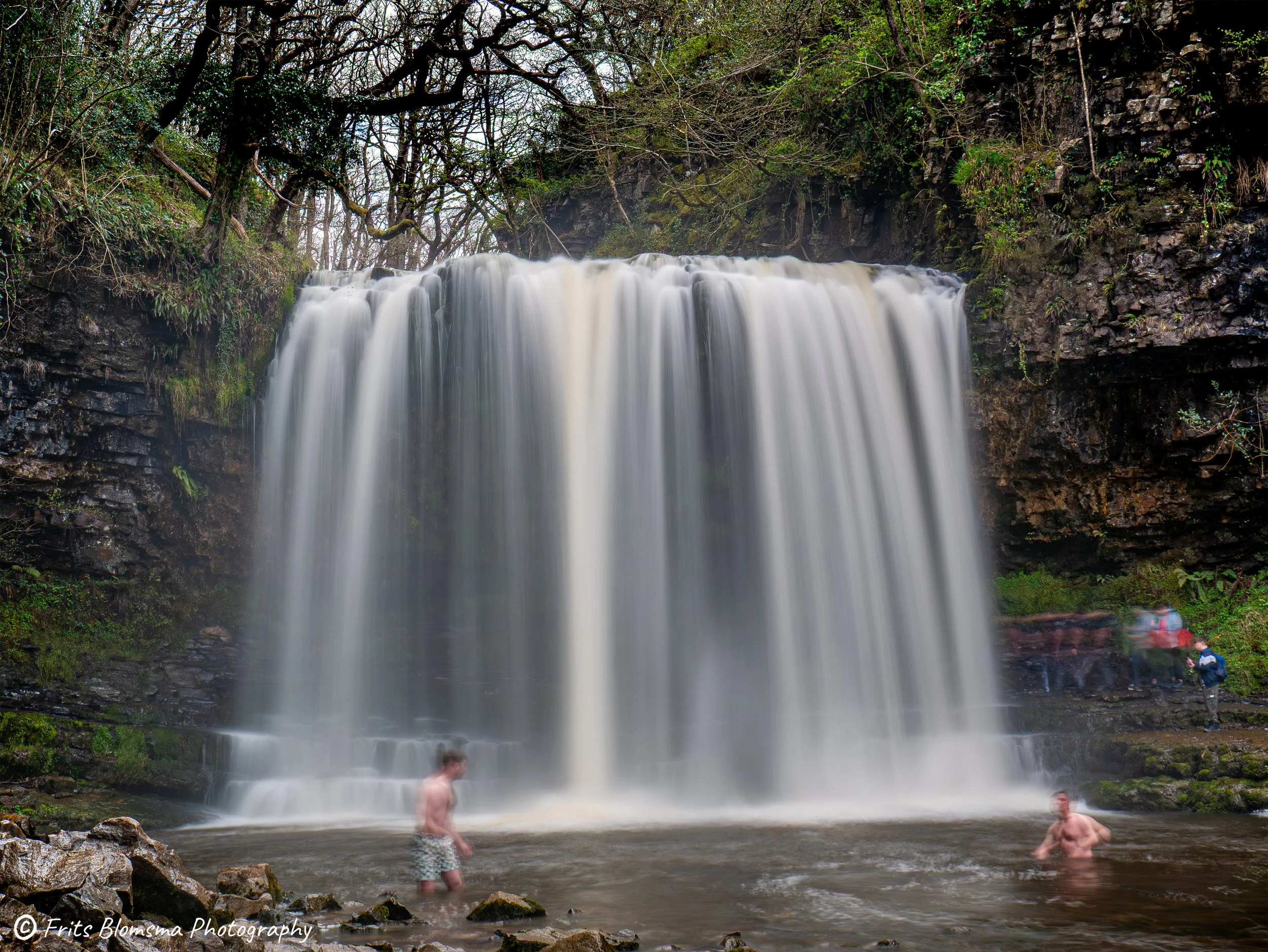
This photo captures a beautifully moody and dynamic scene at a waterfall, likely within the lush landscapes of the Brecon Beacons in Wales (hinted at by the filename). It is a classic long-exposure shot, which transforms the rushing water into a silky, ethereal veil.
Here is a breakdown of what makes this image so compelling:
The photographer, Frits Blomsma, clearly used a slow shutter speed to achieve this effect.
The Waterfall: Instead of frozen droplets, the water appears as a continuous, soft curtain. The slight "tea" color in the center suggests recent rainfall, washing peat and sediment down from the hills.
The Figures: Because the shutter was open for a few seconds, the people in the water and on the bank are slightly blurred. This "ghosting" effect adds a sense of passing time and movement to the frame.
The image utilizes a strong natural frame. The dark, jagged rock faces on either side and the overhanging branches at the top draw the viewer’s eye directly toward the center of the falls.
Contrast: There is a wonderful contrast between the dark, textured mossy rocks and the bright, smooth white of the falling water.
Scale: The two swimmers in the foreground provide a perfect sense of scale, showing just how massive and powerful this waterfall truly is.
The photo feels "alive." You can almost hear the roar of the water and feel the damp, cool mist on your skin.
Cold Water Swimmers: The inclusion of the swimmers adds a touch of human grit. It captures a moment of "wild swimming," a popular activity in this region, emphasizing a raw connection with nature.
The Setting: The dense ferns and bare branches suggest a scene in early spring or late autumn, where the greenery is just beginning to wake up or starting to fade into the earth.
Technical Note: To get a shot like this in broad daylight, a photographer usually needs a Neutral Density (ND) filter, which acts like sunglasses for the lens, allowing for longer shutter speeds without overexposing the image.
It’s a fantastic shot that balances the stillness of the ancient rocks with the relentless, kinetic energy of the water.
This photo captures a beautifully moody and dynamic scene at a waterfall, likely within the lush landscapes of the Brecon Beacons in Wales (hinted at by the filename). It is a classic long-exposure shot, which transforms the rushing water into a silky, ethereal veil.
Here is a breakdown of what makes this image so compelling:
The photographer, Frits Blomsma, clearly used a slow shutter speed to achieve this effect.
The Waterfall: Instead of frozen droplets, the water appears as a continuous, soft curtain. The slight "tea" color in the center suggests recent rainfall, washing peat and sediment down from the hills.
The Figures: Because the shutter was open for a few seconds, the people in the water and on the bank are slightly blurred. This "ghosting" effect adds a sense of passing time and movement to the frame.
The image utilizes a strong natural frame. The dark, jagged rock faces on either side and the overhanging branches at the top draw the viewer’s eye directly toward the center of the falls.
Contrast: There is a wonderful contrast between the dark, textured mossy rocks and the bright, smooth white of the falling water.
Scale: The two swimmers in the foreground provide a perfect sense of scale, showing just how massive and powerful this waterfall truly is.
The photo feels "alive." You can almost hear the roar of the water and feel the damp, cool mist on your skin.
Cold Water Swimmers: The inclusion of the swimmers adds a touch of human grit. It captures a moment of "wild swimming," a popular activity in this region, emphasizing a raw connection with nature.
The Setting: The dense ferns and bare branches suggest a scene in early spring or late autumn, where the greenery is just beginning to wake up or starting to fade into the earth.
Technical Note: To get a shot like this in broad daylight, a photographer usually needs a Neutral Density (ND) filter, which acts like sunglasses for the lens, allowing for longer shutter speeds without overexposing the image.
It’s a fantastic shot that balances the stillness of the ancient rocks with the relentless, kinetic energy of the water.