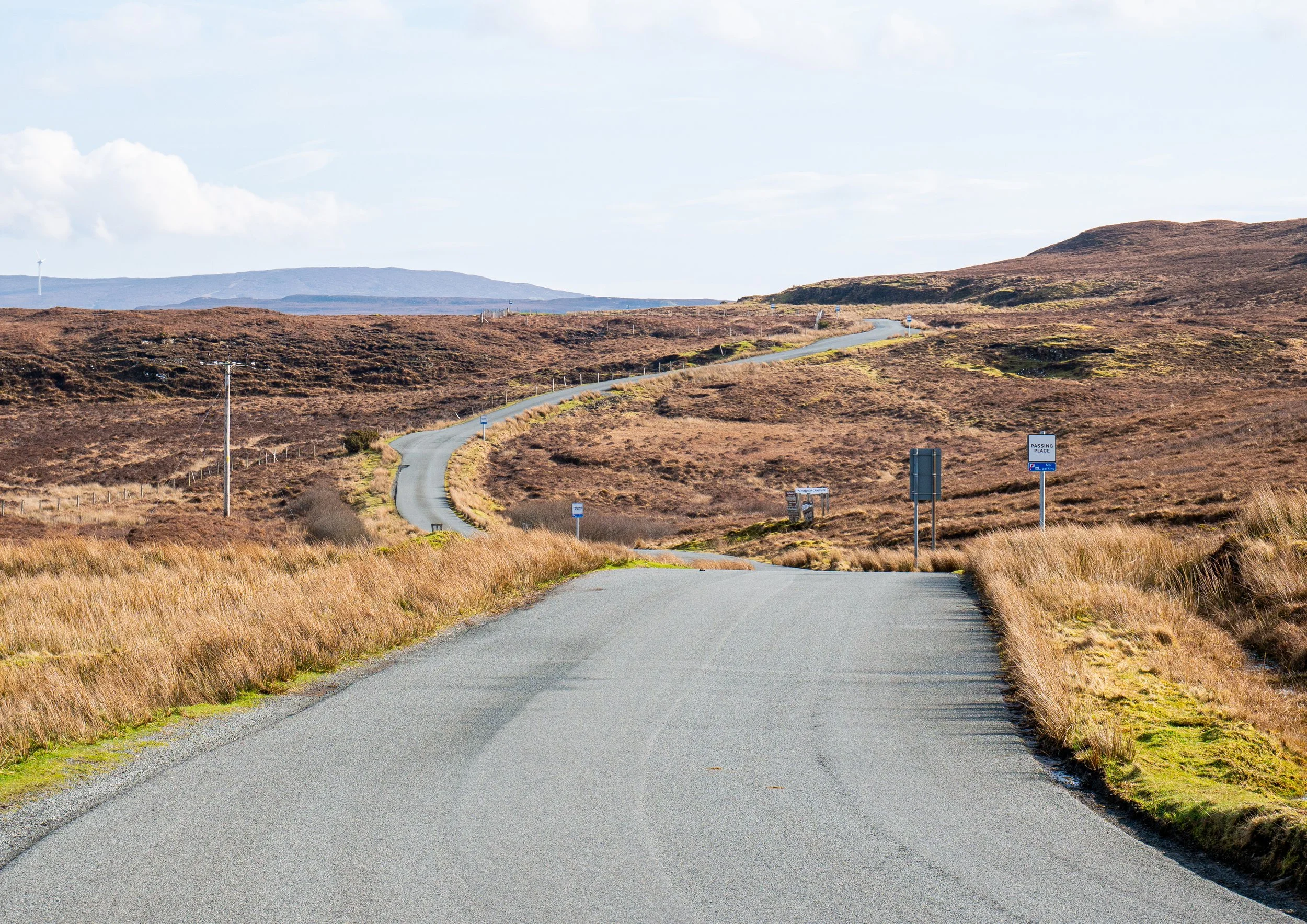
This image captures the rugged, evocative beauty of a highland landscape, likely in Scotland or a similar northern region. The composition uses the winding road as a powerful leading line, drawing the eye from the foreground, through the dip in the terrain, and up toward the rolling hills in the distance.
Here is a breakdown of the elements that give this photo its character:
The photo leans into a moody, earthy color palette. The deep browns and ochres of the moorland suggest late autumn or early spring, when the vegetation is dormant. This is contrasted beautifully by the vibrant, crisp blue of the sky and the soft, white "cauliflower" clouds that hint at a cold, breezy day.
The Road: The asphalt is weathered, showing the wear of a remote passing place. It feels like a solitary path through an ancient landscape.
The Terrain: The hills are blanketed in peat and heather, typical of the Highlands. In the distance, you can see a lone wind turbine on the left, a modern touch against the timeless, undulating peaks.
Human Elements: The presence of the utility pole and the "Passing Place" sign on the right adds a sense of scale and reminds us of the human effort required to navigate and inhabit such wild spaces.
The photographer has used a deep depth of field, keeping everything from the texture of the road in the front to the distant mountain range in the back relatively sharp. The lighting appears to be coming from the side, casting soft shadows in the folds of the hills which gives the landscape a three-dimensional, tactile quality.
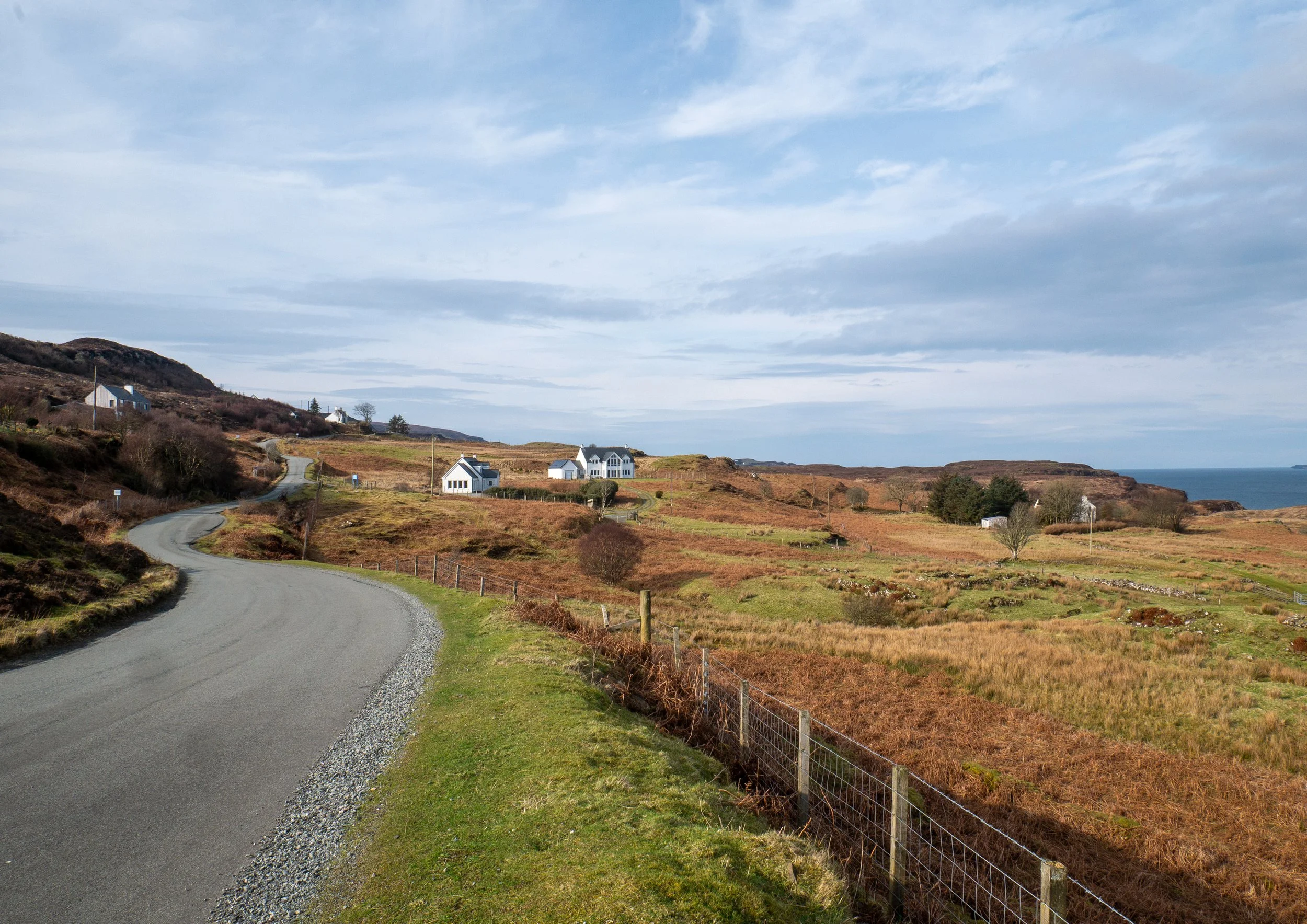
This image captures a serene, windswept landscape that feels characteristic of the Scottish Highlands or perhaps the Irish coastline. It evokes a sense of quiet isolation and the rugged beauty of the North Atlantic fringe.
Here is a breakdown of the elements that make this photograph so compelling:
The photographer has used the winding asphalt road as a powerful leading line. It starts in the bottom left foreground and curves gracefully into the distance, pulling the viewer’s eye through the rolling terrain toward the small cluster of white houses. This creates a narrative of journey and arrival.
The image is dominated by a beautiful contrast between warm and cool tones:
The Earth: The ground is covered in dormant ferns and grasses, creating a rich tapestry of russet, ochre, and burnt orange.
The Sky and Sea: These provide a cool counterpoint with deep cerulean and slate blues. The dramatic, streaky cloud formations suggest a brisk wind moving off the ocean.
The small, white-washed cottages with dark roofs are quintessential to this region. Their bright walls pop against the muted colors of the moorland. The scale of the houses compared to the vast hills and the wide sea emphasizes the "edge of the world" feeling often found in remote coastal communities.
There is a "calm after the storm" quality to the light. The sun seems to be breaking through low on the horizon, casting long shadows and highlighting the texture of the grass and the gravel edge of the road. It feels peaceful, lonely, and remarkably fresh.
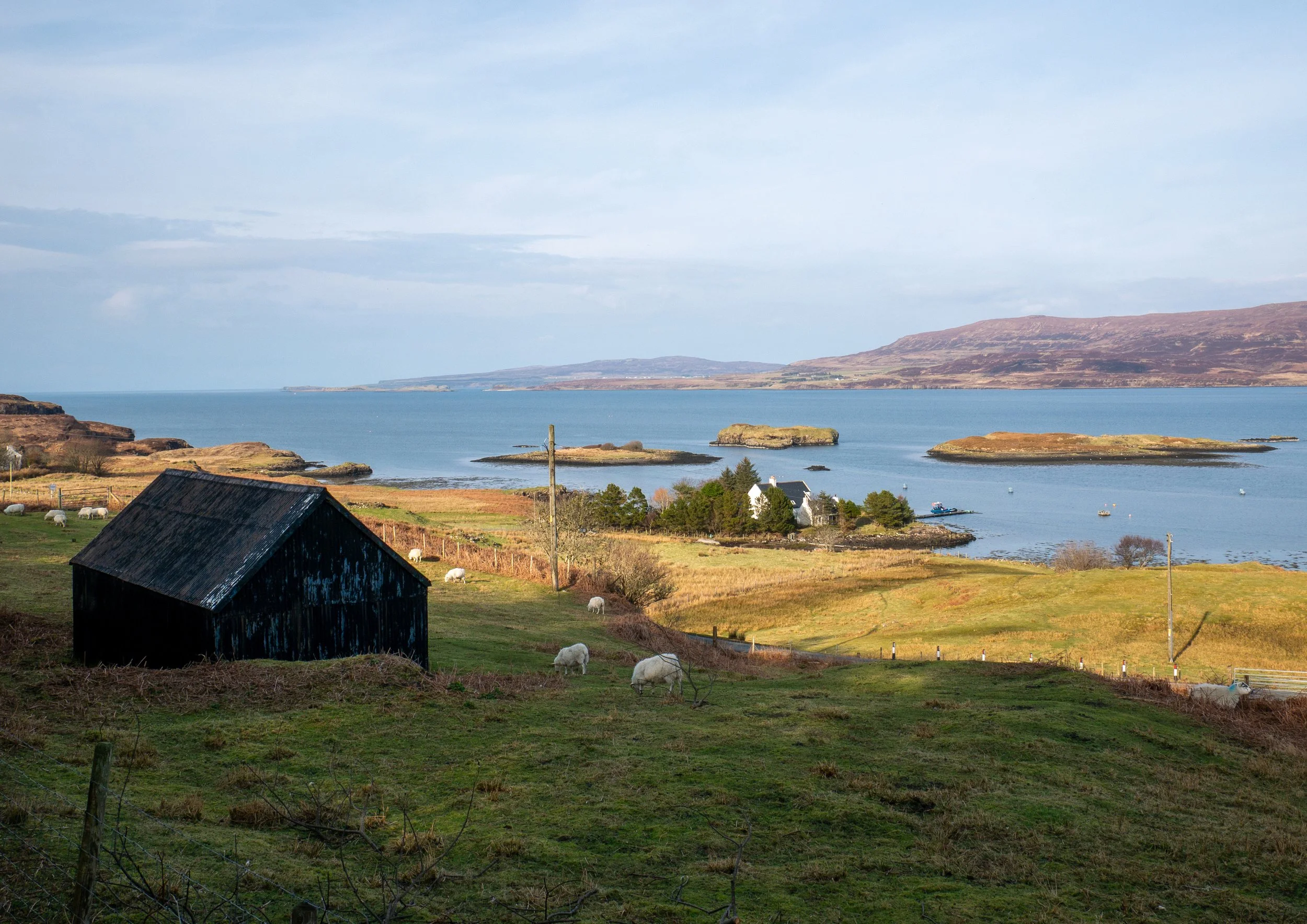
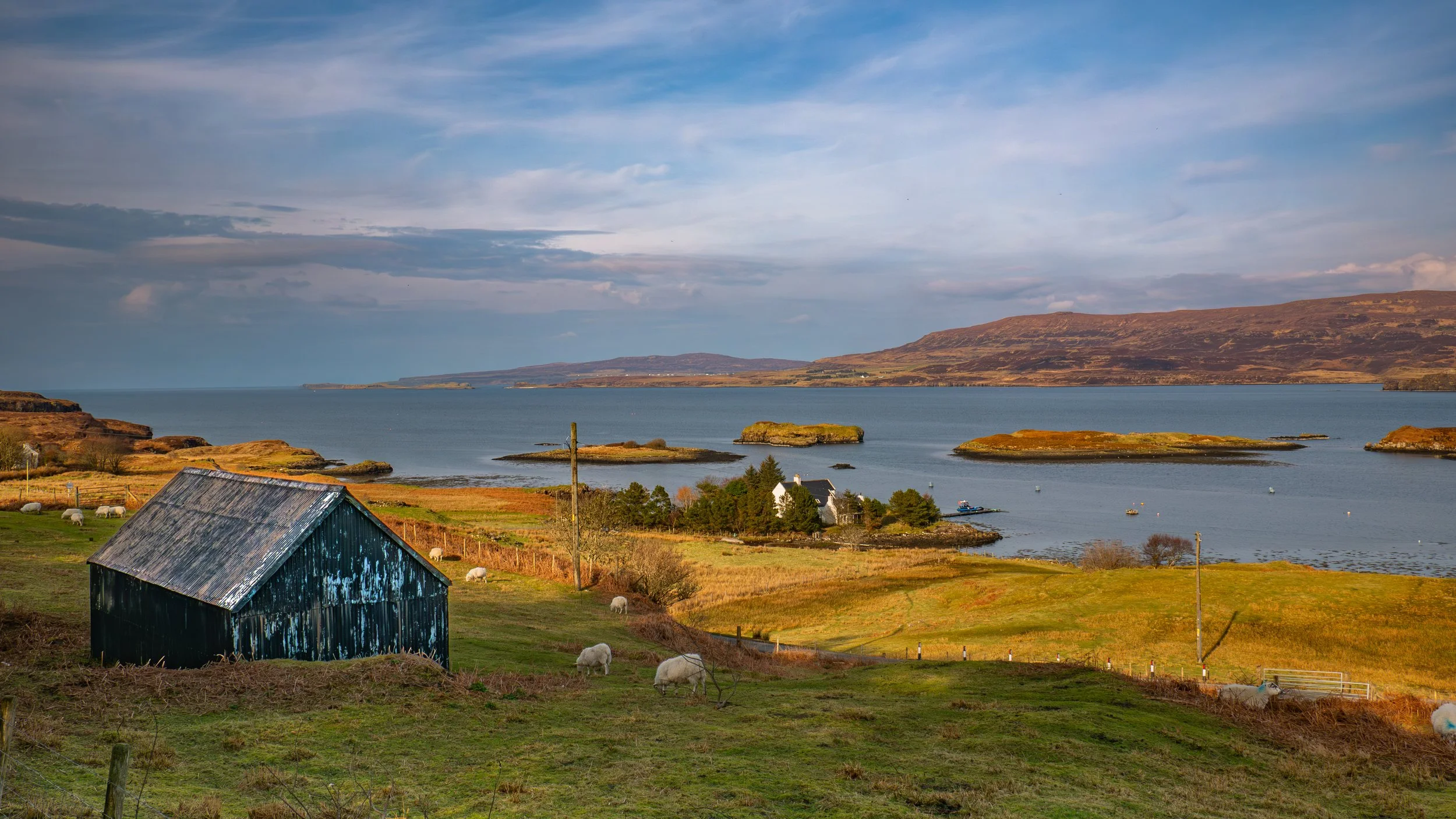
This image captures a quintessentially serene and rugged scene, likely from the Scottish Highlands or the Inner Hebrides (such as the Isle of Skye). It evokes a sense of "slow living" and the enduring beauty of remote coastal landscapes.
Here is an exploration of the elements that make this photo so compelling:
The photograph is beautifully layered, leading the eye from the immediate foreground out toward the distant horizon:
Foreground: The dark, weathered barn and grazing sheep ground the image in agricultural reality. The texture of the barn’s siding suggests years of enduring harsh Atlantic winds.
Midground: A solitary white house nestled among trees provides a focal point of human habitation, contrasting against the vastness of the water and hills.
Background: The calm sea dotted with small islets leads to the rolling, golden-brown hills under a soft, expansive sky.
The lighting suggests a "golden hour" or a bright overcast day, which brings out a rich, earthy palette:
Complementary Tones: The vibrant orange and gold of the dormant bracken and grass contrast beautifully with the deep blues of the water and sky.
Atmospheric Mood: The soft cloud cover diffuses the light, preventing harsh shadows and giving the landscape a painterly, almost dreamlike quality.
Isolation vs. Connection: While the scene feels remote, the presence of the fence lines, the telephone pole, and the sheep indicates a landscape that is lived-in and working.
Timelessness: Aside from a few modern details, this scene looks much like it might have a century ago—a testament to the slow pace of life in these coastal communities.
ElementVisual ImpactEmotional ToneSheepSmall white dots across the greenPeaceful, pastoralThe BarnDark, textured, and heavySturdy, weathered, historicalThe SeaCalm, reflective blueSerene, vastThe HillsRugged and treelessWild, ancient
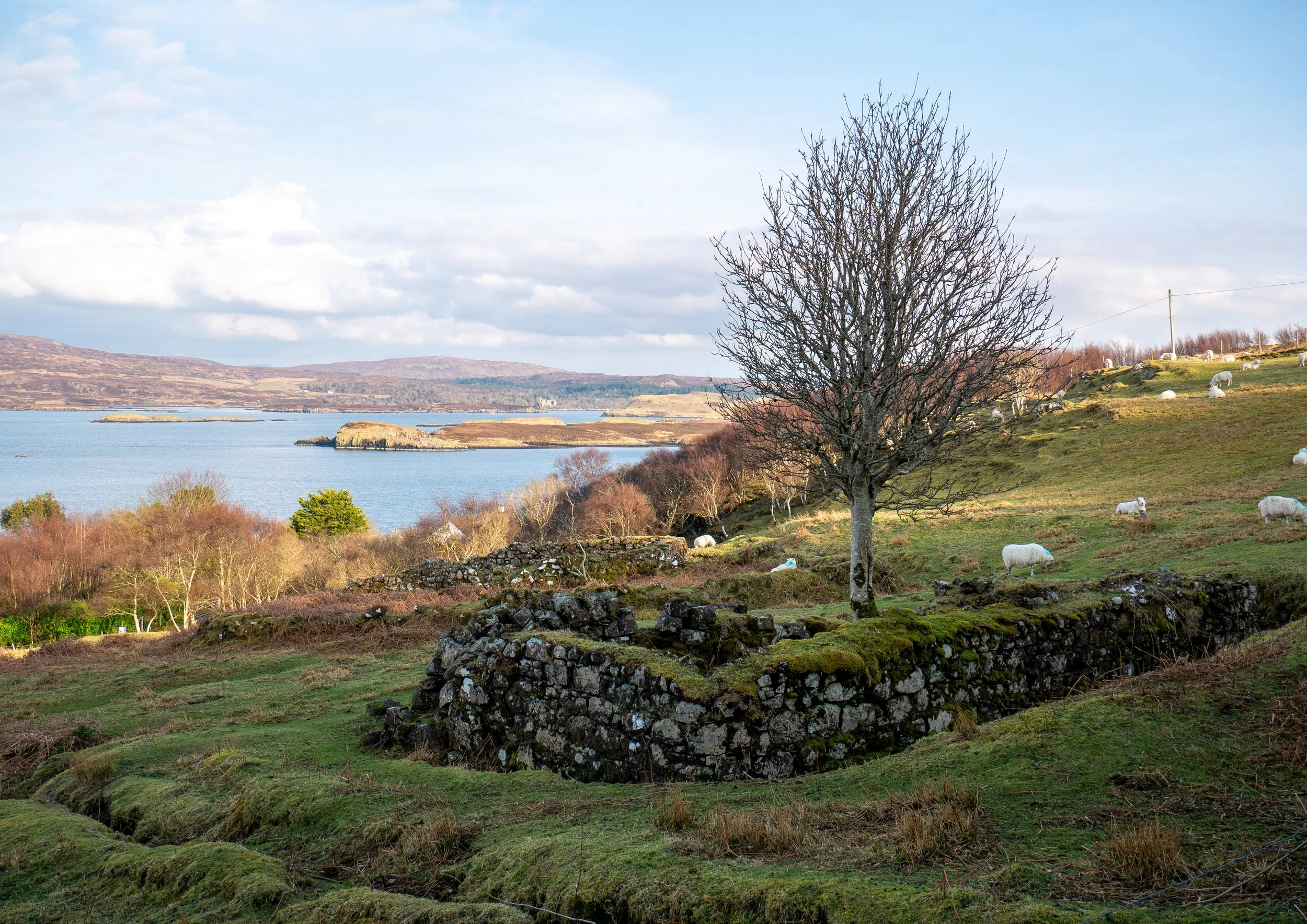
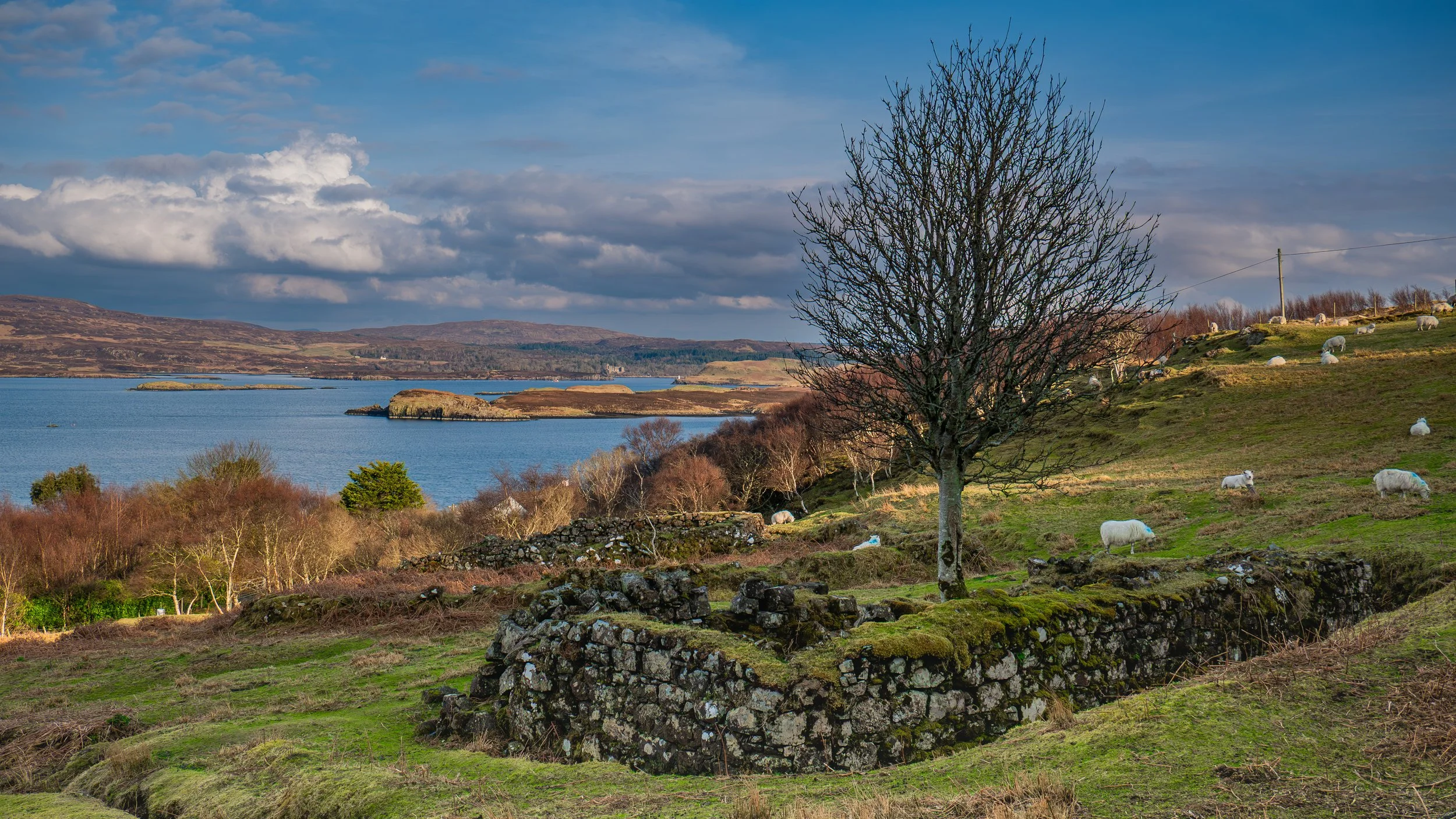
This image captures a hauntingly beautiful scene that feels like a window into the past. It depicts a rugged, coastal landscape—likely in the Scottish Highlands or the Hebrides—where nature is slowly reclaiming what was once a site of human habitation.
The Ruined Croft: In the foreground, the low stone walls of an abandoned dwelling are covered in moss and lichen. The dry-stone construction is characteristic of traditional Atlantic architecture. A single, leafless tree grows directly from within the ruins, serving as a powerful symbol of nature’s endurance over man-made structures.
The Coastal Vista: The mid-ground opens up to a deep blue sea loch, dotted with rocky islands and outcroppings. The rolling hills on the far shore are draped in the muted browns and purples of heather and dormant ferns.
Pastoral Life: To the right, the hillside is alive with sheep. Their presence adds a touch of "living" history to the scene, suggesting that while the house may be gone, the traditional land use continues.
The Sky: The dramatic lighting—warm sunlight hitting the foreground while heavy, textured clouds gather in the distance—creates a sense of "changeable" weather typical of the northern British Isles.
There is a profound sense of quietude and melancholy in this photo. It speaks to the "Highland Clearances" or the general depopulation of rural coastal areas. The contrast between the cold blue of the water and the warm, golden light on the grass creates a visual tug-of-war between harshness and beauty.
Observation: The way the lone tree stands centered in the ruin acts as a natural monument, marking a spot where a family likely lived for generations.
The photographer has used a deep depth of field, keeping everything from the moss on the stones to the distant mountains in sharp focus. This allows the viewer's eye to wander from the intimate details of the stone walls out to the vastness of the horizon
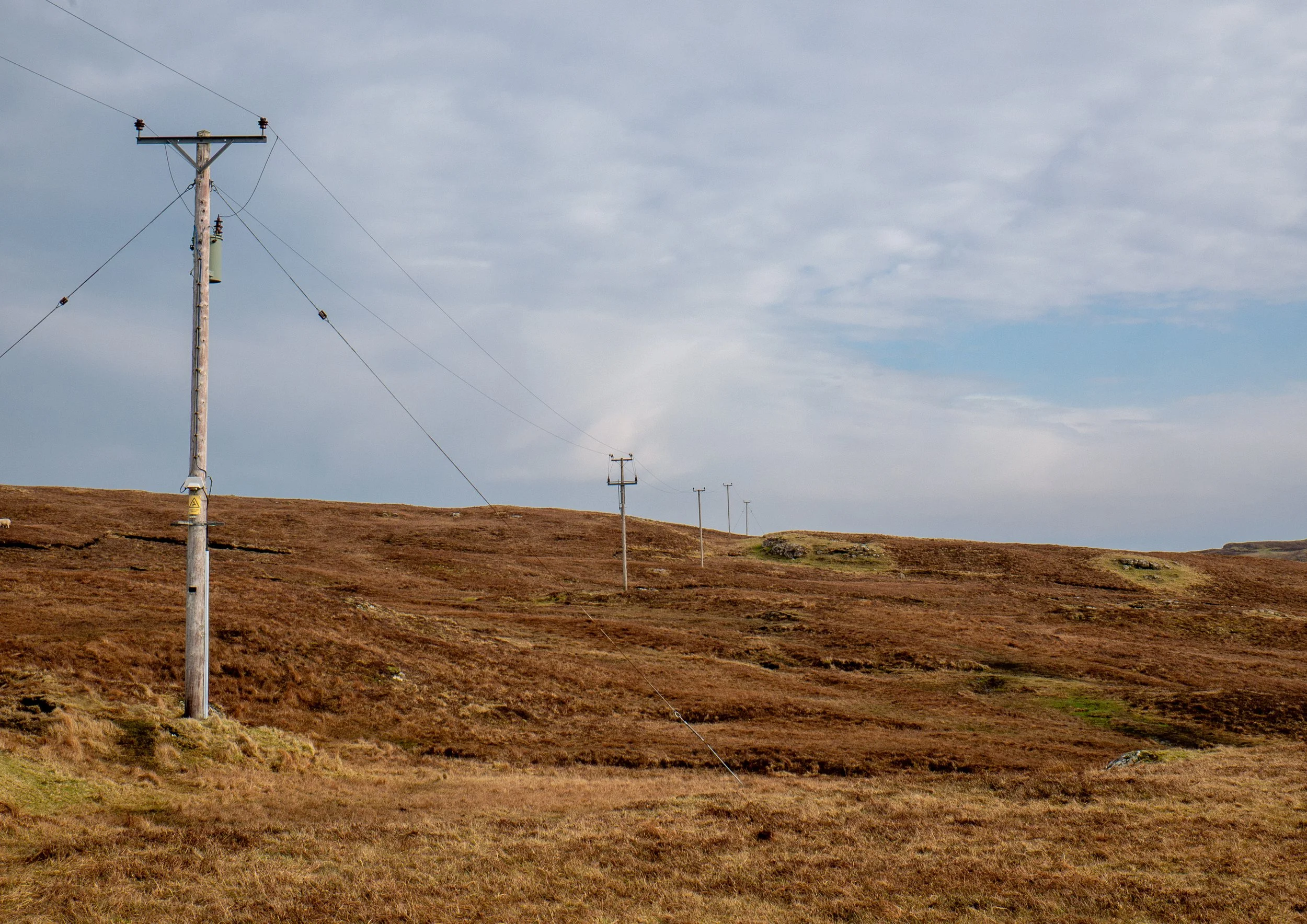
This image captures a striking contrast between human infrastructure and a rugged, desolate landscape. There is a quiet, rhythmic quality to the composition, led by the utility poles that march across the horizon.
Here is a breakdown of the photograph’s most compelling elements:
The photographer has used linear perspective effectively. The utility poles act as "leading lines," starting prominently in the foreground on the left and receding into the distance toward the right. This creates a strong sense of depth, drawing the viewer's eye across the rolling terrain and toward the horizon.
The color palette is dominated by complementary tones:
The Sky: Deep blues and soft whites create a cool, expansive atmosphere. The "mackerel sky" cloud patterns add a layer of complex texture.
The Land: The earth is covered in various shades of burnt orange, ochre, and brown—likely dormant grasses or peat bog. This warmth provides a sharp contrast to the cool sky, making the landscape feel ancient and raw.
The presence of the power lines suggests the reach of civilization into the wilderness, yet there are no buildings, roads, or people in sight. It evokes a sense of remote living and the quiet persistence required to bring modern necessities to such an untamed environment. The slight lean of the poles and the weathered wood hint at the harsh winds and elements this area likely faces.
The lighting appears to be from a low sun, possibly in the late afternoon. This casts soft shadows that define the "folds" in the hills, giving the ground a tactile, almost velvet-like appearance.
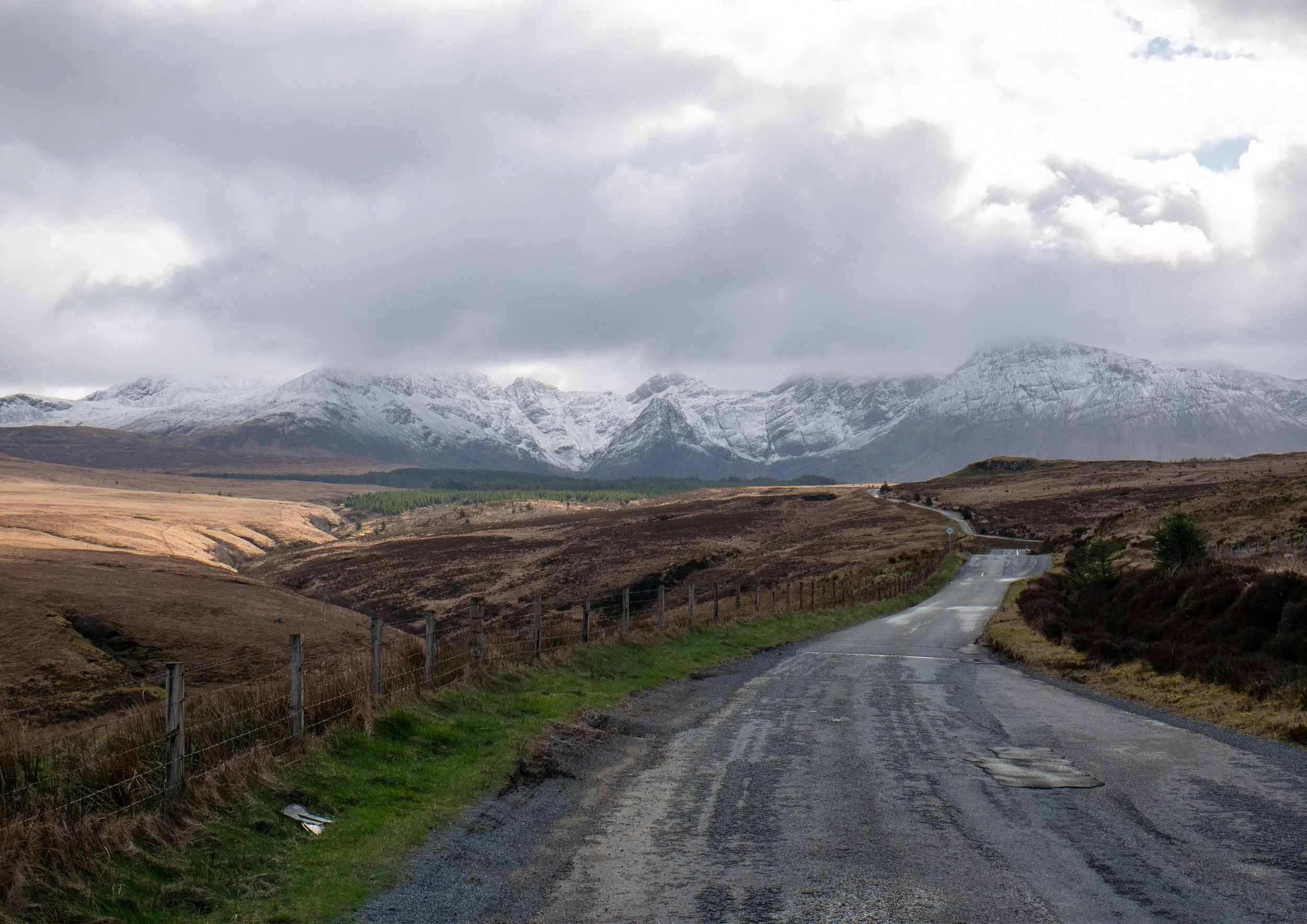
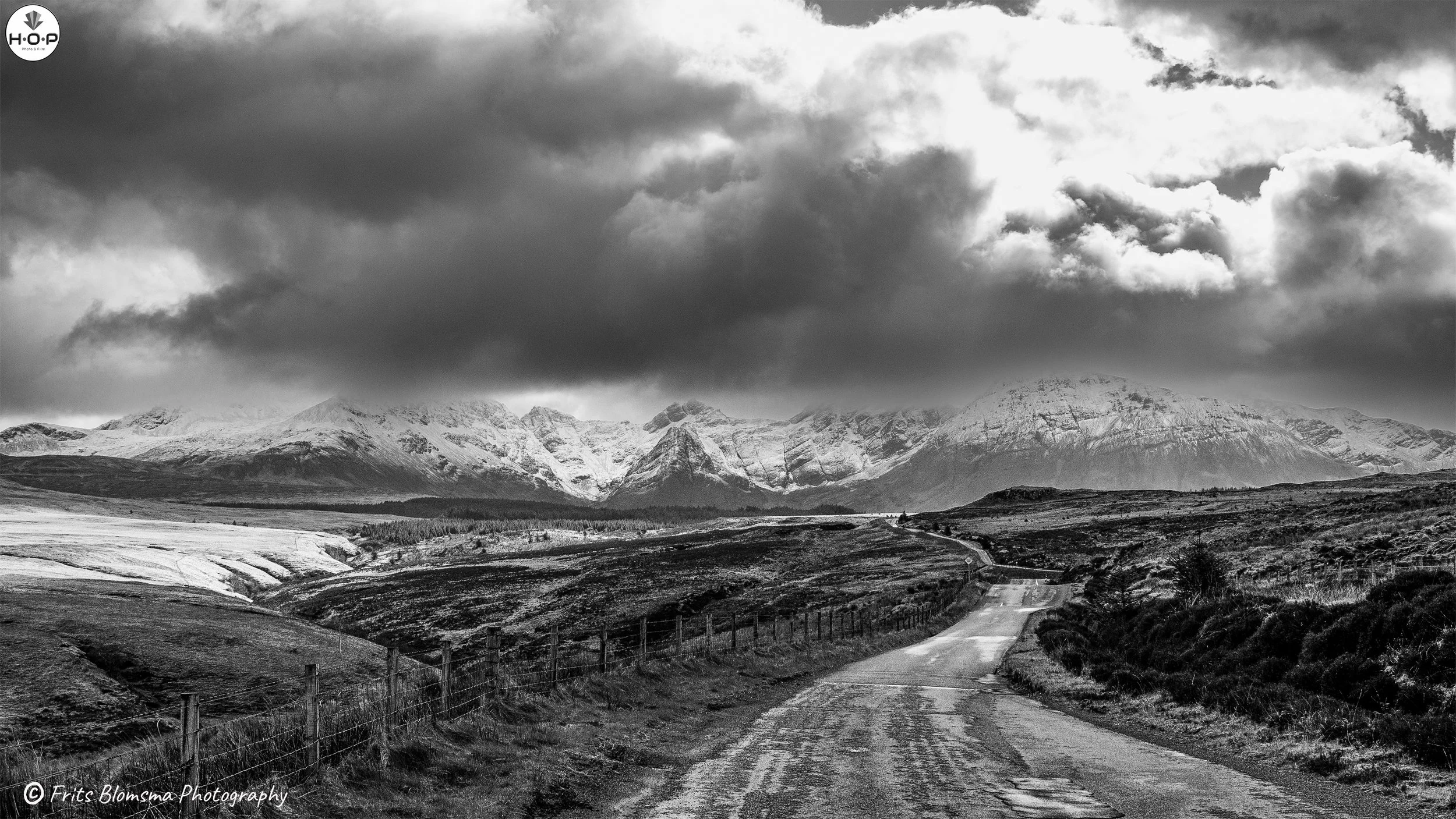
This photograph captures the raw, moody essence of the Scottish Highlands, likely in the Isle of Skye or near Glen Coe. It masterfully balances the warmth of the sun-drenched foreground with the cold, imposing presence of the snow-capped peaks in the distance.
Here is a breakdown of what makes this image so compelling:
The most striking element is the lighting. Heavy, slate-gray clouds dominate the top half of the frame, casting deep shadows over the mid-ground. However, a break in the clouds allows golden light to illuminate the hills on the left, creating a vibrant contrast against the dark, wet asphalt of the road.
The winding road serves as a perfect leading line. It draws the viewer’s eye from the bottom right, through the desolate moorland, and toward the base of the mountains. The wet surface of the road suggests a recent rainfall, a common occurrence in this landscape that adds a reflective quality to the scene.
The composition is built in distinct horizontal layers:
The Foreground: A rustic wire fence and patch of green grass provide a sense of scale and human boundary.
The Mid-ground: Rolling brown and amber hills, typical of dormant winter heather and peat.
The Background: The rugged, jagged "Black Cuillin" style peaks covered in a fresh dusting of snow, partially veiled by low-hanging mist.
There is a profound sense of solitude and stillness. The lack of vehicles or people makes the landscape feel ancient and indifferent to time. It evokes the feeling of a "road trip to the edge of the world," where the weather is a living participant in the scenery.
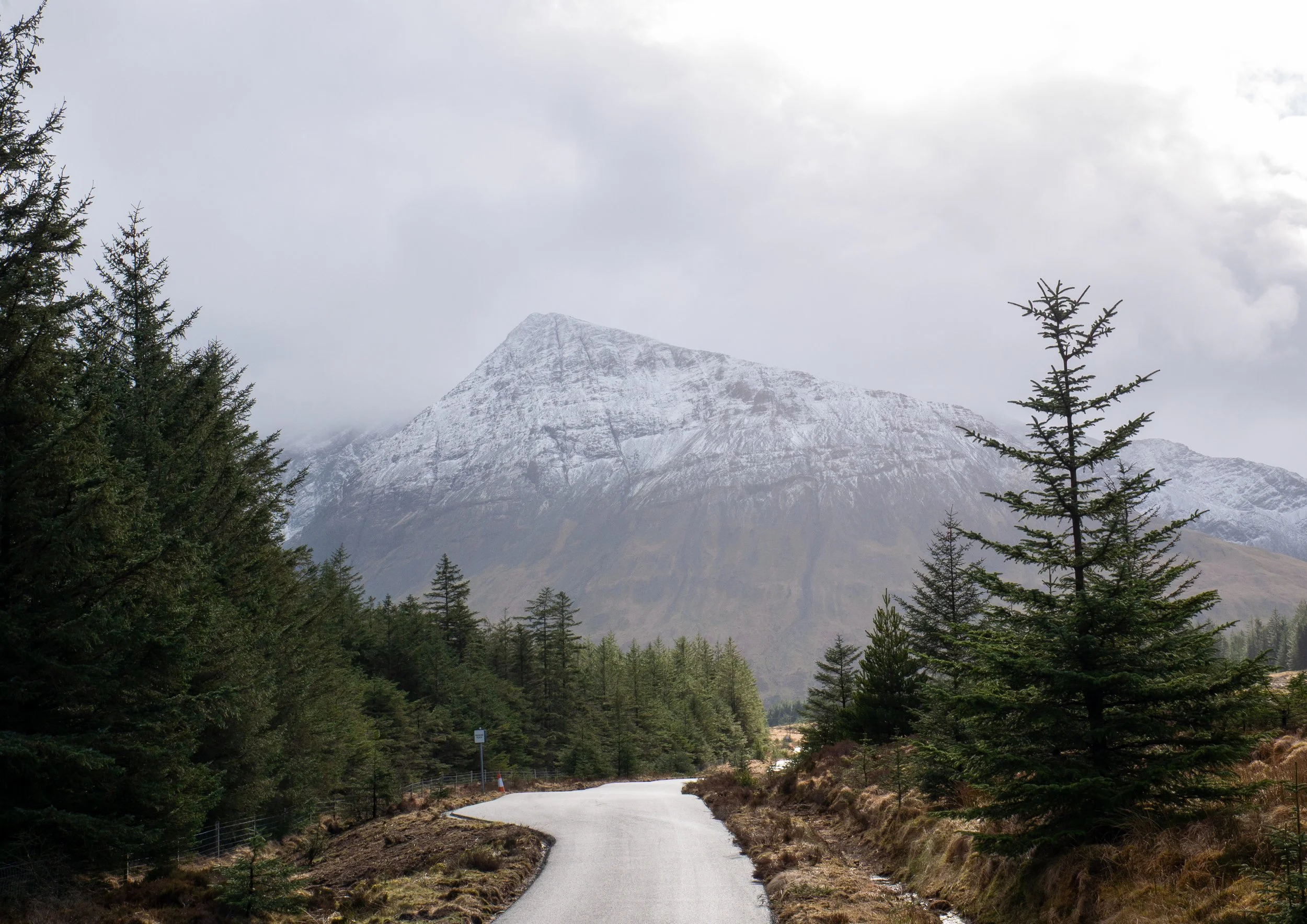
This photograph captures the quiet, rugged beauty of a mountain landscape in transition—likely taken in the Scottish Highlands or a similar northern region where late autumn meets early winter.
The image is defined by its soft, overcast lighting and a natural color palette of muted greens, browns, and slate greys. Here is a breakdown of the elements that make this shot so atmospheric:
The Peak: The centerpiece is a prominent, triangular peak lightly dusted with "sugar-coating" snow. This suggests a high altitude or a sudden drop in temperature, contrasting against the darker, weathered rock of the mountain's face.
The Road: A winding, asphalt path leads the eye into the frame. It looks damp, reflecting the diffuse light from the heavy sky, and creates a sense of journey or isolation.
The Forest: Rows of evergreen conifers (likely Sitka spruce or larch) frame the road. On the right, a solitary, younger tree stands slightly apart, adding a sense of depth and scale to the composition.
The Sky: Swirling, low-hanging clouds obscure the higher ridges, creating a "moody" atmosphere that is synonymous with highland weather.
The photo evokes a feeling of solitude and stillness. There are no people or vehicles visible, suggesting a remote location where nature remains the dominant force. The "half-winter" state of the mountain where the peaks are white but the valley floors are still brown and green creates a powerful sense of seasonal change.
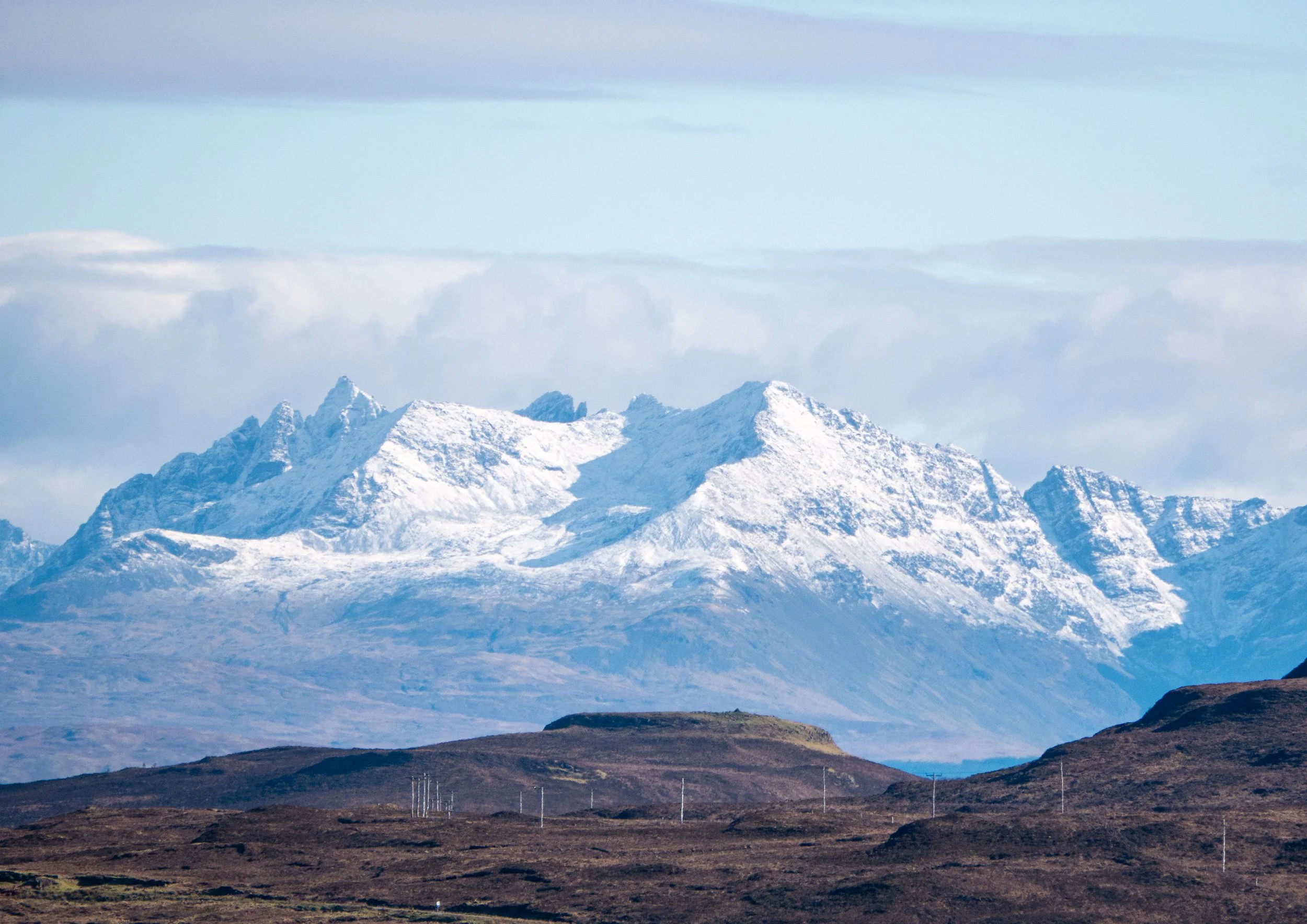
That is a striking landscape photograph, capturing a rugged, snow-dusted mountain range under a vast, textured sky. The composition creates a beautiful sense of scale and quiet solitude.
The Mountains: The central focus is a jagged, snow-capped ridge. The way the light hits the peaks highlights the craggy texture of the rock, suggesting an ancient, weathered terrain. The peaks on the left are particularly sharp and needle-like, contrasting with the broader massif in the center.
The Foreground: In contrast to the bright white of the snow, the foreground consists of rolling, dark brown hills or moorland. The presence of thin, vertical poles (likely fence posts or utility lines) adds a subtle human element, emphasizing just how massive and remote the mountains are by comparison.
The Atmosphere: The sky is a gradient of deep blue and soft, low-hanging clouds. The clouds appear to be drifting behind the peaks, creating a sense of depth and movement, as if a winter storm has just passed or is currently rolling in.
The image evokes a feeling of stark beauty and isolation. This looks very much like the Scottish Highlands, possibly the Cuillin range on the Isle of Skye, given the distinctive sharp, gabbro peaks and the surrounding peat-colored moorland. The cool blue tones and the light dusting of snow suggest a late autumn or early spring morning—crisp, cold, and clear.
Perspective Note: The low angle of the sun creates long shadows across the ridges, which helps define the "spine" of the mountain range, making it look almost like a sleeping giant.
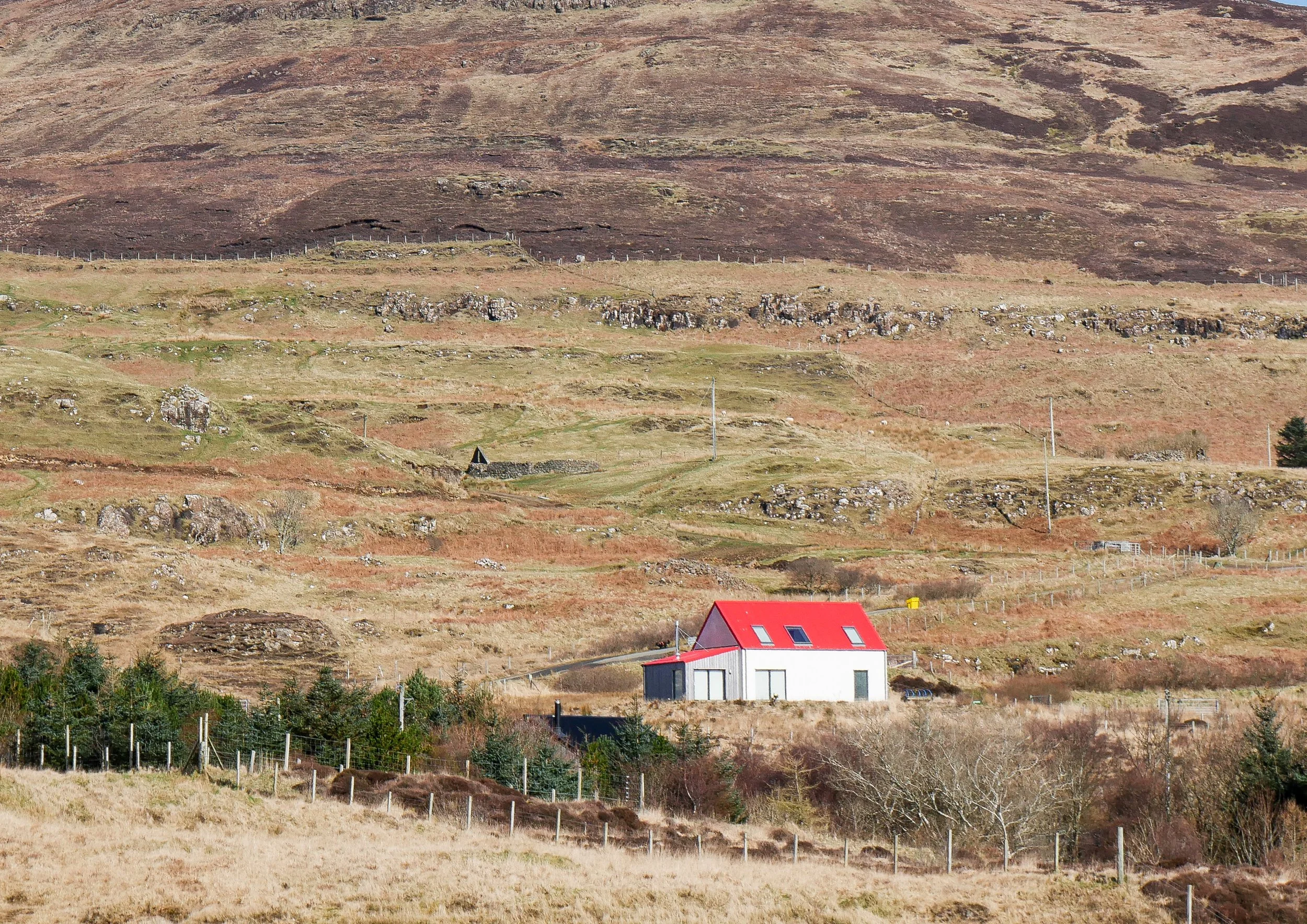
This photograph captures a striking sense of isolation and modern minimalism set against a rugged, ancient landscape. The composition is defined by the sharp contrast between the human-made structure and the vast, untamed terrain behind it.
The eye is immediately drawn to the small, modern house at the base of the hill. Its crisp white walls and vibrant red roof act as a vivid "pop" of color against the otherwise muted tones of the earth. This architectural choice feels intentional—a bold statement of presence in a quiet, sprawling environment.
The terrain rises steeply behind the house, characterized by:
Textured Slopes: The hill is a patchwork of dry grasses, dark soil, and rocky outcrops, suggesting a dormant or wintry season.
Layered Geology: Visible ridges and horizontal lines in the hillside hint at the ancient geological processes that formed this land.
Scale: The sheer size of the hill, topped with a lone communications tower on the far left, makes the house look incredibly small, emphasizing a "man vs. nature" theme.
The lighting suggests a bright, perhaps chilly day with the sun hitting the landscape from the side, creating soft shadows that accentuate the folds of the hill. There is a profound sense of quietude and solitude; the lack of other buildings or people makes the scene feel like a peaceful retreat from the modern world.
This image beautifully illustrates the concept of "living on the edge" where modern comfort meets the raw, unyielding beauty of the wilderness.
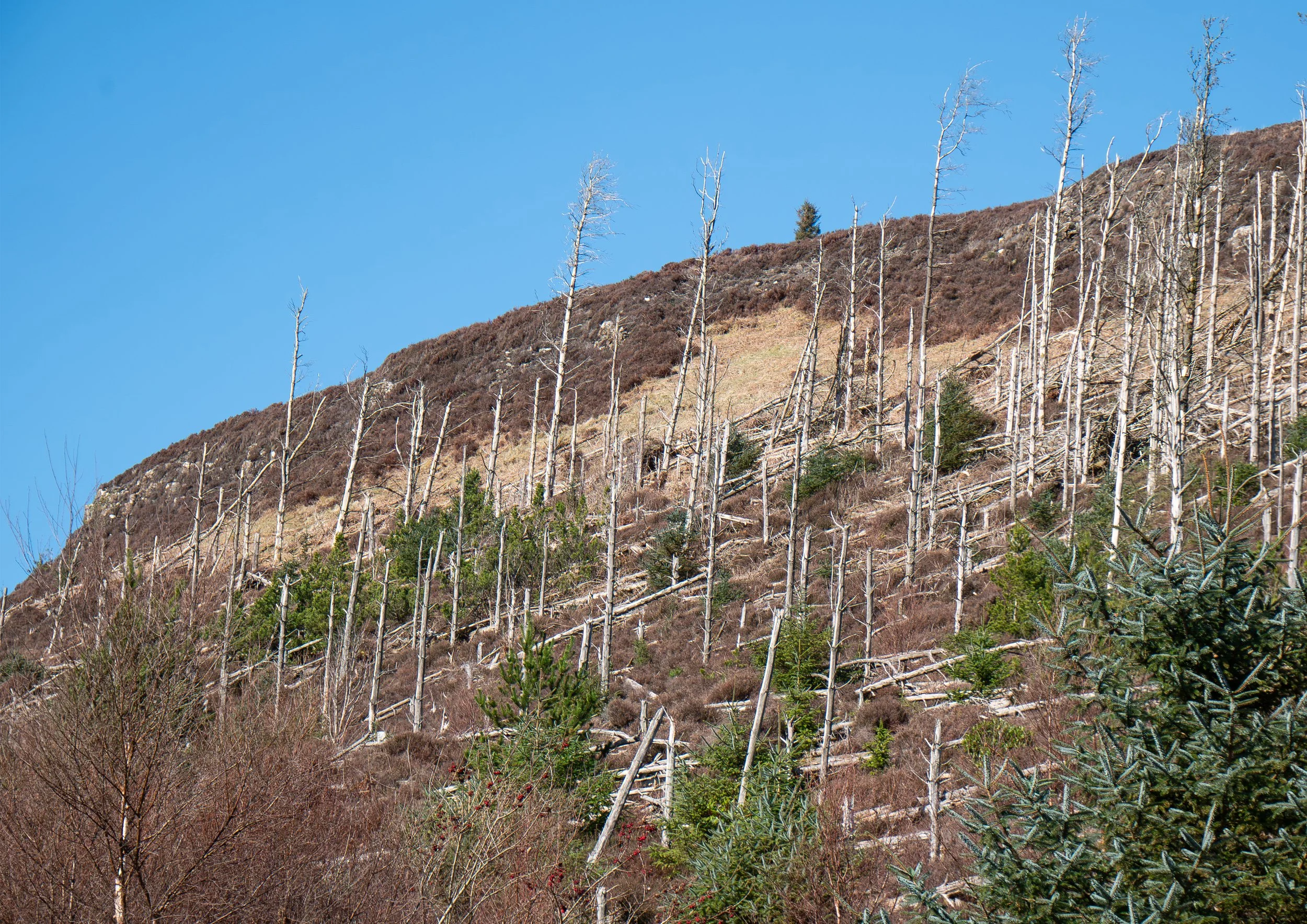
This image captures a powerful scene of ecological transition a "ghost forest" in the midst of a slow but steady rebirth. It’s a stark visual representation of the cycle of life, death, and resilience in nature.
The most striking feature is the graveyard of bleached, skeletal trees (likely larch or spruce) that dominate the hillside. Stripped of their bark and needles, these "snags" stand like silver-grey monuments to a forest that once was.
The way many of the trunks lie crisscrossed on the ground suggests a significant event perhaps a combination of disease (such as Phytophthora ramorum which has devastated larch populations in many regions), a pest infestation (like bark beetles), or a severe windstorm that took advantage of the weakened trees.
Amidst the grey and brown "necromass," there is a vibrant secondary layer of life. Bright green conifer saplings and hardy shrubs are pushing through the debris.
Succession in Action: This is a classic example of secondary succession. The death of the older canopy has opened up the forest floor to sunlight that was previously blocked.
Natural Protection: The fallen logs actually serve a purpose; they provide "nurse logs" and physical protection for the young trees, sheltering them from wind and creating micro-habitats for insects and fungi that enrich the soil.
The composition is defined by its harsh contrasts:
Color: The deep, clear blue of the sky against the muted, earthy browns of the scrub and the stark white of the dead wood.
Texture: The jagged, vertical lines of the standing dead wood versus the soft, feathery needles of the new growth.
Time: The image captures two different timelines the decades-long decay of the old forest and the fragile, early years of the new one.
This photograph reminds us that while a forest may look "ruined" at first glance, it is actually in a state of intense productivity and change. It is a transition from one generation to the next, proving that nature rarely leaves a vacuum for long.
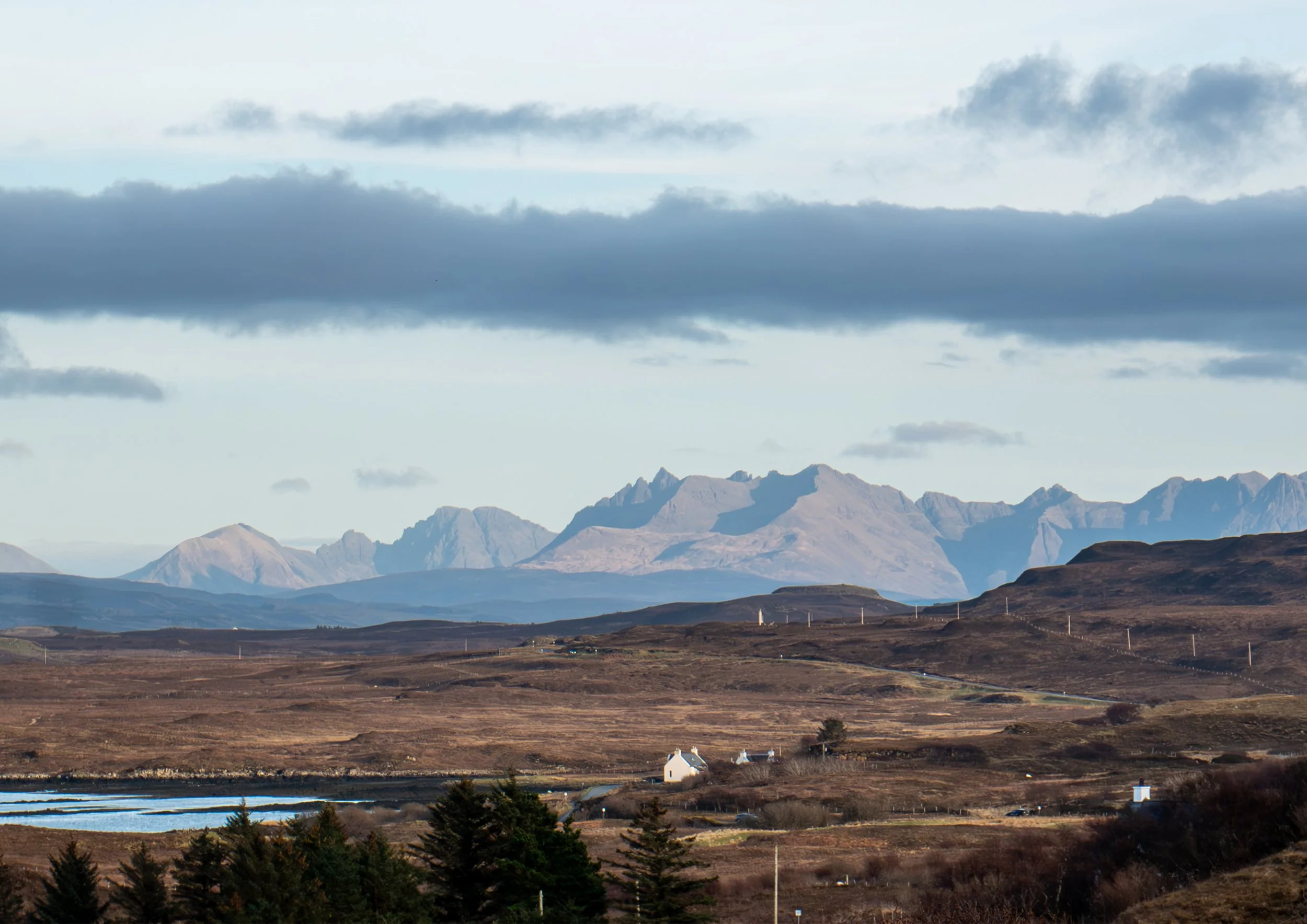
This photo captures one of the most iconic and breathtaking landscapes in the world: the Isle of Skye in the Scottish Highlands.
Specifically, you are looking at the Old Man of Storr overlooking Loch Fada. The image perfectly encapsulates the rugged, ethereal beauty that makes Scotland a bucket-list destination for many.
The Old Man of Storr: In the background, the jagged, spire-like rock formation stands prominently against the sky. These formations are part of the Trotternish Ridge and were created by a massive ancient landslip.
Loch Fada: The calm body of water in the foreground provides a serene contrast to the sharp, volcanic rocks above. The name "Loch Fada" translates from Gaelic to "Long Lake."
The Lone Island: The tiny, tree-topped island sitting in the middle of the loch acts as a perfect focal point, adding a sense of scale and quiet solitude to the vast scene.
Color Palette: The mix of golden-brown grasses, deep blue water, and the pale grey of the basalt cliffs suggests a clear day in the shoulder seasons likely early spring or late autumn when the light is crisp and the colors are earthy.
This particular vantage point is a favorite for photographers because it layers the elements of Scottish nature so effectively: the stillness of the water, the rolling moorlands, and the dramatic, prehistoric silhouette of the mountains. It feels like a scene straight out of a high-fantasy novel or a film (it has actually been a filming location for movies like Prometheus and The BFG).
The atmosphere is one of ancient stillness a place where the geology tells a story millions of years old.
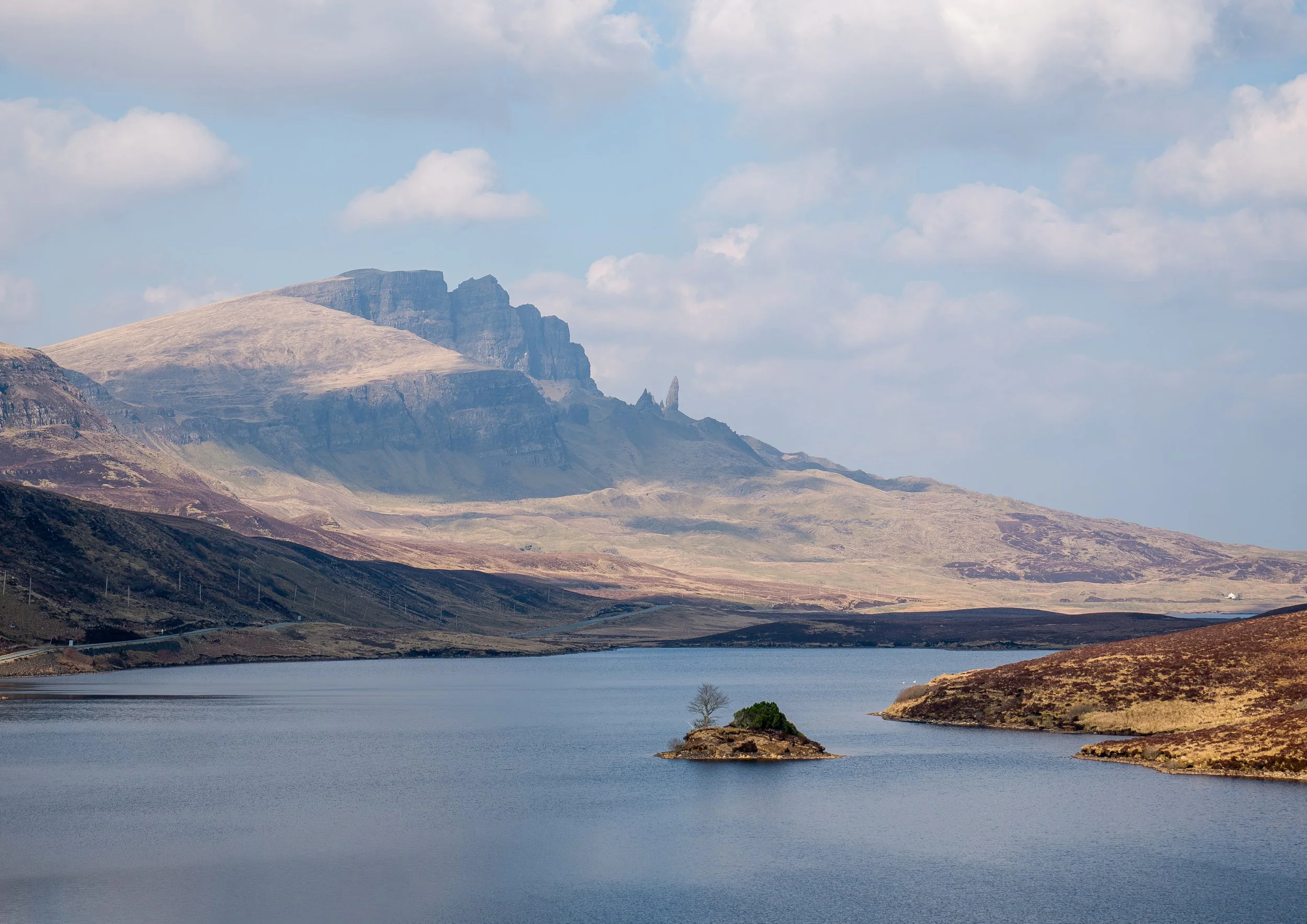
This photograph captures a breathtaking, layered landscape that evokes the rugged serenity of the Scottish Highlands most likely a view toward the Cuillin mountains on the Isle of Skye.
The composition is beautifully balanced, moving from the warm, earthy tones of the foreground to the cool, ethereal blues of the distant peaks.
The Foreground: The rolling moorland is covered in a tapestry of tawny grasses and deep brown heathers, suggesting a late autumn or winter season. A small cluster of dark evergreen trees provides a sharp vertical contrast to the horizontal flow of the land.
The Middle Ground: A small, solitary white cottage sits nestled in the vastness, offering a sense of scale and a touch of human presence in an otherwise wild environment. To the left, a sliver of blue water (likely a sea loch) reflects the sky, grounding the image.
The Background: The jagged, saw-toothed silhouettes of the mountains dominate the horizon. Their dusty blue hue creates a sense of immense depth through atmospheric perspective, making them feel both monumental and distant.
The lighting suggests the "golden hour" of early morning or late afternoon. The sun is low, casting long, soft shadows and highlighting the textures of the hills while catching the very tops of the mountain ridges.
The sky is a pale, crisp blue, streaked with horizontal bands of soft grey clouds that mirror the lines of the mountain range below. The overall mood is one of profound stillness and "Cianalas" a Scottish Gaelic word for a deep sense of place and belonging to the land.
378x210 mm photo printed on A3 (420x297 mm) premium glossy photo paper (frame and mount not included).
No results match your search. Try removing a few filters.