
 Image 1 of 1
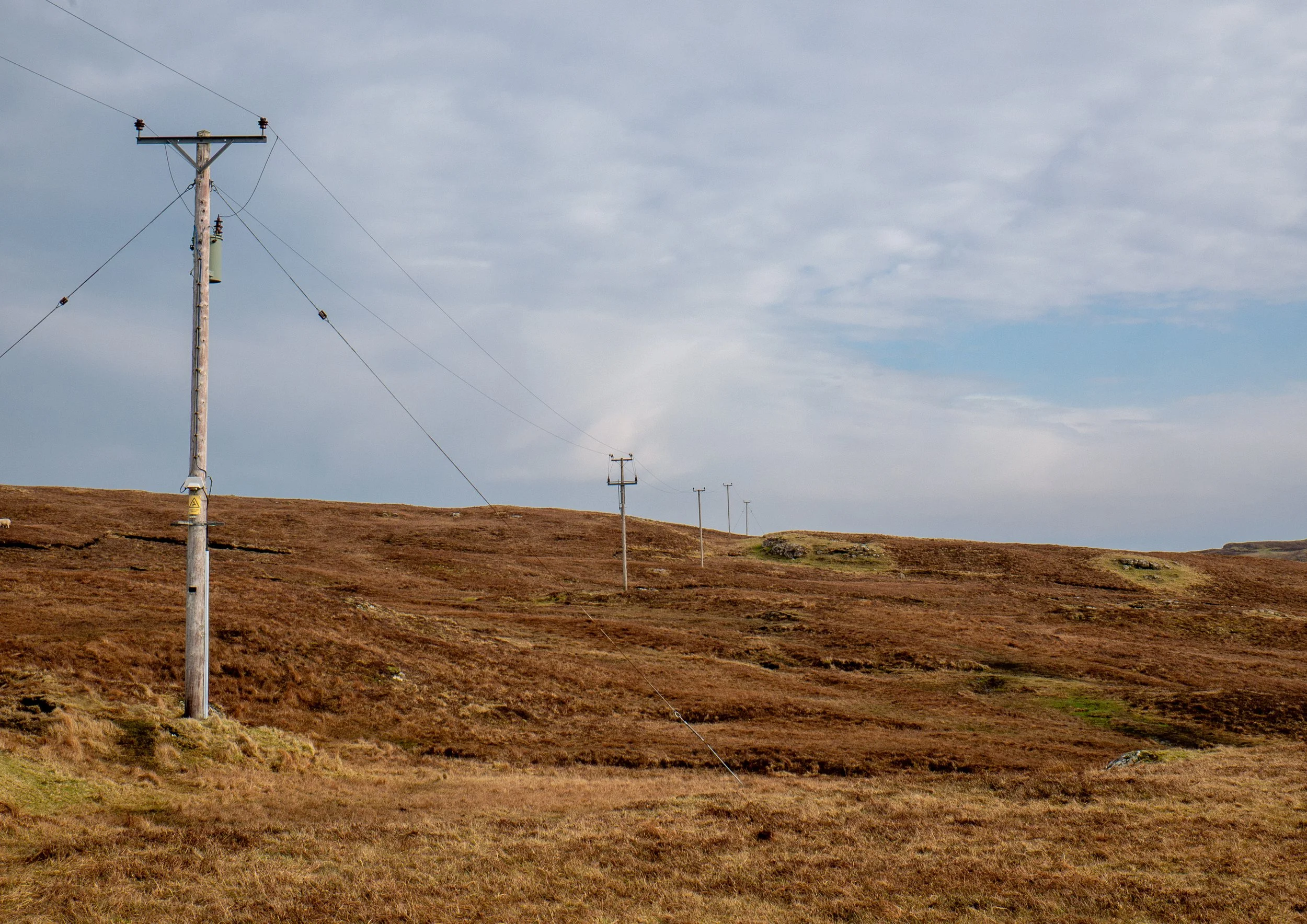
This image captures a striking contrast between human infrastructure and a rugged, desolate landscape. There is a quiet, rhythmic quality to the composition, led by the utility poles that march across the horizon.
Here is a breakdown of the photograph’s most compelling elements:
The photographer has used linear perspective effectively. The utility poles act as "leading lines," starting prominently in the foreground on the left and receding into the distance toward the right. This creates a strong sense of depth, drawing the viewer's eye across the rolling terrain and toward the horizon.
The color palette is dominated by complementary tones:
The Sky: Deep blues and soft whites create a cool, expansive atmosphere. The "mackerel sky" cloud patterns add a layer of complex texture.
The Land: The earth is covered in various shades of burnt orange, ochre, and brown—likely dormant grasses or peat bog. This warmth provides a sharp contrast to the cool sky, making the landscape feel ancient and raw.
The presence of the power lines suggests the reach of civilization into the wilderness, yet there are no buildings, roads, or people in sight. It evokes a sense of remote living and the quiet persistence required to bring modern necessities to such an untamed environment. The slight lean of the poles and the weathered wood hint at the harsh winds and elements this area likely faces.
The lighting appears to be from a low sun, possibly in the late afternoon. This casts soft shadows that define the "folds" in the hills, giving the ground a tactile, almost velvet-like appearance.
This image captures a striking contrast between human infrastructure and a rugged, desolate landscape. There is a quiet, rhythmic quality to the composition, led by the utility poles that march across the horizon.
Here is a breakdown of the photograph’s most compelling elements:
The photographer has used linear perspective effectively. The utility poles act as "leading lines," starting prominently in the foreground on the left and receding into the distance toward the right. This creates a strong sense of depth, drawing the viewer's eye across the rolling terrain and toward the horizon.
The color palette is dominated by complementary tones:
The Sky: Deep blues and soft whites create a cool, expansive atmosphere. The "mackerel sky" cloud patterns add a layer of complex texture.
The Land: The earth is covered in various shades of burnt orange, ochre, and brown—likely dormant grasses or peat bog. This warmth provides a sharp contrast to the cool sky, making the landscape feel ancient and raw.
The presence of the power lines suggests the reach of civilization into the wilderness, yet there are no buildings, roads, or people in sight. It evokes a sense of remote living and the quiet persistence required to bring modern necessities to such an untamed environment. The slight lean of the poles and the weathered wood hint at the harsh winds and elements this area likely faces.
The lighting appears to be from a low sun, possibly in the late afternoon. This casts soft shadows that define the "folds" in the hills, giving the ground a tactile, almost velvet-like appearance.