
 Image 1 of 1
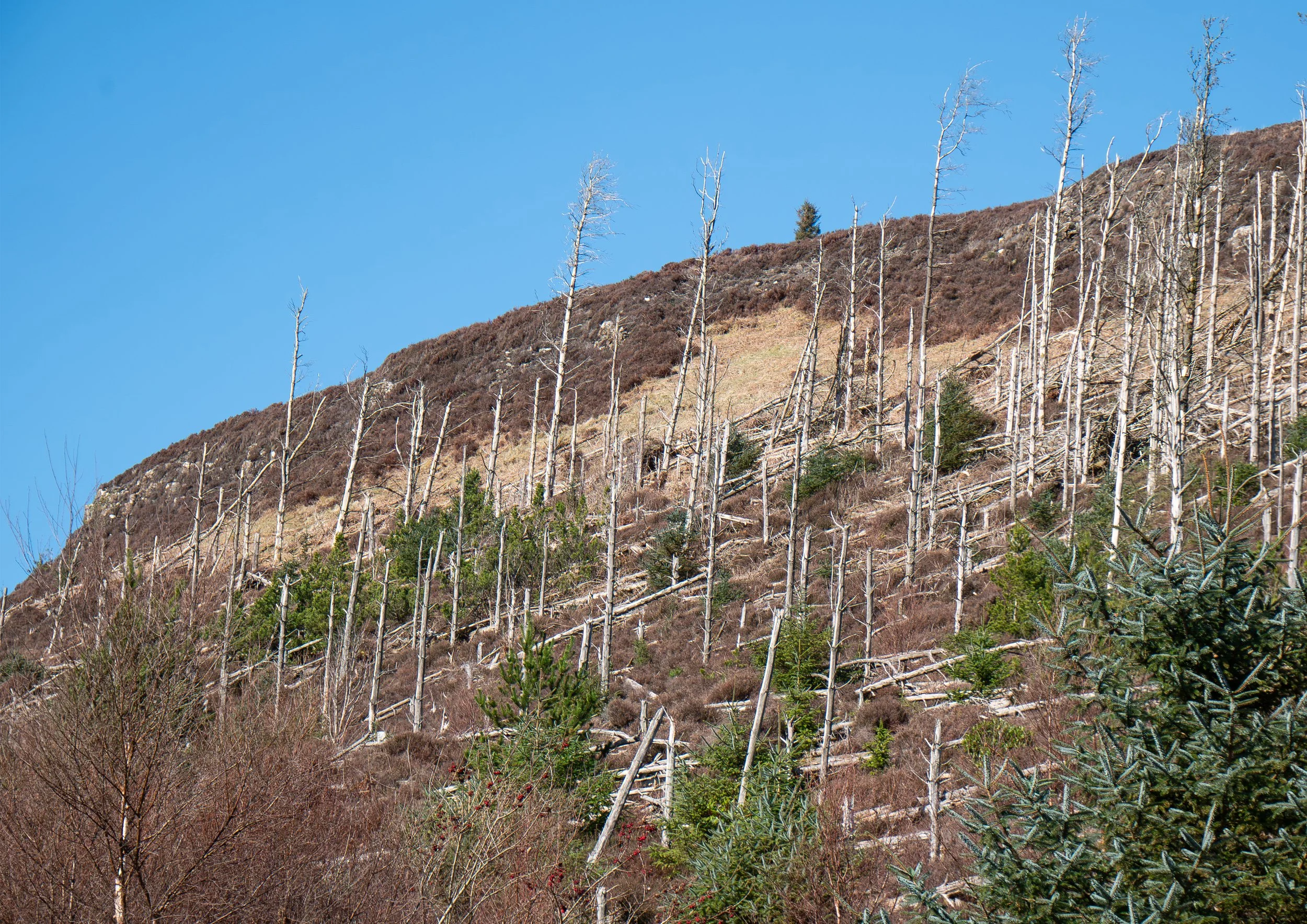
This image captures a powerful scene of ecological transition a "ghost forest" in the midst of a slow but steady rebirth. It’s a stark visual representation of the cycle of life, death, and resilience in nature.
The most striking feature is the graveyard of bleached, skeletal trees (likely larch or spruce) that dominate the hillside. Stripped of their bark and needles, these "snags" stand like silver-grey monuments to a forest that once was.
The way many of the trunks lie crisscrossed on the ground suggests a significant event perhaps a combination of disease (such as Phytophthora ramorum which has devastated larch populations in many regions), a pest infestation (like bark beetles), or a severe windstorm that took advantage of the weakened trees.
Amidst the grey and brown "necromass," there is a vibrant secondary layer of life. Bright green conifer saplings and hardy shrubs are pushing through the debris.
Succession in Action: This is a classic example of secondary succession. The death of the older canopy has opened up the forest floor to sunlight that was previously blocked.
Natural Protection: The fallen logs actually serve a purpose; they provide "nurse logs" and physical protection for the young trees, sheltering them from wind and creating micro-habitats for insects and fungi that enrich the soil.
The composition is defined by its harsh contrasts:
Color: The deep, clear blue of the sky against the muted, earthy browns of the scrub and the stark white of the dead wood.
Texture: The jagged, vertical lines of the standing dead wood versus the soft, feathery needles of the new growth.
Time: The image captures two different timelines the decades-long decay of the old forest and the fragile, early years of the new one.
This photograph reminds us that while a forest may look "ruined" at first glance, it is actually in a state of intense productivity and change. It is a transition from one generation to the next, proving that nature rarely leaves a vacuum for long.
This image captures a powerful scene of ecological transition a "ghost forest" in the midst of a slow but steady rebirth. It’s a stark visual representation of the cycle of life, death, and resilience in nature.
The most striking feature is the graveyard of bleached, skeletal trees (likely larch or spruce) that dominate the hillside. Stripped of their bark and needles, these "snags" stand like silver-grey monuments to a forest that once was.
The way many of the trunks lie crisscrossed on the ground suggests a significant event perhaps a combination of disease (such as Phytophthora ramorum which has devastated larch populations in many regions), a pest infestation (like bark beetles), or a severe windstorm that took advantage of the weakened trees.
Amidst the grey and brown "necromass," there is a vibrant secondary layer of life. Bright green conifer saplings and hardy shrubs are pushing through the debris.
Succession in Action: This is a classic example of secondary succession. The death of the older canopy has opened up the forest floor to sunlight that was previously blocked.
Natural Protection: The fallen logs actually serve a purpose; they provide "nurse logs" and physical protection for the young trees, sheltering them from wind and creating micro-habitats for insects and fungi that enrich the soil.
The composition is defined by its harsh contrasts:
Color: The deep, clear blue of the sky against the muted, earthy browns of the scrub and the stark white of the dead wood.
Texture: The jagged, vertical lines of the standing dead wood versus the soft, feathery needles of the new growth.
Time: The image captures two different timelines the decades-long decay of the old forest and the fragile, early years of the new one.
This photograph reminds us that while a forest may look "ruined" at first glance, it is actually in a state of intense productivity and change. It is a transition from one generation to the next, proving that nature rarely leaves a vacuum for long.