
 Image 1 of 1
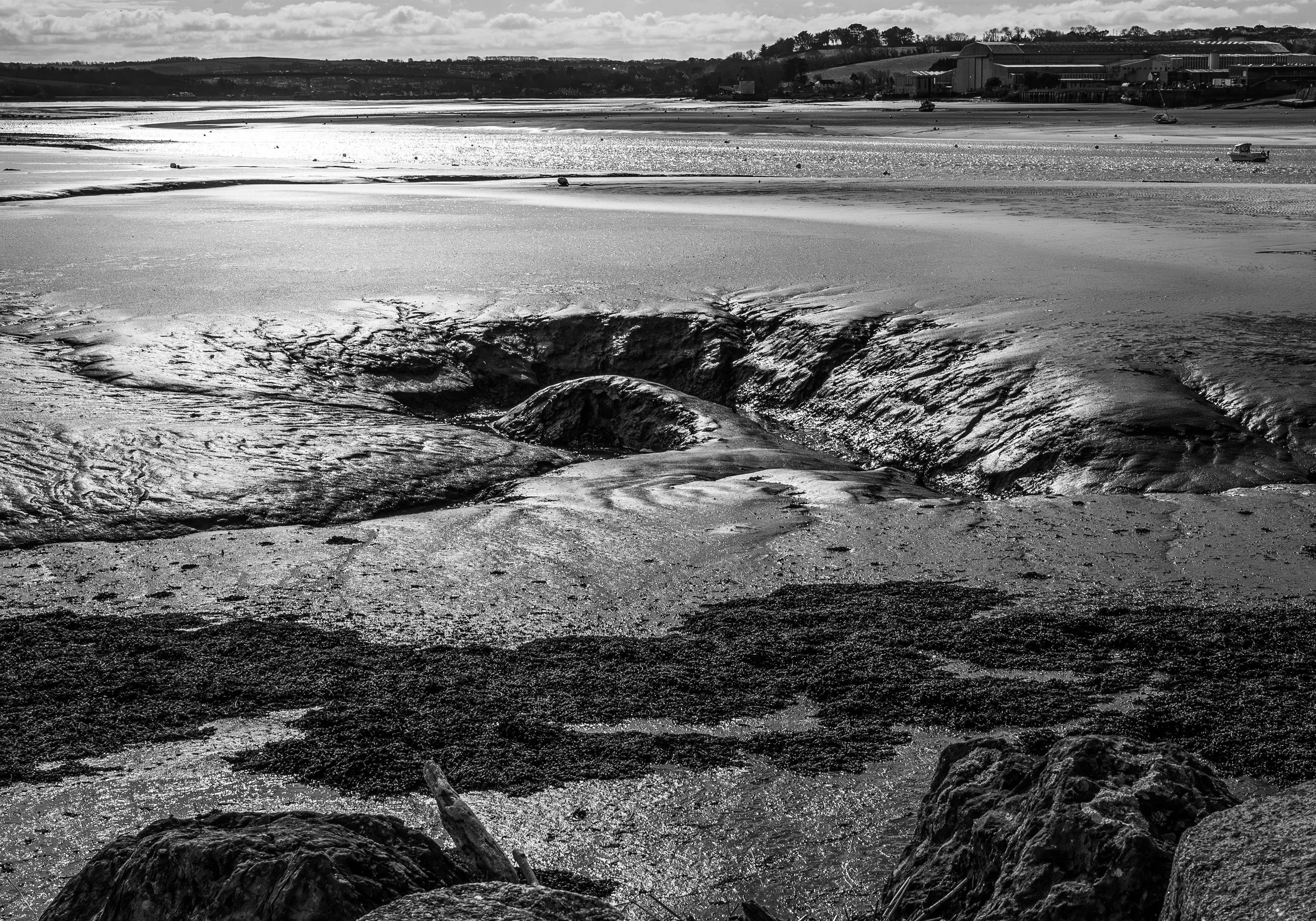
This black-and-white photograph captures a hauntingly beautiful, low-tide landscape, likely along the coast of Devon. The absence of color shifts the focus entirely to the raw textures and tonal contrasts of the estuary.
The bottom of the frame is anchored by dark, craggy rocks and a thick carpet of seaweed. The high-contrast lighting makes the wet surfaces glisten, highlighting the biological grit of the shoreline. A piece of driftwood juts out, adding a sharp, organic line to the rugged base.
The centerpiece of the image is the intricate network of drainage channels carved into the mud. These "veins" create a sense of movement, showing exactly where the tide has retreated.
Texture: The mud appears viscous and heavy, sculpted into smooth mounds and sharp ridges.
Reflection: The silver sheen of the remaining water creates a metallic effect, contrasting against the deep shadows of the crevices.
In the far distance, the horizon is lined with low hills and industrial or harbor structures. Small boats sit grounded on the sand, appearing tiny and immobile against the vastness of the natural basin. The sky is filled with a soft, diffused light, filtered through a layer of textured clouds that mirror the complexity of the ground below.
There is a profound sense of quietude and waiting in this scene. The monochrome palette strips away the "vacation" feel of a coastline, replacing it with something more primal and geological. It emphasizes the cyclical nature of the tides—the earth being revealed and then hidden again.
This black-and-white photograph captures a hauntingly beautiful, low-tide landscape, likely along the coast of Devon. The absence of color shifts the focus entirely to the raw textures and tonal contrasts of the estuary.
The bottom of the frame is anchored by dark, craggy rocks and a thick carpet of seaweed. The high-contrast lighting makes the wet surfaces glisten, highlighting the biological grit of the shoreline. A piece of driftwood juts out, adding a sharp, organic line to the rugged base.
The centerpiece of the image is the intricate network of drainage channels carved into the mud. These "veins" create a sense of movement, showing exactly where the tide has retreated.
Texture: The mud appears viscous and heavy, sculpted into smooth mounds and sharp ridges.
Reflection: The silver sheen of the remaining water creates a metallic effect, contrasting against the deep shadows of the crevices.
In the far distance, the horizon is lined with low hills and industrial or harbor structures. Small boats sit grounded on the sand, appearing tiny and immobile against the vastness of the natural basin. The sky is filled with a soft, diffused light, filtered through a layer of textured clouds that mirror the complexity of the ground below.
There is a profound sense of quietude and waiting in this scene. The monochrome palette strips away the "vacation" feel of a coastline, replacing it with something more primal and geological. It emphasizes the cyclical nature of the tides—the earth being revealed and then hidden again.