
 Image 1 of 1
A4_15471670 Portrait
A4 picture in a 30×40 cm white mount (Frame NOT included).
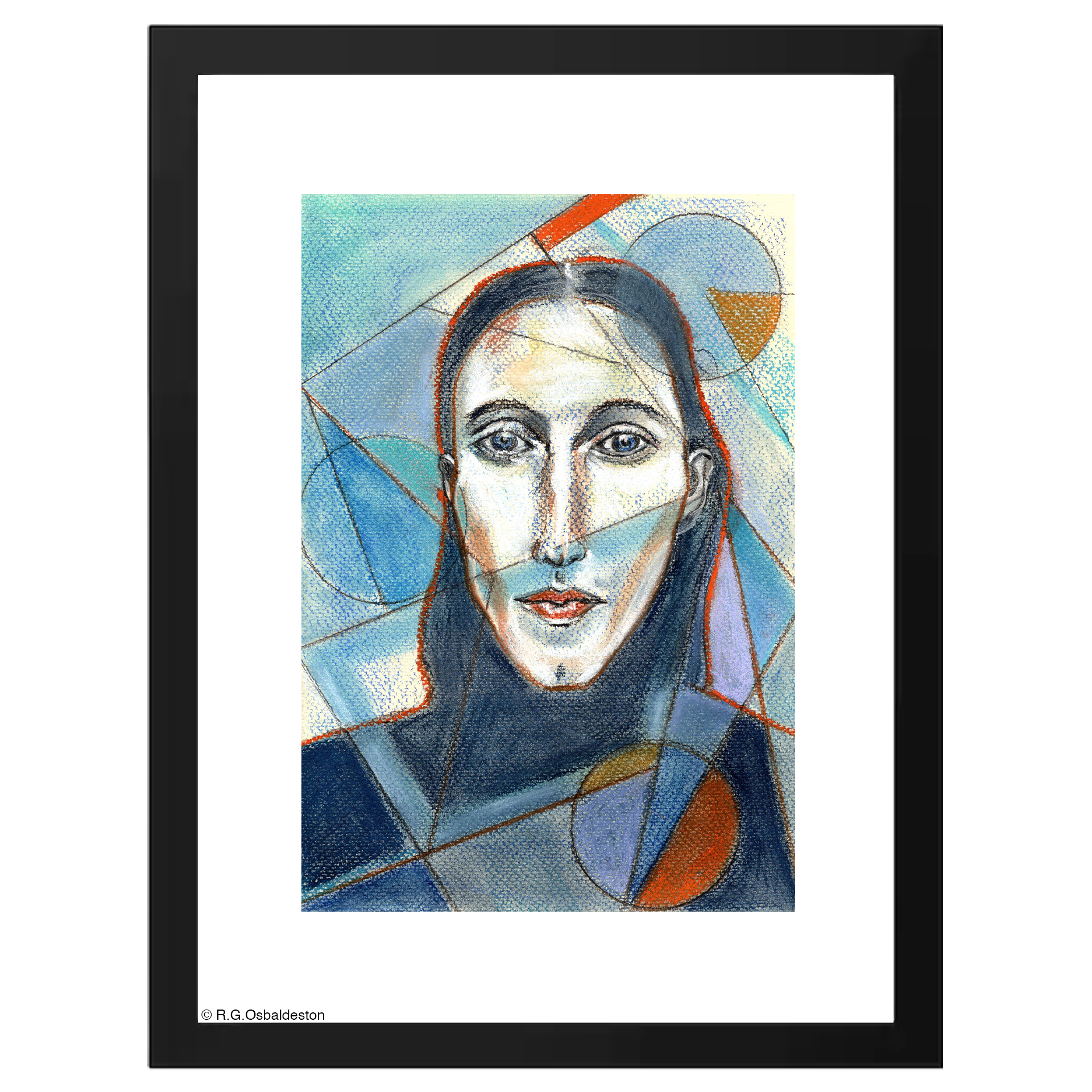
This is a compelling portrait that combines elements of figuration with Cubist-inspired abstraction and a vibrant color palette, likely executed in pastel or colored pencil given the textured, dry appearance.
Subject: The central figure is a woman with striking, intense eyes and a neutral expression. Her features are rendered with a degree of naturalism, focusing the viewer's attention on her face. Her long, dark hair frames her face and blends into the dark turtleneck or garment she is wearing.
Composition & Style: The background and parts of the foreground are composed of geometric shapes—lines, triangles, and circles—that intersect and overlap. This use of geometry fragments the space, a characteristic technique of Cubism.
The background is not a realistic setting but an abstract plane of interlocking shapes, creating a dynamic energy around the static figure.
Color Palette: The dominant colors are cool, primarily shades of blue and teal, suggesting a sense of calm, introspection, or perhaps coolness of mood. These blues are sharply contrasted by accents of warm reddish-orange (seen in the arcs and triangles in the upper right and lower right), which adds tension and visual excitement to the composition.
Technique: The texture suggests a medium like pastel or crayon/pencil on a slightly textured paper, allowing the colors to be layered and blended while retaining a grainy, painterly quality. The fine lines used for the geometric framework provide structure against the softer shading of the face and background.
Overall Mood: The painting evokes a feeling of introspection and psychological depth. The figure seems to be looking directly out at the viewer, yet the abstract elements surrounding her hint at a complex internal landscape or a fragmented reality.
While not strictly Cubist (as the figure's face is not fully deconstructed), the work clearly draws on Post-Cubist or Analytical styles, where the subject is recognizable, but the surrounding space is broken down into geometric forms. This fusion of a realistic portrait with an abstract environment is a powerful way to express both the external appearance and internal complexity of the subject.
A4 picture in a 30×40 cm white mount (Frame NOT included).
This is a compelling portrait that combines elements of figuration with Cubist-inspired abstraction and a vibrant color palette, likely executed in pastel or colored pencil given the textured, dry appearance.
Subject: The central figure is a woman with striking, intense eyes and a neutral expression. Her features are rendered with a degree of naturalism, focusing the viewer's attention on her face. Her long, dark hair frames her face and blends into the dark turtleneck or garment she is wearing.
Composition & Style: The background and parts of the foreground are composed of geometric shapes—lines, triangles, and circles—that intersect and overlap. This use of geometry fragments the space, a characteristic technique of Cubism.
The background is not a realistic setting but an abstract plane of interlocking shapes, creating a dynamic energy around the static figure.
Color Palette: The dominant colors are cool, primarily shades of blue and teal, suggesting a sense of calm, introspection, or perhaps coolness of mood. These blues are sharply contrasted by accents of warm reddish-orange (seen in the arcs and triangles in the upper right and lower right), which adds tension and visual excitement to the composition.
Technique: The texture suggests a medium like pastel or crayon/pencil on a slightly textured paper, allowing the colors to be layered and blended while retaining a grainy, painterly quality. The fine lines used for the geometric framework provide structure against the softer shading of the face and background.
Overall Mood: The painting evokes a feeling of introspection and psychological depth. The figure seems to be looking directly out at the viewer, yet the abstract elements surrounding her hint at a complex internal landscape or a fragmented reality.
While not strictly Cubist (as the figure's face is not fully deconstructed), the work clearly draws on Post-Cubist or Analytical styles, where the subject is recognizable, but the surrounding space is broken down into geometric forms. This fusion of a realistic portrait with an abstract environment is a powerful way to express both the external appearance and internal complexity of the subject.