
 Image 1 of 1
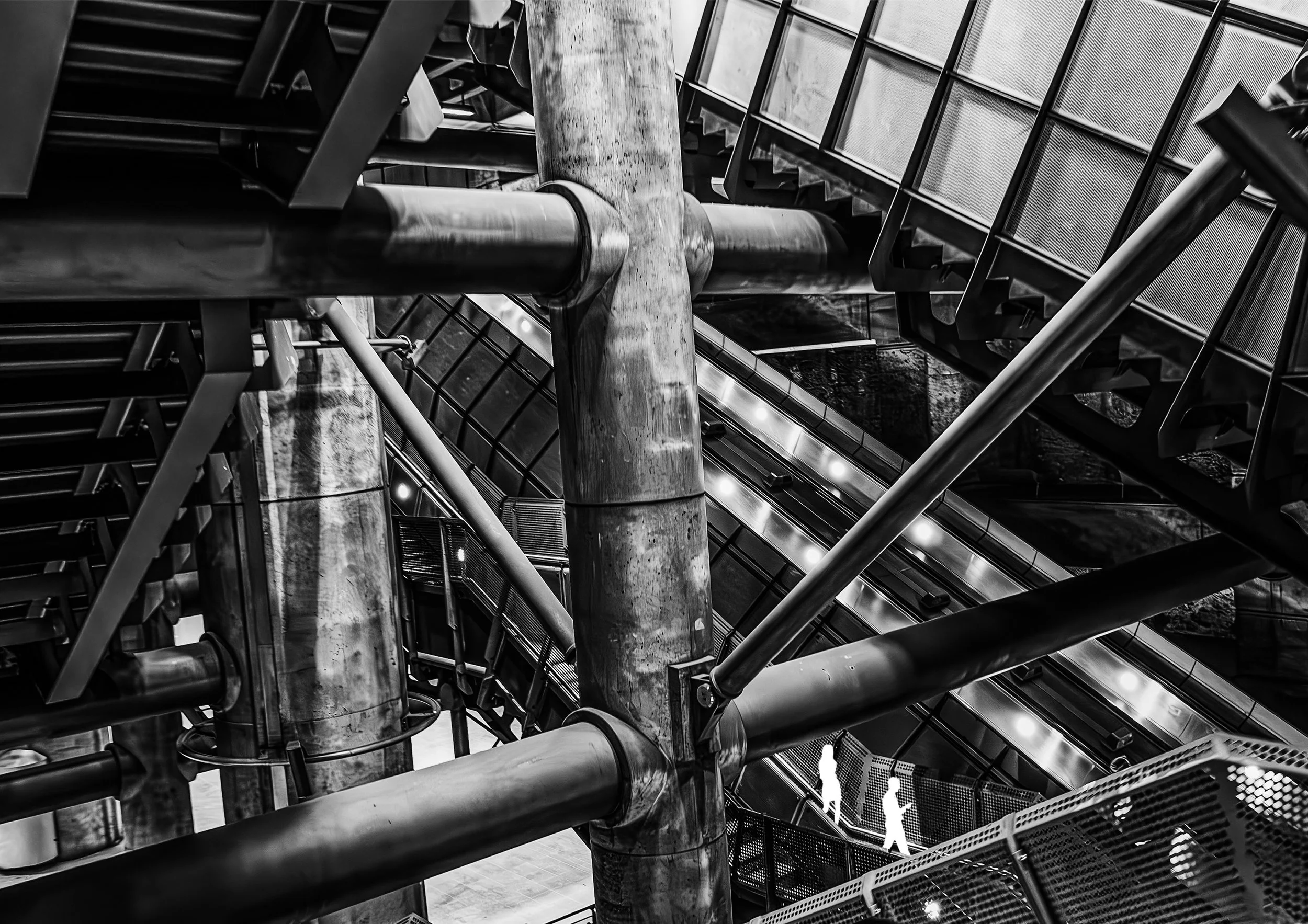
This framed print captures the industrial, almost cinematic atmosphere of Westminster Underground Station in London. Often described as "Brutalist" or "dystopian," the station's architecture is a celebrated example of high-tech engineering.
Designed by Hopkins Architects (led by Michael Hopkins) and completed in 1999 as part of the Jubilee Line Extension, the station is famous for its "box" design. This print highlights several key architectural features:
The "Station Box": To create the station, engineers excavated one of the deepest voids in central London (about 39 meters deep). The result is a massive, cathedral-like underground cavern.
Exposed Structural Elements: Unlike most tube stations that hide their workings behind tiles or panels, Westminster celebrates its skeleton. The large cylindrical pillars and diagonal "diagrid" beams you see in the print aren't just for show—they provide the lateral support needed to keep the walls of the box from collapsing inward.
Portcullis House Foundations: Interestingly, some of the massive columns visible in the station actually serve as the foundations for Portcullis House, the parliamentary office building located directly above the station.
The choice of black and white photography emphasizes the textures of the materials:
The Concrete: The rough-hewn, bush-hammered concrete walls provide a "tough" backdrop.
The Steel: The sleek, metallic sheen of the escalators and support pipes creates a futuristic contrast against the heavy concrete.
The Scale: By including small, ghostly figures of commuters on the escalators, the print emphasizes the sheer, overwhelming scale of the engineering.
The composition feels reminiscent of Piranesi’s Carceri (Prisons)—an 18th-century series of etchings featuring vast, labyrinthine structures—or perhaps a scene from a science fiction film like Blade Runner.
This print serves as a striking reminder of how infrastructure can be transformed into a work of art.
This framed print captures the industrial, almost cinematic atmosphere of Westminster Underground Station in London. Often described as "Brutalist" or "dystopian," the station's architecture is a celebrated example of high-tech engineering.
Designed by Hopkins Architects (led by Michael Hopkins) and completed in 1999 as part of the Jubilee Line Extension, the station is famous for its "box" design. This print highlights several key architectural features:
The "Station Box": To create the station, engineers excavated one of the deepest voids in central London (about 39 meters deep). The result is a massive, cathedral-like underground cavern.
Exposed Structural Elements: Unlike most tube stations that hide their workings behind tiles or panels, Westminster celebrates its skeleton. The large cylindrical pillars and diagonal "diagrid" beams you see in the print aren't just for show—they provide the lateral support needed to keep the walls of the box from collapsing inward.
Portcullis House Foundations: Interestingly, some of the massive columns visible in the station actually serve as the foundations for Portcullis House, the parliamentary office building located directly above the station.
The choice of black and white photography emphasizes the textures of the materials:
The Concrete: The rough-hewn, bush-hammered concrete walls provide a "tough" backdrop.
The Steel: The sleek, metallic sheen of the escalators and support pipes creates a futuristic contrast against the heavy concrete.
The Scale: By including small, ghostly figures of commuters on the escalators, the print emphasizes the sheer, overwhelming scale of the engineering.
The composition feels reminiscent of Piranesi’s Carceri (Prisons)—an 18th-century series of etchings featuring vast, labyrinthine structures—or perhaps a scene from a science fiction film like Blade Runner.
This print serves as a striking reminder of how infrastructure can be transformed into a work of art.