
 Image 1 of 1
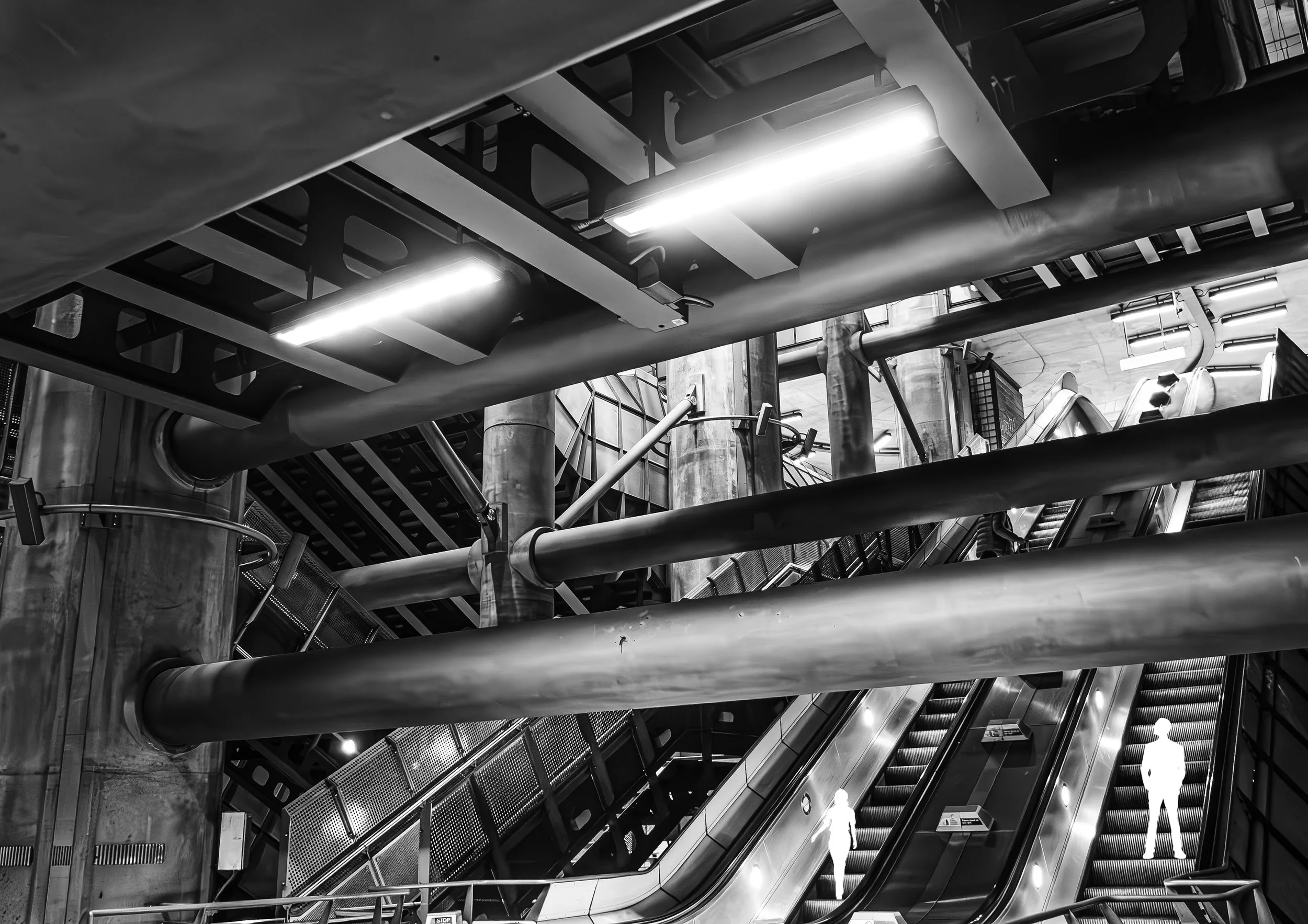
This striking black-and-white print captures the subterranean "brutalist" grandeur of Westminster Station in London, specifically the Jubilee Line extension designed by Hopkins Architects.
Opened in 1999, this part of the station is famous for its vast, cavernous design that looks more like a sci-fi film set or an industrial powerhouse than a typical subway stop.
Industrial Scale: The image highlights the massive concrete beams and giant steel "buttress" tubes. These aren't just for show—they are structural necessities designed to support the immense weight of the buildings above (including Portcullis House) while keeping the station hollowed out and open.
The Contrast of Light: The use of monochrome emphasizes the play between the harsh artificial glow of the linear light fixtures and the deep, metallic shadows of the escalator shafts.
Human Scale: Note the white, silhouette-like figures on the escalators. They provide a vital sense of scale, showing just how dwarfed commuters are by the sheer magnitude of the engineering.
Leading Lines: The diagonal lines of the escalators and the horizontal thrust of the piping create a sense of constant movement and architectural depth.
This piece is a celebration of High-Tech Architecture. By stripping away color, the focus shifts entirely to texture—the coldness of the steel, the roughness of the concrete, and the geometric precision of the trusses. It transforms a daily commute into a dramatic, atmospheric experience.
This striking black-and-white print captures the subterranean "brutalist" grandeur of Westminster Station in London, specifically the Jubilee Line extension designed by Hopkins Architects.
Opened in 1999, this part of the station is famous for its vast, cavernous design that looks more like a sci-fi film set or an industrial powerhouse than a typical subway stop.
Industrial Scale: The image highlights the massive concrete beams and giant steel "buttress" tubes. These aren't just for show—they are structural necessities designed to support the immense weight of the buildings above (including Portcullis House) while keeping the station hollowed out and open.
The Contrast of Light: The use of monochrome emphasizes the play between the harsh artificial glow of the linear light fixtures and the deep, metallic shadows of the escalator shafts.
Human Scale: Note the white, silhouette-like figures on the escalators. They provide a vital sense of scale, showing just how dwarfed commuters are by the sheer magnitude of the engineering.
Leading Lines: The diagonal lines of the escalators and the horizontal thrust of the piping create a sense of constant movement and architectural depth.
This piece is a celebration of High-Tech Architecture. By stripping away color, the focus shifts entirely to texture—the coldness of the steel, the roughness of the concrete, and the geometric precision of the trusses. It transforms a daily commute into a dramatic, atmospheric experience.