
 Image 1 of 1
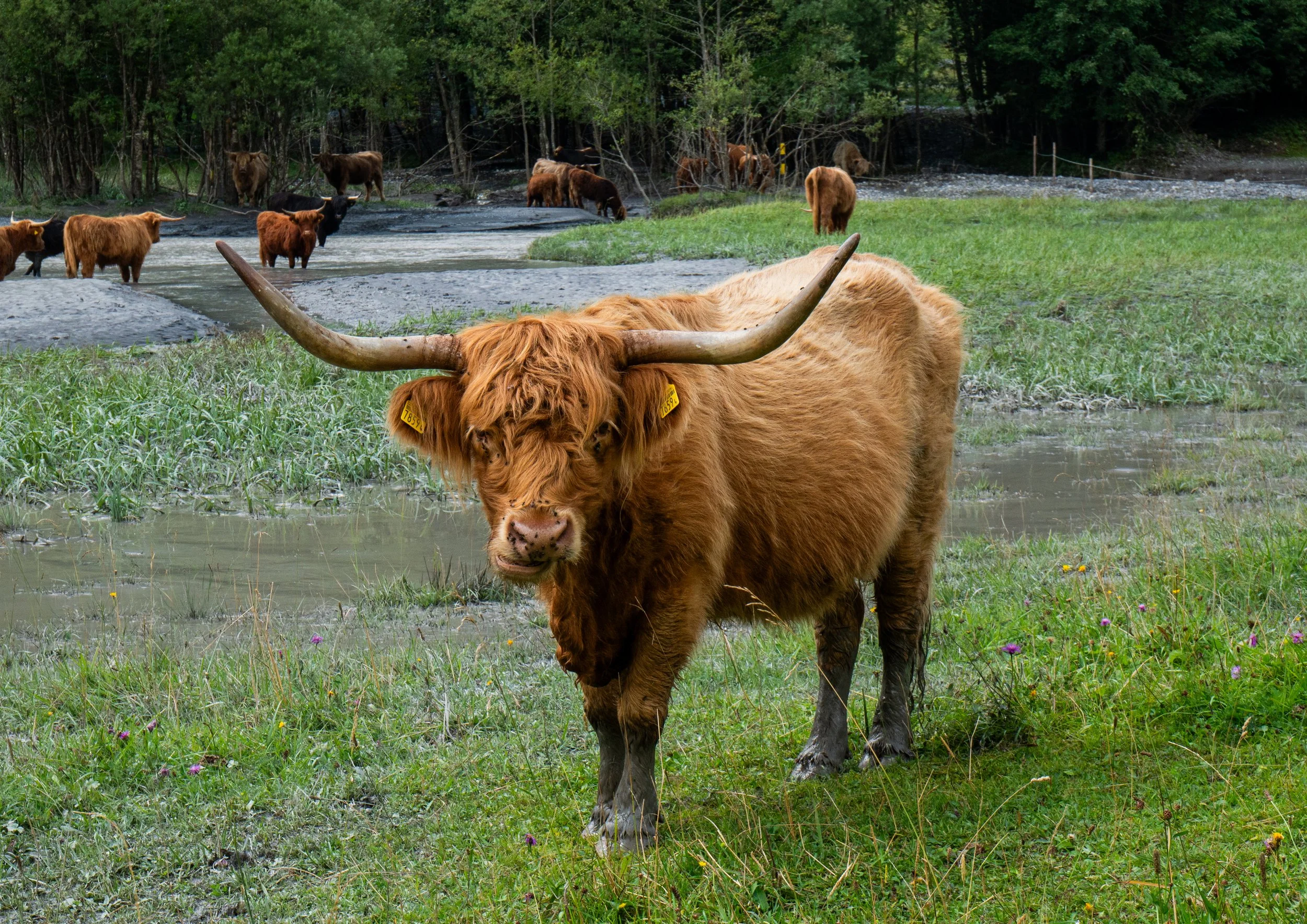
This striking image captures a Highland Cow (or Hérens cross, though the shaggy coat is classic Highland) in a rugged, marshy Swiss landscape. While these cows are originally Scottish, they are incredibly popular in Switzerland—especially in the Alpine regions—due to their hardiness and ability to thrive in cold, wet, and high-altitude environments.
Here is a breakdown of what makes this scene quintessentially Swiss and scientifically interesting:
The cow in the foreground is a magnificent specimen, showing off the breed's most famous traits:
The "Dossan": That thick, wavy fringe of hair protects their eyes from the driving rain and snow common in the Alps.
The Horns: These aren't just for show; they help the cattle forage through snow and brush. In this photo, the wide, sweeping curve suggests an older, well-matured animal.
Double Coat: They possess a shaggy outer layer to shed water and a soft undercoat for warmth, making them "low-maintenance" for Swiss farmers who keep them outdoors.
The background reveals a "braided" or flooded pasture, likely near a mountain stream or after heavy snowmelt.
Resilience: You can see the cow’s legs are caked in mud. Highland cattle are preferred for these "marginal" lands because they are lighter on their feet than many commercial dairy breeds, meaning they cause less soil erosion in delicate Swiss ecosystems.
Social Structure: In the distance, you can see the rest of the herd. These animals are highly social and thrive in the free-range grazing systems used during the Swiss Alpabzug (Alpine descent) and summer grazing months.
If you look closely at the ears, you’ll see yellow ear tags. These are mandatory in Switzerland for livestock tracking and food safety. Even in this wild-looking setting, these animals are part of a highly regulated and carefully managed agricultural system that prioritizes animal welfare and mountain land preservation.
In Switzerland, Highland cattle are often used for "landscape grooming." Because they eat plants that other cows avoid (like thistles and woody shrubs), they help prevent the Swiss valleys from becoming overgrown with forest, maintaining the "postcard" Alpine meadows we all recognize.
This striking image captures a Highland Cow (or Hérens cross, though the shaggy coat is classic Highland) in a rugged, marshy Swiss landscape. While these cows are originally Scottish, they are incredibly popular in Switzerland—especially in the Alpine regions—due to their hardiness and ability to thrive in cold, wet, and high-altitude environments.
Here is a breakdown of what makes this scene quintessentially Swiss and scientifically interesting:
The cow in the foreground is a magnificent specimen, showing off the breed's most famous traits:
The "Dossan": That thick, wavy fringe of hair protects their eyes from the driving rain and snow common in the Alps.
The Horns: These aren't just for show; they help the cattle forage through snow and brush. In this photo, the wide, sweeping curve suggests an older, well-matured animal.
Double Coat: They possess a shaggy outer layer to shed water and a soft undercoat for warmth, making them "low-maintenance" for Swiss farmers who keep them outdoors.
The background reveals a "braided" or flooded pasture, likely near a mountain stream or after heavy snowmelt.
Resilience: You can see the cow’s legs are caked in mud. Highland cattle are preferred for these "marginal" lands because they are lighter on their feet than many commercial dairy breeds, meaning they cause less soil erosion in delicate Swiss ecosystems.
Social Structure: In the distance, you can see the rest of the herd. These animals are highly social and thrive in the free-range grazing systems used during the Swiss Alpabzug (Alpine descent) and summer grazing months.
If you look closely at the ears, you’ll see yellow ear tags. These are mandatory in Switzerland for livestock tracking and food safety. Even in this wild-looking setting, these animals are part of a highly regulated and carefully managed agricultural system that prioritizes animal welfare and mountain land preservation.
In Switzerland, Highland cattle are often used for "landscape grooming." Because they eat plants that other cows avoid (like thistles and woody shrubs), they help prevent the Swiss valleys from becoming overgrown with forest, maintaining the "postcard" Alpine meadows we all recognize.