
 Image 1 of 1
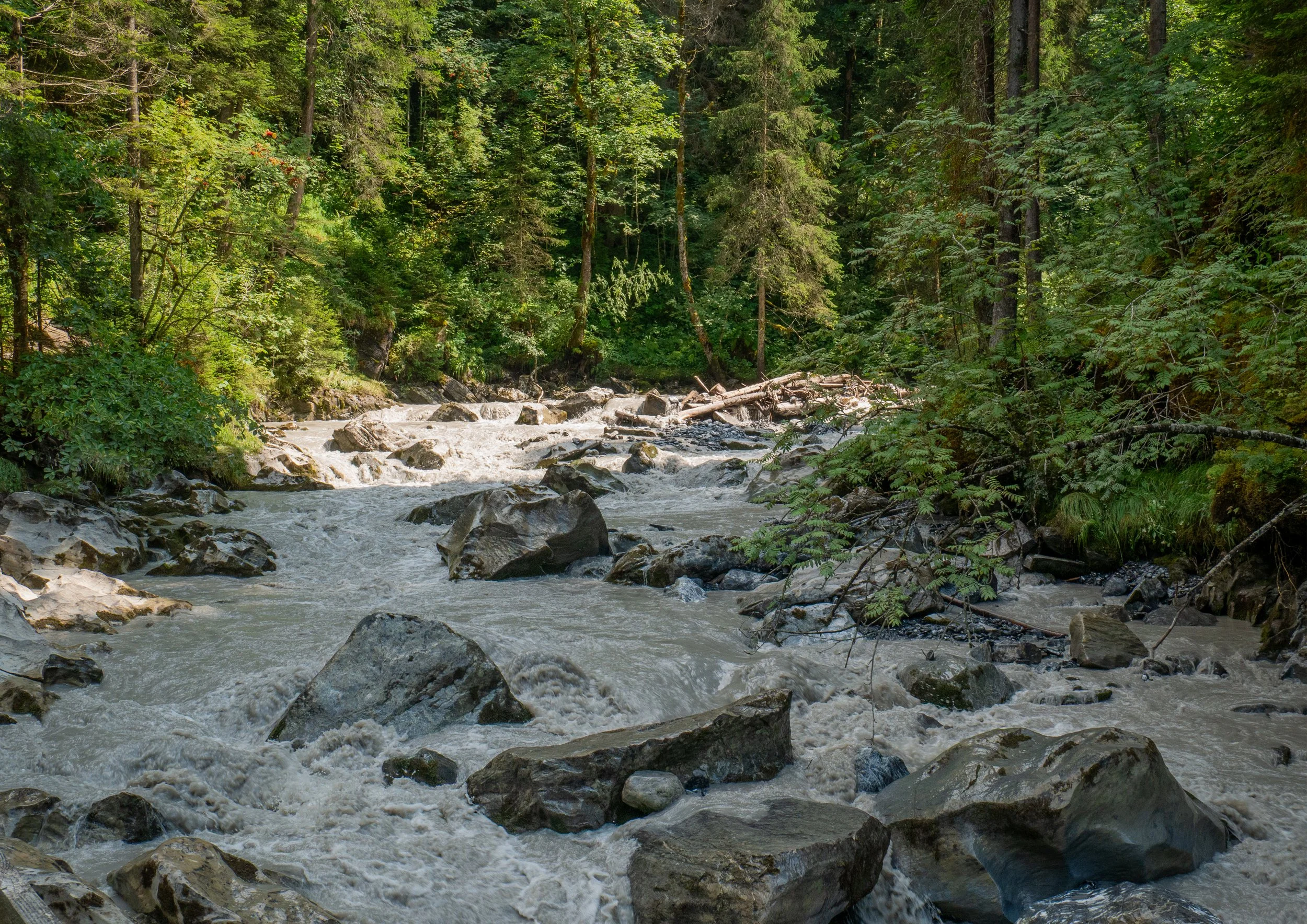
This image captures the raw, powerful beauty of a glacial river in the Swiss Alps. The milky, greyish-white color of the water often called "glacial milk" is a classic characteristic of this region. This unique hue is caused by fine particles of rock, or "rock flour," which are ground down by moving glaciers and suspended in the meltwater.
Here is a breakdown of the scene:
The River Flow: The water is turbulent and fast-moving, cascading over large, dark boulders. This suggests a high-energy environment, likely a mountain stream (or Bach) that gains momentum from the steep Alpine slopes.
The Rock Formations: The jagged, dark grey rocks contrast sharply with the lighter water. These are likely fragments of limestone or granite, common in the Swiss Massifs, shaped by centuries of erosion.
The Vegetation: The lush green canopy of coniferous trees (pines and firs) and deciduous shrubs suggests this was taken at a mid-altitude level during the summer months. The density of the forest reflects the high rainfall and humidity found in Swiss valleys.
This photo evokes the atmosphere of regions like the Bernese Oberland or the Grisons (Graubünden). These areas are famous for their narrow gorges and powerful river systems that feed into Switzerland's famous lakes.
Sound: Looking at the white water, one can almost hear the deafening roar of the current hitting the rocks.
Temperature: Even on a sunny day, the air near these rivers remains crisp and cool due to the freezing temperatures of the glacial runoff.
These rivers are the "water towers" of Europe. The water seen here eventually flows into major European arteries like the Rhine or the Rhône. The presence of fallen logs and natural debris indicates a healthy, un-engineered river ecosystem where the forest and water are in a constant state of exchange.
This image captures the raw, powerful beauty of a glacial river in the Swiss Alps. The milky, greyish-white color of the water often called "glacial milk" is a classic characteristic of this region. This unique hue is caused by fine particles of rock, or "rock flour," which are ground down by moving glaciers and suspended in the meltwater.
Here is a breakdown of the scene:
The River Flow: The water is turbulent and fast-moving, cascading over large, dark boulders. This suggests a high-energy environment, likely a mountain stream (or Bach) that gains momentum from the steep Alpine slopes.
The Rock Formations: The jagged, dark grey rocks contrast sharply with the lighter water. These are likely fragments of limestone or granite, common in the Swiss Massifs, shaped by centuries of erosion.
The Vegetation: The lush green canopy of coniferous trees (pines and firs) and deciduous shrubs suggests this was taken at a mid-altitude level during the summer months. The density of the forest reflects the high rainfall and humidity found in Swiss valleys.
This photo evokes the atmosphere of regions like the Bernese Oberland or the Grisons (Graubünden). These areas are famous for their narrow gorges and powerful river systems that feed into Switzerland's famous lakes.
Sound: Looking at the white water, one can almost hear the deafening roar of the current hitting the rocks.
Temperature: Even on a sunny day, the air near these rivers remains crisp and cool due to the freezing temperatures of the glacial runoff.
These rivers are the "water towers" of Europe. The water seen here eventually flows into major European arteries like the Rhine or the Rhône. The presence of fallen logs and natural debris indicates a healthy, un-engineered river ecosystem where the forest and water are in a constant state of exchange.