
 Image 1 of 1
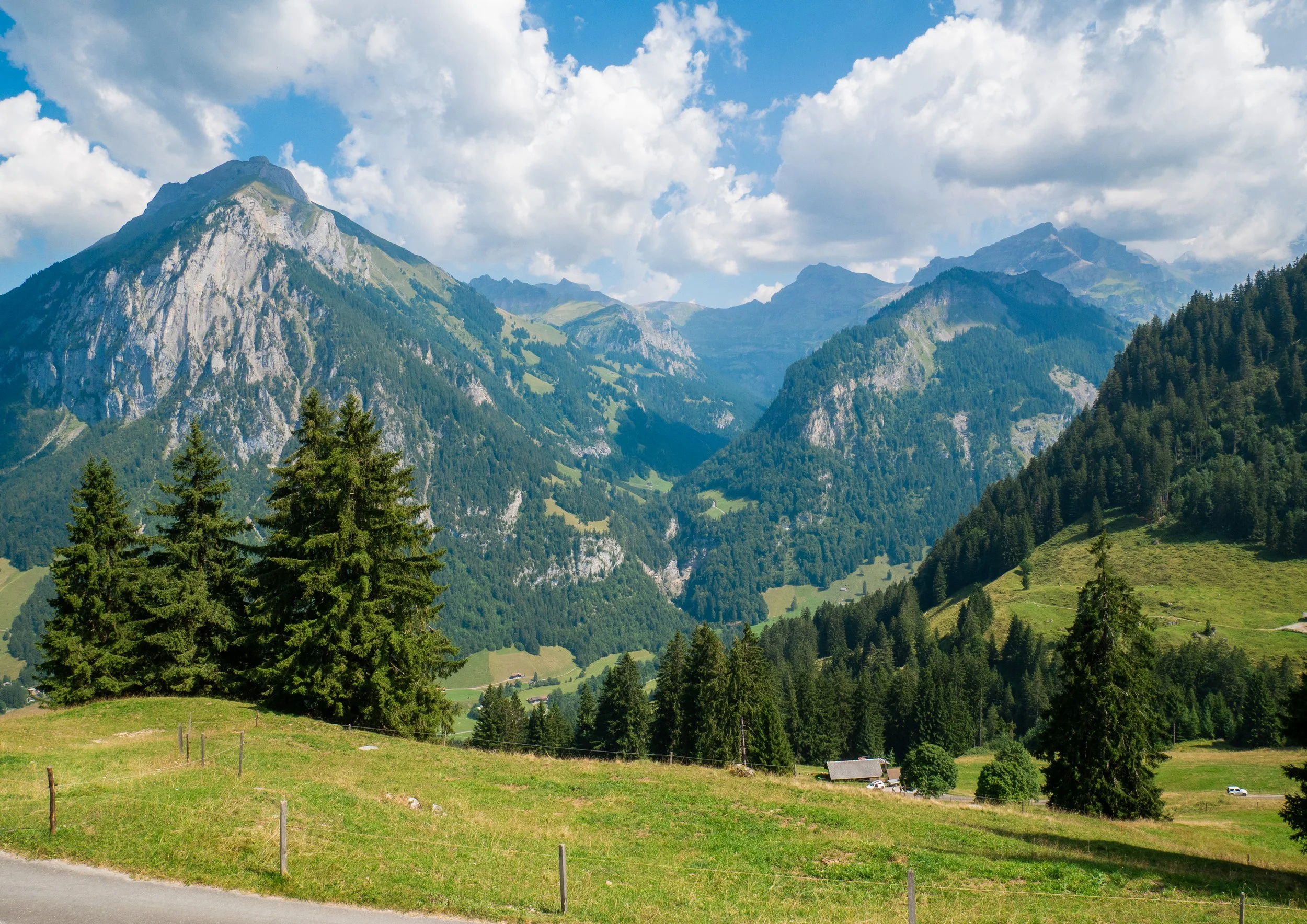
This image captures the quintessential beauty of the Swiss Alps, showcasing the dramatic transition between lush, habitable valleys and the rugged, limestone peaks that define the region's geography.
The photo appears to be taken from a high mountain pasture, or Alp, during the peak of summer. Here is a breakdown of what makes this scene so characteristic of Switzerland:
The landscape is dominated by U-shaped valleys, a hallmark of glacial erosion. You can see how the steep, forested slopes give way to vertical rock faces. The prominent peak on the left displays the classic grey limestone common in the Prealps, likely in a region like the Bernese Oberland or Central Switzerland (near Glarus or Schwyz).
In the lower third of the image, we see how the Swiss have integrated with this challenging terrain for centuries:
High Pastures: The foreground shows a cleared meadow with a simple wire fence, used for seasonal cattle grazing (the transhumance).
Chalets: Scattered throughout the valley floor and on the lower slopes are small wooden structures and farmsteads, built to withstand heavy winter snow.
Managed Forestry: The dense stands of Norway Spruce and Silver Fir are often carefully managed to serve as "protection forests," preventing avalanches and landslides from reaching the villages below.
The lighting suggests a bright, slightly humid summer day. The "fair-weather" cumulus clouds gathering around the summits are a daily occurrence in the Alps, as warm air rises from the valleys (anabatic winds) and condenses against the cooler mountain peaks.
Beyond the mountains themselves, there is a distinct sense of order and scale. Even in this wild, vertical environment, there are signs of human presence a small road, a parked white van, and perfectly maintained meadows reflecting the Swiss "civilized wilderness" where nature and infrastructure exist in a tight, clean embrace.
This image captures the quintessential beauty of the Swiss Alps, showcasing the dramatic transition between lush, habitable valleys and the rugged, limestone peaks that define the region's geography.
The photo appears to be taken from a high mountain pasture, or Alp, during the peak of summer. Here is a breakdown of what makes this scene so characteristic of Switzerland:
The landscape is dominated by U-shaped valleys, a hallmark of glacial erosion. You can see how the steep, forested slopes give way to vertical rock faces. The prominent peak on the left displays the classic grey limestone common in the Prealps, likely in a region like the Bernese Oberland or Central Switzerland (near Glarus or Schwyz).
In the lower third of the image, we see how the Swiss have integrated with this challenging terrain for centuries:
High Pastures: The foreground shows a cleared meadow with a simple wire fence, used for seasonal cattle grazing (the transhumance).
Chalets: Scattered throughout the valley floor and on the lower slopes are small wooden structures and farmsteads, built to withstand heavy winter snow.
Managed Forestry: The dense stands of Norway Spruce and Silver Fir are often carefully managed to serve as "protection forests," preventing avalanches and landslides from reaching the villages below.
The lighting suggests a bright, slightly humid summer day. The "fair-weather" cumulus clouds gathering around the summits are a daily occurrence in the Alps, as warm air rises from the valleys (anabatic winds) and condenses against the cooler mountain peaks.
Beyond the mountains themselves, there is a distinct sense of order and scale. Even in this wild, vertical environment, there are signs of human presence a small road, a parked white van, and perfectly maintained meadows reflecting the Swiss "civilized wilderness" where nature and infrastructure exist in a tight, clean embrace.