
 Image 1 of 1
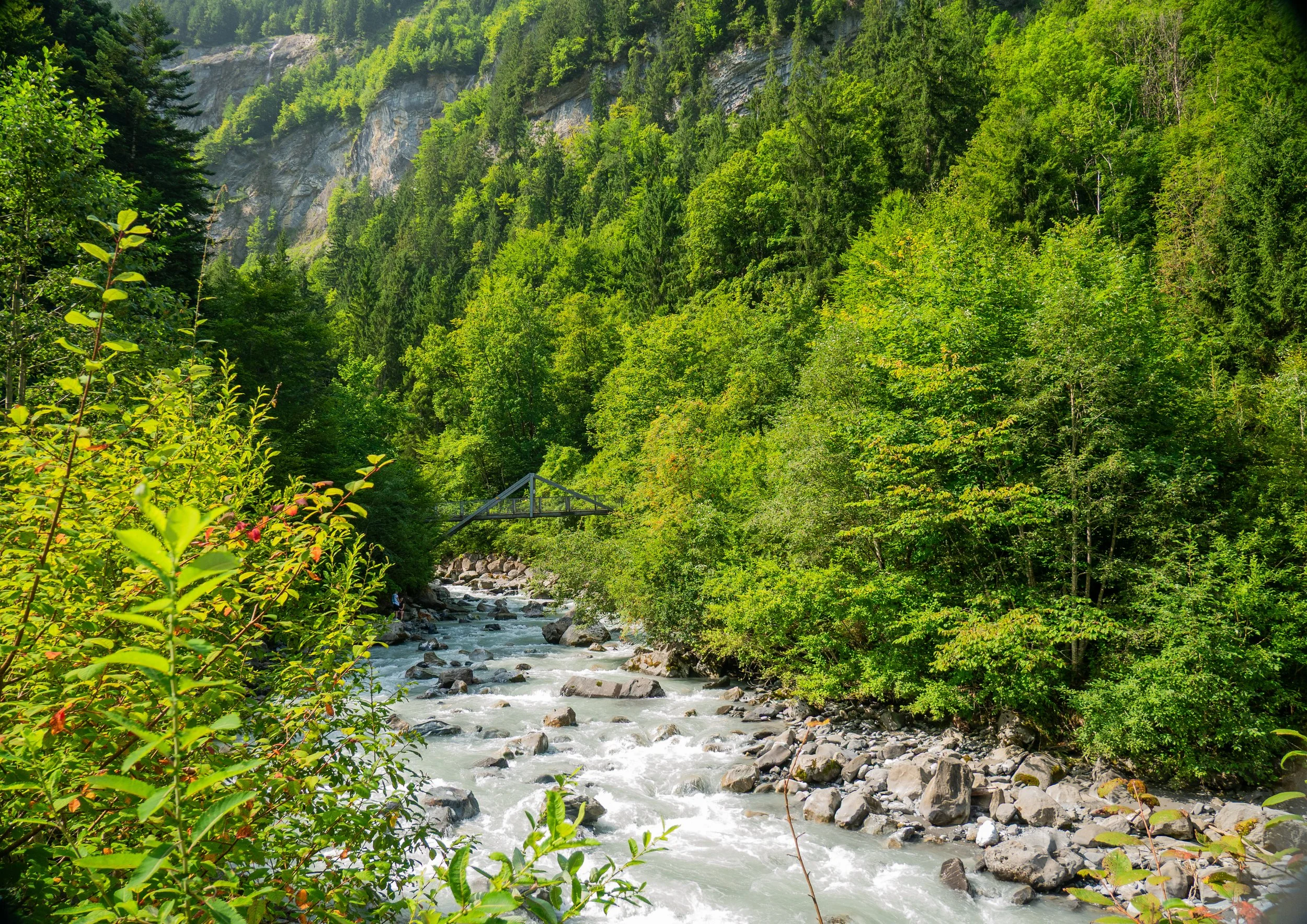
This image captures the serene and rugged beauty typical of the Swiss Alps in summer. The scene is a perfect example of the "glacial milk" rivers and lush valley forests that define the Bernese Oberland or the Valais regions.
The Glacial River: The water has a distinct milky, turquoise-grey hue. This is caused by "rock flour"—fine particles of silt and rock ground down by moving glaciers. When the ice melts and flows into streams like this one, these particles remain suspended, scattering light and creating that iconic Alpine color.
The Bridge: The inclusion of the metal truss bridge highlights Switzerland’s world-renowned hiking infrastructure. Even in deep wilderness areas, the Swiss trail network (Wanderwege) is impeccably maintained, often featuring such engineering to allow hikers to safely traverse powerful mountain torrents.
The Flora: The dense canopy of deciduous and coniferous trees suggests a lower-elevation Alpine valley. The vibrant greens indicate a high level of moisture, common in valleys where mist traps humidity and snowmelt keeps the soil rich.
There is a profound sense of tranquility and scale here. The steep, rocky cliff face peeking through the top-left corner reminds the viewer of the massive verticality of the Swiss mountains. It’s a scene that invites you to imagine the sound of the rushing water against the rocks and the cool, crisp air that usually accompanies these riverbeds, even on a sunny day.
Fun Fact: Switzerland has over 65,000 kilometers of marked hiking trails. A scene like this is often just a small part of a much larger journey toward a high-altitude peak or a mountain hut.
This image captures the serene and rugged beauty typical of the Swiss Alps in summer. The scene is a perfect example of the "glacial milk" rivers and lush valley forests that define the Bernese Oberland or the Valais regions.
The Glacial River: The water has a distinct milky, turquoise-grey hue. This is caused by "rock flour"—fine particles of silt and rock ground down by moving glaciers. When the ice melts and flows into streams like this one, these particles remain suspended, scattering light and creating that iconic Alpine color.
The Bridge: The inclusion of the metal truss bridge highlights Switzerland’s world-renowned hiking infrastructure. Even in deep wilderness areas, the Swiss trail network (Wanderwege) is impeccably maintained, often featuring such engineering to allow hikers to safely traverse powerful mountain torrents.
The Flora: The dense canopy of deciduous and coniferous trees suggests a lower-elevation Alpine valley. The vibrant greens indicate a high level of moisture, common in valleys where mist traps humidity and snowmelt keeps the soil rich.
There is a profound sense of tranquility and scale here. The steep, rocky cliff face peeking through the top-left corner reminds the viewer of the massive verticality of the Swiss mountains. It’s a scene that invites you to imagine the sound of the rushing water against the rocks and the cool, crisp air that usually accompanies these riverbeds, even on a sunny day.
Fun Fact: Switzerland has over 65,000 kilometers of marked hiking trails. A scene like this is often just a small part of a much larger journey toward a high-altitude peak or a mountain hut.