
 Image 1 of 1
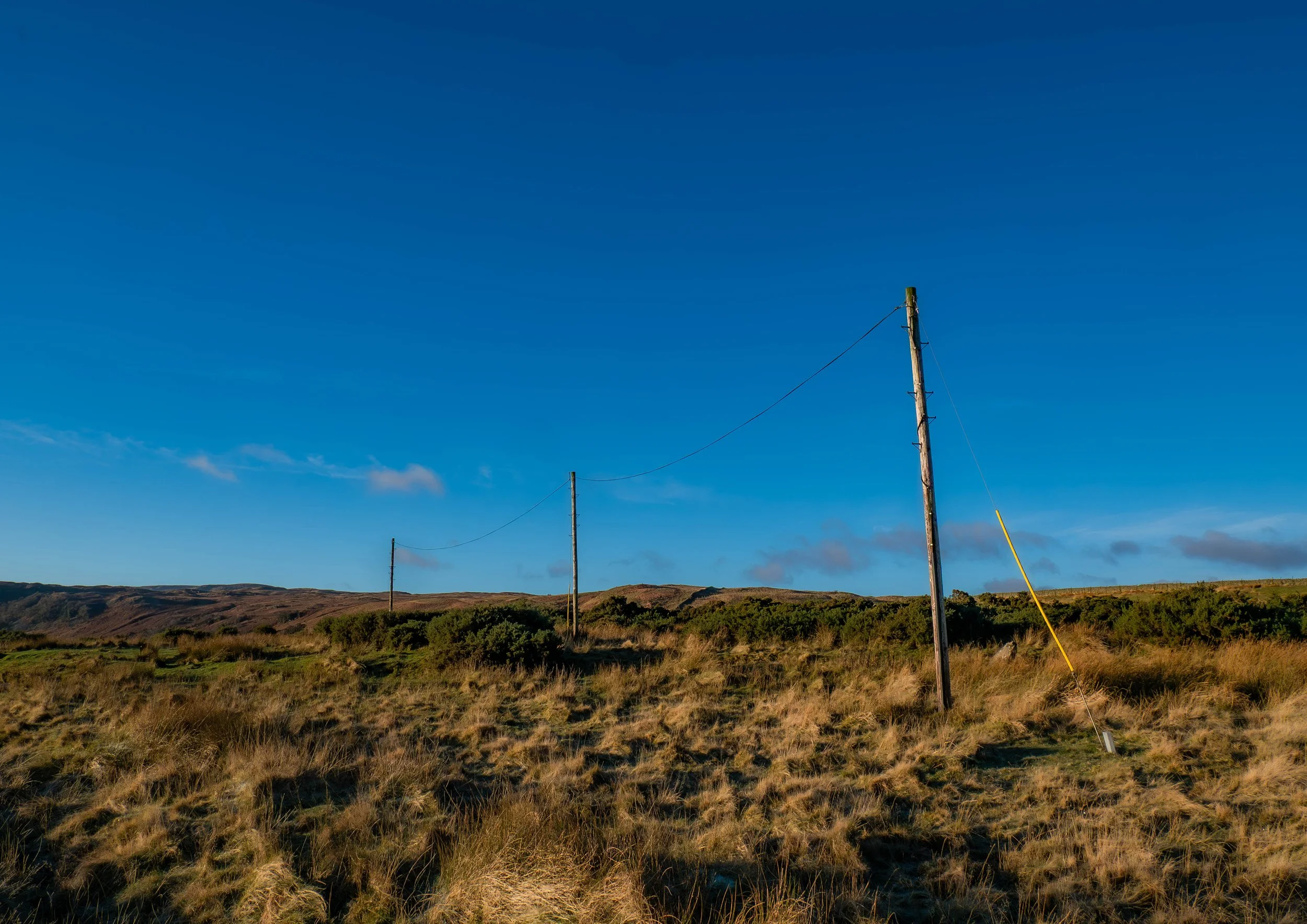
This image captures a quiet, rugged corner of the Lake District in Cumbria, likely away from the high peaks and closer to the undulating moorland fringes. It perfectly illustrates the "backbone" of rural life—where modern utility meets ancient landscape.
The composition is dominated by a vast, deep blue sky that takes up the top two-thirds of the frame, emphasizing the openness of the Cumbrian fells. The low sun creates long, soft shadows across the tawny grasses and dark green gorse bushes, suggesting either a crisp autumn morning or a late winter afternoon.
The Utility Line: A row of weathered wooden telegraph poles marches across the frame. Their slight lean and the sagging wires provide a sense of scale and human presence in an otherwise wild-looking environment.
The Landscape: The foreground is a texture-rich mix of dry moorland grass and scrub. In the distance, the rolling hills (or fells) turn a hazy purple-brown, characteristic of the Lake District's volcanic geology and peat-rich soil.
The Light: The golden-hour lighting highlights the "stay wire" (the yellow-capped cable on the right), which glows against the darker landscape, drawing the eye into the scene.
There is a profound sense of isolation and utility. Unlike the "chocolate box" postcard views of Lake Windermere or Derwentwater, this photo celebrates the functional beauty of the Cumbrian uplands. It’s a reminder that even in one of England's most famous national parks, there are vast stretches of quiet land where the only sound is the wind whistling through those very wires.
This image captures a quiet, rugged corner of the Lake District in Cumbria, likely away from the high peaks and closer to the undulating moorland fringes. It perfectly illustrates the "backbone" of rural life—where modern utility meets ancient landscape.
The composition is dominated by a vast, deep blue sky that takes up the top two-thirds of the frame, emphasizing the openness of the Cumbrian fells. The low sun creates long, soft shadows across the tawny grasses and dark green gorse bushes, suggesting either a crisp autumn morning or a late winter afternoon.
The Utility Line: A row of weathered wooden telegraph poles marches across the frame. Their slight lean and the sagging wires provide a sense of scale and human presence in an otherwise wild-looking environment.
The Landscape: The foreground is a texture-rich mix of dry moorland grass and scrub. In the distance, the rolling hills (or fells) turn a hazy purple-brown, characteristic of the Lake District's volcanic geology and peat-rich soil.
The Light: The golden-hour lighting highlights the "stay wire" (the yellow-capped cable on the right), which glows against the darker landscape, drawing the eye into the scene.
There is a profound sense of isolation and utility. Unlike the "chocolate box" postcard views of Lake Windermere or Derwentwater, this photo celebrates the functional beauty of the Cumbrian uplands. It’s a reminder that even in one of England's most famous national parks, there are vast stretches of quiet land where the only sound is the wind whistling through those very wires.