
 Image 1 of 2
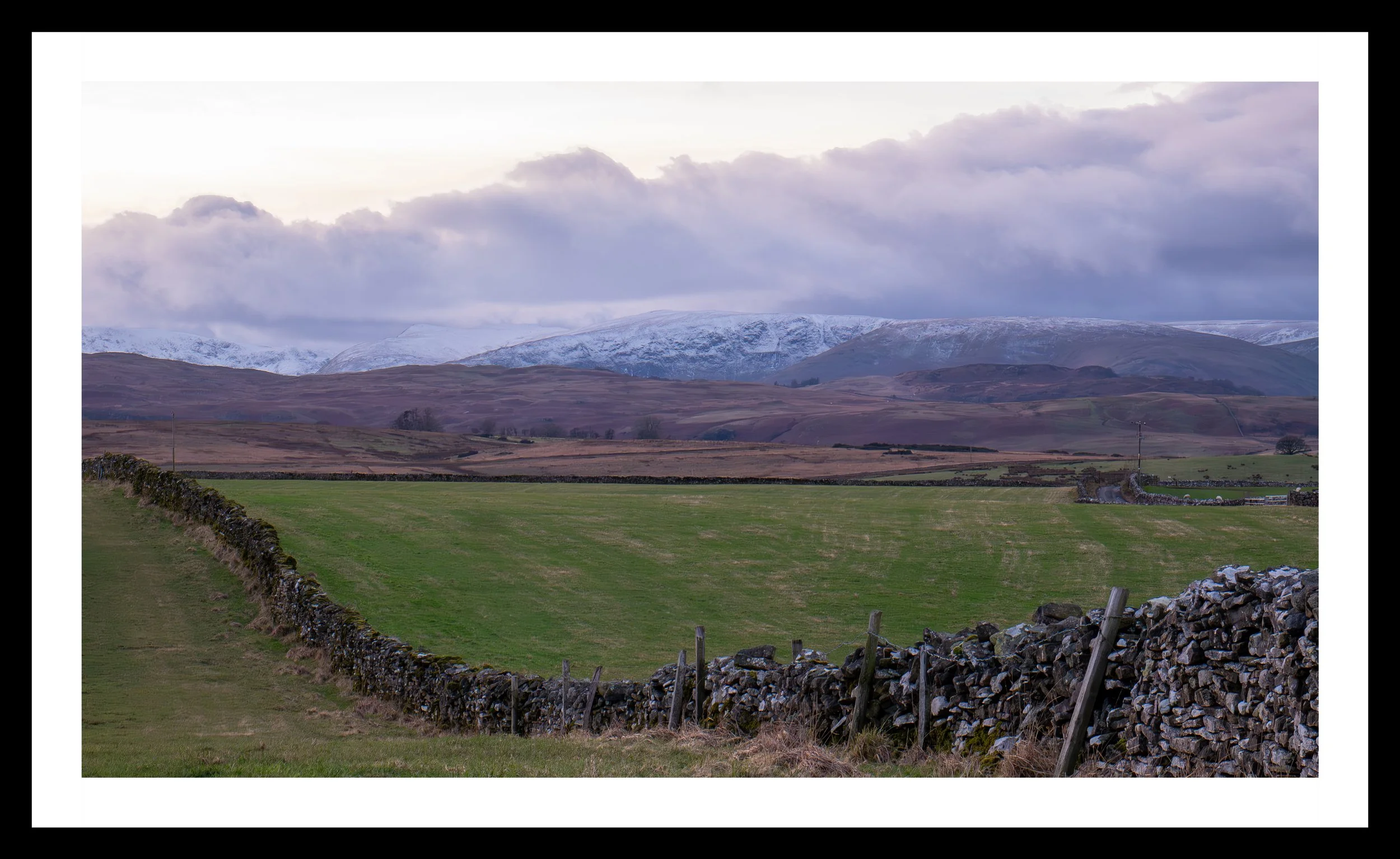 Image 2 of 2
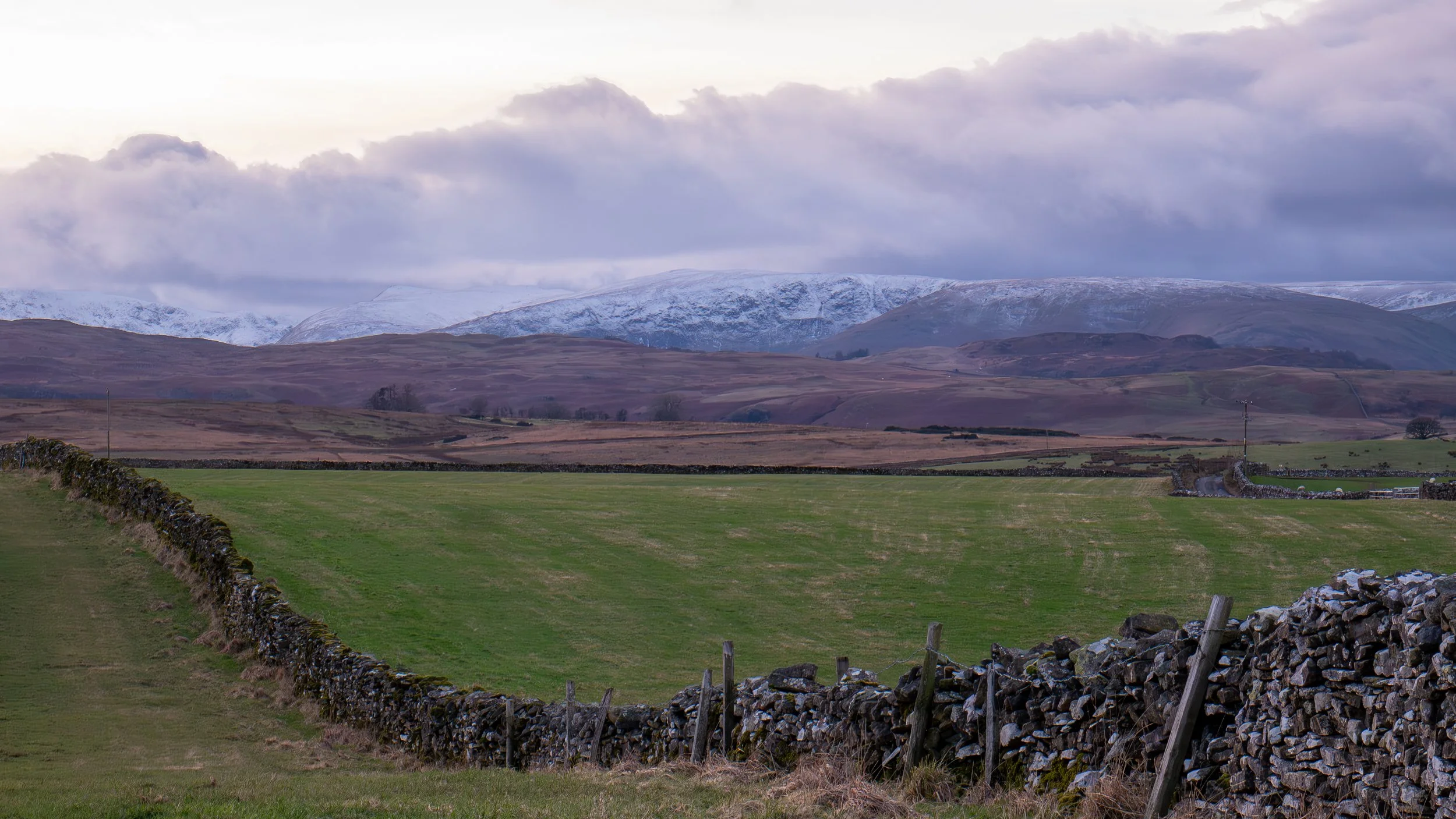
This image captures the quiet, rugged soul of the Lake District in winter. It’s a scene that feels deeply Cumbrian balancing the domesticity of farmed land with the raw, untamed nature of the high fells.
Here is a breakdown of what makes this particular view so evocative:
The foreground is dominated by a classic dry stone wall, a hallmark of the Cumbrian landscape. These walls are more than just boundaries; they are a testament to centuries of hill farming. The way it snakes along the emerald pasture guides the eye toward the "middle distance" of rolling brown bracken, before finally hitting the dramatic backdrop of the fells.
The photo beautifully illustrates the vertical climate of the Lakes:
The Valley Floor: The fields remain a resilient green, benefiting from the milder air of the lower elevations.
The High Fells: The peaks are dusted in a crisp layer of snow, likely indicating a "temperature inversion" or simply the harsh reality of winter at 2,000+ feet.
The Palette: There is a wonderful transition from the earthy greens and russet browns of the foreground to the cool whites and deep purples of the snow and storm clouds.
The lighting suggests either a twilight "blue hour" or a heavy, overcast winter morning. The soft, diffused light eliminates harsh shadows, giving the mountains a painterly, almost ethereal quality. The heavy cloud bank hanging over the peaks adds a sense of isolation and drama, reminding the viewer of how quickly the weather can turn in the fells.
While many parts of the Lake District share this look, the broadness of the valley and the profile of the snow-capped range suggest this might be looking toward the Helvellyn range or perhaps the Eastern Fells from a vantage point near places like Troutbeck or the outskirts of Kendal.
Fun Fact: There are enough dry stone walls in Cumbria to stretch around the world several times. They are held together entirely by gravity and the skill of the "waller," with no mortar used at all.
A 267.3x148.8 mm photo printed on a A4 (297x210 mm) premium glossy photo paper (Frame and mount NOT included).
This image captures the quiet, rugged soul of the Lake District in winter. It’s a scene that feels deeply Cumbrian balancing the domesticity of farmed land with the raw, untamed nature of the high fells.
Here is a breakdown of what makes this particular view so evocative:
The foreground is dominated by a classic dry stone wall, a hallmark of the Cumbrian landscape. These walls are more than just boundaries; they are a testament to centuries of hill farming. The way it snakes along the emerald pasture guides the eye toward the "middle distance" of rolling brown bracken, before finally hitting the dramatic backdrop of the fells.
The photo beautifully illustrates the vertical climate of the Lakes:
The Valley Floor: The fields remain a resilient green, benefiting from the milder air of the lower elevations.
The High Fells: The peaks are dusted in a crisp layer of snow, likely indicating a "temperature inversion" or simply the harsh reality of winter at 2,000+ feet.
The Palette: There is a wonderful transition from the earthy greens and russet browns of the foreground to the cool whites and deep purples of the snow and storm clouds.
The lighting suggests either a twilight "blue hour" or a heavy, overcast winter morning. The soft, diffused light eliminates harsh shadows, giving the mountains a painterly, almost ethereal quality. The heavy cloud bank hanging over the peaks adds a sense of isolation and drama, reminding the viewer of how quickly the weather can turn in the fells.
While many parts of the Lake District share this look, the broadness of the valley and the profile of the snow-capped range suggest this might be looking toward the Helvellyn range or perhaps the Eastern Fells from a vantage point near places like Troutbeck or the outskirts of Kendal.
Fun Fact: There are enough dry stone walls in Cumbria to stretch around the world several times. They are held together entirely by gravity and the skill of the "waller," with no mortar used at all.
A 267.3x148.8 mm photo printed on a A4 (297x210 mm) premium glossy photo paper (Frame and mount NOT included).