
 Image 1 of 2
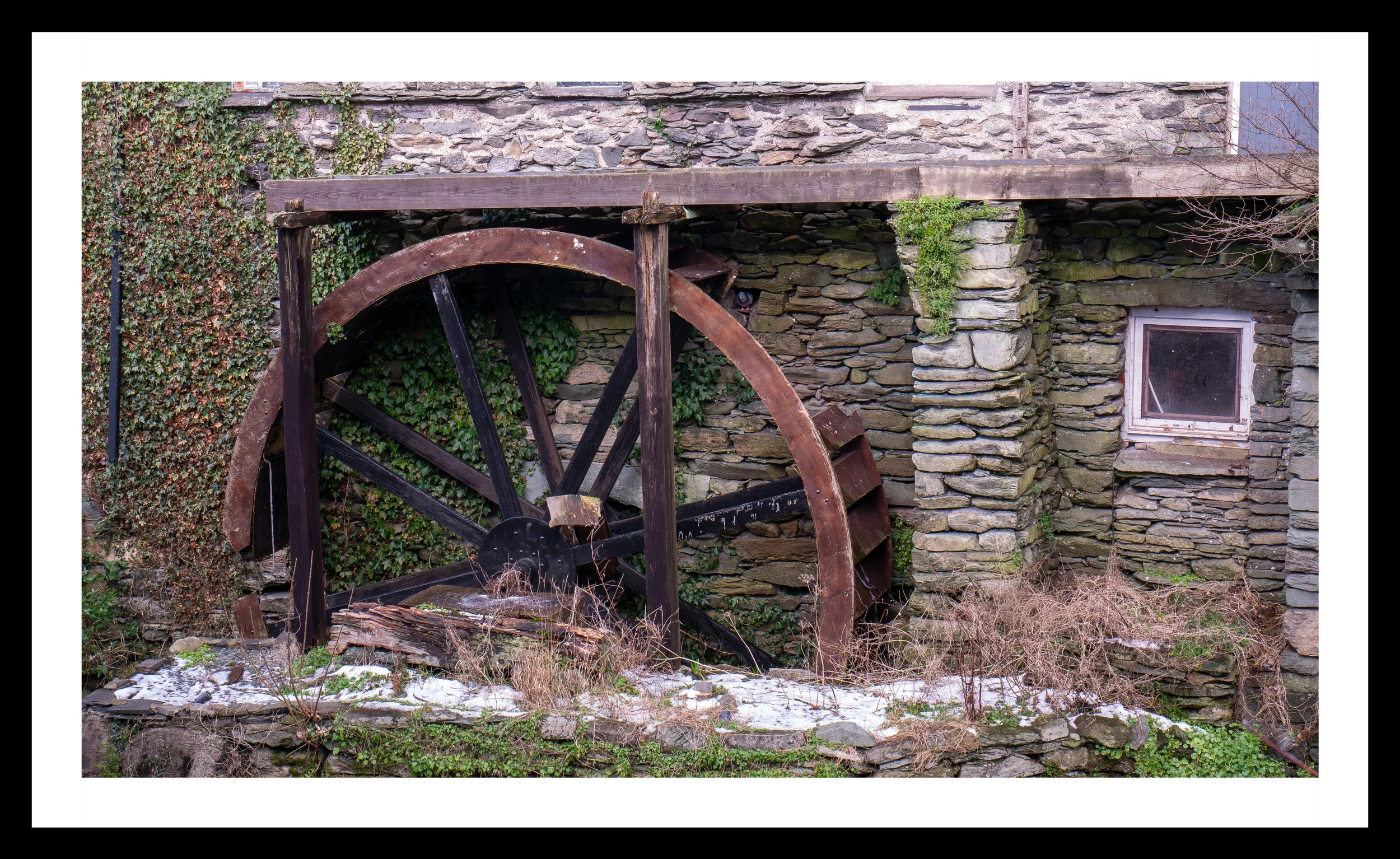 Image 2 of 2
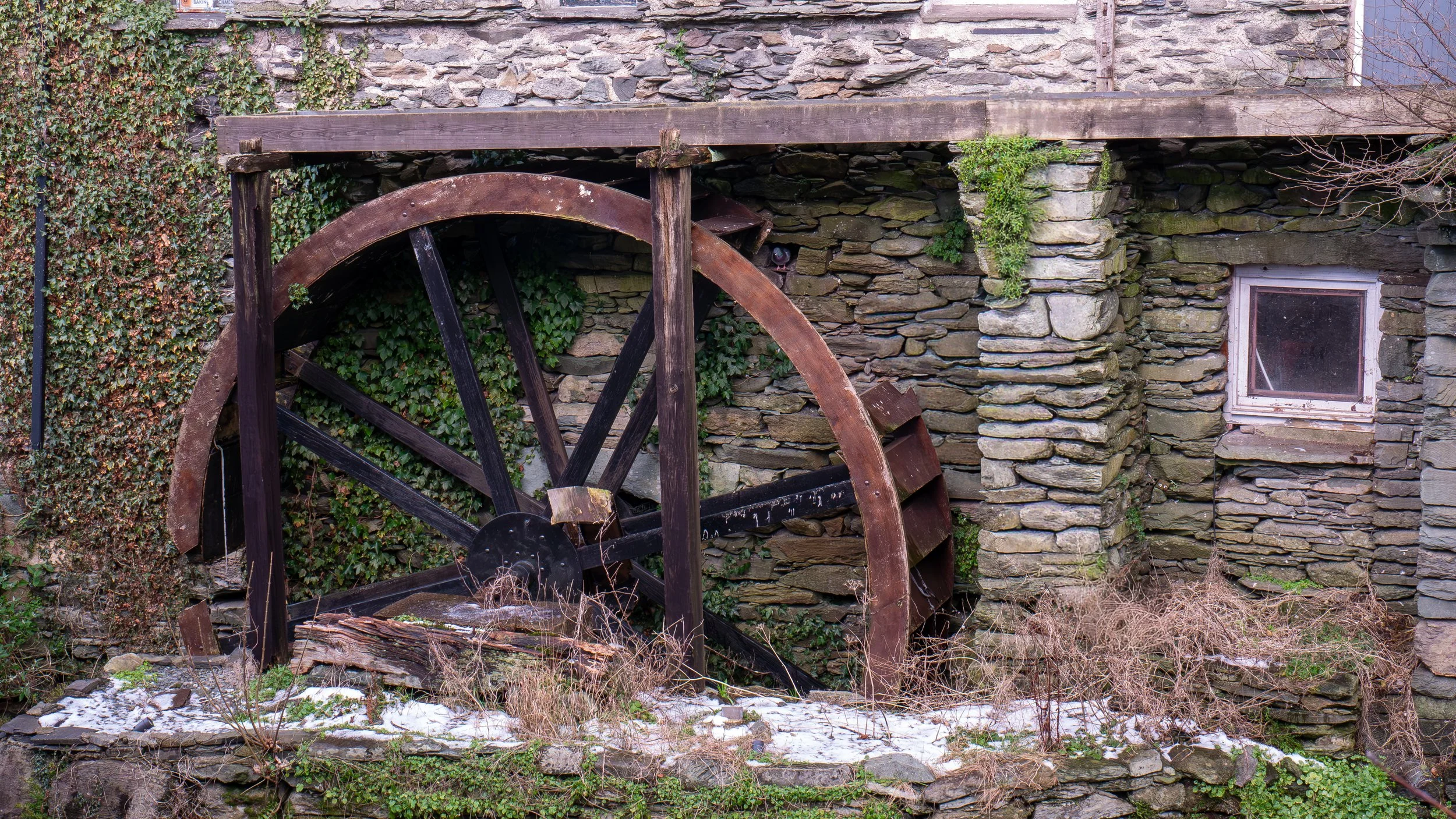
This image captures the quiet, enduring spirit of Cumbria’s industrial past. It shows an old, weathered waterwheel nestled against a traditional dry-stone wall, likely part of a former mill or farmstead in the Lake District.
The scene is a beautiful example of how nature and human engineering coexist over time. Here is a closer look at the elements that make this photo so characteristic of the region:
The structure is built from Lakeland slate and fieldstone, stacked in the classic "dry stone" style common throughout the Lake District. You can see how the stones are carefully wedged to create a sturdy frame around the window and the wheel’s housing.
The Overshot Design: This appears to be an overshot wheel, where water would have been channeled via a wooden trough (the "launder") onto the top of the wheel.
The Hub and Spokes: The heavy timber spokes and iron-reinforced hub suggest this was a serious workhorse, perhaps used for grinding corn, crushing minerals, or powering a small textile loom.
The Weathering: The deep rust on the outer rim and the moss-covered timber speak to the damp, misty climate of the fells.
The ivy creeping across the stones and the dormant, wintry grass in the foreground give the image a peaceful, melancholic atmosphere. The patches of lingering snow or frost at the bottom suggest a cold winter morning, a time when the Lake District is at its most rugged and quiet.
The Lake District is a UNESCO World Heritage site not just for its natural beauty, but for its cultural landscape. Industrial relics like this waterwheel are reminders of the 18th and 19th centuries when the valleys were bustling with small-scale industry powered entirely by the region's abundant rainfall and steep streams (becks).
A Small Detail: If you look closely at the masonry just above the wheel, you can see a small pigeon perched in a nook—a tiny sign of life in a scene that feels frozen in time.
A 267.3x148.8 mm photo printed on a A4 (297x210 mm) premium glossy photo paper (Frame and mount NOT included).
This image captures the quiet, enduring spirit of Cumbria’s industrial past. It shows an old, weathered waterwheel nestled against a traditional dry-stone wall, likely part of a former mill or farmstead in the Lake District.
The scene is a beautiful example of how nature and human engineering coexist over time. Here is a closer look at the elements that make this photo so characteristic of the region:
The structure is built from Lakeland slate and fieldstone, stacked in the classic "dry stone" style common throughout the Lake District. You can see how the stones are carefully wedged to create a sturdy frame around the window and the wheel’s housing.
The Overshot Design: This appears to be an overshot wheel, where water would have been channeled via a wooden trough (the "launder") onto the top of the wheel.
The Hub and Spokes: The heavy timber spokes and iron-reinforced hub suggest this was a serious workhorse, perhaps used for grinding corn, crushing minerals, or powering a small textile loom.
The Weathering: The deep rust on the outer rim and the moss-covered timber speak to the damp, misty climate of the fells.
The ivy creeping across the stones and the dormant, wintry grass in the foreground give the image a peaceful, melancholic atmosphere. The patches of lingering snow or frost at the bottom suggest a cold winter morning, a time when the Lake District is at its most rugged and quiet.
The Lake District is a UNESCO World Heritage site not just for its natural beauty, but for its cultural landscape. Industrial relics like this waterwheel are reminders of the 18th and 19th centuries when the valleys were bustling with small-scale industry powered entirely by the region's abundant rainfall and steep streams (becks).
A Small Detail: If you look closely at the masonry just above the wheel, you can see a small pigeon perched in a nook—a tiny sign of life in a scene that feels frozen in time.
A 267.3x148.8 mm photo printed on a A4 (297x210 mm) premium glossy photo paper (Frame and mount NOT included).