
 Image 1 of 2
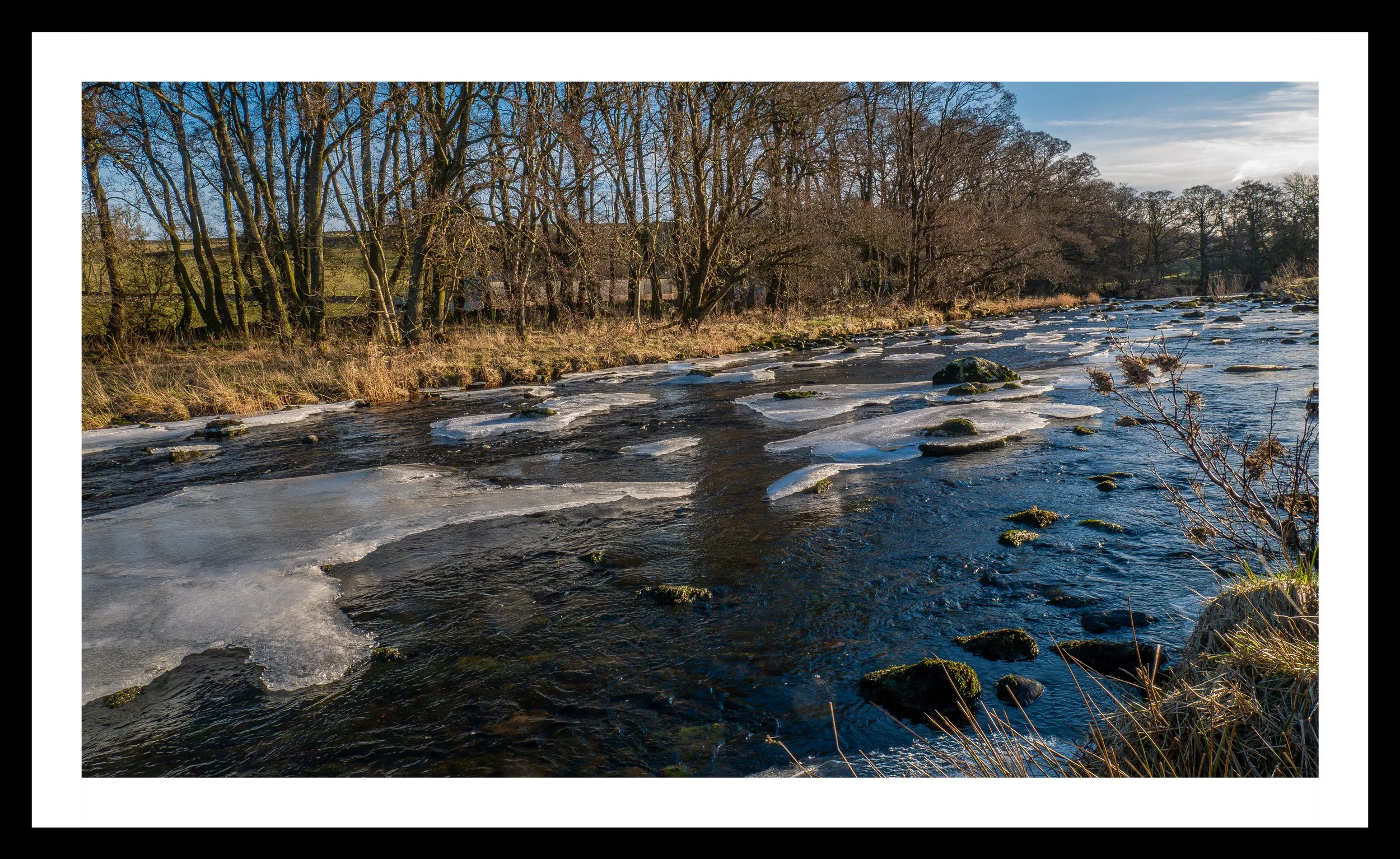 Image 2 of 2
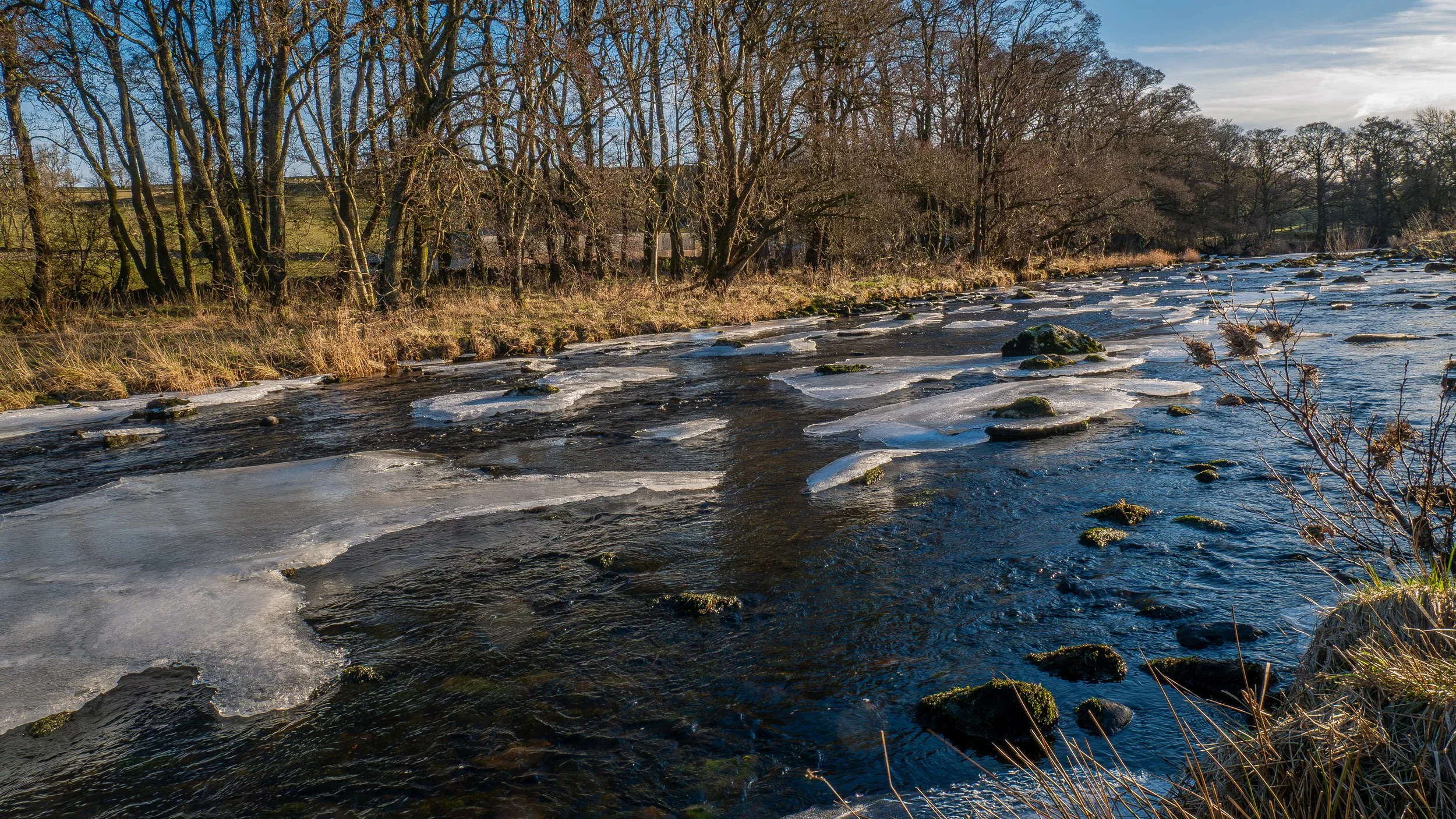
This image captures a serene, wintry scene along a river in the Lake District, Cumbria. It beautifully illustrates the transition between a deep freeze and the early signs of a thaw, likely during the crisp months of January or February.
The photograph highlights several elements characteristic of the Cumbrian landscape:
The focus is on a shallow, rocky river (possibly the River Derwent or the Brathay) filled with floating ice shelves. These formations often occur when ice that formed along the calmer banks breaks off and drifts into the main current. The jagged, white edges of the ice contrast sharply with the dark, cold water swirling around mossy river stones.
The backdrop consists of a dense line of deciduous trees, likely oak or alder, which are common in the Lake District valleys. Their bare, intricate branches reach toward a clear blue sky, indicating that the photo was taken on a "bluebird" winter day—a rare and prized occurrence in the often-rainy North West of England.
The low angle of the winter sun creates a striking golden-hour glow across the dry, golden grasses on the riverbank. This side-lighting emphasizes the textures of:
The rough, moss-covered rocks.
The translucent, crystalline surface of the ice.
The delicate, dormant vegetation in the foreground.
While the Lake District is famous for its massive fells and expansive lakes (merew), this photo highlights the quiet, intimate beauty of its river valleys. It evokes the biting cold of a Cumbrian frost—the kind that makes the ground crunch under your boots and turns the moving water into a floating mosaic.
A 267.3x148.8 mm photo printed on a A4 (297x210 mm) premium glossy photo paper (Frame and mount NOT included).
This image captures a serene, wintry scene along a river in the Lake District, Cumbria. It beautifully illustrates the transition between a deep freeze and the early signs of a thaw, likely during the crisp months of January or February.
The photograph highlights several elements characteristic of the Cumbrian landscape:
The focus is on a shallow, rocky river (possibly the River Derwent or the Brathay) filled with floating ice shelves. These formations often occur when ice that formed along the calmer banks breaks off and drifts into the main current. The jagged, white edges of the ice contrast sharply with the dark, cold water swirling around mossy river stones.
The backdrop consists of a dense line of deciduous trees, likely oak or alder, which are common in the Lake District valleys. Their bare, intricate branches reach toward a clear blue sky, indicating that the photo was taken on a "bluebird" winter day—a rare and prized occurrence in the often-rainy North West of England.
The low angle of the winter sun creates a striking golden-hour glow across the dry, golden grasses on the riverbank. This side-lighting emphasizes the textures of:
The rough, moss-covered rocks.
The translucent, crystalline surface of the ice.
The delicate, dormant vegetation in the foreground.
While the Lake District is famous for its massive fells and expansive lakes (merew), this photo highlights the quiet, intimate beauty of its river valleys. It evokes the biting cold of a Cumbrian frost—the kind that makes the ground crunch under your boots and turns the moving water into a floating mosaic.
A 267.3x148.8 mm photo printed on a A4 (297x210 mm) premium glossy photo paper (Frame and mount NOT included).