
 Image 1 of 2
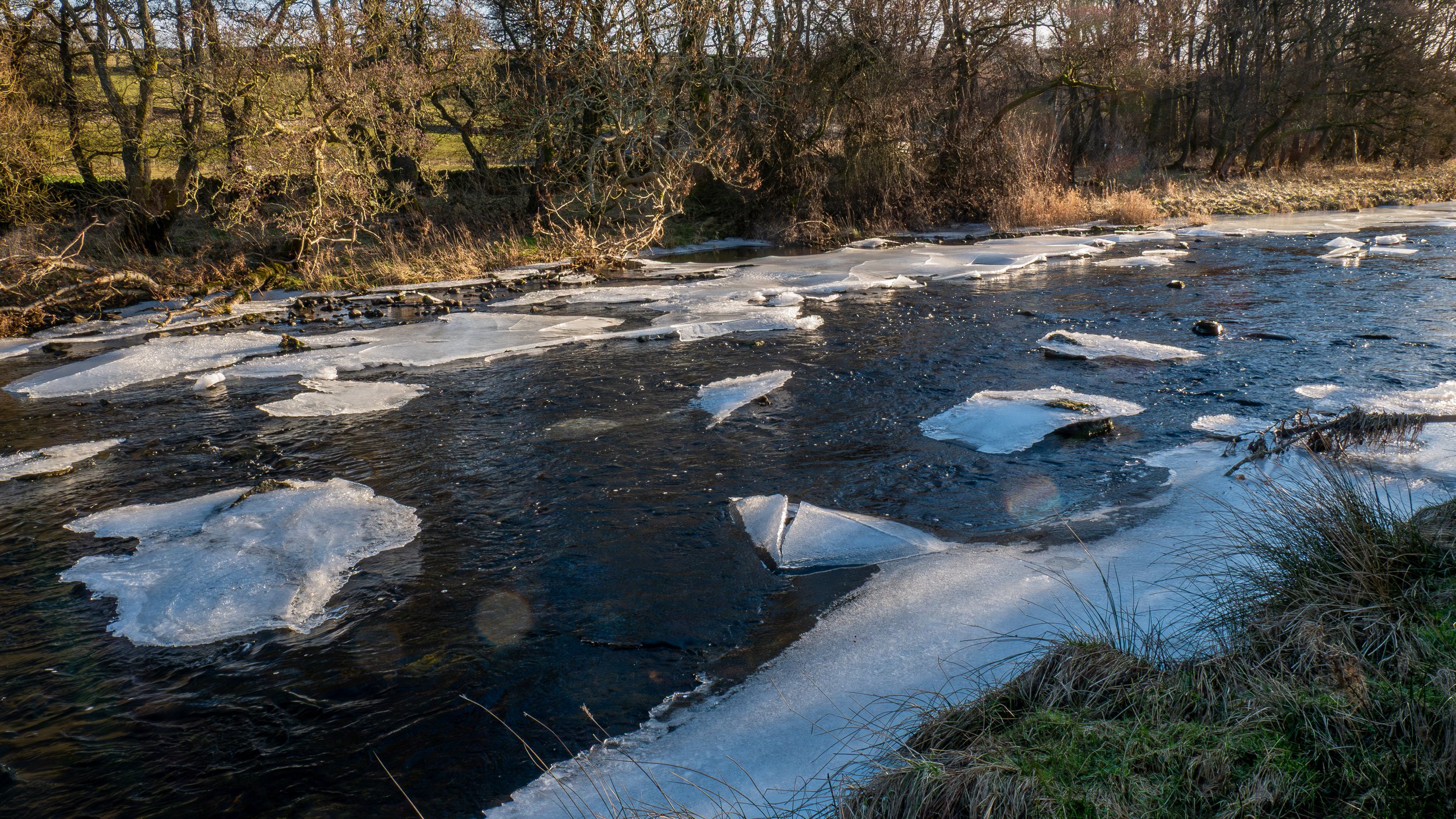 Image 2 of 2
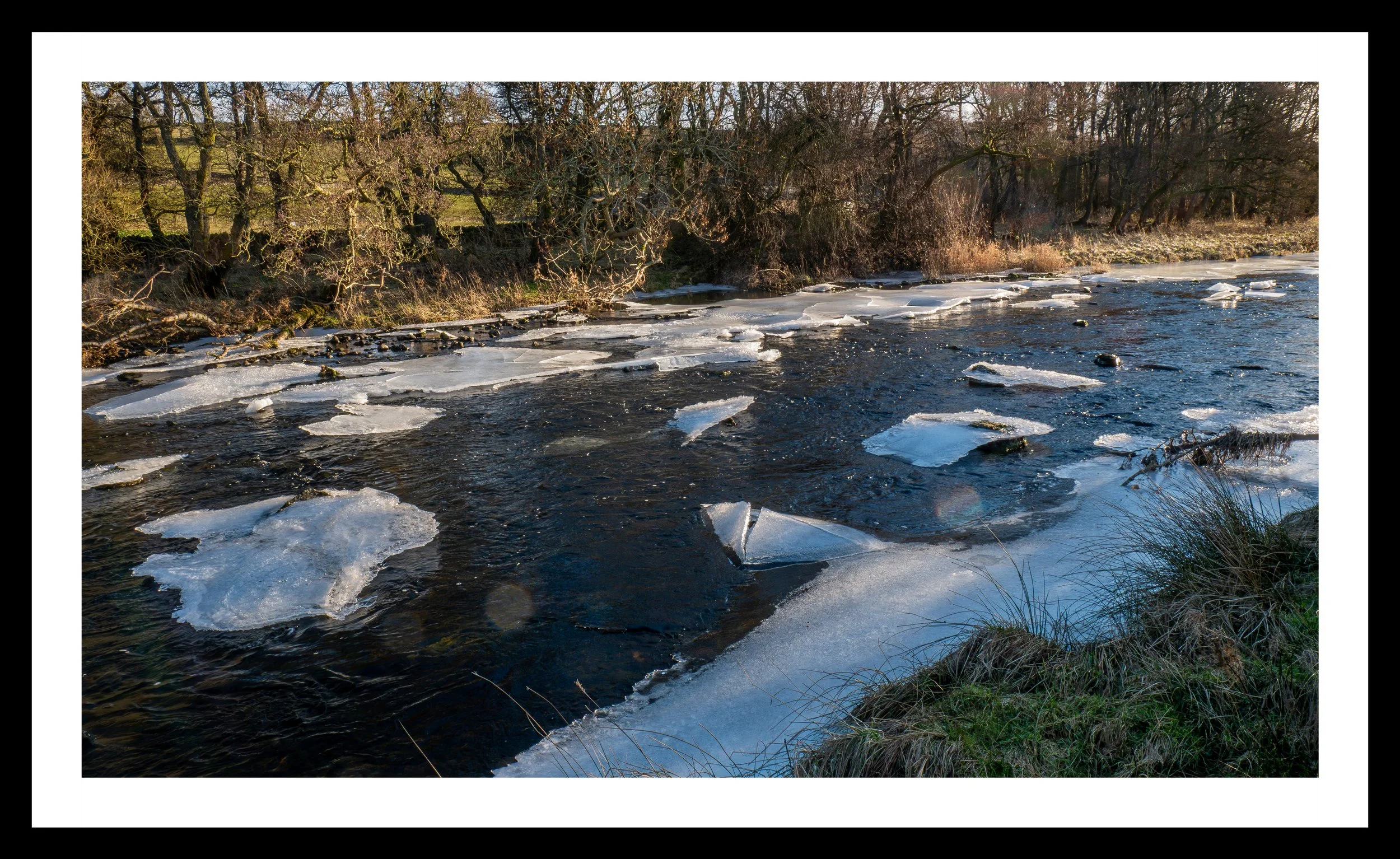
That is a beautiful, crisp shot capturing the quiet transition of winter in the Lake District. The scene looks like it might be along the banks of a river like the Eden, the Derwent, or perhaps a quiet beck feeding into one of the larger lakes.
Here is a reflection on the atmosphere and details of your photo:
The image perfectly captures the "interstitial" moments of a Cumbrian winter—where the landscape isn't fully buried in snow, but the biting cold is undeniable.
The Ice Pans: These jagged, floating plates of ice (sometimes called "pancake ice" when rounded, though these are more angular) suggest a sudden drop in temperature. They likely formed in the calmer shallows or eddys before being pulled into the main current.
The Light: You’ve captured that distinctive, low-slung winter sun. The way it catches the white surfaces of the ice while leaving the river depth a dark, obsidian blue creates a striking contrast.
The Shoreline: The dormant, golden-brown grasses and the skeletal trees in the background are classic Lakeland winter. Without their leaves, the intricate "skeleton" of the Cumbrian valley is revealed.
Looking at this photo, one can almost feel the specific Lake District chill:
Sound: The gentle "clink" and grinding of ice plates hitting one another over the rush of the water.
Air: That sharp, damp cold that catches in your throat, typical of the fells in January or February.
Solitude: There is a profound sense of stillness, as if the landscape is holding its breath until the spring thaw.
Note: The clarity of the water is a testament to the Lake District’s environment; even in the depths of winter, the rivers remain remarkably translucent, reflecting the sky and the surrounding fells.
A 267.3x148.8 mm photo printed on a A4 (297x210 mm) premium glossy photo paper (Frame and mount NOT included).
That is a beautiful, crisp shot capturing the quiet transition of winter in the Lake District. The scene looks like it might be along the banks of a river like the Eden, the Derwent, or perhaps a quiet beck feeding into one of the larger lakes.
Here is a reflection on the atmosphere and details of your photo:
The image perfectly captures the "interstitial" moments of a Cumbrian winter—where the landscape isn't fully buried in snow, but the biting cold is undeniable.
The Ice Pans: These jagged, floating plates of ice (sometimes called "pancake ice" when rounded, though these are more angular) suggest a sudden drop in temperature. They likely formed in the calmer shallows or eddys before being pulled into the main current.
The Light: You’ve captured that distinctive, low-slung winter sun. The way it catches the white surfaces of the ice while leaving the river depth a dark, obsidian blue creates a striking contrast.
The Shoreline: The dormant, golden-brown grasses and the skeletal trees in the background are classic Lakeland winter. Without their leaves, the intricate "skeleton" of the Cumbrian valley is revealed.
Looking at this photo, one can almost feel the specific Lake District chill:
Sound: The gentle "clink" and grinding of ice plates hitting one another over the rush of the water.
Air: That sharp, damp cold that catches in your throat, typical of the fells in January or February.
Solitude: There is a profound sense of stillness, as if the landscape is holding its breath until the spring thaw.
Note: The clarity of the water is a testament to the Lake District’s environment; even in the depths of winter, the rivers remain remarkably translucent, reflecting the sky and the surrounding fells.
A 267.3x148.8 mm photo printed on a A4 (297x210 mm) premium glossy photo paper (Frame and mount NOT included).