
 Image 1 of 2
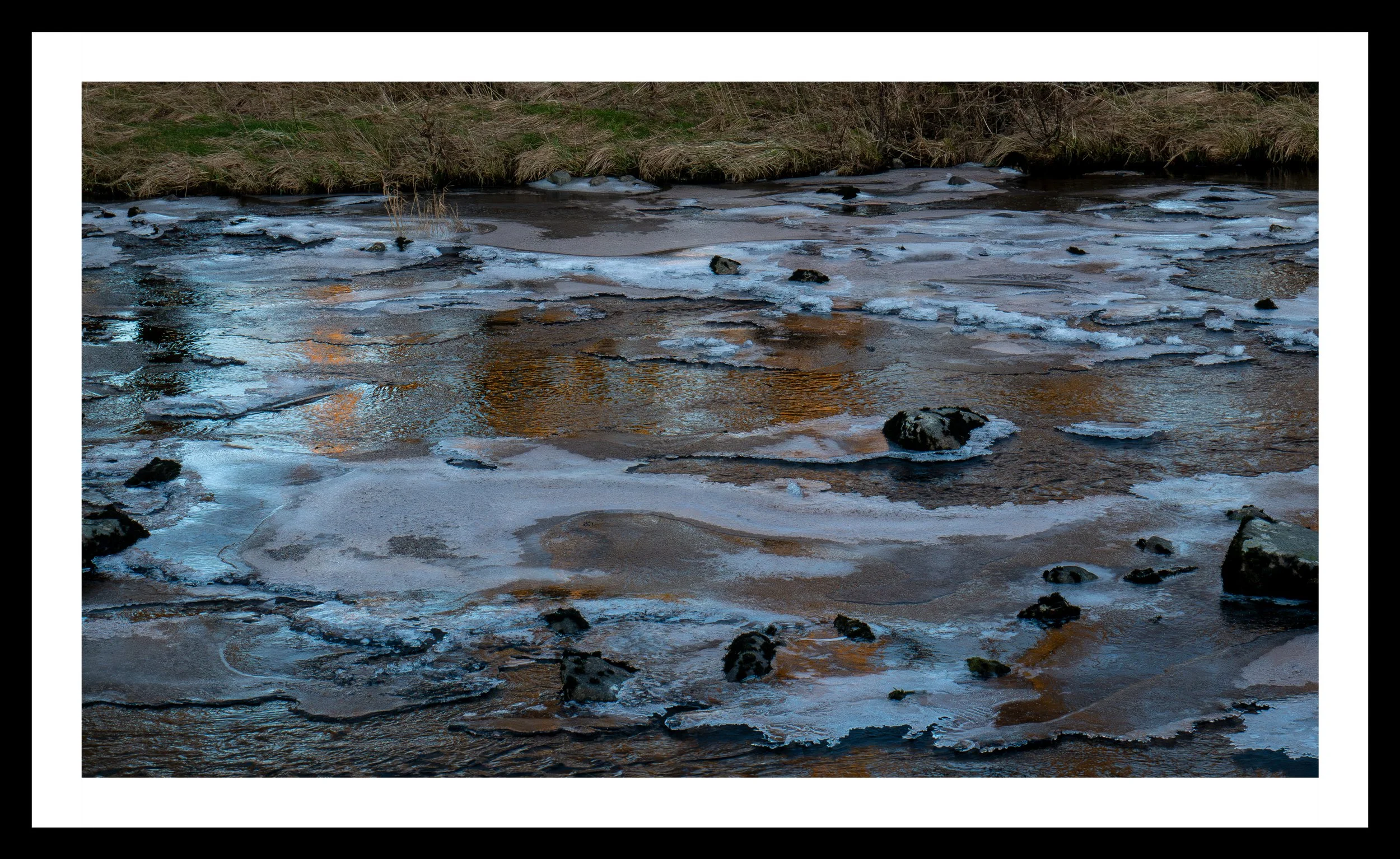 Image 2 of 2
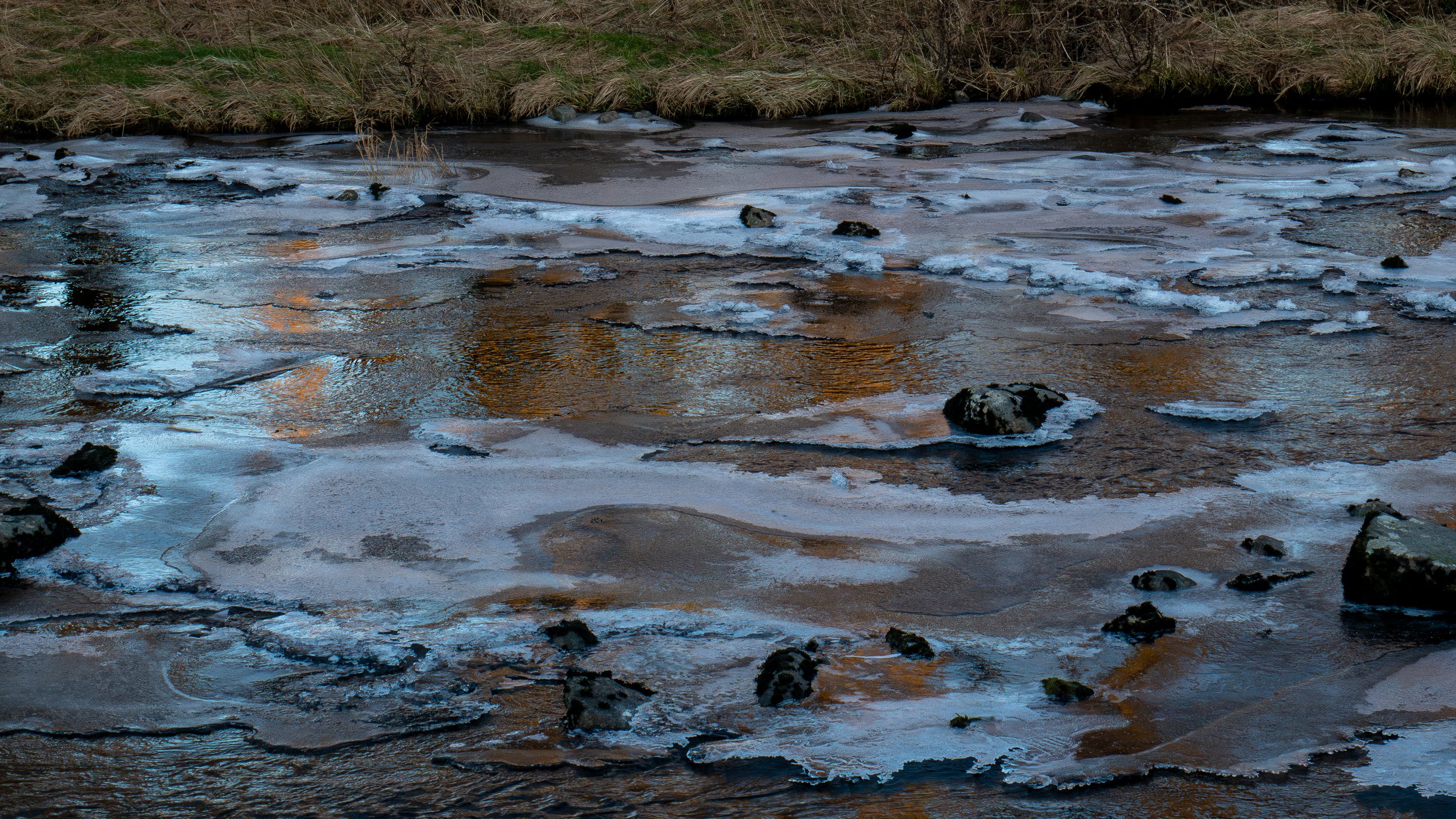
This image captures the quiet, transitionary beauty of the Lake District during the colder months—likely late autumn or early winter when the Cumbrian fells begin to shed their vibrant greens for a more muted, textural palette.
The photo highlights a shallow stretch of water, possibly the edge of a tarn or a slow-moving beck, where the first "skeleton" of winter is beginning to form.
The Ice Formation: The thin, milky layers of ice are the focal point. They aren't solid or monolithic; instead, they appear as delicate, overlapping plates that trace the movement of the water. The way the ice clings to the dark, mossy rocks creates a beautiful contrast between the jagged stone and the smooth, frosted surface.
The Color Palette: There is a striking interplay of light here. You have the cool, steel blues of the sky reflected in the ice and open water, contrasted sharply against the amber and copper tones of the submerged lakebed. This orange hue is characteristic of the Lake District's iron-rich soil and the decaying bracken that washes into the waterways.
Textural Contrast: The composition moves from the soft, dry grasses of the shoreline at the top to the brittle, glassy textures of the water. The dark rocks breaking the surface provide "anchors" for the eye, preventing the scene from feeling too ethereal.
In Cumbria, scenes like this often precede the heavy snows. It represents a moment of stillness—what locals might call a "hushed" day. Without the dramatic peaks in the frame, the focus shifts to the micro-landscape, reminding us that the Lake District's beauty is found just as much in the frozen details of a small stream as it is in the heights of Helvellyn or Scafell Pike.
The lighting suggests a "blue hour" or a heavily overcast day, which deepens the shadows and makes the orange reflections pop. It’s a classic example of the moody, evocative weather that defines the region.
A 267.3x148.8 mm photo printed on a A4 (297x210 mm) premium glossy photo paper (Frame and mount NOT included).
This image captures the quiet, transitionary beauty of the Lake District during the colder months—likely late autumn or early winter when the Cumbrian fells begin to shed their vibrant greens for a more muted, textural palette.
The photo highlights a shallow stretch of water, possibly the edge of a tarn or a slow-moving beck, where the first "skeleton" of winter is beginning to form.
The Ice Formation: The thin, milky layers of ice are the focal point. They aren't solid or monolithic; instead, they appear as delicate, overlapping plates that trace the movement of the water. The way the ice clings to the dark, mossy rocks creates a beautiful contrast between the jagged stone and the smooth, frosted surface.
The Color Palette: There is a striking interplay of light here. You have the cool, steel blues of the sky reflected in the ice and open water, contrasted sharply against the amber and copper tones of the submerged lakebed. This orange hue is characteristic of the Lake District's iron-rich soil and the decaying bracken that washes into the waterways.
Textural Contrast: The composition moves from the soft, dry grasses of the shoreline at the top to the brittle, glassy textures of the water. The dark rocks breaking the surface provide "anchors" for the eye, preventing the scene from feeling too ethereal.
In Cumbria, scenes like this often precede the heavy snows. It represents a moment of stillness—what locals might call a "hushed" day. Without the dramatic peaks in the frame, the focus shifts to the micro-landscape, reminding us that the Lake District's beauty is found just as much in the frozen details of a small stream as it is in the heights of Helvellyn or Scafell Pike.
The lighting suggests a "blue hour" or a heavily overcast day, which deepens the shadows and makes the orange reflections pop. It’s a classic example of the moody, evocative weather that defines the region.
A 267.3x148.8 mm photo printed on a A4 (297x210 mm) premium glossy photo paper (Frame and mount NOT included).