
 Image 1 of 2
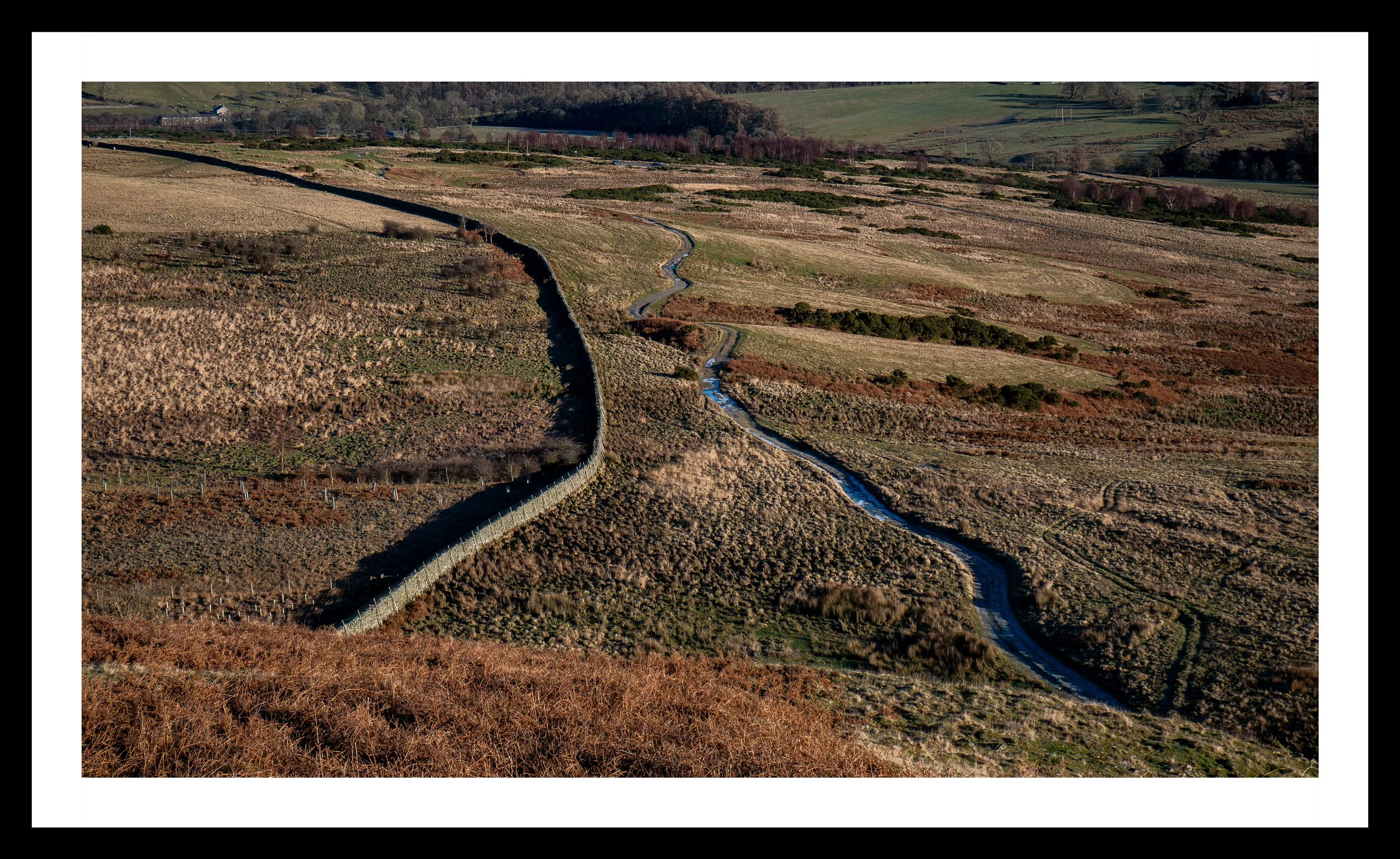 Image 2 of 2
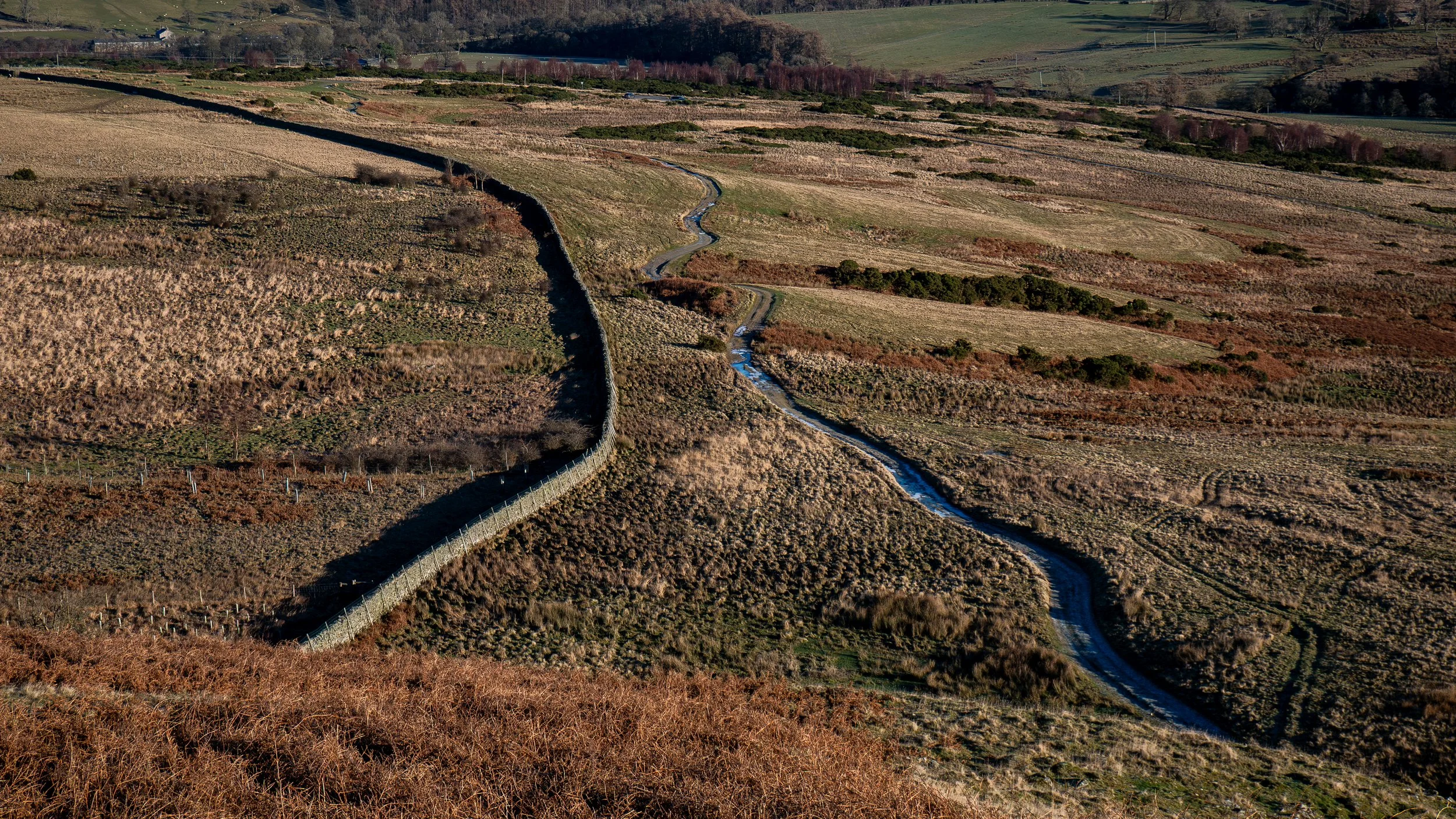
The image captures the rugged, enduring character of the Lake District in Cumbria, specifically highlighting the interaction between the natural landscape and human heritage.
The photo is defined by two parallel, winding lines that draw the eye from the foreground deep into the valley.
The Dry Stone Wall: On the left, a traditional Cumbrian dry stone wall acts as a stark, dark boundary. These walls are iconic to the region, built without mortar and maintained for centuries to manage livestock.
The Bridleway: To the right, a narrow, waterlogged track meanders through the fellside. The reflective puddles on the path suggest the damp, peat-rich soil typical of the Lakeland fells.
The color palette suggests late autumn or early winter.
Bracken: The foreground is dominated by the deep russet and copper tones of dead bracken, which covers the hillsides once the summer greens fade.
Light and Shadow: The low angle of the sun creates long, dramatic shadows, emphasizing the undulations of the "drumlin" style landscape and the texture of the rough grazing land.
This isn't the jagged, high-peak drama of Scafell Pike or Helvellyn, but rather the upland "fells" used for sheep farming. In the distance, the landscape transitions into softer, greener valley floors with clusters of trees and stone farm buildings, illustrating the classic "in-bye" and "out-bye" land management system of the Lake District National Park.
The image evokes a sense of quiet isolation and the slow passage of time—a place where the boundaries set by farmers generations ago still dictate the shape of the land today.
The image captures the rugged, enduring character of the Lake District in Cumbria, specifically highlighting the interaction between the natural landscape and human heritage.
The photo is defined by two parallel, winding lines that draw the eye from the foreground deep into the valley.
The Dry Stone Wall: On the left, a traditional Cumbrian dry stone wall acts as a stark, dark boundary. These walls are iconic to the region, built without mortar and maintained for centuries to manage livestock.
The Bridleway: To the right, a narrow, waterlogged track meanders through the fellside. The reflective puddles on the path suggest the damp, peat-rich soil typical of the Lakeland fells.
The color palette suggests late autumn or early winter.
Bracken: The foreground is dominated by the deep russet and copper tones of dead bracken, which covers the hillsides once the summer greens fade.
Light and Shadow: The low angle of the sun creates long, dramatic shadows, emphasizing the undulations of the "drumlin" style landscape and the texture of the rough grazing land.
This isn't the jagged, high-peak drama of Scafell Pike or Helvellyn, but rather the upland "fells" used for sheep farming. In the distance, the landscape transitions into softer, greener valley floors with clusters of trees and stone farm buildings, illustrating the classic "in-bye" and "out-bye" land management system of the Lake District National Park.
The image evokes a sense of quiet isolation and the slow passage of time—a place where the boundaries set by farmers generations ago still dictate the shape of the land today.