
 Image 1 of 2
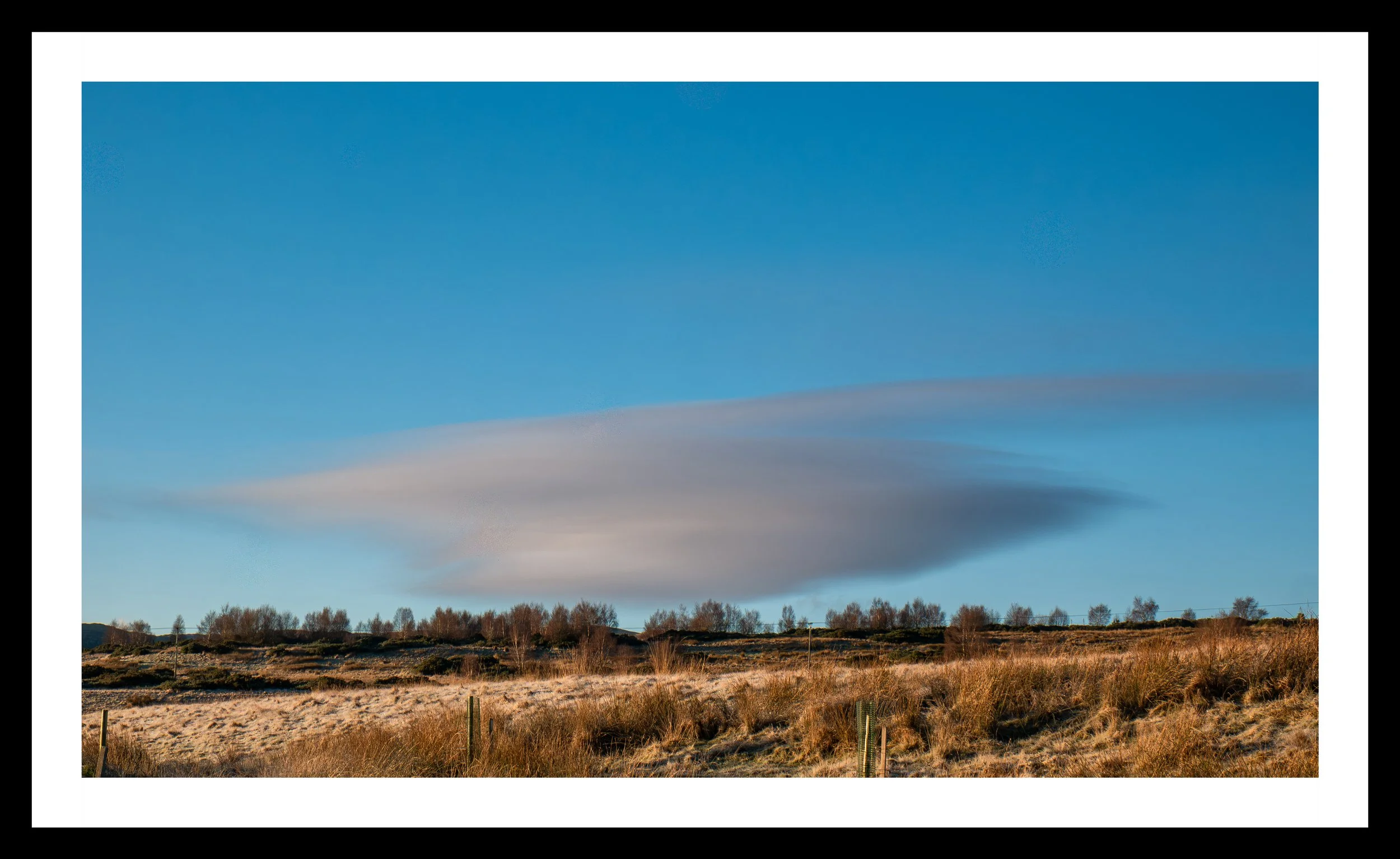 Image 2 of 2
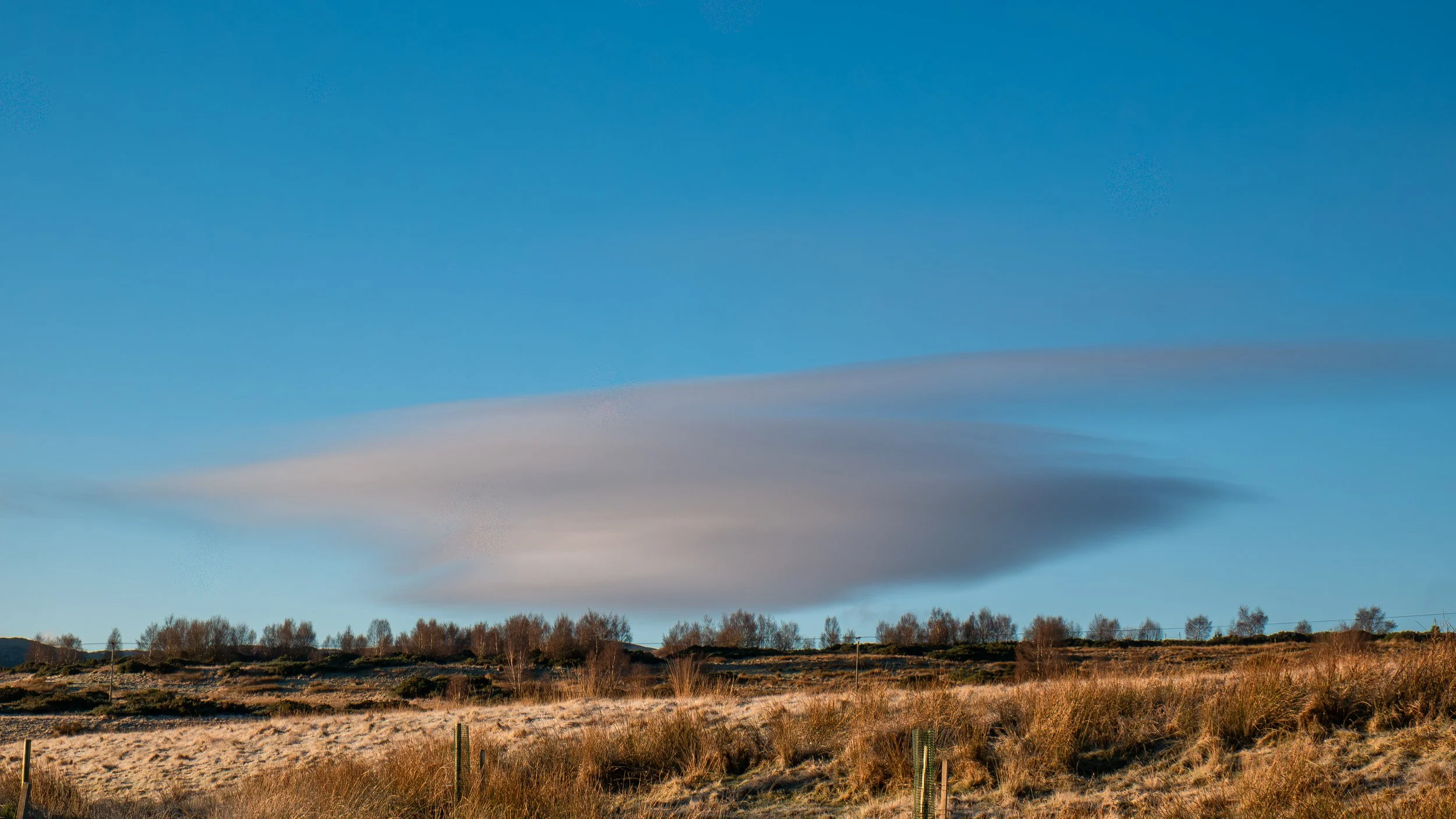
That is a striking photograph. What you’ve captured here is a classic Lenticular cloud (Altocumulus lenticularis), often nicknamed "UFO clouds" for their smooth, saucer-like shape.
While they look stationary, they are actually formed by a constant flow of moist air being pushed upward by mountains—in this case, likely the fells of the Lake District.
The "Standing Wave": When strong winds blow across the rugged topography of Cumbria, they create "waves" in the atmosphere, much like water flowing over a submerged rock in a stream.
Condensation: As the air rises to the crest of the wave, it cools and moisture condenses into a cloud. As the air drops back down, it warms and the cloud evaporates.
The Result: The cloud appears to sit perfectly still over the landscape even though air is racing through it at high speeds.
The photo beautifully captures the stark, wintry texture of the Lake District. The low-angled sunlight highlights the frost or dried bracken in the foreground, creating a warm, golden contrast against the deep blue of the sky. The row of leafless trees acts as a natural "pedestal" for the cloud, emphasizing its massive scale.
In a region known for its dramatic weather, lenticular clouds are a favorite for photographers in the Lakes because they signal high-altitude wind activity, often preceding a change in the weather.
That is a striking photograph. What you’ve captured here is a classic Lenticular cloud (Altocumulus lenticularis), often nicknamed "UFO clouds" for their smooth, saucer-like shape.
While they look stationary, they are actually formed by a constant flow of moist air being pushed upward by mountains—in this case, likely the fells of the Lake District.
The "Standing Wave": When strong winds blow across the rugged topography of Cumbria, they create "waves" in the atmosphere, much like water flowing over a submerged rock in a stream.
Condensation: As the air rises to the crest of the wave, it cools and moisture condenses into a cloud. As the air drops back down, it warms and the cloud evaporates.
The Result: The cloud appears to sit perfectly still over the landscape even though air is racing through it at high speeds.
The photo beautifully captures the stark, wintry texture of the Lake District. The low-angled sunlight highlights the frost or dried bracken in the foreground, creating a warm, golden contrast against the deep blue of the sky. The row of leafless trees acts as a natural "pedestal" for the cloud, emphasizing its massive scale.
In a region known for its dramatic weather, lenticular clouds are a favorite for photographers in the Lakes because they signal high-altitude wind activity, often preceding a change in the weather.