
 Image 1 of 2
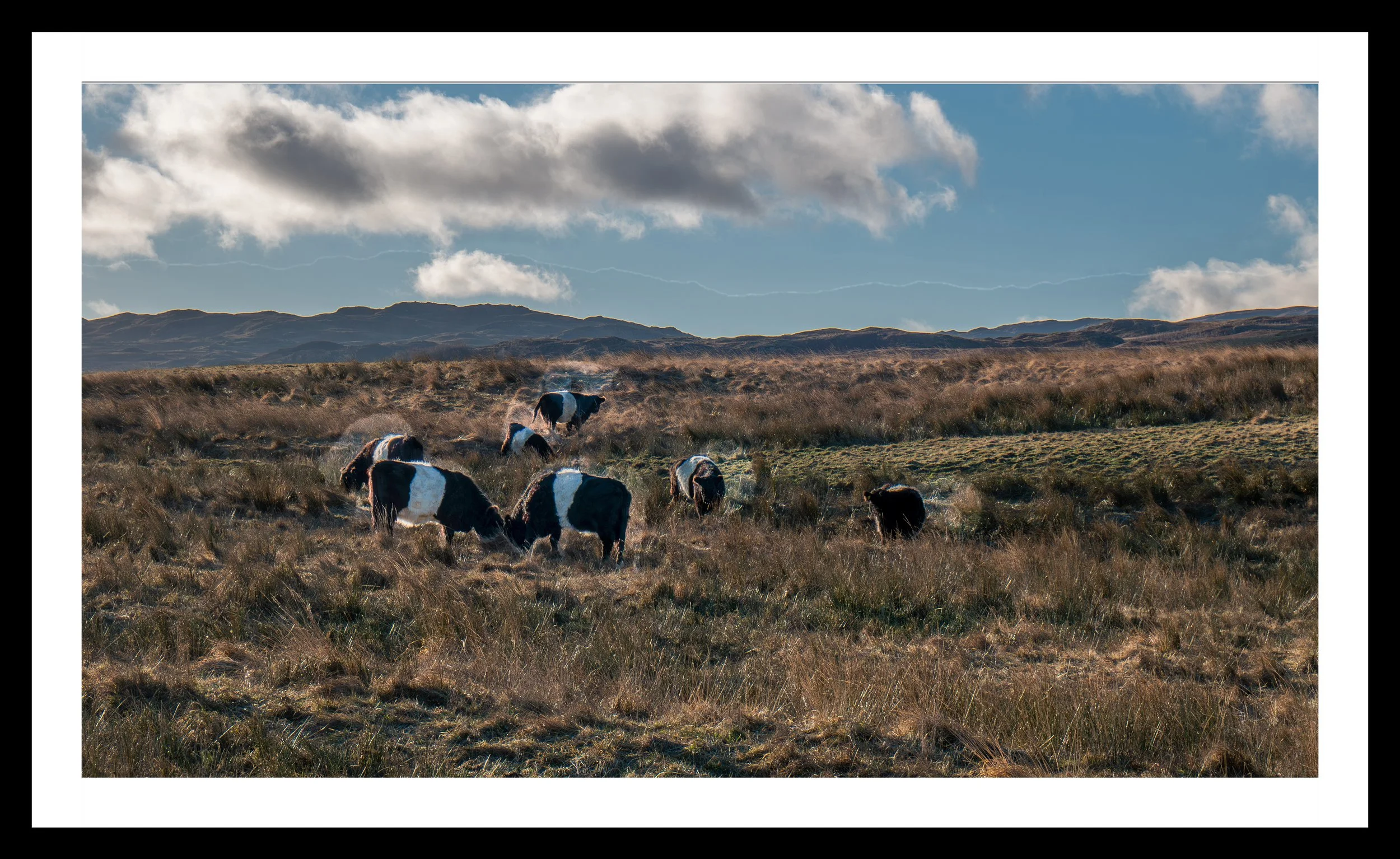 Image 2 of 2
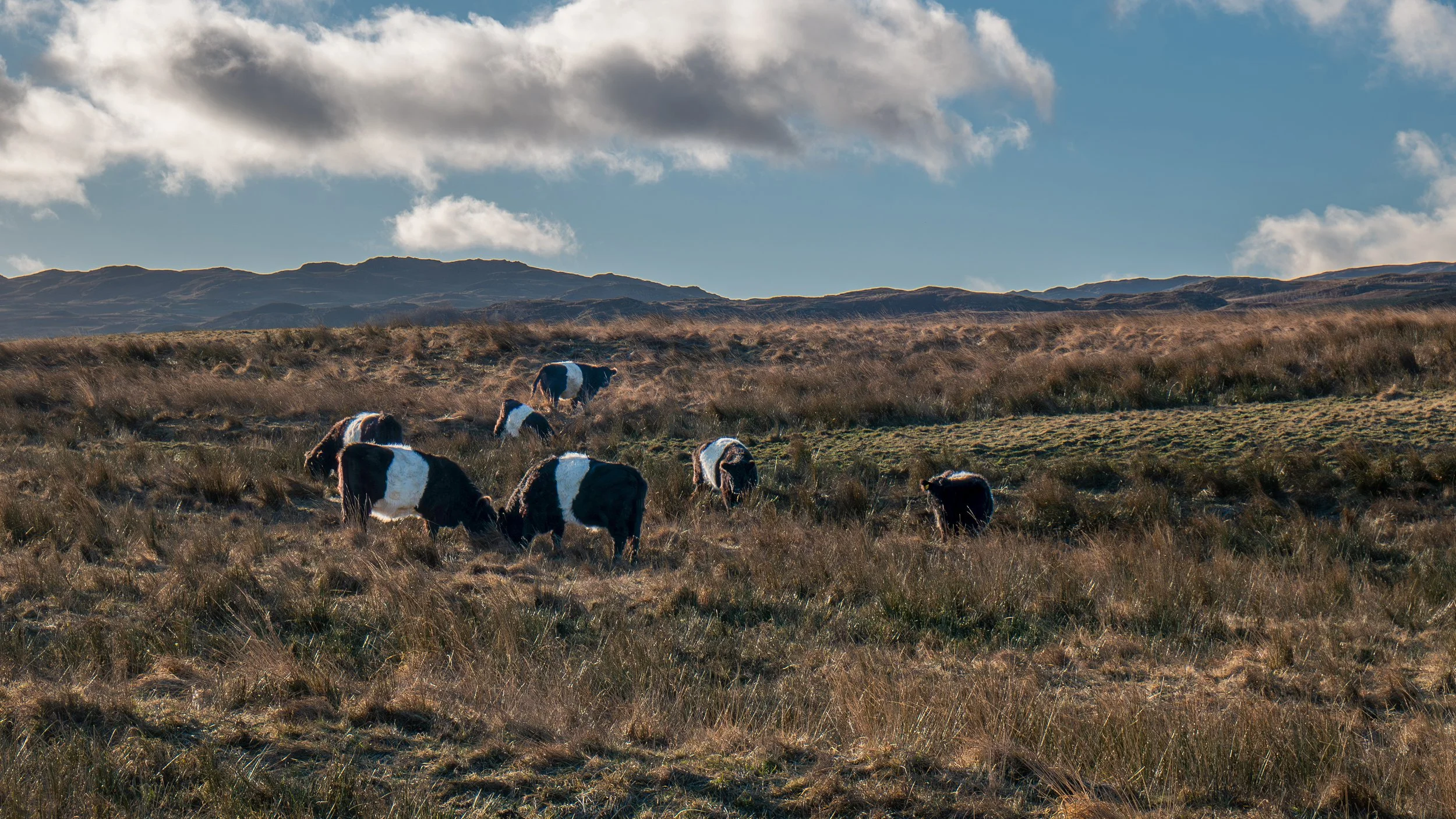
This striking image captures a group of Belted Galloway cattle, often affectionately known as "Belties," grazing in the rugged upland terrain of the Lake District, Cumbria.
The photograph beautifully illustrates the relationship between the region's unique livestock and its dramatic landscape.
The scene is set against a backdrop of rolling fells and a wide, expansive sky. The lighting suggests either early morning or late afternoon—the "golden hour"—which casts long shadows and highlights the golden, wintry hues of the dried grasses and bracken.
Terrain: The ground is uneven and covered in hardy moorland vegetation, typical of the higher reaches of the Lake District where traditional sheep and cattle farming still shape the land.
Weather: The low-hanging, fluffy white clouds and the soft blue sky evoke that crisp, cool Cumbrian air. There is a sense of quietude and the vast scale of the National Park.
While the Lake District is famous for Herdwick sheep, Belted Galloways are a common and beloved sight. They are perfectly suited for this environment for several reasons:
Hardiness: Their thick, shaggy double coats protect them from the harsh Cumbrian winters and frequent rainfall.
Conservation Grazing: They are "non-selective" grazers, meaning they eat the tough grasses and scrub that other animals might ignore. This helps maintain the biodiversity of the fells, preventing the landscape from becoming overgrown.
Distinctive Appearance: Their signature "white belt" against a black (or sometimes dun/red) body makes them one of the most photogenic and easily recognizable breeds in the UK.
This photo captures the "working" side of the Lake District. It isn't just a postcard view of a lake; it’s a glimpse into highland farming heritage. The way the cattle are scattered across the slope emphasizes the freedom and space they have to roam in this UNESCO World Heritage site.
This striking image captures a group of Belted Galloway cattle, often affectionately known as "Belties," grazing in the rugged upland terrain of the Lake District, Cumbria.
The photograph beautifully illustrates the relationship between the region's unique livestock and its dramatic landscape.
The scene is set against a backdrop of rolling fells and a wide, expansive sky. The lighting suggests either early morning or late afternoon—the "golden hour"—which casts long shadows and highlights the golden, wintry hues of the dried grasses and bracken.
Terrain: The ground is uneven and covered in hardy moorland vegetation, typical of the higher reaches of the Lake District where traditional sheep and cattle farming still shape the land.
Weather: The low-hanging, fluffy white clouds and the soft blue sky evoke that crisp, cool Cumbrian air. There is a sense of quietude and the vast scale of the National Park.
While the Lake District is famous for Herdwick sheep, Belted Galloways are a common and beloved sight. They are perfectly suited for this environment for several reasons:
Hardiness: Their thick, shaggy double coats protect them from the harsh Cumbrian winters and frequent rainfall.
Conservation Grazing: They are "non-selective" grazers, meaning they eat the tough grasses and scrub that other animals might ignore. This helps maintain the biodiversity of the fells, preventing the landscape from becoming overgrown.
Distinctive Appearance: Their signature "white belt" against a black (or sometimes dun/red) body makes them one of the most photogenic and easily recognizable breeds in the UK.
This photo captures the "working" side of the Lake District. It isn't just a postcard view of a lake; it’s a glimpse into highland farming heritage. The way the cattle are scattered across the slope emphasizes the freedom and space they have to roam in this UNESCO World Heritage site.