
 Image 1 of 2
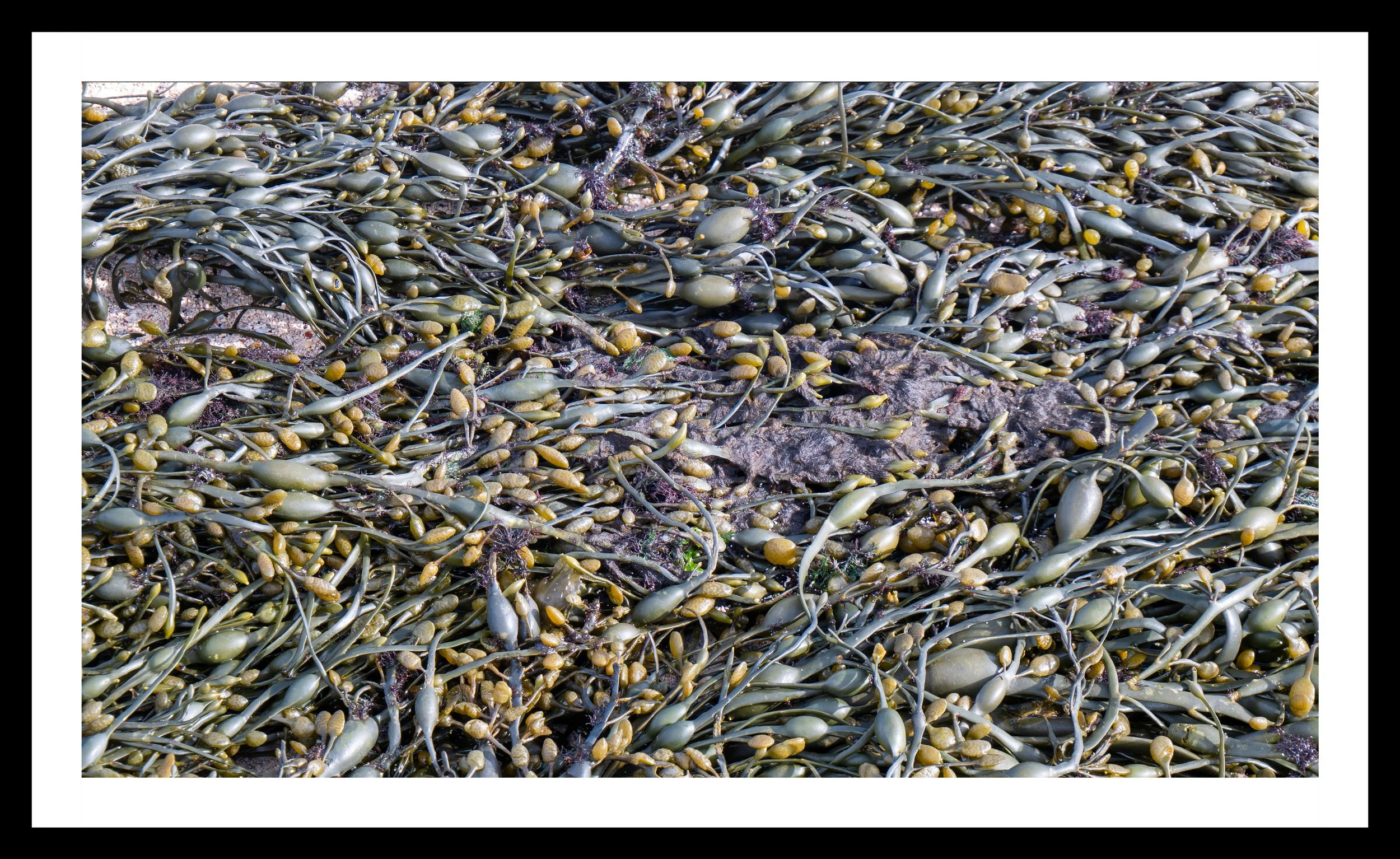 Image 2 of 2
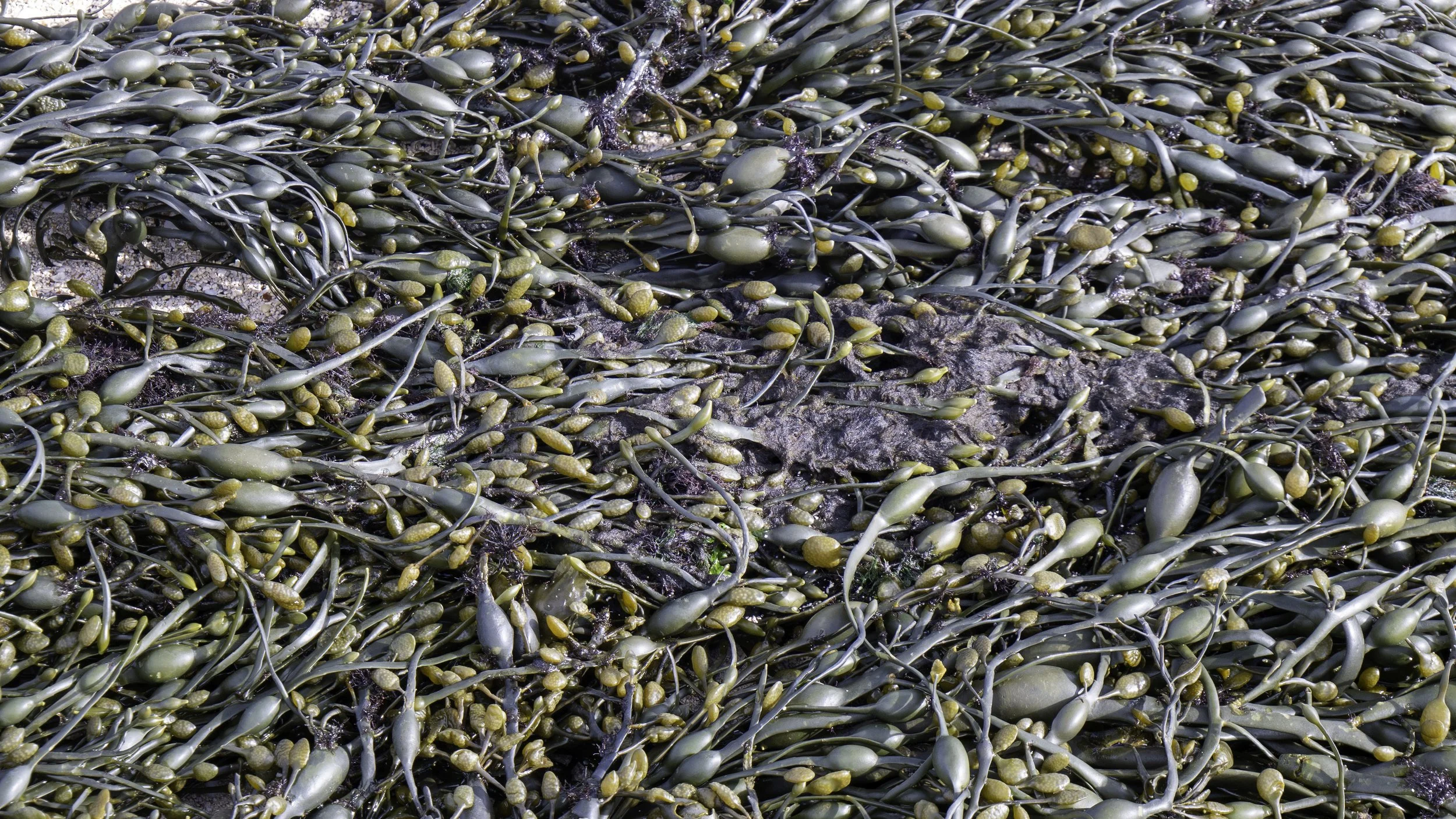
This image captures a dense, sprawling mat of Ascophyllum nodosum, commonly known as Rockweed or Knotted Wrack. This brown seaweed is a staple of the North Atlantic rocky intertidal zones, often appearing like a thick, olive-green carpet draped over the shoreline during low tide.
Air Bladders (Vesicles): The most prominent feature is the egg-shaped, yellowish-green bladders. These function as "floats," keeping the fronds upright when the tide comes in so the plant can maximize its exposure to sunlight for photosynthesis.
Color and Texture: The deep olive-drab hue and rubbery texture are characteristic of seaweeds that have adapted to survive hours of exposure to the air. The slight yellowish tint on some tips likely indicates the presence of receptacles, which are the reproductive organs that swell during the spring.
Intertwined Complexity: The image highlights how these organisms grow in massive, tangled colonies. This density provides a vital "nursery" habitat for small crustaceans, mollusks, and juvenile fish, protecting them from predators and the drying heat of the sun.
Rockweed is often referred to as a "foundation species." Like a forest on land, it creates a three-dimensional environment that supports an entire ecosystem. When the tide is out, the wet fronds trap moisture beneath them, allowing cold-blooded sea creatures to survive until the water returns.
Age Indicators: You can often tell the age of a Rockweed plant by counting the number of bladders along a single strand; they typically grow one new bladder per year.
Durability: These plants are incredibly hardy, capable of losing up to 60–90% of their water content during low tide and fully recovering once submerged.
378x210 mm photo printed on A3 (420x297 mm) premium glossy photo paper (frame and mount not included).
This image captures a dense, sprawling mat of Ascophyllum nodosum, commonly known as Rockweed or Knotted Wrack. This brown seaweed is a staple of the North Atlantic rocky intertidal zones, often appearing like a thick, olive-green carpet draped over the shoreline during low tide.
Air Bladders (Vesicles): The most prominent feature is the egg-shaped, yellowish-green bladders. These function as "floats," keeping the fronds upright when the tide comes in so the plant can maximize its exposure to sunlight for photosynthesis.
Color and Texture: The deep olive-drab hue and rubbery texture are characteristic of seaweeds that have adapted to survive hours of exposure to the air. The slight yellowish tint on some tips likely indicates the presence of receptacles, which are the reproductive organs that swell during the spring.
Intertwined Complexity: The image highlights how these organisms grow in massive, tangled colonies. This density provides a vital "nursery" habitat for small crustaceans, mollusks, and juvenile fish, protecting them from predators and the drying heat of the sun.
Rockweed is often referred to as a "foundation species." Like a forest on land, it creates a three-dimensional environment that supports an entire ecosystem. When the tide is out, the wet fronds trap moisture beneath them, allowing cold-blooded sea creatures to survive until the water returns.
Age Indicators: You can often tell the age of a Rockweed plant by counting the number of bladders along a single strand; they typically grow one new bladder per year.
Durability: These plants are incredibly hardy, capable of losing up to 60–90% of their water content during low tide and fully recovering once submerged.
378x210 mm photo printed on A3 (420x297 mm) premium glossy photo paper (frame and mount not included).