
 Image 1 of 2
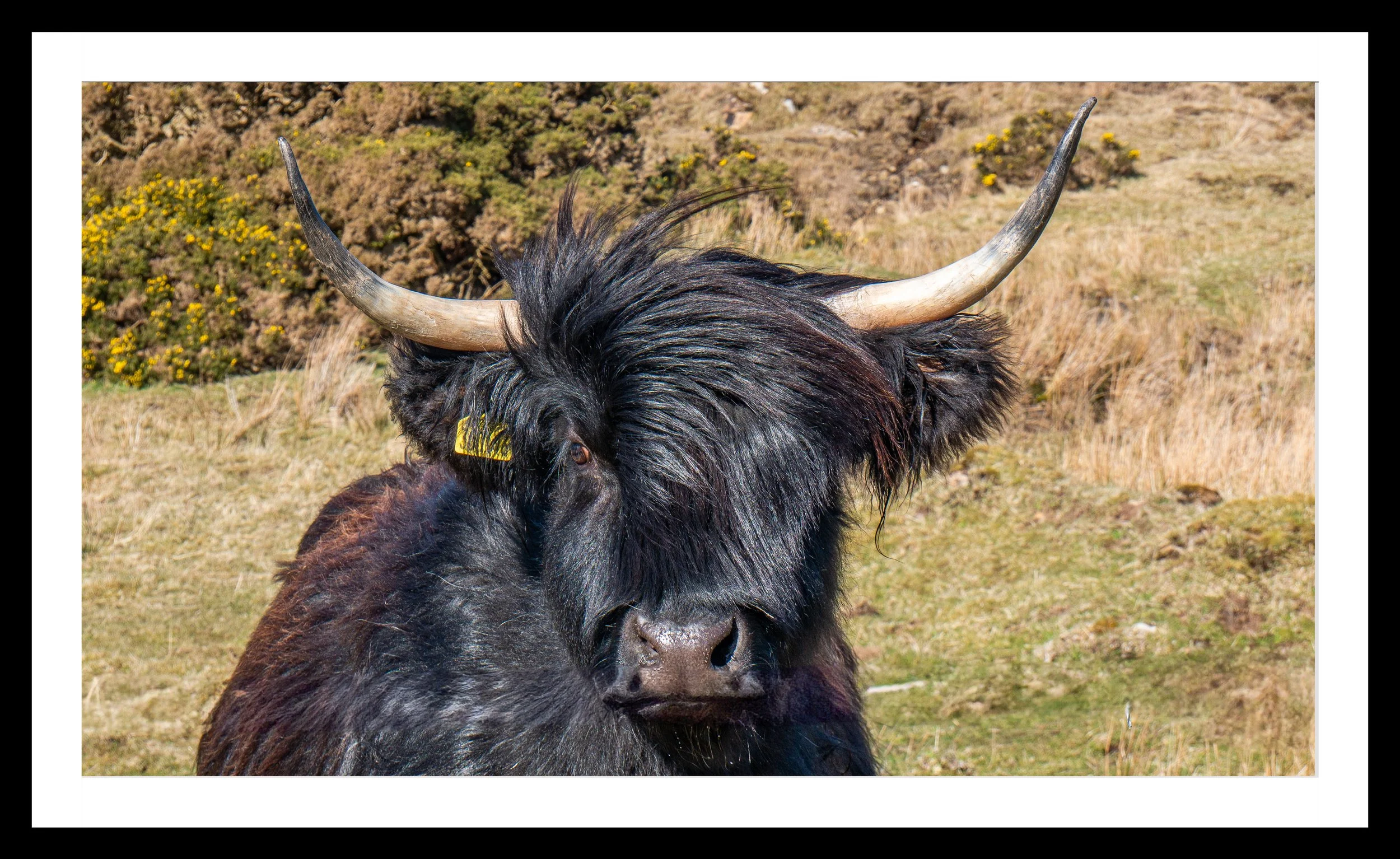 Image 2 of 2
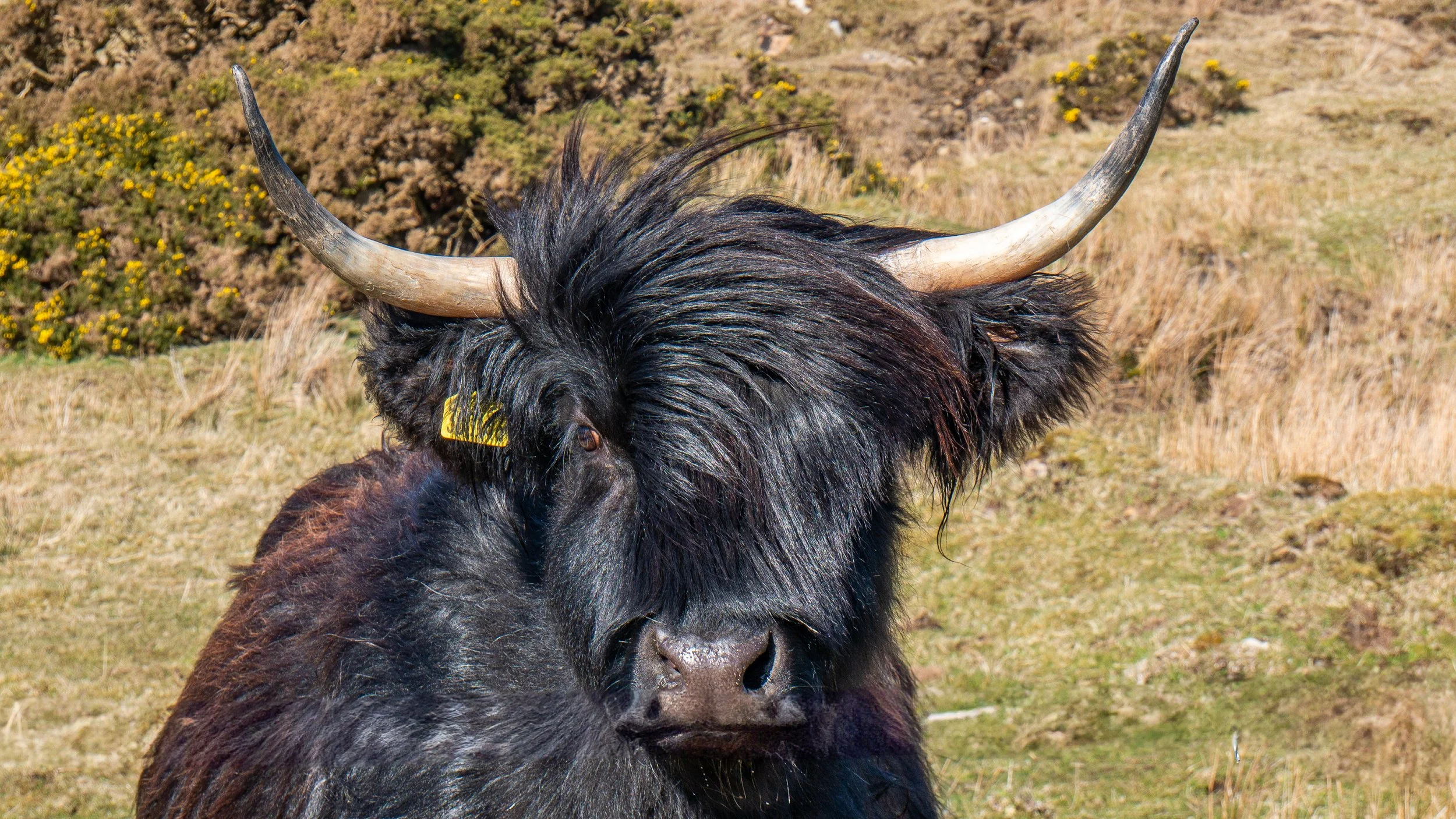
This striking image captures the rugged and iconic beauty of a Highland cow, likely in its natural habitat in Scotland or a similar moorland environment.
While many people associate Highland cattle with a ginger or reddish coat, this specimen showcases the breed's black variety, which is equally traditional but often less common in popular media.
The "Dossan": The most characteristic feature is the long, swept-over fringe of hair, known as a dossan. This thick coat serves a practical purpose, protecting the animal’s eyes from the biting wind, rain, and insects of the Highlands.
The Horns: The cow sports formidable, upward-curving horns. In Highland cattle, the shape of the horns can often tell you the sex; bulls’ horns usually grow forward or slightly down, while cows’ horns (like these) typically curve upwards.
The Setting: The background features dry grasses and yellow-flowered Gorse bushes, suggesting a late winter or early spring landscape. The animal is also marked with a yellow ear tag, indicating it is part of a managed herd.
Double Coat: They possess a unique "double coat" a downy undercoat for warmth and a long, oily outer coat to shed rain. This makes them incredibly hardy in cold climates.
Gentle Giants: Despite their intimidating horns and large size, the breed is well-known for having a very calm and docile temperament.
Low Maintenance: Because they are so hardy, they can survive on poor grazing land where other cattle breeds would struggle, making them excellent for conservation grazing.
Note: The messy, "bedhead" look of their hair isn't just for style; it’s one of nature's best designs for surviving harsh, damp climates without the need for much body fat.
378x210 mm photo printed on A3 (420x297 mm) premium glossy photo paper (frame and mount not included).
This striking image captures the rugged and iconic beauty of a Highland cow, likely in its natural habitat in Scotland or a similar moorland environment.
While many people associate Highland cattle with a ginger or reddish coat, this specimen showcases the breed's black variety, which is equally traditional but often less common in popular media.
The "Dossan": The most characteristic feature is the long, swept-over fringe of hair, known as a dossan. This thick coat serves a practical purpose, protecting the animal’s eyes from the biting wind, rain, and insects of the Highlands.
The Horns: The cow sports formidable, upward-curving horns. In Highland cattle, the shape of the horns can often tell you the sex; bulls’ horns usually grow forward or slightly down, while cows’ horns (like these) typically curve upwards.
The Setting: The background features dry grasses and yellow-flowered Gorse bushes, suggesting a late winter or early spring landscape. The animal is also marked with a yellow ear tag, indicating it is part of a managed herd.
Double Coat: They possess a unique "double coat" a downy undercoat for warmth and a long, oily outer coat to shed rain. This makes them incredibly hardy in cold climates.
Gentle Giants: Despite their intimidating horns and large size, the breed is well-known for having a very calm and docile temperament.
Low Maintenance: Because they are so hardy, they can survive on poor grazing land where other cattle breeds would struggle, making them excellent for conservation grazing.
Note: The messy, "bedhead" look of their hair isn't just for style; it’s one of nature's best designs for surviving harsh, damp climates without the need for much body fat.
378x210 mm photo printed on A3 (420x297 mm) premium glossy photo paper (frame and mount not included).