
 Image 1 of 2
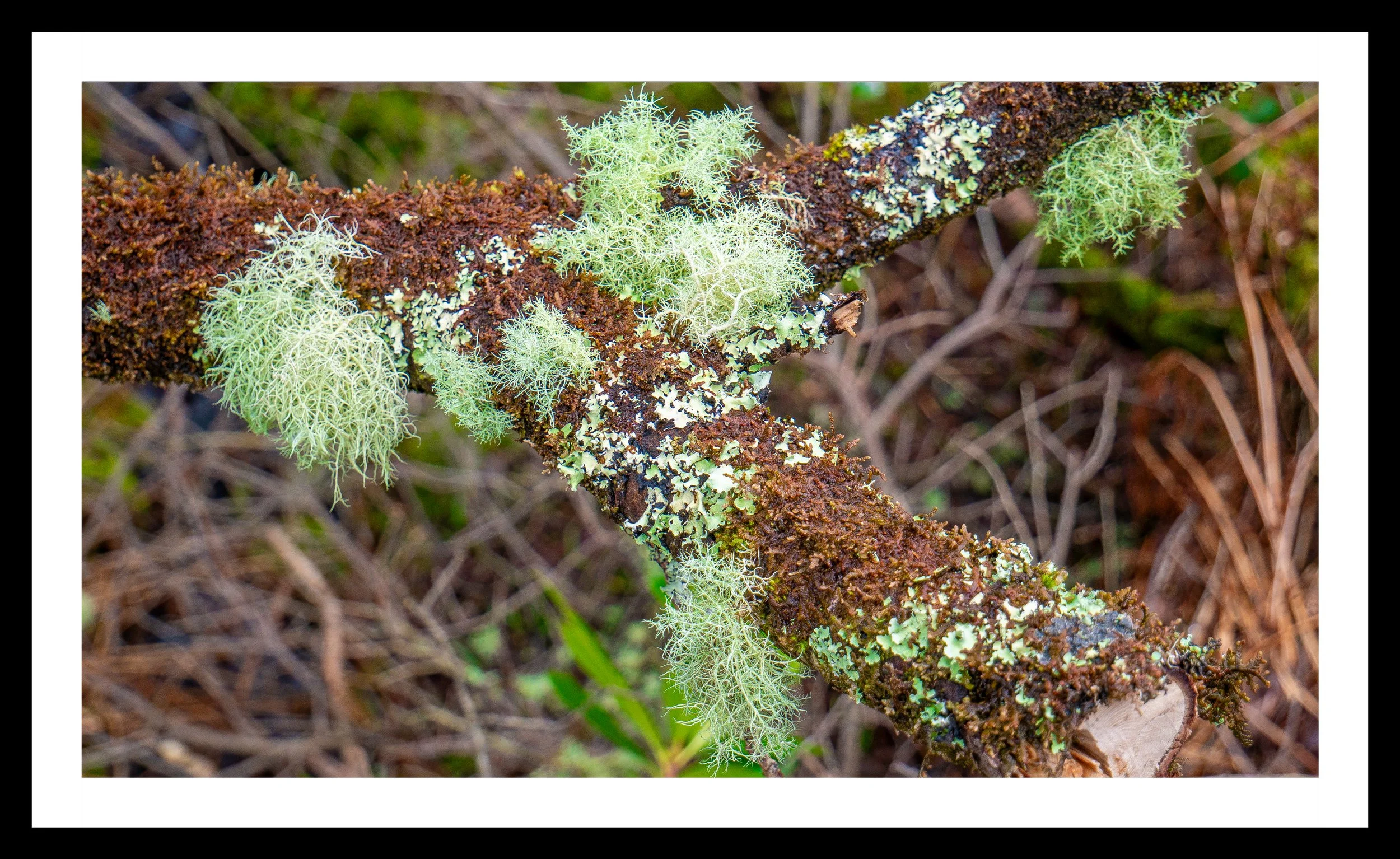 Image 2 of 2
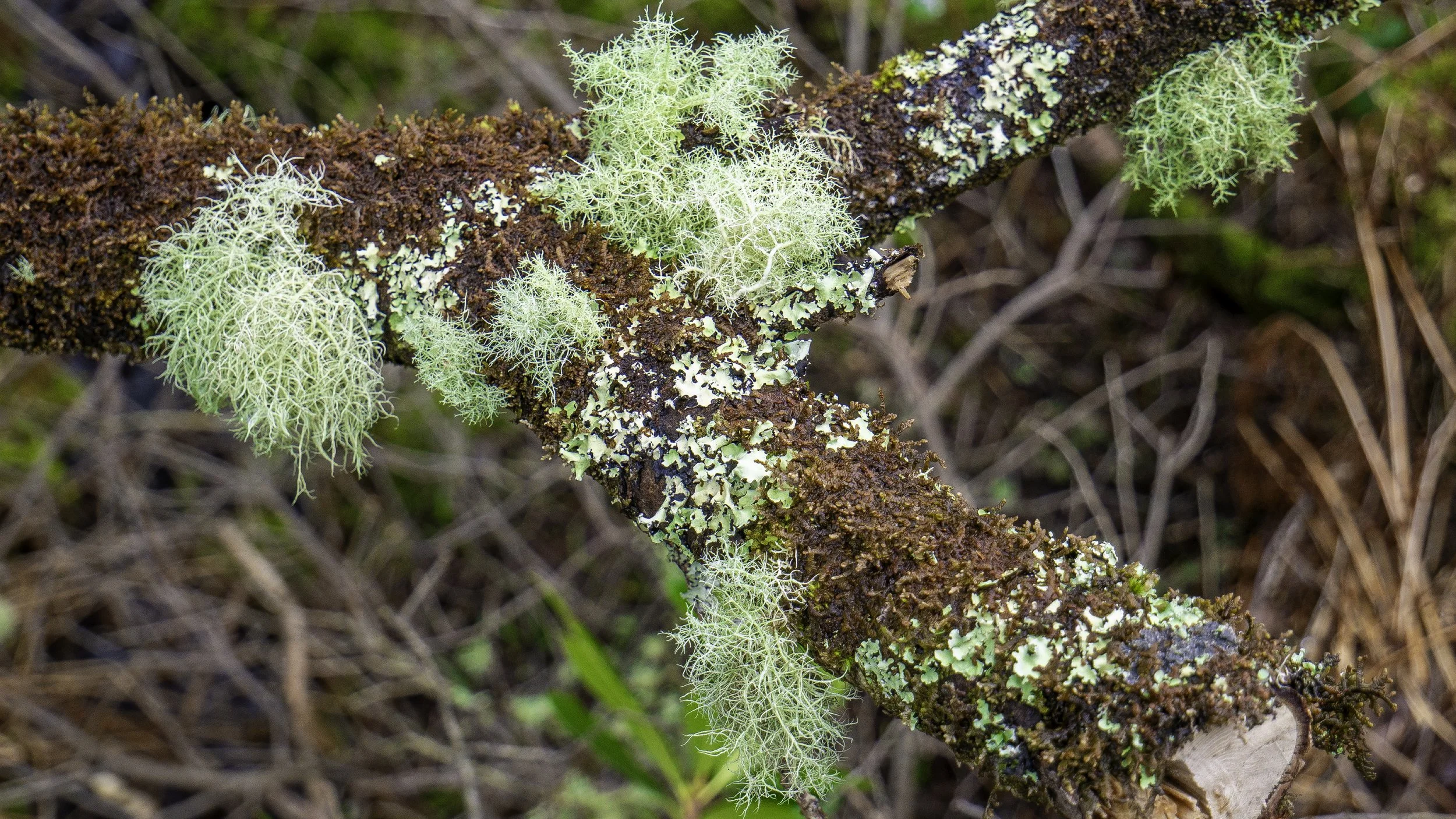
This photo captures a stunning "miniature forest" thriving on a single decaying branch. It’s a perfect example of the complex, symbiotic relationships that happen right under our noses in a forest ecosystem.
Here is a breakdown of the fascinating life forms seen in your image:
The most striking features are the pale, mint-green tufts that look like tiny shrubs or "Old Man's Beard." These are fruticose lichens (likely from the genus Usnea).
Significance: These lichens are highly sensitive to air pollution. Seeing them grow so vibrantly is usually a sign of excellent air quality in that area.
Structure: They aren't plants; they are a partnership between a fungus (providing the home) and an alga or cyanobacteria (providing the food through photosynthesis).
Dotted along the bark are flatter, leaf-like patches of a lighter green. These are foliose lichens. They hug the bark more closely than their bushy cousins and add a different textural layer to the branch's "skin."
The dark, reddish-brown velvety layer covering much of the branch is moss.
The Color: While we often think of moss as bright green, many species turn this deep bronze or brown color when they are slightly dry or as they mature.
The Role: The moss acts as a sponge, holding moisture on the bark which helps the lichens survive during dry spells.
This image isn't just a picture of a branch; it's a picture of succession. These organisms are slowly breaking down the wood, eventually turning it back into soil to feed the next generation of trees. It's a tiny, slow-motion engine of forest renewal.
378x210 mm photo printed on A3 (420x297 mm) premium glossy photo paper (frame and mount not included).
This photo captures a stunning "miniature forest" thriving on a single decaying branch. It’s a perfect example of the complex, symbiotic relationships that happen right under our noses in a forest ecosystem.
Here is a breakdown of the fascinating life forms seen in your image:
The most striking features are the pale, mint-green tufts that look like tiny shrubs or "Old Man's Beard." These are fruticose lichens (likely from the genus Usnea).
Significance: These lichens are highly sensitive to air pollution. Seeing them grow so vibrantly is usually a sign of excellent air quality in that area.
Structure: They aren't plants; they are a partnership between a fungus (providing the home) and an alga or cyanobacteria (providing the food through photosynthesis).
Dotted along the bark are flatter, leaf-like patches of a lighter green. These are foliose lichens. They hug the bark more closely than their bushy cousins and add a different textural layer to the branch's "skin."
The dark, reddish-brown velvety layer covering much of the branch is moss.
The Color: While we often think of moss as bright green, many species turn this deep bronze or brown color when they are slightly dry or as they mature.
The Role: The moss acts as a sponge, holding moisture on the bark which helps the lichens survive during dry spells.
This image isn't just a picture of a branch; it's a picture of succession. These organisms are slowly breaking down the wood, eventually turning it back into soil to feed the next generation of trees. It's a tiny, slow-motion engine of forest renewal.
378x210 mm photo printed on A3 (420x297 mm) premium glossy photo paper (frame and mount not included).